



Sometimes the wrong job role is actually the perfect opportunity.
For Mitchell Piersante, some "terrible" first car photos sparked a journey from becoming a licensed insurance agent to celebrating the first Indy 500 rookie pole in 42 years. After his recent stint with Prema Racing for their debut IndyCar season, he shares the reality of life behind the camera in motorsports and gives advice on networking and providing value to break into the industry.
Position: Social Media Manager at Pace Six Four
Day to day: (Going off race season) Meeting directly with the head of social media to go over different trends, different ideas, on top of other needs for sponsors and teams, and then going over logistics and create the content.


Mitchell's start in motorsports
#1. What was the first moment that you discovered racing?
The first moment that I discovered racing or cars, it's kind of funny. Most people don't know about this. My father was childhood friends with [Ueal Eugene] Patrick, at Patrick Racing in IndyCar. So, at a young age, me and my brother were introduced to racing and motorsports and just cars in general. I remember my brother was able to go to a lot of the races. Some of them were steel cars back in the day, because that's where Mr. Patrick was racing in. And I didn't go because I was too young and I was too afraid of everything going around and it just being overstimulating. But I loved being a part of seeing the cars. Learning from some of the adults. Even though I never participated in races and went to them, having some of the people explain what some of the stuff was, even to me as a little kid, was amazing.
Greg: Would Mr. Patrick take you around in a car when no one was at the track?
Yeah, it was funny, his grandkids were around the same age as me and my brother. So, we'd go to certain things to check out some of the cars and some of the stuff when we really didn't have an idea to fathom what actually was in front of us. I mean, we're kids and it's really funny because actually, someone at Prema was on Mr. P's team around that timeframe that I was a child there. So, it was funny to make that full circle moment. I was talking about it, and he was like, “I was there at that time.” I was like, “It's funny. You probably ran into me as a child.” I was very young. I was probably between 4 and 5 when I started remembering that stuff. Whether it was IndyCar, Formula 1, I remember being the weirdo in high school. I went to school in Salt Lake City. Over there was Miller Motorsports Park; at the time that’s what it was called. So, we would have a Rolex Series that would come out. But between me and my friends, I was the only one that really cared about racing. So I moved to Utah in 2008. That was the year that Lewis Hamilton won his first championship. And I'm the one that's like, “Oh my gosh, this is such a huge deal. This is crazy. It's his second year in F1!” All my friends are like, “Yeah, that's cool. The Utah Jazz are playing.” It was funny to see the difference between the things that I enjoyed, and obviously racing wasn't that big at the time with the people that I knew and my friends.
#2. When was the point in time that you decided that this industry was where you wanted to build your career?
I got interested in automotive photography a little bit before Covid. So around 2016, 2017. I've always just been interested in cars, and love design. Obviously, the performance, they’re always pushing the boundary and the engineering always caught my attention. I've always been a huge fan. At the time I was with someone that was into the social media world when it was still very early. She was like, “If you like cars and you think photography is cool, why don't you just try it?” And I was like, “Why do I need to do this? I'm not good at it.” I worked with her on some projects and I was terrible. I couldn't take a photo. I couldn't take a video to save my life.
Greg: And what were you doing at the time?
At this time, I was working at Best Buy and a bank job. This was just purely a hobby or just something that I was like, “This is really interesting to me. This is fun.” Again, taking my passion for cars, I was like, “You know, it is really cool.” Always seeing Top Gear—the videos that they would make, the photography that they would release with the articles. I was like, “This is just so cool.” And she was like, “Well, just try it.” I was like, “I'm going to be terrible, but I'll try it.”
There was a local car show across the street from our apartment complex. I just took the camera and I started taking some photos, and they were terrible. Absolutely terrible. But it just sparked the idea of “Oh my gosh, this is a possibility. Someone can do this for a job.” So, I started picking up automotive photography as a hobby, started picking up clients, doing some collections. And then Covid came. During that time frame obviously, we were all shut down. A buddy of mine was a fabricator for a local builder, and he specialized in Time Attack and Pikes Peak Hill Climb. At the time, I had no idea about video.
He texted me saying, “Hey, man, how would you like to learn some video stuff and document this build in this series? This guy's doing it. He's doing it on his cell phone. He could really use a lot of help.” And I'm thinking, I don't know anything about video, but I can certainly do better than a guy on his cell phone. So, I decided to meet him and he was local, which was great, so I didn't have to worry about any crazy traveling, especially during that time of Covid when you weren't really supposed to. But he showed me this build that he was working on and how he was documenting the process with YouTube. And I started doing that for a couple of years, which was documenting the process of us going to Pikes Peak, building this insane car that had two of Sauber's F1 engineers as part of the design process, which was really cool.
If you could picture a blank slate for F1 engineers to design a car that has no limits, it's super light carbon fiber tube chassis and a big V8 turbo. Slap it all together. That's what this build was. It was really cool. And that gave me the taste of what I can do to make these videos reach an audience. At that point in time TikTok was super popular, we're all locked down. What are we going to do? We're going to make silly videos. So, I started posting videos about the build, the process, and it started gaining enough attention; I grew 10,000 followers in like a month. And I was like, wow, this is actually a thing. That was probably the real turning point of social media; especially in the automotive side is a real thing. This is crazy. That led me to opportunities to then work with Hagerty, and then RM Sotheby's, and then do my own here, which is how I got the opportunity to work with Pace Six Four.
Editor's note: You can also read our Fast Lane feature on Ben Cowley, Founder and Creative Director at Pace Six Four.
#3. What was the step you took to get into a social media role with Hagerty?
For people that don't know, Hagerty is a specialty car insurance company that is local to where I live in Traverse City, Michigan. They have a fairly big headquarters. I started off by being an insurance agent. A big source of Hagerty’s income is they sell specialty car insurance for collector cars, exotic cars and things like that. To get my foot in the door, I actually had to become a licensed agent. And from the get go—thankfully, my partner has a really great friend who does a fantastic job with a team that's part of Hagerty. It gave me my introduction. And right from the beginning of interviewing, I was like, “I'm going to make it on your social team. I don't care how long it's going to take. I don't care how it's going to happen. I will be on your social team.” Hagerty was great with providing a lot of opportunities, even though I was in a position as a licensed insurance agent. I knew from the get go, I'm going to make it happen. And that was always the running joke when I would meet these people, I'd be like, “I'll be on your team soon, don't worry.” It just took a lot of patience. I had to wait for an opportunity to come up. And thankfully I did. And it was really fun being able to show them analytically what I've done with the Pikes Peak Hill Climb, and my buddy Cody, with his channel.
And then what I've done personally and the direction that I think I could take with some of Hagerty's ancillary channels. So Hagerty has a bunch of different social channels, which is cool. I think that was a big thing not only showing my passion for it, but also where I could provide value even though I would be the lowest man on the totem pole. I think that's what a lot of people forget when they want to be in an industry. This is not what you know you can do for me, but what value can I provide for you? I think that was very important for them to see that I was very eager because I came from a non-corporate side, where we didn't have a lot of the structure in place that you would in some corporate offices, learning that was a little bit different. But I knew the concepts and what I wanted to do, and how we could grab attention. That was what I think was really great. They could see it from my personal side, and then what I would want to do and implement on the corporate side, and they gave me a shot, and it worked.
Mitchell's current role
#4. What is your current role? And what does a standard day look like, if there is one?
We'll go off of the race season because now that the season is currently done; a typical day for me would be understanding and knowing what our next race objective is. At Pace Six Four, I would have someone that I would meet directly with, the head of social media, and we would go over these ideas and things that I would break down. We have this race coming up here. Here are some things that we can do that I think would entertain or educate or bring some type of value to someone. That's how you have to constantly be thinking in a social media role. How can you educate or entertain the person that's on the end, and keep them from scrolling so you can have their attention? We would go over different trends, different ideas on top of also other things that we would need to do for our sponsors or other teams’ sake. So really breaking down, what is the necessity of the kind of content that we want to create, and that we need to create? And then going over logistics of how we plan on doing that, going over scheduling for what's going on for the week. And then executing, because you can have everything down on pen and paper or a document, but then once you actually have to execute it, we could have delays of people, with drivers or other, we're going to be a little bit late, we're running behind or we thought we were going to have this amount of time to do this, now that's cut in half. So, you really have to be quick on your feet. Between that and organizing and structuring something on the back end to then execute it on the front end, it just takes a lot of patience and you just have to be able to work quickly.
Greg: Are you coordinating that with other people who can help with the editing to bring it to life, or are you responsible for the end to end?
Yes. What we did on the IndyCar side is we had two content creators that worked with me as well [as the woman who] oversaw the entire branding and marketing for Prema itself. We would meet once a week or once we were there during the race weekend to say, “Here are the ideas that we have. Here's how I want to do it. Here's the tone, here's how we will execute it, and we'll see what we can do to make it happen.” Then I would work with the content creators and be like, here's the ideas. This is what I want to do. What do you have? What do you think we should do? Should we change anything and just bounce off each other and see what works well? There are some things that we would want to do that were more polished. Then there were things that I would want to do just with my cell phone to make it quick and easy because I think people would be surprised at the amount that you can do with the cell phone; it just makes it more natural. It makes it more appealing than sometimes some of the over polished stuff. So that was also kind of fun to really test that theory with some of the content that we made.
#5. What are the most rewarding and the most challenging parts of the job?
Rewarding
I think some of the most rewarding is honestly having people that want to be involved with it and really enjoy it. We would love to be able to garnish the most reach possible. That's your goal. Your objective is to get the most eyes on it. But I also think people look forward to doing it and having fun with it. That's such a big win in itself, because not a lot of people really like to be behind camera or do these skits or perform trends. I get it, it can be very tiring, but I think the most rewarding part is seeing some of those connections, and those friendships really bond over silly things like that. Some of the stuff that Callum [Ilott], and Robert [Shwartzman], and I, and Anthony [Furlong], or everyone else that would participate, we would do, it was just fun to be like, “This is so ridiculous, but we're having so much fun with it.” I think that is something that really means the most to me.
Challenging
The hardest, I would say, is sometimes you have an idea and a vision and how you want it to go, exactly, and it doesn't or your time gets cut short, where you can't take it personally, that you have to understand that things are moving very quickly in the racing world. If you don't have an opportunity to do it right then and there, or maybe the vision doesn't come across the way that you wanted it to with that target audience, it's okay. You tried. You get to learn. That's one less thing that you have to worry about because you learned what not to do. You have to be able to take that and run with it, and move quickly.
#6. What are the three qualities that have helped you be successful at this?
Adaptability
100% adaptability. Like I was mentioning previously, you have to be able to move quickly on your feet because sometimes whether it's a scheduling issue, or maybe your equipment's not working, or you thought you were going to be able to have certain people help you create content. You have to be adaptable. I would say a calmness under pressure is another thing because you sometimes are given opportunities where you only have X number of resources or X amount of time, you have to be able to keep calm and stick to the plan, stick to the schedule. And even for me a couple of times where I was like, “I just need five minutes, give me five minutes to myself to collect myself.” And it's like, cool. I know what I need to do, let's make it happen!” But it's frustrating sometimes when you can't get it in the way that you wanted to, like you originally wanted it to.
Patience
Patience and understanding and being calm—it's huge.
Open to feedback
You can't be afraid of feedback, and you can't be afraid of failing, because you may have this idea and this way that you want whatever piece of content to come out. And it may not hit the way that you thought. And that's okay, because you just have to be able to understand that it's a learning opportunity. You understood what you did, why it didn't work, and then be able to really move forward and progress with that. So, the third is being able to take feedback and understand that there's a learning opportunity if it didn't work the way that you wanted it to.
Mitchell's advice
#7. If you could go back and give advice to your younger self, what would that be?
There's probably a few things, but the first thing that comes to mind is never stop learning. I mean, not saying that I've stopped now, but you really have to understand that you will always be able to learn something new. And trends change. Social media changes. What worked for us in 2020 or 2018 is not the same concept of how you would approach social media now. So, if you're not willing to learn and adapt and do all of these things you're just going to be stuck spinning your wheels, no pun intended. But that would be the biggest thing that I would tell anyone is you have to always be constantly learning. It doesn't matter if it's social media, whatever that you want to do, if you want to be one of the best out there, you have to be willing to do things that others aren't. And that's constantly learning.
#8. What advice would you give to someone who wanted to get started and be where you are in a couple of years?
Understanding the basics of what it takes to provide value as far as social media. How would you get attention; how would you get eyeballs on it; understanding the concepts of what would make a good piece of content and practicing that until you can't anymore. I think one of my favorite quotes is, “Amateurs practice until they get it right. Professionals practice till they can't get it wrong.” And it's true. You can take any kind of concept like that; what I think is going to work as a piece of content, no matter the niche, you can have a structured system, and most of the time it's going to work well. You might have to adapt a few things, but once you figure out that structure, content creation, that's where it really starts to begin, because it's like you have your ideas of what you want to do, now you can apply it to many different ways to gain that attention. And it's really fun to see what truly works and what doesn't.
Greg: Where do you find this inspiration? Where have you found success identifying those things that have led to success in the work?
With social media, it's a great opportunity to have those ideas where you can see things that are working or are not working. I learned a lot from other people also in this space when it came to the networking side. So even if it's someone that you meet that's in social media, that might not do the specific niche that you're in. I love chatting with people to be able to learn their perspective on things. I'd say, I'm super into cartooning and drawing; what is the structure of them? How do they tell their story? Because it might be a little bit different. And you will pick up things which I think can help anyone. And it's like whether you use it right then in that moment or not, it's something that you've gained that you then can have in your tool belt.
So, networking with people also in social media, a lot of us, every person that I've met is very willing to help. I think a big thing, though, that I've noticed is if you come to others just like I have, even in photography and automotive videography, I want to achieve this kind of “Look, I've tried this, this and this. Is there something that you can do to point me in the right direction?” It's like showing that, hey, I'm actually trying. Your guidance would be super appreciated versus this: I have a great family friend. I love the kid to death. He just graduated high school recently, and he's like, “hey, I want to do this.” It's like, well, what have you tried? No, that's not how this works. You got to go out and try it. And he's been doing a lot better with that. You'd be surprised how many people just want the answer. They want the quick get around, and you just have to constantly try. If you show people that you're trying, more people are willing to help.
Mitchell's career highlights
#9. What's been the most memorable moment of your career so far?
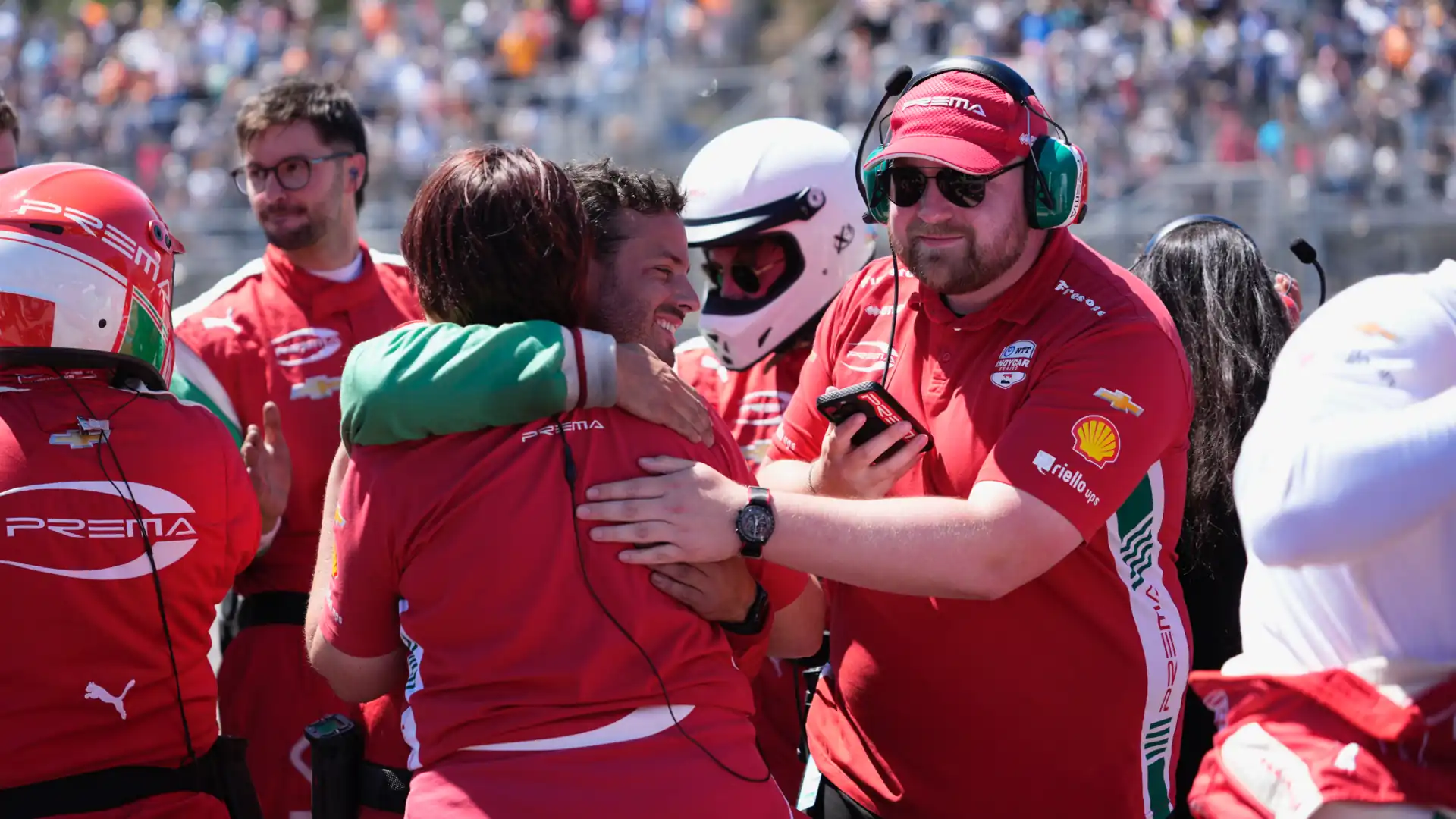
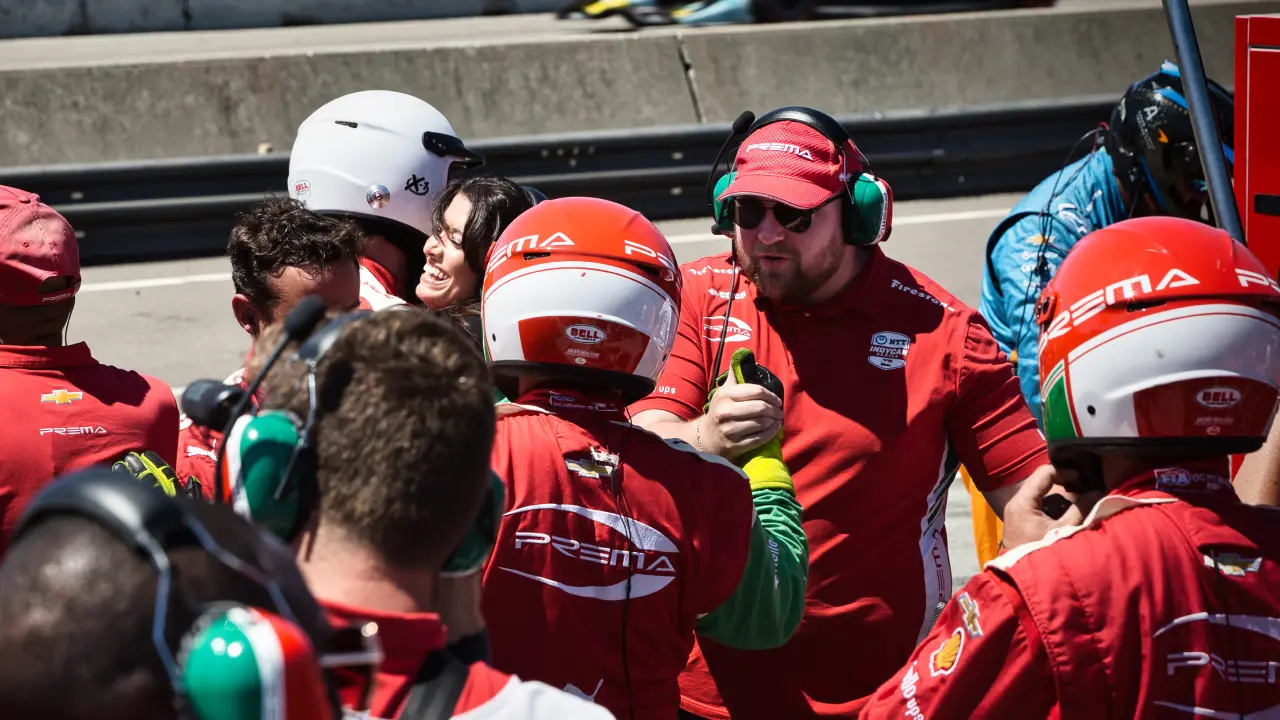
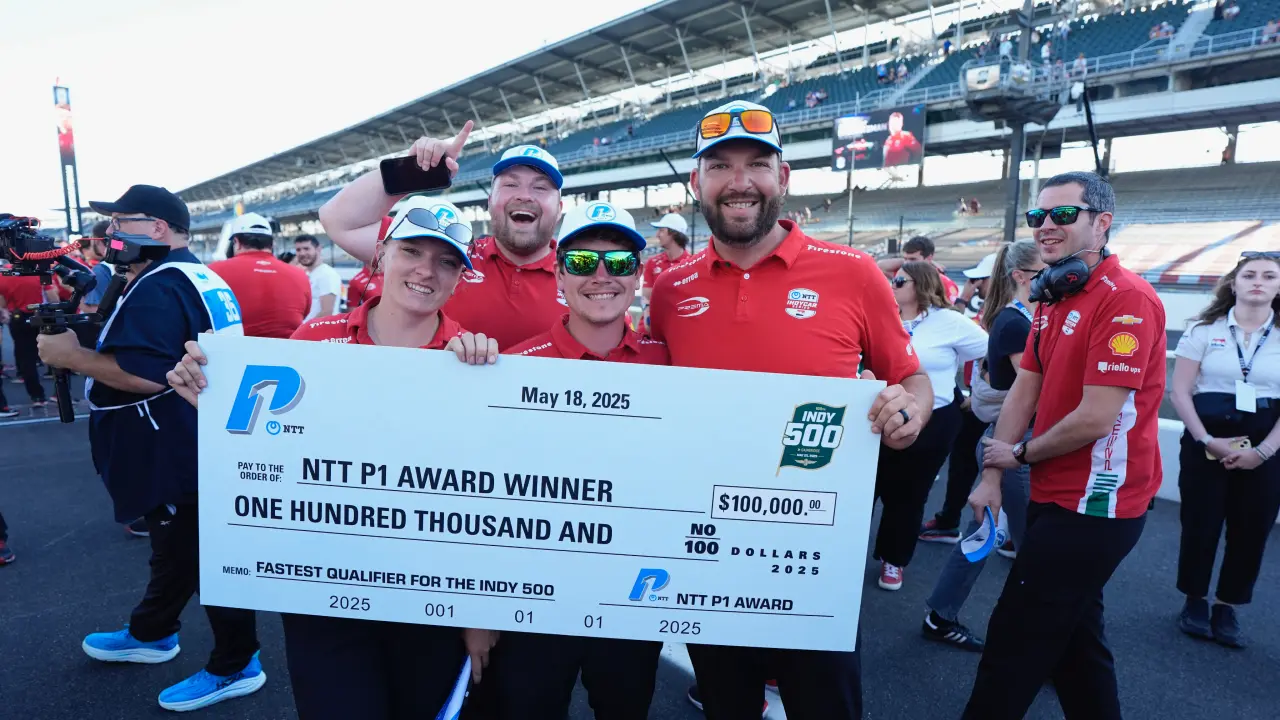
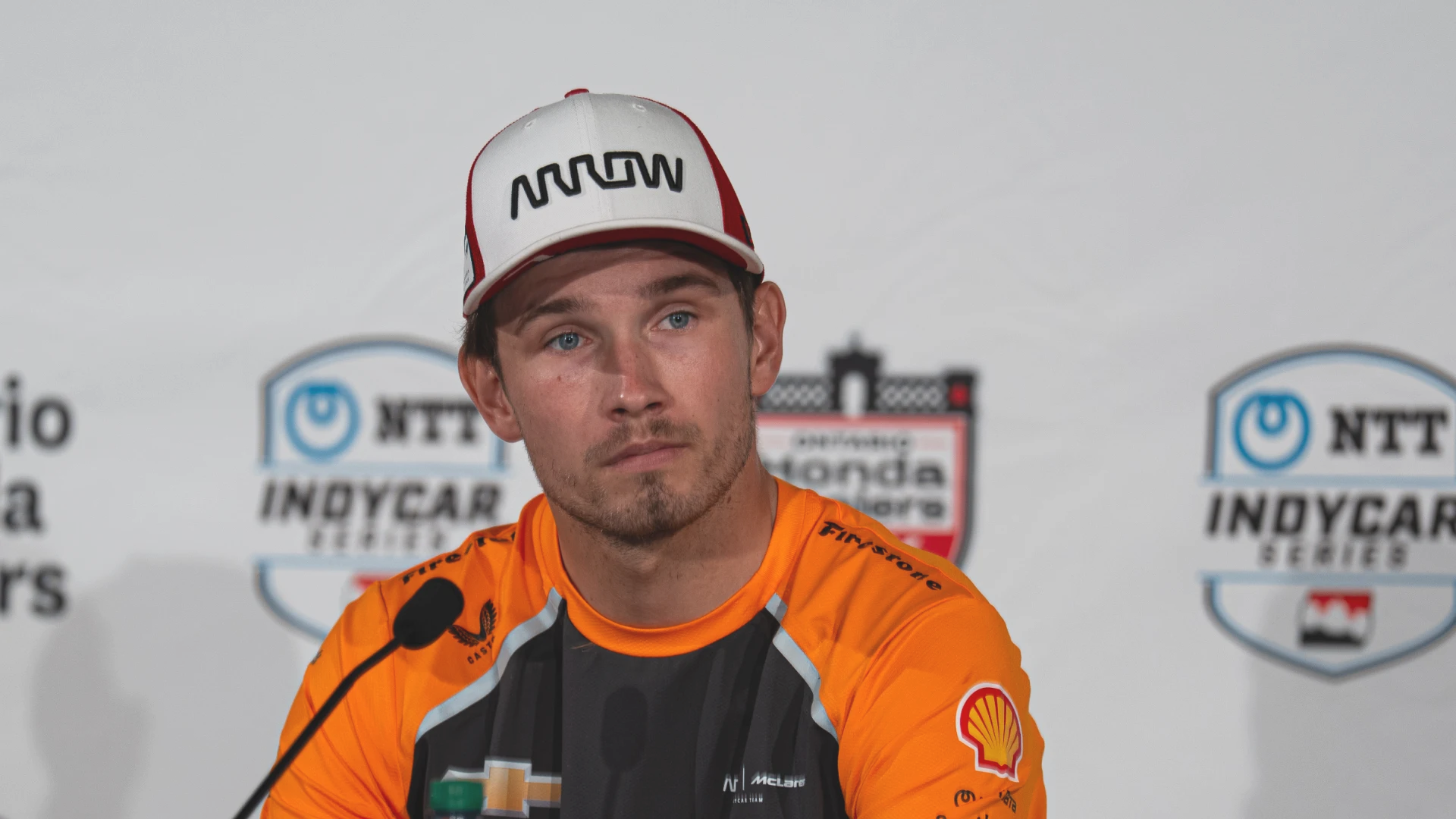
The biggest one in motorsports was being a part of a rookie team that had a rookie driver end up on pole for the Indy 500. Even if you aren't the biggest fan of racing, you know exactly what that race is. It just carries a bunch of history with it and just knowing that we were a part of that as one of the teams at that point in time, we especially did not have any great results. So out of nowhere, we had a rookie that sent it and a team that worked endlessly. Every single man and woman that was a part of that team worked night and day to make that car, set the qualifying that it did, and to see the recognition that they got. I was fortunate, this was my first year in motorsports. We were very fortunate to be in that position, where I was with team members that have been in IndyCar for ten, 15, 20 years and never experienced that. To see the look on everyone's face, on all of their hard work really coming together for this, is priceless. I'll never be able to top that. As far as a motorsports thing.
Now, being able to work with certain car collections, meeting amazing individuals on the luxury car side at RM Sotheby's. I got to experience just cars in general that most of the public may never even see in the public eye. And to me, that just fulfilled such a five-year old dream of. I was able to sit in the F40, the F50, the LaFerrari, some of these rare Bugatti, these old classic cars. Even today, I still get excited thinking about it because I was able to do something that not a lot of people may have the opportunity to do. And I will be forever grateful for that.
#10. You had Waka Flocka Flame and Robert Shwartzman hanging out at the end of the season last year. If you could line up any dream collab with a driver and any celebrity, who would it be and why?
The fun part about some of the work that I have been able to do is meeting certain people like that, and really understanding. It's so cool to see how they're just people. A lot of people forget that. I've heard Ben [Cowley] talk about how great George Russell was as a person. And then talking to Angelina about how great Kimi Antonelli is, as a great young man. So, it's fun. I would love to pick an athlete like Lewis Hamilton. Again, Lewis has been someone that I've been fond of for many years. He's an absolute legend. If I could choose someone non-living, I think it would just be amazing to pick the brains of Niki Lauda, Ayrton Senna. Just seeing some of those individuals, what would they be like now, in their age, with their wisdom, to collaborate with? I think those would be some really fun individuals.
Also, during the 500, Tom Brady walked by. I don't know if you've ever introduced yourself to Tom Brady, but first off, that man has a presence to him and he is big. Waka Flocka was really big too. I'm a big guy myself; I'm six-two and even I was looking up at this guy and I was like, dude, you don't even need security, you are security. I think someone like Tom Brady would also be very interesting. Not even for the fact of he's a football god, but it would just be fun to pick his brain of being like, “How do you operate, man? How does this work?” And then to be able to do that and tie it in with motorsports, which would be really fun.
Want to learn more about other professionals across motorsport series? Then check out all of our Fast Lane interviews, or jump right into one of these:

.png)
.png)