


.jpg)



Ask a race fan to name the most important part of a race car, and they'll have a slew of answers: the engine, the gearbox, the aerodynamics. But none of that matters without tires, and tires are what Bridgestone knows best. So when it came time to produce two brand-new tire compounds to kick off its exclusive partnership with Formula E as the all-electric series prepares to embark on its Gen4 era, Bridgestone knew it had to come up with something special.
And come up with something special they did.
For the first time since it left Formula 1 16 years ago, Bridgestone is entering an FIA-sanctioned World Championship racing series ready to make a splash with its Potenza Gen4 tire: sustainable, durable, and capable of bringing a Formula E car up to speed 25% faster than a Formula 1 car.
I had a chance to join the tire manufacturer at its research and development facility in Rome for an inside look at the technology and manufacturing process behind these innovative tires — and like a chef sharing their secret ingredients, it was hard not to be impressed by the food Bridgestone is bringing to the table.


The goal: Bridgestone returns to an FIA World Championship for the first time in 16 years
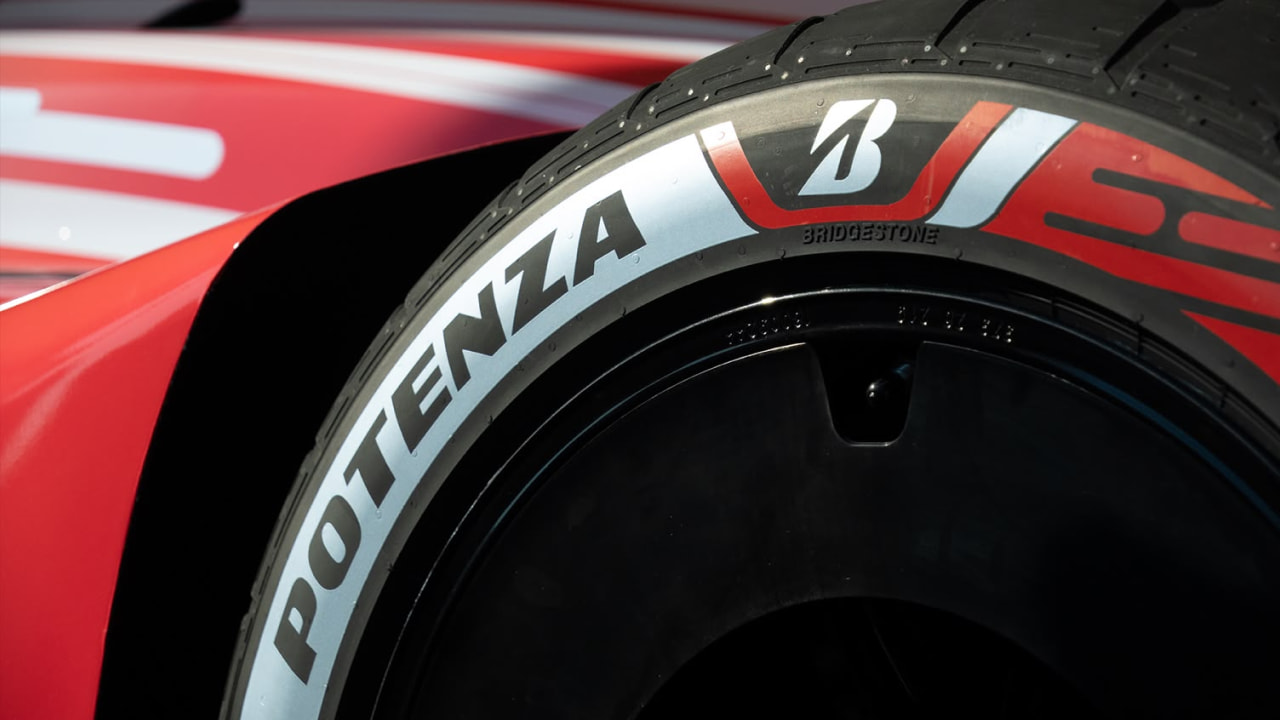
Bridgestone's partnership with Formula E coincides with the start of a new era for the all-electric series. This year, we'll see the introduction of the sport's Gen4 car, and its demands immediately created a major challenge for Bridgestone — a company that is re-entering FIA World Championship racing for the first time in 16 years.
The Gen4 car is going to be Formula E's most powerful yet, and the specs have been sorted right from the start.
Peak power is set to run at 600 kW, which is the equivalent of over 800 horsepower. The Gen4's top speed will be over 200 miles per hour, and it can launch from 0 mph to 62 mph in 1.8 seconds — which is 25% faster than a Formula 1 car (which takes 2.4 seconds). Oh — and Formula E machines are all-wheel drive, which makes for a whole other tire engineering challenge.
All racing tires need to be built to exacting standards, but Formula E presented a unique set of circumstances.
When compared to vehicles powered by combustion engines, electric cars have heaps of torque that can be instantly applied to the wheels. Torque is what we call a car's “get up and go”; it's the rotational force that causes the tires to rotate on their axles, and it's how race cars translate the raw power of their motor onto the tarmac. Because combustion engines rely on the burning of gasoline, it can take them a few seconds to reach their full operating power because the full burn power isn't instantaneous. EVs can access that power instantly. Push the pedal of a combustion engined vehicle, and it'll take you a few seconds to get up to speed. Push the pedal of an EV, and you'll immediately launch into motion.
That intense rotational force means EV tires have to be more robust than the tires used for combustion cars. When it comes to a form of racing like Formula E, where there are no pit stops for tire changes, the tires you use need to maintain maximum efficiency all the way through the race while also quickly coming up to temperature. And all of those needs conflict with one another. A softer tire will heat up faster, but it'll wear more quickly. A harder tire might remain rigid, but it won't provide the necessary grip.
Most tire manufacturers have some sense of how to accomplish that goal, but Bridgestone had another challenge: Its tires needed to be made of sustainable materials.
Synthetic rubber made from chemicals is predictable because tire manufacturers have been using it for years. There are natural substances in this world that can mimic the basics of those synthetics, but there is no such thing as a perfect match. If you've ever baked with different flours, you'll understand this; you can't swap out all-purpose, bleached flour for wholemeal flour in equal proportions without completely transforming the final product.
It's the same with Bridgestone's tires. The company knew it could substitute silica derived from rice husks for its silica derived from sand. It also knew that doing so would completely transform the way all the other ingredients came together and have a major impact on the final tire. So not only did Bridgestone need to find more sustainable ingredients, but it also had to figure out how to mix those ingredients together.
But what are those ingredients, exactly? Let's dig in.
The ingredients: Sustainable rubber for all-weather and wet compounds
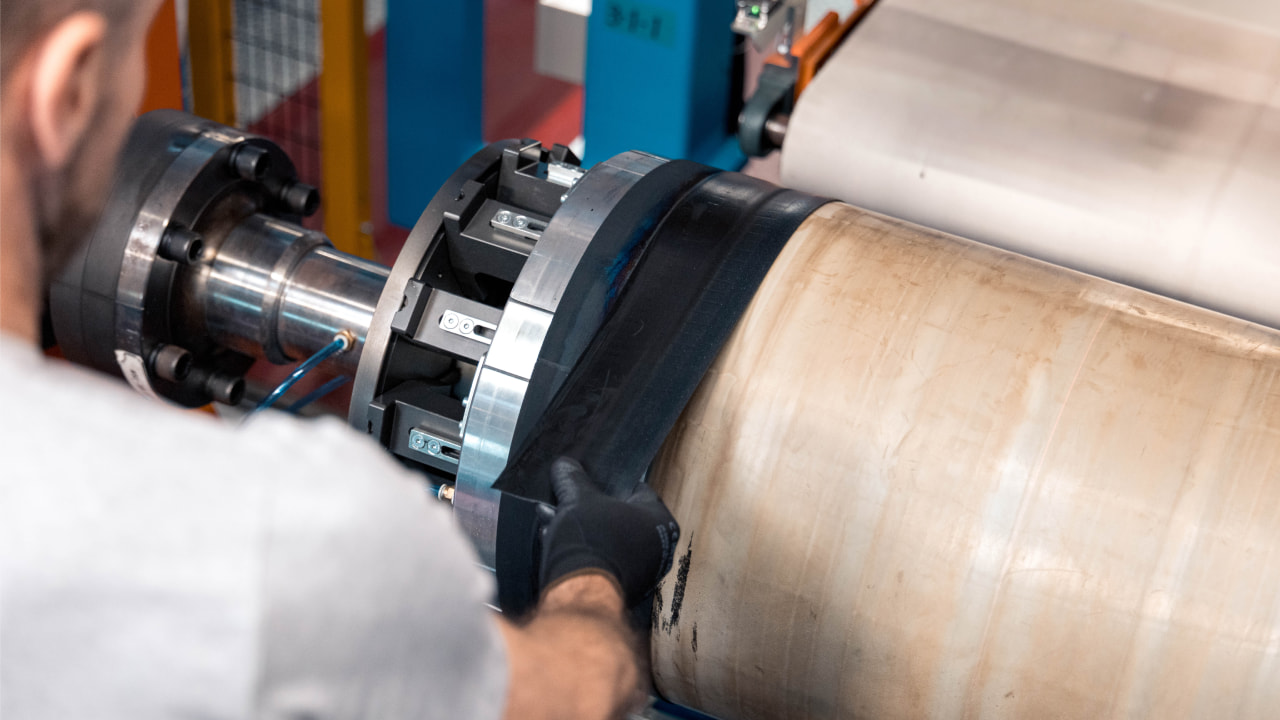
Bridgestone was (understandably) hesitant about revealing its proprietary blend of Potenza Gen4 tire ingredients, but it did give us a sense of what those ingredients are.
First, there's carbon black derived from recycled tires. Carbon black is a fine carbon powder created via pyrolysis, which we'll talk about shortly, and its main purpose is to give strength and adhesion to a tire. Silica has long been used in tires in order to improve grip and extend tire life; rather than get its silica via sand, Bridgestone derives its silica from rice husks, which does far less environmental damage. Recycled steel is woven into thick bands to provide strength.
In total, Bridgestone estimates that around 65% of its Formula E tires come from recycled and renewable materials.
The development: Where AI and sim racing come into play

Modern technology has enabled Bridgestone to ‘test’ its tires without actually having to construct them, and that has been a hugely important element of its Potenza Gen4 development.
Emilio Tiberio, the company's chief technology officer, told me that Bridgestone started off with 20 compounds that it believed could make a successful race tire. It knew it needed to narrow down those options to two compounds, one for the all-weather tire and one for the wet-weather tire. And it never actually had to construct those compounds to compare them to one another.
Bridgestone's predictive artificial intelligence systems can anticipate how different blends of ingredients work together without needing to use those ingredients to construct a physical tire. And by inputting the blend ratios into the company's driver-in-loop simulator, test drivers can get an early sense of which compound blends are strong and which can be scrapped.
A driver-in-loop (DIL) simulator is the most advanced form of simulation technology currently in existence. A human driver climbs into a cockpit surrounded by massive wrap-around screens. The cockpit itself is mounted to a multi-axis motion platform that can mimic every bump in a race track and the corresponding pitch of the car as it carves through a turn.
I had a chance to test out Honda's IndyCar driver-in-loop simulator back in 2024, and it was an intense experience. It can't perfectly mimic the experience of driving a real car on a real race track, but it's pretty dang close. A trained sim driver can understand how simulator feedback translates to real-life feedback, and he can suggest changes accordingly.
Over in Rome, we watched Bridgestone's sim driver, Mauro, take a lap before he paused the simulator to give a little feedback. The rear of the car felt loose, he said. A Bridgestone engineer analyzing the sim data made a few tweaks to the tire compound, and Mauro was back out to evaluate the differences.
Before sim technology, Bridgestone would have had to construct an entirely new tire based on Mauro's feedback, then send him out on a physical track to see if it was any better. It was a process that could have taken weeks. With the sim, it's a matter of seconds.
With AI systems helping figure out the right ingredient ratios and the sim helping figure out what blends worked, Bridgestone only needed to manufacture the select compounds that would best work for Formula E before kicking off its physical, at-track testing.
The process: Inside Bridgestone's Rome motorsport manufacturing and testing facilities
Bridgestone will manufacture all of its Formula E tires at two different plants—one outside of Rome, and one in Japan. The tires from both facilities must be identical, because they are strategically positioned to ship tires to different locations. The Japanese plant, for example, is building the tires for the Middle East, Asia, and the Americas, while the Roman plant will ship its product around Europe. That means the recipe preparation for each tire must be exactly the same in each plant.
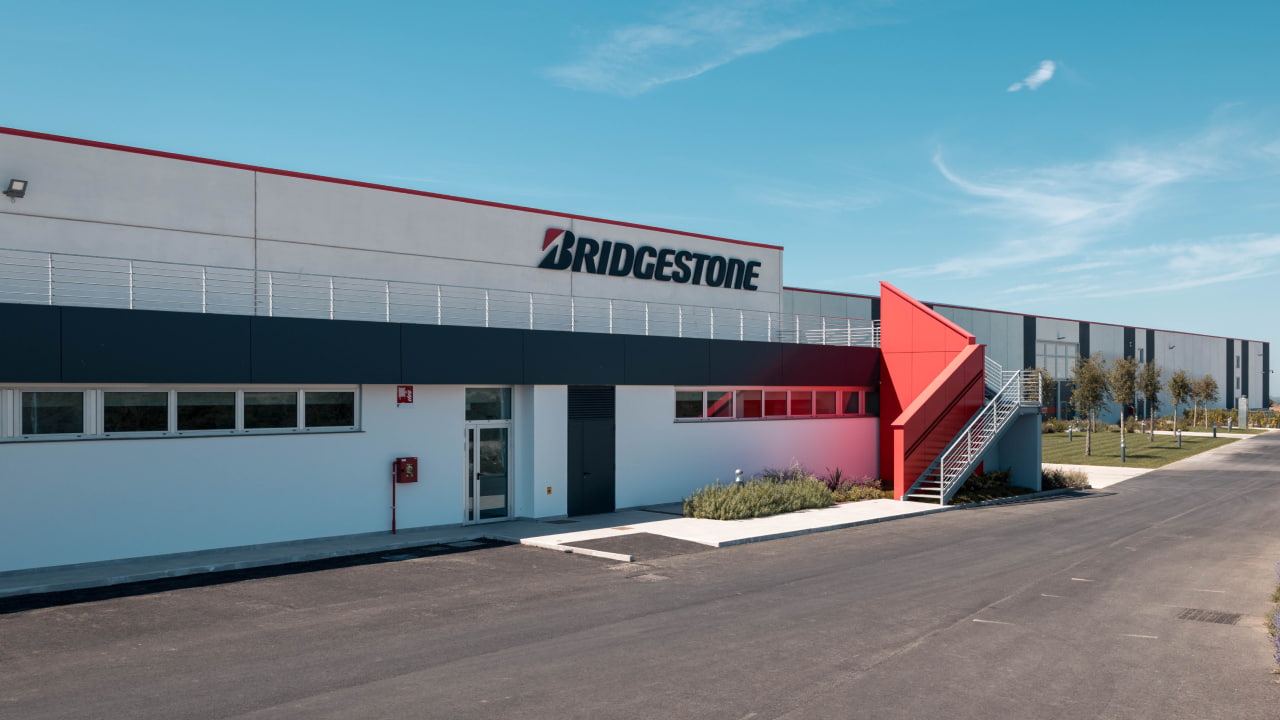
The Rome plant is brand new, built over the course of a year. Inside, it's staffed by just 10 to 12 employees who oversee every step of the development and who conduct the all-important quality control checks at several different stages.
And the first step of the tiremaking process sounds pretty simple yet is anything but: kneading. Here, repeated pressure basically forces all the various ingredients to mix together. The problem is, those ingredients are not natural friends, so they don't want to blend together. It takes a lot of effort to convince each element to combine into a solid chunk of rubber.
Then comes a process known as extrusion, and if you've ever used a hand-cranked pasta machine, this will look familiar. Basically, a big blob of rubber is fed between two rolling cylinders that flatten the rubber into a thin sheet. That thin sheet is going to become our race tire.
After the tire is extruded, it's layered with a handful of other materials, including a canvas liner, the bead that inflates the tire, woven steel cords, and the extruded rubber sheet. Each layer provides durability and strength.
The part of tire construction that makes a round rubber circle look like an actual tire is called vulcanization. Vulcanization is a chemical heating process that turns the “green,” or unfinished, rubber into a finished tire. The green tire is fitted into a mold before it's heated. The heating process will not only reshape the rubber to take on the ideal tread pattern, but it will also harden the rubber into a durable but elastic state. After this process, the tire is visually inspected by an employee for any noticeable flaws.
Finally, the tire is stamped with a Bridgestone logo and inspected one more time using radio-frequency identification (RFID) technology. The tire can only exit the building if it's in perfect condition. For the last few months, all the tires that have left Bridgestone's Rome facility have been used for testing. Soon, those tires will be shipped off to races all around the world.
The final result: The Bridgestone Potenza Gen4 tire duo
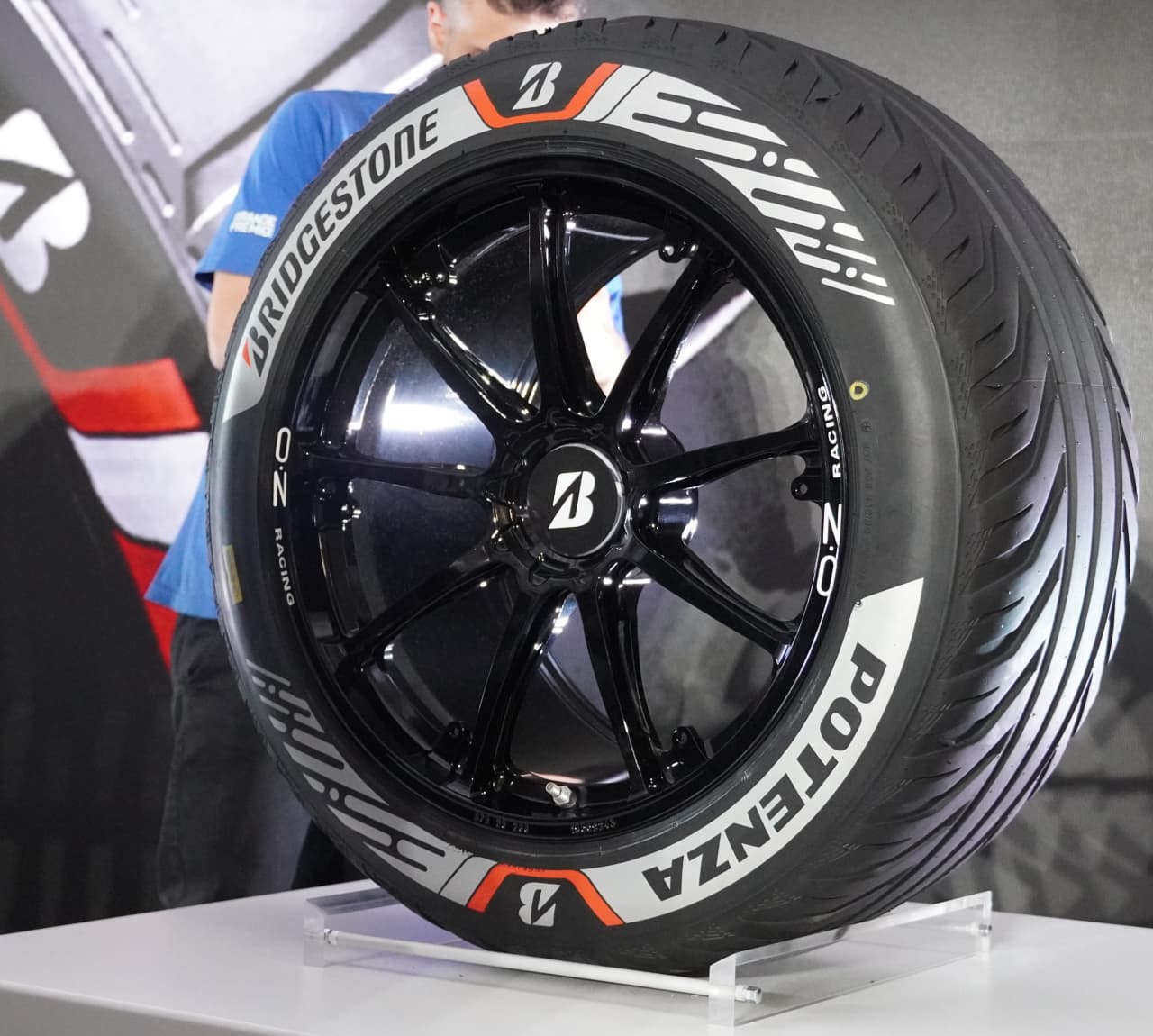
For the first time in Formula E history, the series will have two different tire compounds available for each race.
It took over 50 ePrix for the all-electric series to experience its first wet-weather race, but since that time, conditions have only grown more treacherous. Regardless of tire manufacturer, Formula E has utilized treaded all-weather tires as opposed to the more traditional slick racing tires as a way to better connect the sport to fans, who drive on treaded tires. But that simply hasn't cut it of late, and the sport has had to delay races in order to avoid dangerous conditions.
So, Bridgestone is bringing something it's calling the Typhoon Tire, which was specifically designed for heavy rain conditions. The tread pattern helps explain its goals: Running down the center of the tread are two strips of slick rubber with a channel between them. The slick sections are designed to maintain contact with the ground for the best grip, while the channel between them will move water out of the way. Surrounding the slick strips are thick grooved channels that will funnel even more water out from beneath the tires.
Former racing driver James Rossiter has taken on the job of developing both Formula E's Gen4 chassis and the Bridgestone tires it'll wear during the season, and his impression of the Typhoon Tire is impressive. In full-wet conditions, he told the media he was able to drive almost completely flat-out through even the trickiest corners.
But the all-weather Potenza Gen4 tires are the bread and butter of Bridgestone's Formula E partnership. Per Rossiter, he's been able to drive flat-out for over 180 miles—the same as Formula 1’s new Grand Prix distance, or nearly three times the length of a typical 62-mile Formula E race—on a single set of tires before experiencing any performance fall-off.
The clean-up: Bridgestone's recycling plans
It doesn't matter how skilled you are in the kitchen; every chef will need to clean up after himself at some point. And Bridgestone has plans for that, too. In fact, the company was thinking about its impact from the moment it set out to join Formula E.
After each race, Bridgestone will collect the used tires from every team competing on the Formula E grid, then ship them back to one of its manufacturing facilities, either in Rome or in Japan. There, they'll be recycled using pyrolysis.
Pyrolysis refers to the scientific process by which carbon-based organic materials can be decomposed using extreme heat. Critically, pyrolysis doesn't involve any oxygen, so there's no combustion to emit harmful chemicals into the air via smoke; instead, using temperatures between 570 and 1,600°F, the tires can be broken down into pyrolytic oil and recovered carbon black. Bridgestone can then reuse the carbon black to create more Formula E tires, while the pyrolytic oil can be refined into biofuels that can generate energy with a significantly smaller carbon footprint than via standard combustion.
Recycling tires with pyrolysis will enable Bridgestone to reuse virtually 100% of its old race tires to create new ones.
What Bridgestone's serving up for the 2026/27 Formula E season
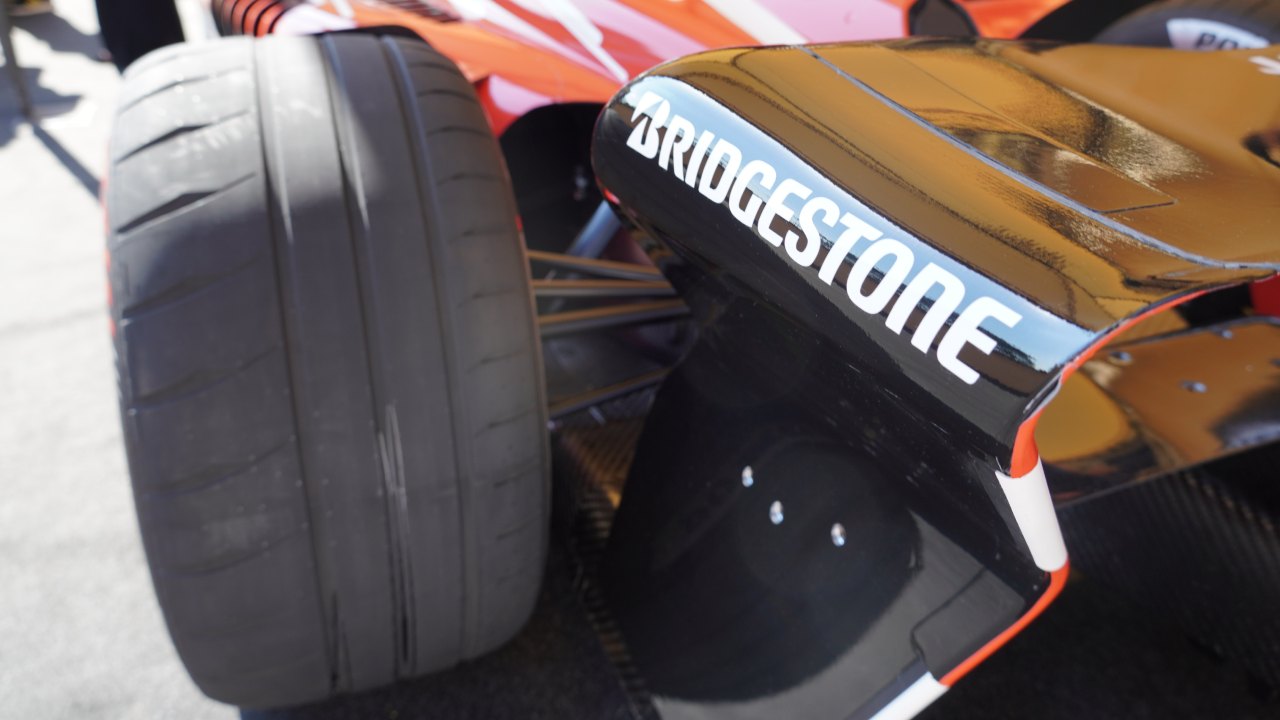
So, how do Bridgestone's Potenza Gen4 tires actually perform on track? Unfortunately, details are kept well under wraps.
Thankfully, Rossiter gave us a little nibble during our tour.
"The first time I drove the car, [after] I turned off the pit limiter, I thought, ‘might as well go full throttle and see what this thing's made of!’
"My physical body left. My consciousness was left behind. I felt like I was one step behind the car for the first few laps, and that's a feeling I hadn't experienced from my very first Formula 1 test 20 years ago."
And his praise for the tire is just as steep: "The acceleration is unparalleled — faster than a Formula 1 car, and that is sort of difficult to comprehend, being able to put that much power to the ground. The only contact point of the car is the tire. To be able to translate all that energy into acceleration is only through Bridgestone."
Now, all that’s left to do is wait for the main course to arrive this December, when Formula E kicks off its 13th season of competition with the Jeddah ePrix doubleheader.
Full disclosure: Bridgestone invited me to Rome, Italy to celebrate the global launch of its Potenza Gen4 tires. They provided tasty food, cozy lodgings, and an unprecedented tour of its Rome research and development facility. All opinions and reporting are my own.
.jpg)
.jpg)
.jpg)


.webp)

.png)
.png)