


.webp)


Sprints have been a staple of the Formula 1 calendar since their introduction back at the 2021 British Grand Prix, and they are becoming a bigger part of the racing season with each passing year. In fact, the 2027 F1 calendar now includes 10 Sprint weekends, up from six in 2026.
So what are Sprints, how do they work and which tracks will they be happening at? We’ve got everything you need to know about Sprint races down below!


Why does F1 have Sprint races at all, and why is the number going up?
With the main event of every F1 weekend being the respective Grand Prix, what is the purpose of having a Sprint race? Simply put, audience value.
This is true for fans at home and in the grandstands. Viewership data shows that, starting all the way back in 2021, Sprint weekends have consistently had about 12% higher viewership than standard race weekends. Meanwhile, a massive 82% of race attendees feel that Sprints make the weekend more worthwhile for them to attend. Indeed, Sprint Qualifying alone can draw up to three times as many fans as Free Practice sessions, showing that there is higher demand for Sprint racing.
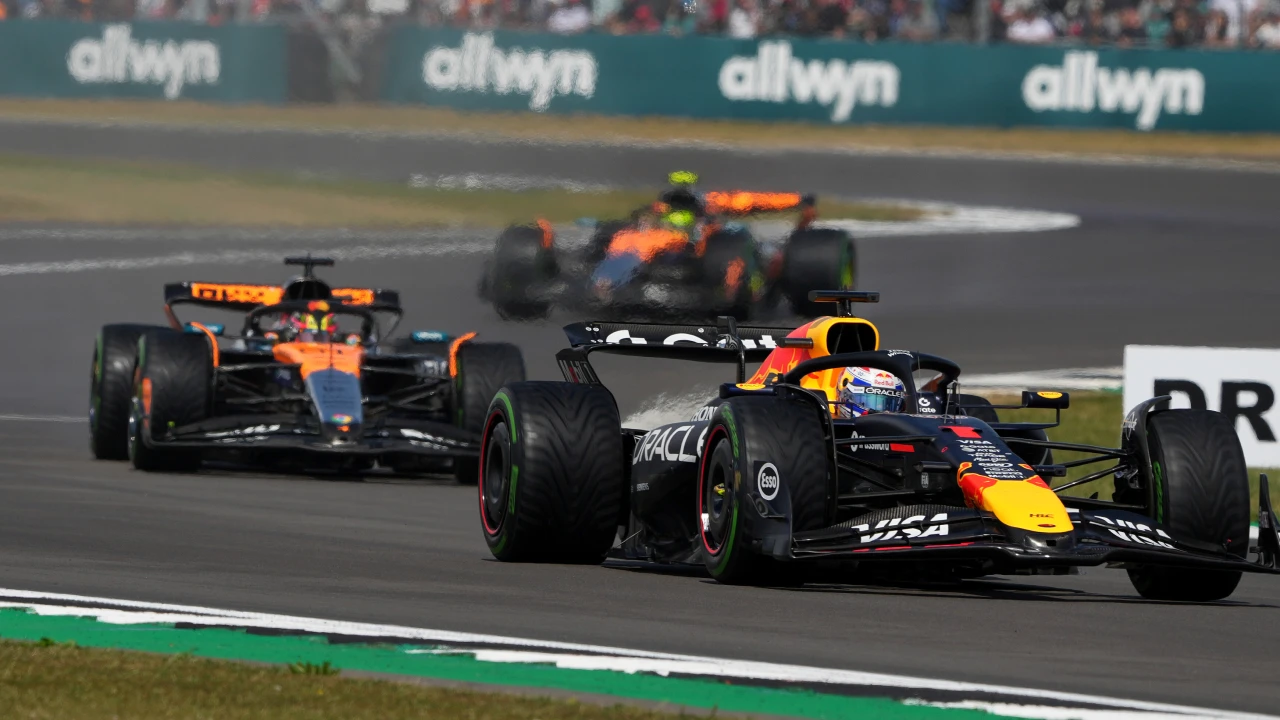
This is a driving factor in the recently announced increase to the Sprint race count for 2027. F1 CEO Stefano Domenicali commented on this, saying, “The reason why we start to discuss to increase the number of Sprints … [is] the feedback we receive from the fans, from the people attending the track, the promoter, that people want to see action, real action during the three days.”
In 2021, the first time that Sprints were introduced to F1, just three Sprint weekends were scheduled. Two years later it doubled to six, and next year it will nearly double again to 10, the most ever to date.
Will we ever see a time when F1 includes Sprints for every race weekend on the calendar? Maybe down the line, but in the near future it seems unlikely. Instead, it seems like F1 is aiming for “up to 12” for now, according to Domenicali.
When are the Sprint races in 2027?
Of note, the season opener in Bahrain and finale in Abu Dhabi are getting Sprint races for the very first time ever in 2027. Australia, Japan and Monaco (yes, you read that right, Monaco) are also getting their first Sprints.
In addition, the Canadian, British, Italian, Brazilian, and Qatar Grands Prix are all returning to the Sprint calendar. The full Sprint schedule can be found below:
What exactly is a Sprint race, and how is it different from a Grand Prix race?
Sprints are, like the name suggests, shorter, quicker races than the standard F1 Grand Prix race. Where most Grand Prix races are currently about 190 miles (305 kilometers) in length, Sprints are just one third of that, at 62 miles (100 kilometers).
Of note, from 2027 Grand Prix races will be shortened to roughly 180 miles (290 kilometers), or about two or three fewer laps per race, as cars will increase their reliance on fuel but fuel tank size will not be changing. Sprint race lengths will not be affected.
In addition to being shorter, Sprints don’t require drivers to use two different tire types, which means that pit stops are much less likely to happen. Most drivers will take one stint from lights out to the checkered flag. Championship points are also up for grabs, though fewer are awarded than in a feature length race.
How do Sprint race points work?
Once they reach the Sprint finish line, drivers are awarded points based on their standings in the race. The top eight finishers all add to their Championship score, starting with eight points for first place and subsequently decreasing by one for each of the next seven drivers. While this is both fewer positions and fewer points available compared to a standard Grand Prix race, every point matters in the grand scheme of the Championship.
How does a Sprint weekend work?
Like a regular race weekend, Sprint weekends also have five sessions that F1 fans can look forward to. But they are slightly different than usual.
While your standard race weekend schedule begins with three Free Practice sessions–FP1 and FP2 on Friday, and FP3 on Saturday–during a Sprint weekend, teams are only given one such session, on Friday. The second half of the day is reserved for Sprint Qualifying, which sets the grid for Saturday’s Sprint race.
Sprint Qualifying follows a very similar format to a Grand Prix Qualifying, with it being split into three sessions; during SQ1 and SQ2 the six slowest drivers are eliminated, while SQ3 is a top 10 shootout. The biggest difference is that the sessions are shorter, lasting 12, 10 and eight minutes, respectively, while Q1, Q2 and Q3 of a standard Qualifying are 18, 15, and 13 minutes, respectively.
Saturday kicks off with the Sprint itself in the morning, and then your typical race Qualifying in the afternoon.
Sunday is, as always, reserved exclusively for the main event: the weekend’s feature race.




.webp)
.png)
.png)