


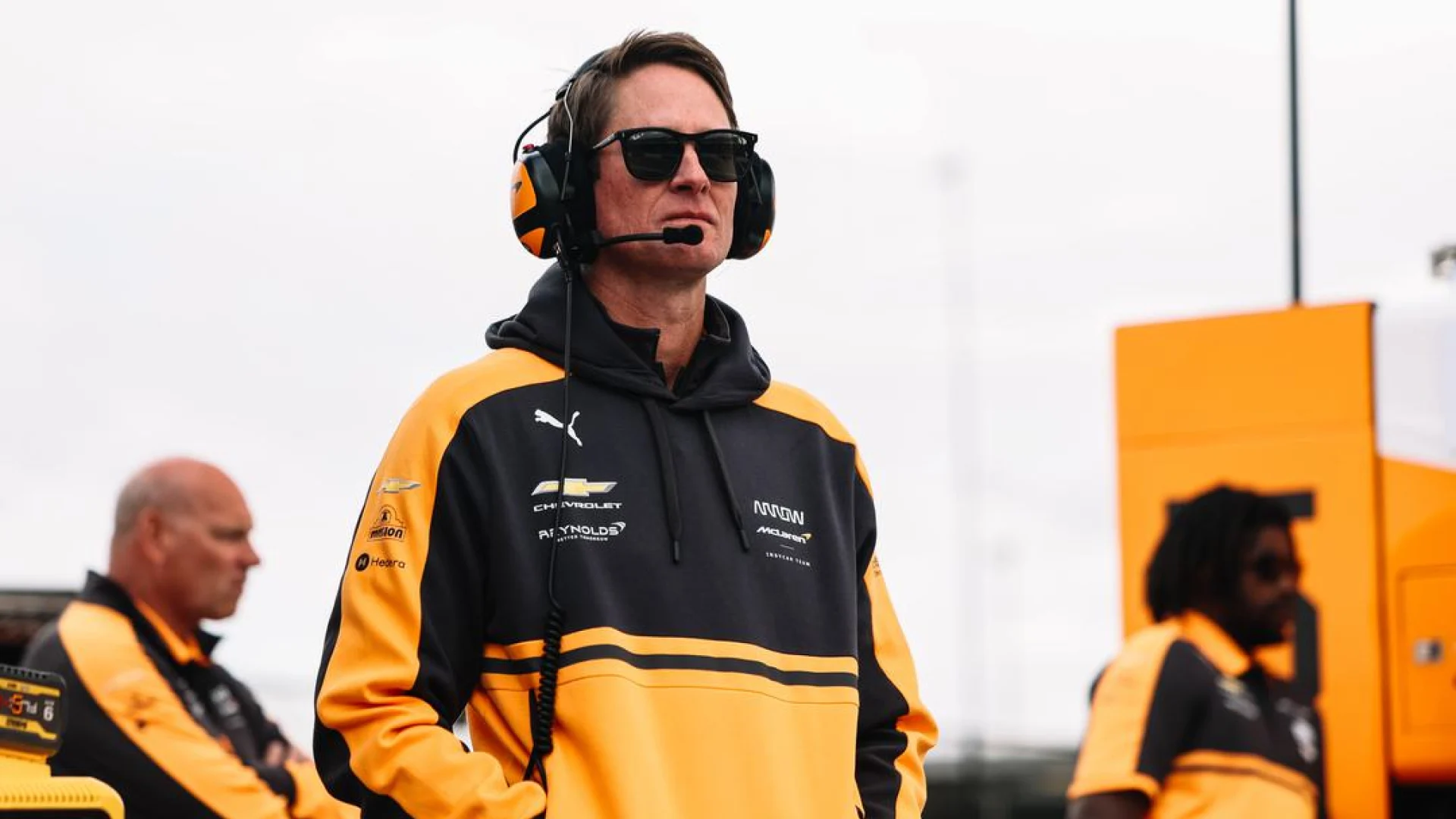


Ryan Hunter-Reay has an Indy 500 win and IndyCar championship, but what if those were just the warm-up for his mission at McLaren?
Most people know Ryan Hunter-Reay as 'Captain America', an Indianapolis 500 winner and the ONLY IndyCar driver to win the championship in the modern era that didn’t drive for Team Penske or Chip Ganassi.
But what most people don’t know is that for Ryan, achieving his dream felt nearly impossible. Early days, he found himself broke and out of a job. Even when he found an IndyCar seat, holding on was a challenge, with sponsor issues and team changes haunting him until he found his footing at Andretti. That’s when things started to click. Fast forward to 2026 and Arrow McLaren picked him up for their fourth car in the 500.
And that’s where I come in. I met Ryan at the 500 to learn what it takes to win the crown jewel race, and how it feels attempting it again in papaya. But when I reflected on our conversation, I realized that something he said in our conversation, as well as his promotion to Arrow McLaren’s sporting director, warranted a deeper look at his role with the team.
Is Ryan McLaren’s missing link? Is he what Zak Brown and Tony Kanaan have been missing to not only win the Indy 500 in the modern era, but to also secure an IndyCar championship and put McLaren just one step short of ruling three major series: Formula 1, IndyCar, and the World Endurance Championship (WEC)? Let’s find out.


0:00 Why Ryan Hunter-Reay’s story is bigger than McLaren’s fourth car
Greg: What do Fernando Alonso and this man have in common?
Ryan Hunter-Reay: My rear-end never touched the seat. I was standing on the throttle so hard, I felt like it was just my shoulder blades and my foot that were making contact with anything.
Greg: Both drove McLaren's fourth car at the Indianapolis 500. An opportunity given to an elite few. But after [Fernando] Alonso's failed attempts, the 500 became more than a one-off race for McLaren.
Zak Brown: Not qualifying for the Indianapolis 500 with Fernando [Alonso] was the worst experience of my life.
Greg: It became a critical pillar in Zak Brown's plan to dominate motorsports in the modern era.
Zak: You don't make an investment like this if you're not gonna intend to be in IndyCar for a long time.
Greg: Enter former Indy 500 winner and IndyCar champion, Ryan Hunter Ray. I spoke with him at this year’s 500, to learn what it takes to win and how it feels attempting it again in papaya. But watching the footage back, I caught him saying this:
Ryan: I came in here wanting to contribute to the overall program, not just occupy a seat for the Indy 500.
David Land [reporting from the Bommarito 500]: A little bit of breaking news this morning. Arrow McLaren officially announces that Ryan Hunter-Reay is joining the team in an official capacity as sporting director.
Greg: I went in asking about a seat and a win. But the announcement made me realize the real question is so much bigger. Is Ryan McLaren’s missing link? I don’t just mean to win an Indy 500 in the modern era. I mean to also secure an IndyCar championship and to put McLaren just one step short of ruling three major series.
Tony Kanaan: He's the only one that was able to do it.
Greg: But before we can answer that, we first have to understand who Ryan is and why his mindset is so special.
1:38 Ryan’s early career: Out of a job, teaming up Tony Kanaan at Andretti, and winning the Indy 500
Ryan: Nothing ever came easy for me, ever. I went from two, three years into my IndyCar career being completely broke and out of a job to where we are today.
Greg: Ryan Hunter-Reay was the first racing driver in his family. And while he won karting championships to jumpstart his career, his climb up the professional ladder was complicated by frequent team changes and sponsor issues. But rather than listen to me try and explain why this matters, I figured I'd ask an expert who actually lived it. Tony, tell me about Ryan.
Tony: Ryan was struggling when he got to Andretti. He was out of a job, in and out, and I remember Michael [Andretti] came to me and said, Hey, I'm thinking about getting this kid to come to be your teammate, but he doesn't have a full budget yet. It was back in the day, in the IZOD days. And he says, He might not finish the season. I said, Well, okay. But for me, it was like, okay, who is it? This is an American kid, you know, Captain America. And he came in and three races in he added so much to my program that I got better. You know, he put pressure on me, but also he made me better. We worked together on the setup. Then three races to go, I remember Michael was like, Man, I don't think Ryan's going to finish the season because we need a couple hundred thousand dollars to find in sponsorship money. And I said,
Michael, just take a hundred grand out of my salary and help him out.
That's not a story that I tell to brag, but it's how important Ryan was to me. So until this day I have the right to tell [Ryan] that I actually sponsored [him].
Greg: Whether it was TK [Tony Kanaan]'s ‘sponsorship’ or something in the water, Andretti was exactly what Ryan needed to achieve two huge motorsports milestones, the same two I mentioned McLaren has its sights on now. His Indy 500 win still remains one of the closest in history.
Ryan: It felt like a championship in one moment. It was a culmination of my whole career. I remember a flashback as I had my hand in the air going through turn one. A flashback of being at the kart track when I was twelve with my dad and here we are going through turn one after taking the checkered flag, having won the Indy 500. It's just, yeah, it's an emotion you can't really describe.
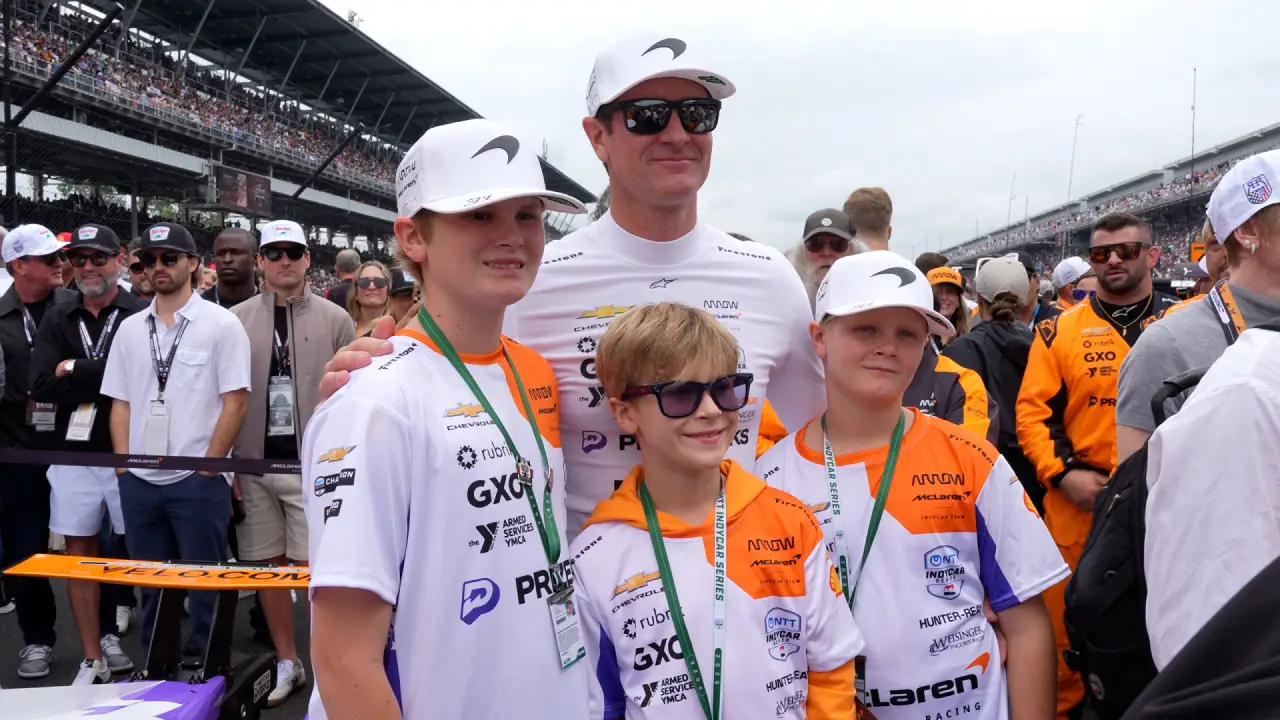
Greg: And Ryan became an IndyCar champion. Not only that, he's still the only champion in the modern era who wasn't part of Team Penske or Ganassi.
3:51 Why Ryan being the ONLY driver to beat Team Penske and Chip Ganassi matters
Greg: How hard is it to win a championship against Penske and Ganassi? Why is that achievement—that championship—so material?
Tony: We are fairly young. It’s been six years since we bought the team. And you talk about Ganassi and Penske and they’ve been around for almost 30 years but then have been successful for 25 or more. They have this core of continuity, the people there, and how they structure themselves. I think it's extremely tough to beat those guys because they have—we’re racing six people, not two. It's two teams with six cars. Very capable people, all strong. Then, you know, you're in the top eight, regardless of what—so to win it like that. You gave Ryan props just by asking the question. He's the only one that was able to do it. I hired the only guy that beat those teams and I want him on my side.
4:47 The honor of driving McLaren’s fourth car and what Tony thinks of Ryan’s work ethic
Ryan: It's amazing. I mean, it's an amazing opportunity to be associated with a team like this, first of all. But you know, it's such an incredibly powerful brand and to be in the fourth car, the same seat as you said, [Fernando] Alonso, [Kyle] Larson, Tony Kanaan, Juan [Pablo] Montoya. In good company in that regard. And really I came in here wanting to contribute, you know, to the overall program, not just occupy a seat for the Indy 500.
Greg: But besides his wins and how well he gels with the full-time drivers… We need to understand what’s different about Ryan’s mindset that proves whether he’s capable of unlocking McLaren’s true potential.
Tony: Ryan is the most pain in the—you know—behind that you can… But dedication, obsession, the same as me. We take notes. We're old school. People nowadays have digital stuff, we just have notes.
Greg: I have my questions on a piece of paper for you. [Jokingly]
Tony: I knew his work ethic will help this young generation. I'm not saying they do it right, we do it wrong, or vice versa, but I think with the team, as young as our drivers are, they would benefit from a veteran. And I experienced that when Dario Franchitti was my driver's coach, talking driver to driver, the respect is there.
6:12 Experiencing the highs and lows of the Indy 500 and how Ryan maintains a positive mindset
Greg: So Ryan has the work ethic and can speak driver. But what about how he handles pressure when the stakes are cranked to an 11?
Ryan: You put everything on the line, you realize then how bad you want it.
You know, the last laps with Hélio [Castroneves], we were putting the car in places that we had never done. We'd never practiced it. It was some super sketchy moves at times, but at the same time we had a lot of respect for one another, never touched wheels. My rear end never touched the seat during the last seven laps because I was standing on the throttle so hard, I felt like it was just my shoulder blades and my foot that were making contact with anything.
Greg: And critically, how he stays motivated when things come up short, year after year, no matter how hard he tries.
Ryan: And I realized last year after coming so close to having a shot at that fight at the end for the win. When that got ripped out of my hands from running out of fuel, I wasn't right for like a week after that. I didn't sleep well. And it's because it matters to me a lot. So that was another reminder that, you know, this thing is so special, this race, this place, it's like nothing else.
Greg: And knowing that you're going after it so many times, what keeps you in that right headspace for that? Because you're spending an entire month for this race. Yeah. That's what makes this emotion so crazy, even as a fan.
Ryan: Yeah, and you know, that experience again really helps there because I remember when I was younger, man, day to day, one day the car would be good, next day the wind would change, temperature would change, I didn't like the car. You just start overthinking too much, right? And so much is up [in your head]. It's wild how much you can actually control with your mind. And that experience has led me down that road and I'm definitely gonna lean on it.
I think that the thing that has made me the driver I am today is all those tough times, right? Switching from team to team. Not having a job for two years during that. It's given me, over the years, this extra reservoir that I can kind of tap. It's a certain level of fight in me that a lot of other drivers don't have.
8:24 Why Ryan is the obvious candidate to be Arrow McLaren’s sporting director
Greg: And that brings us back to McLaren’s mission and Ryan’s sporting director role. With how much Zak and Tony have on the line, they needed someone with the accolades and attitude to get the job done.
What's the elevator pitch for Ryan in this new role? What does he have that made him the obvious call for this opportunity?
Tony: An Indy 500 Win and a good reputation as one of the best IndyCar drivers of all time.
Greg: Why does winning in IndyCar, both the 500 and the championship, matter to the broader McLaren racing picture? How does it influence the WEC and the F1 programs?
Tony: Let's go back to our owner and founder, Bruce [McLaren], right? He raced in Formula 1, and in that era, the race that he would come here to do, and build cars for, was the Indy 500. So I go back to Bruce's passion, McLaren's core. We started here. We had a history here. We won here with Johnny [Rutherford] in 1974.
So it's actually the beginning of this entire company. The name of the McLaren brand started with that too. So why is it so important? Because that's what Bruce wanted. And being a huge McLaren fan, even before I started working here, I truly believe in tradition, keeping some of the things that, you know, when this team was built a few decades ago, and what Bruce's mentality was.
On the branding side of it, for most of McLaren's existence, we participated in the Indy 500. We won the Indy 500. So Formula 1 became much bigger lately, especially in America, but Formula 1 doesn't race at the Indy 500. And the Indy 500, it is the biggest race here. We have the Paddock Club, but IndyCar you still get to get to the grid. You could sit right there with me five minutes before the start. It's just different products, but I think if you can give the partners an awesome experience and it still involves racing and the McLaren brand, that probably justifies everything.
10:31 Ryan’s history with Tony Kanaan at Andretti and how well they worked together
Greg: Ryan's role as the fourth driver meant he worked closely with McLaren since the first race of the season, learning the ins and outs of the team. And thanks to existing relationships, he was able to jump right in.
Ryan: Well most importantly, TK [Tony Kanaan] and I were teammates at Andretti. When I got to Andretti, the team was not in the greatest form as far as results go. We basically, with the engineers there, we reworked the road course setups and the street course setups. Because we both thought very much alike and we had very similar driving styles. So we wanted the same exact thing from the car all the time. We had the same feedback. So that created a pretty unique opportunity where you could have two drivers like that, go down a road of basically reinventing the wheel as far as it went for road and street course setups of the team.
11:22 The next chapter for McLaren and Ryan Hunter-Reay
Greg: When the announcement broke, I saw a lot of positivity. There were a couple of skeptics in some of the comments sections. One of them joked about Zak loving to have legendary drivers around. What does the sporting director role really mean in practice and what do you have to say to comments like that?
Tony: I mean, Greg, honestly, I mean, we're living in a world where people have reactions and opinions three seconds into the thing. He's not a coach. He's not going tell these kids how to drive. Ryan's job was no different than mine: to ask tough questions, make sure you're not deviating from whatever in the heat of the moment, you and your engineer don’t have this tunnel vision focus that might lead you in the wrong direction. That's his job. Zak likes to be surrounded by people that are extremely successful. I want to be part of it because I think people that are successful are the ones that fail a lot in their lives before they actually succeed. Very rarely do you see somebody that just got lucky.
Greg: Two things are certain: Ryan definitely didn’t get to where he is riding on luck, and Zak and Tony have surrounded themselves with another winner. But surrounding yourself with winners and actually beating Penske and Ganassi are two different things. And McLaren’s tried for years. That means we’re back to the real question.
Is Ryan the missing piece that finally delivers Bruce McLaren the 500 and a championship? Or is he just another big name thrown at a problem that money hasn’t solved?
I know what TK thinks, but I want to know what you think. So let me know in the comments, and I’ll see you in the next one.
Want more exclusive Insiders?
Then you're in the right place! Head to our YouTube playlist for more, and be sure to subscribe to be the first to see new episodes. Or you can check out some of our recent episodes below:
- Inside McLaren’s NEW $30M Racing Center
- Jacob Abel: Why This Underdog Redeemed Himself at the Indy 500
Cover photo via Penske Entertainment (Joe Skibinski).

.webp)

.png)
.png)