



We've all been given souvenirs, but how does a Coca-Cola 600 t-shirt kickstart a career in motorsports?
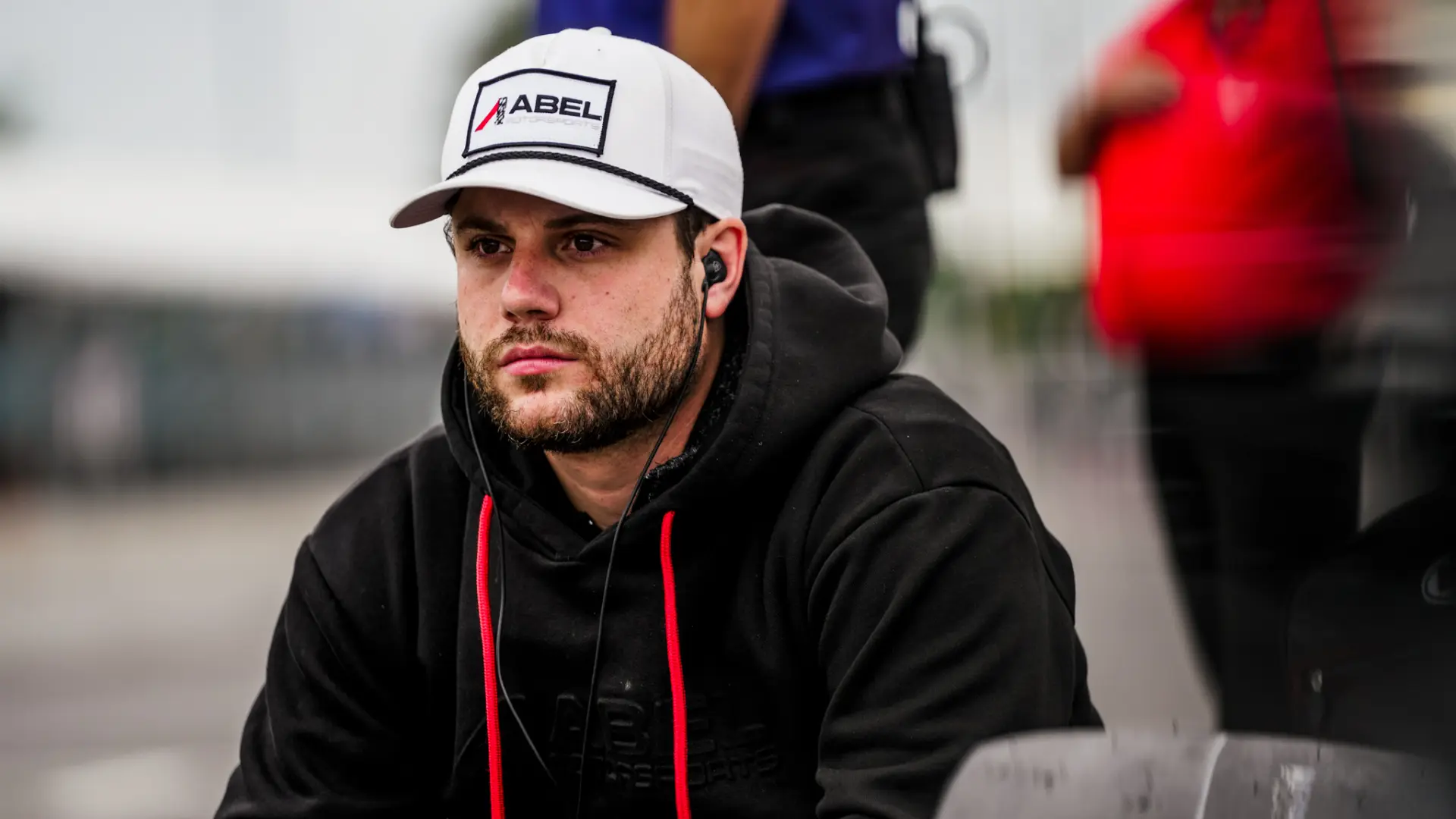
For Jacob Donahue, a gift from his dad when he was just 8 years old sparked an obsession with the racing world. He knew he wanted a career in the paddock, and with a college degree and hustle he got one. But getting started is only half the race. For Jacob, the real keys to making a career in the industry last are: be likeable and stay never stop asking questions.
Keep reading for Jacob's journey from wide-eyed kid to marketing and PR professional with one of the teams shaping the rising stars of the IndyCar world, ABEL Motorsports.
Position: Marketing and Public Relations Coordinator at ABEL Motorsports
His Role in One Sentence: Scheduling media appearances, keeping up with social media, and a little bit of graphic design. Basically trying to maintain and grow what the ABEL brand is.
Years in the Industry: 10


Jacob's start in motorsports
#1. What was the first moment that you discovered racing?
Honestly, it's funny. The thing that really got me into racing was my dad and his friends used to always go to NASCAR races. So they'd always rent a motorhome and go do that. And I was always excited for when they get back because I'd always have a t-shirt or a hat or something from the event. So, you know, I still have my Coca-Cola 600 shirt with the planes that are flying over. So that piqued my interest in racing, and then from there just watching races with my dad or whenever I could get out to the track with them—just trying to tag along.
#2. When did you decide that the racing industry is where you wanted to build your career?
Working in it? I decided very early on. I was like, if I can find a way to make a career out of this, that's what I want to do. That evolved very differently. It started out, you know, obviously everyone wants to be a driver. I have claustrophobia, I don't like tight spaces or any of that. So that was ruled out pretty quickly. Then I wanted to be an engineer. I always thought that was cool and another way that you could really play a part. I'm not a math or science person, so again, that option was out.
But I love to write, and my favorite thing about the role that I'm in now is how can we bring the fans and people that might not really know the behind the scenes stuff, how can we bring them in and make them feel like, I didn't know that, or I had no idea that race teams did that, or that's how that operates. So luckily, I was able to find marketing public relations and tailor my love for writing and creativity in with that, while still getting to stay in the motorsports world.
Greg: Were you in school, or was it even before you went to college that you had decided that this is what you wanted to do and that was what you went to college for?
Yeah, I was probably eight years old when I realized I'm going to find a way to make this a career. And then honestly through elementary school, middle school, high school and into college, my parents forced me to get a normal degree and not go in a motorsport-specific route. But basically the whole time I was doing that, I had that intention or that goal of this is why I'm doing it. So if I can put a motorsport spin onto it, great. But yeah, I always had that in the back of my mind as the reason why I'm doing all of this.
#3. What was the first step you took to launch your career in racing?
I first got an opportunity in 2016, doing PR and social media for Bryan Clauson at the Indy 500, which was a huge eye-opening experience. I mean, kind of seeing just that event alone from the inside of how much it goes into it, how many people are involved in all the stuff that makes it what it is. It was really eye-opening and one of those things where it's like, wow, there's not a lot of people that get to do this. This is something that's tremendously special. I've got to find a way to be a part of this every year.
But yeah, 2016 for the 100th running was kind of an awesome way to really get everything kind of kick-started.
Greg: When you showed up there and you were doing that for the first time from a work perspective, what did you say to yourself? Because it is so different being a fan versus working.
I knew it was a big event, obviously, because everyone goes out there, and race weekend in Indianapolis is just [second to none], party-wise. But I didn't realize how long of a month it was.
And then, as I got more into it and I started asking, 'When did you guys start planning that?' or 'When did you start working on this design?'—and it's like, 'We've been doing this since June of last year.' And it's like, holy cow.
It's not just a, you know, 'show up, let's do a week or two and make it happen' sort of thing. It's a six-, seven-, eight-month process to get there. So really understanding how long and how much preparation goes into it was wildly eye-opening.
Jacob's current role
#4. How would you describe your current role?
When we get new drivers, I always tell their parents the way to sum up what I do is:
If it's not turning a wrench on the race car I'm usually a pretty good resource to come to for it.
My day-to-day is mainly scheduling media appearances, keeping up with social media, and a little bit of graphic design. But basically just trying to maintain and grow what the ABEL brand is. We've had so many talented drivers come through here. We have awesome engineers and mechanics. And so I really feel lucky that I'm the person that gets to gloat about what we have going on here because it's incredible what we're able to do with such a smaller-sized group compared to some of the other teams.
Greg: It's interesting you said ‘parents’ as the way to frame it. Can you give context as to where ABEL Motorsport fits in the ladder? Why is ‘parents’ something you even said in the first place?
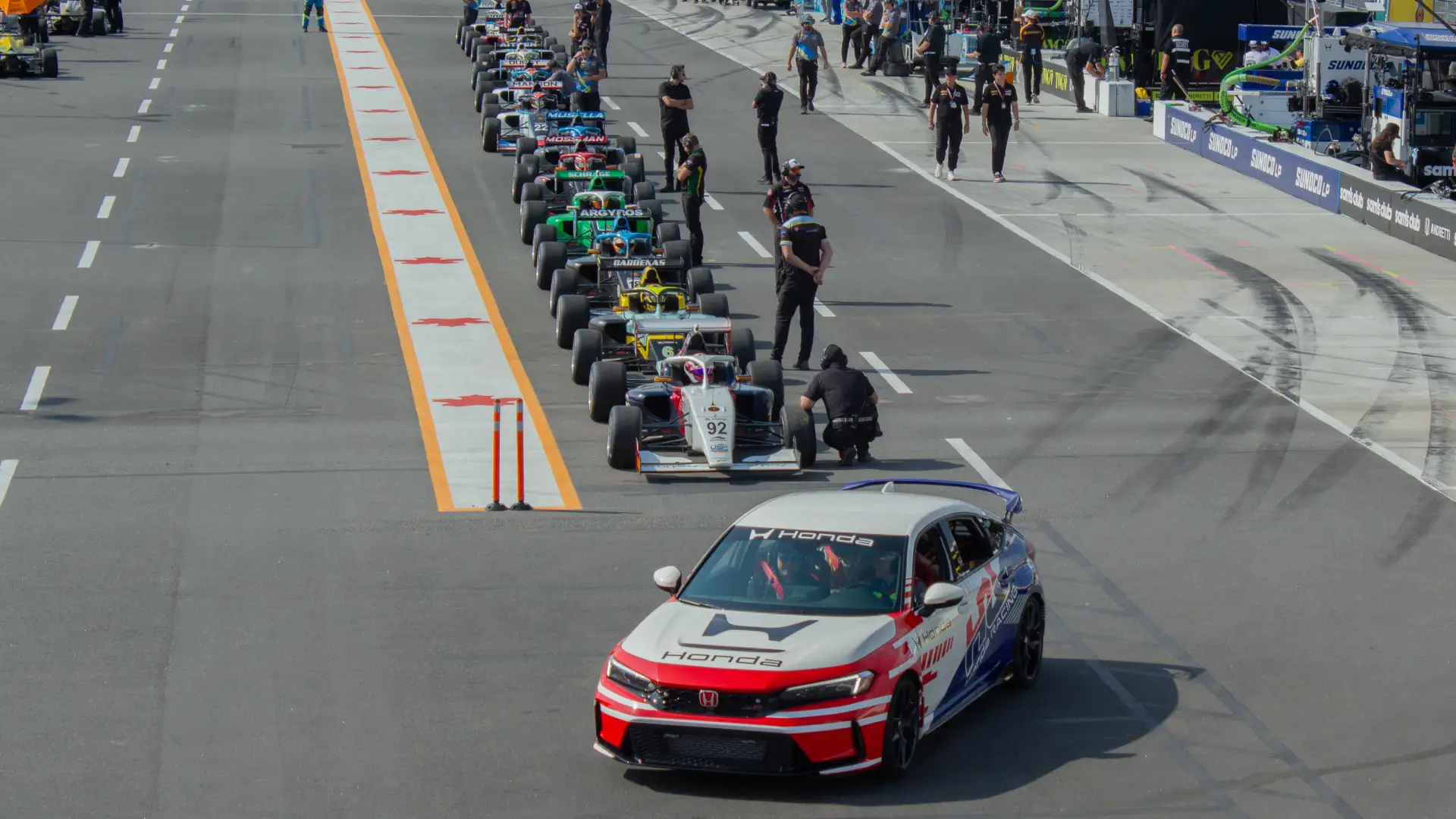
We're the final stop before you reach the NTT IndyCar Series. The way that we always describe it to more stick and ball fans is we're the college or the AAA of sports. So we're that last proving ground before you reach the big leagues. So at this stage, you've got a lot of parents that have spent a lot of money on their kids trying to get them to this point.
Now that they're in a pretty professional environment, the drivers are having to work with the engineers, with the team manager, crew chiefs, all sorts of stuff. The parents are left a little bit more out of the shuffle, whereas before they were used to being a lot more hands on. So a lot of what I feel responsible for with the parents is that we want them to know that their kid is, first of all, going to always be taken care of. We're not going to just leave him out in the cold. They need a ride somewhere? We're there for them.

That's a huge piece because a lot of these kids do not live in Indiana or sometimes don't even live in this country. It's a big risk for these parents to send their 20, 21 year old child overseas or to a different state to live on their own. So that's a big part of it. But the other two are that they’re new to IndyCar. They're new to this paddock. They don't know this environment as well. So one of the things that we really try to do at ABEL is not only make the right introductions for them and their families but also guide them through and avoid some of the pitfalls of this industry—just try to give them every opportunity to reach that next level.
Greg: A lot of what you're describing is that your role goes well beyond internal and external communications. Do you find that at this level, someone who comes into this role is actually going to get pretty broad work experience?
We always say that you don't have a set job description. We have a bunch of talented individuals in every area of what we do here. I have engineers that can go wrench on the car, and I have mechanics that can go do engineering and different things like that. So on the Indy NXT side, yeah, we're not as big as the IndyCar teams. We're not traveling nearly as many people, so we're not as specialized. You know a lot of the bigger IndyCar teams will have a marketing department that's filled with 20 plus people. People that do strictly social media, graphic design, photo, video, and we're lucky that we have that when we travel. So we do have CoForce that does all our photos and videos and they do an awesome job. But very early on, I realized the more that you can be exposed to, the more that you can have your hands in, the more you're going to learn and the more of a valuable asset you'll be to different teams.
At this point in my career, I pretty much have done everything from hospitality to marketing to PR, so I feel like I have a pretty good wide range of skills. And that's honestly something that I liked about this world. I don't want to get pigeonholed down to one specific little thing. I like to experience as much as I can, so the more that I can be involved with on the team side—I've gotten to experience so many things that I wouldn't have had if I had just done PR and marketing.
#5. What are the most rewarding and the most challenging parts of your role?
Rewarding
My absolute favorite thing is when we graduate drivers to IndyCar. There's nothing more rewarding than seeing them succeed at that level and behind the scenes saying it was cool that I got to play a part in that.
Challenging
It's a constant challenge, but honestly, it really all depends on the people you have around you.
I'd say that, and this is kind of a cop-out, but the travel can be the biggest challenge. These back-to-back race weekends, you can get home at two in the morning, Sunday night, and unfortunately you have to be in the office Monday because you have to start it all over again to go somewhere that next week. I'd say the biggest challenge is just those back-to-back weekends and trying to find a semblance of normal life. I have to do grocery shopping, I have to do laundry, but hey, at the same time, I gotta prepare to be out of town again and take care of all this stuff for all these people.
#6. What are the three qualities that have helped you succeed at this role?
Likability
Be likable, that's a big thing. I mean, we travel together, we stay in hotels together, we eat together, and if you're unlikable, that could be a miserable time for you, and people won't vouch for you to get jobs elsewhere. I try to understand that not everyone's coming from the same situation I am. People are real people. They have families. They've got issues at home. You know, a lot of these guys have kids. I don't have kids. But you know, I can't imagine having to travel and balance being a dad and helping your wife and doing all that stuff. So it's just really trying to be patient with people and understanding of where they're coming from.
You know, this is a hard way of life, so there's no need to make it harder for anyone else. So the more that you can just build those relationships with people, makes it easier.
Curiousity
Never stop asking questions. I mean, even to this point, I still ask a million questions every day. You learn so much. The amount that I've learned just in these past three weeks is insane because we've had newer people added who bring new techniques, new styles to things. You may not have seen it done that way, but that's awesome. Always keep asking questions. I'm super inquisitive. I'm not a mechanically-minded person, but I like to have an idea of what we're doing or what's going on. So I'll ask engineers, mechanics, "Why did we do that? What does that do? What's the goal?" Just to learn and get more of a broad picture of what's going on.
Don't Burn Bridges
The final one is just don't ever burn a bridge, no matter what. There's people that I never thought I would interact with again that I've had to reach out to and say, hey, you're the only person that I could think of that would know the answer to this, I need your help. I'm so fortunate to have so many people in this industry that I've gotten to learn from and be mentored by. We might not work together anymore, they might not even be in the IndyCar world, but keeping those bridges and that communication alive has helped me tremendously.
Jacob's advice
#7. If you could go back and give advice to your younger self, what would that be?
To enjoy it more. In the beginning I was so fixated on—in IndyCar back then - 2016, 2015 - it was like 15 PR reps amongst the teams and that was it. So it was one of those like, hey, you've made it here, but now you want to stay here. It was that constant 'work, work, work, work, work.' Don't look back at what you did.
Whereas now, I will step back sometimes and look at Facebook memories or things and it's like, wow, in 10, 11 years I have done a lot of different things and a lot of really cool things that maybe I just didn't take time to appreciate when I was younger.
#8. What advice would you give to someone looking to be in your position?
I would say never be afraid to put yourself out there. I have a ton of kids in college that'll reach out via LinkedIn and things like that. And the same thing is true that I've always said: reach out to people. When I was younger, I somehow stumbled upon the PR rep list for IndyCar and sent out emails pretty much every week to all the PR reps or people on these teams just introducing myself, trying to make connections.
The other big thing, if you can, make it out to the track, introduce yourself to people at the track. The more that teams and personnel within the world get to see your face and see you out at the track, we really start to make that connection of, that's Jessica from so-and-so, I met her at Road America, things like that. The more that you're showing up, the more that you're showing your face around the paddock, the more recognizable you're going to be and the more inclined we might be to take a chance on somebody newer.
Jacob's career highlights
#9. What's been the most memorable moment of your career so far?
I would probably say two things. One, my time at Belardi Auto Racing was awesome. We had one of the best groups and thankfully we were able to keep a lot of that intact coming over to ABEL, which has been awesome. But the one that really sticks out is probably the 2017 Month of May. I was with Dale Coyne Racing and we had Sébastien Bourdais, Ed Jones, Pippa Mann. And we had the fastest times all month. We had the car that should have been on pole.

Unfortunately, Seb wrecked, but he was okay, which really was all that mattered in the end. But we were fighting for the win up until the last restart. And so, with like 10, 15 laps to go, I'm standing in pit lane like, holy cow, I might win my 500 on the second ever try. Unfortunately, Ed Jones got a hole in his nose cone, so he really lost some speed, but I think we finished third.
But yeah, that was the closest I've ever come to winning that race. And that's always so far the one that sticks out until hopefully, we're back there competing for a win.
Greg: How do you describe what it's like to almost win at the 500?
You don't really think about what it could be. I mean, I did because we were under caution, but you're kind of just holding your breath because that's the culmination of months, years, hours of preparation from everyone on the team. And it's kind of out of our hands at that point and we're trusting that driver to go do it.
Not a lot of people remember who finished second or third there, but everyone remembers who won there. And crew guys are incredibly proud of their wins there. They all walk around with their rings on. They'll always talk about it. So yeah, it's intense. That was one that got away. But yeah, hopefully in my career, I'll be able to get a 500 win.
#10. Is there one wishlist race that you'd want to go to with your dad?
Luckily we've checked off quite a few, but honestly if there's one that we haven't, it would have to be Monaco. We took a trip there just to see what it was like, but that or probably the Spa 24 Hours. I just think that one's ridiculous. But I think those are the two that if we could go see anything, they would be the ones.
Greg: And if you did Spa, would you stay up the whole time or are you going to go to sleep?
For the first one, I would stay up the whole time. So like when we did Daytona 24, we stayed up the whole time. I've gone back and refused to stay up the whole 24 hours because I've been there, got that t-shirt, but obviously it's fun. You have to do it. So I would absolutely stay up the whole time.
Want to learn more about other professionals across motorsport series? Then check out all of our Fast Lane interviews, or jump right into one of these:

.png)
.png)