


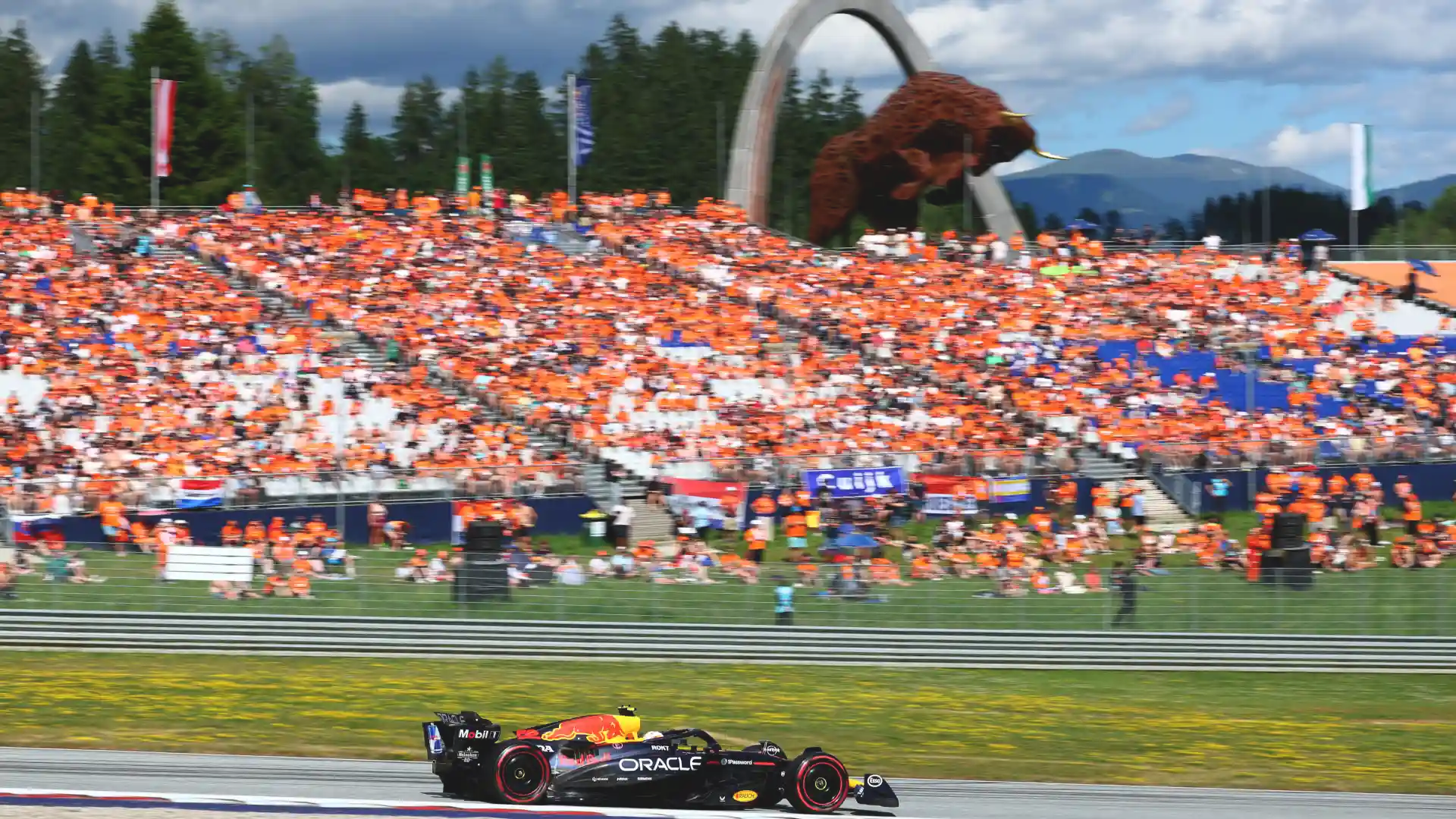


With its lightning fast track perfect for overtaking, the Austrian Grand Prix is a favorite of Formula 1 fans around the world. But beyond the entertainment, this is a race with a long history, and has been the stage for some of the biggest controversies in the sport.
From Ferrari’s famous team orders that cost them €1M to a circuit layout that was deemed ‘too fast’ to safely race on, here are three things about the Austrian Grand Prix that you probably didn’t know!


Ferrari €1M team orders - Reubens Barrichello vs. Michael Schumacher
Team orders have been and always will be a part of F1 racing. From Multi-21 to the more recent Papaya Rules, fans have seen it all play out on the track when it comes to drivers swapping positions. But one of the most controversial and infamous examples happened between Ferrari teammates Michael Schumacher and Reubens Barrichello on the last lap of the 2002 Austrian Grand Prix.
Barrichello was dominant the entire weekend. He had secured pole on Saturday and maintained the lead throughout a majority of the race on Sunday. Then, on the 63rd of 71 laps, then-team principal Jean Todt invoked team orders, asking Barrichello to step aside and let Schumacher through to improve his standing in the Drivers’ Championship and further increase his chances for the title. Over the next few laps a back-and-forth ensued over the team radio, with Barrichello conceding the position through the final corner of the final lap of the race.
But the drama continued afterward. Realizing the uproar that the swap had elicited from the audience, Schumacher urged Barrichello to take the top spot of the podium, while he stepped down to P2. This was what allowed the FIA to ultimately take action, as nothing in the rule book prevented teams from asking their drivers to swap positions. Instead, Ferrari was fined €1 million for failing to follow proper podium protocols when Schumacher and Barrichello switched places. The following year, specific regulations banning team orders were introduced, however those did not last long, and today team orders continue being part of the game.
The original circuit was too fast for F1
The Red Bull Ring that we know today is not the original formation of the track that F1 raced on in Austria 50 plus years ago. Back in 1969, the Österreichring track–as the circuit was known back then–was developed as a replacement for another local track, the Zeltweg Airfield circuit, which had ironically been shut down for being too unsafe.
The original configuration of the Österreichring was largely composed of wide, sweeping corners that could be taken at full speed, making the track extremely fast overall. It quickly became a fan-favorite and a staple of the racing calendar in the 1970s and 80s. But with speeds getting as high as 159.457 mph (256.621 km/h) on a record average lap speed set by Nelson Piquet in 1987, many began to question the safety of the circuit. The FIA eventually determined that the circuit did not meet the safety standards of the sport any more, and by 1988 the Austrian Grand Prix was no more.
The race did eventually return to the calendar in 1996, with the A1-Ring, a shorter version of the Österreichring. The new design was developed by Hermann Tilke, a circuit designer known for his F1 tracks, such as those in Bahrain, China, and Abu Dhabi. In 2011, the track was bought by Red Bull GmbH and renamed as the Red Bull Ring we know today.
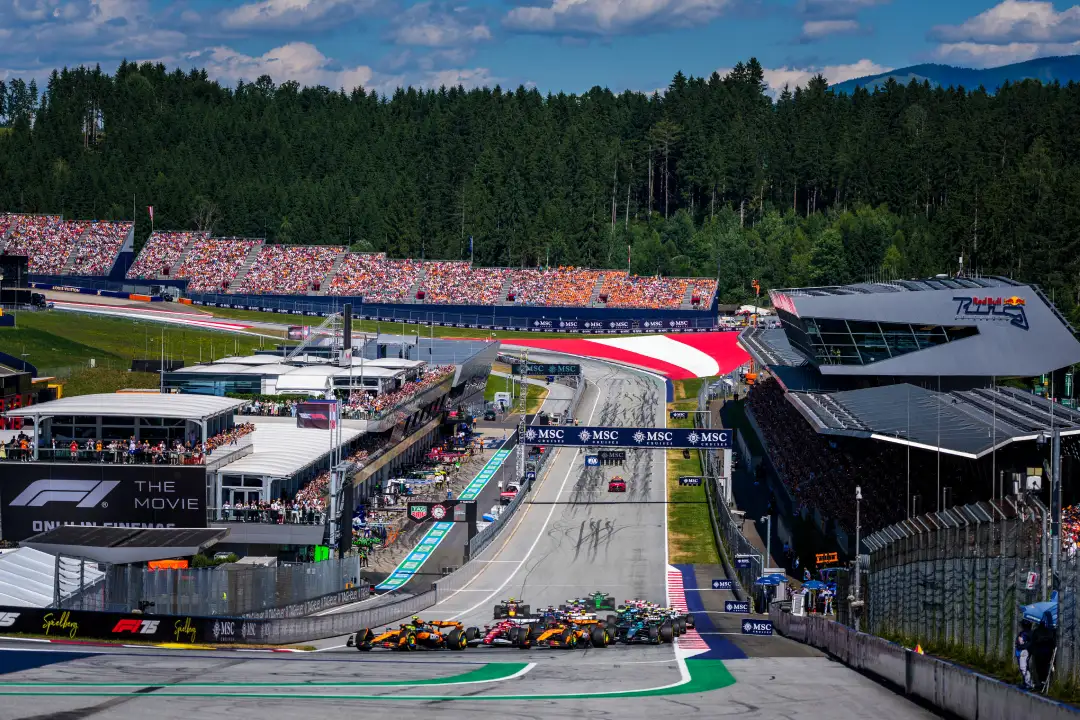
First circuit to host two races in one season
Many countries have hosted multiple races per year. Italy with Monza and Imola, the United States with Miami, Austin and Las Vegas, and, most recently, Spain with Barcelona and Madrid, among others. But one thing stands common among these examples: each race was held on a unique track in a completely different city.
Austria, on the other hand, is a little different, having hosted two F1 races in one year on the same circuit. It isn’t the only country to have this peculiar status, with the UK’s Silverstone and the Bahrain International Circuit also hosting a double feature, but the Red Bull Ring stands unique being the very first track ever to do this.
So how did it happen? Here is a hint: the year was 2020.
With the COVID-19 pandemic sending the world into lockdown, the F1 season was in very real danger of not happening at all. The number of countries that the sport could safely visit was limited, and to help fill out the calendar, several countries took to hosting more races than usual. Some, like Italy, used multiple locations. Others stuck to just one circuit. Austria was among those, hosting the first two rounds of the year–the Austrian and Styrian Grands Prix–back to back as a season-opening double header.
Want more surprising facts about this year’s F1 drivers and race tracks? Sign up for our newsletter for a bonus fact about Austria, and be sure to check out our other Speed Reads:
- 3 Things You Didn’t Know About the Canadian Grand Prix
- 3 Things You Didn’t Know About the Monaco Grand Prix
Images via Red Bull Content Pool


.webp)
.webp)

.png)
.png)