


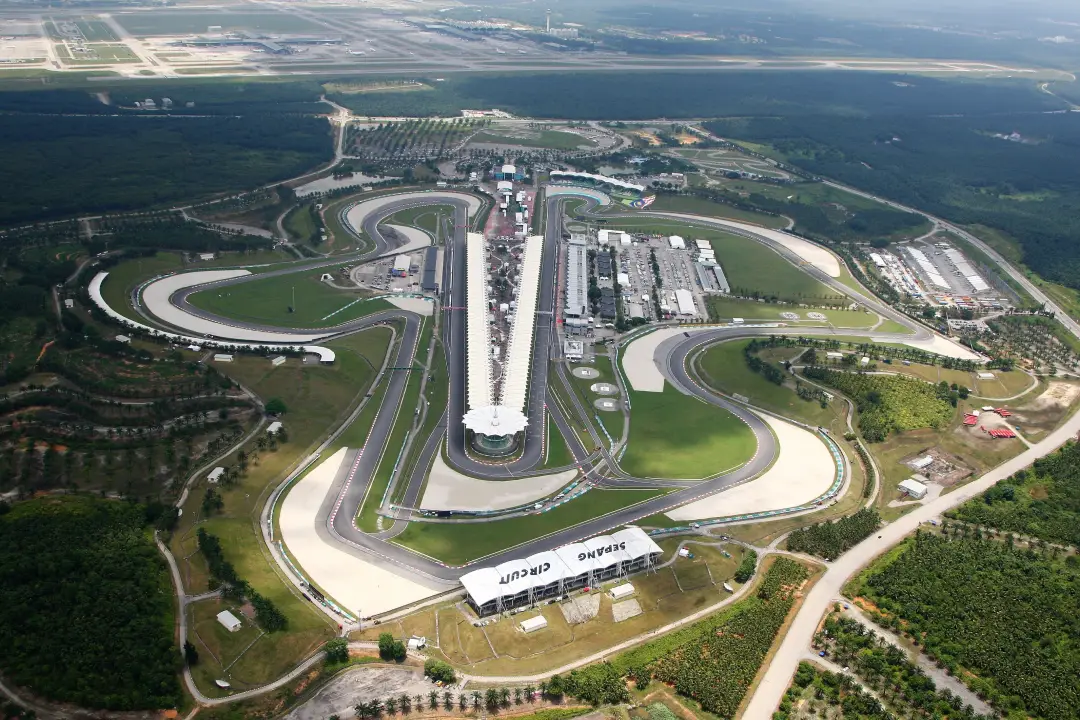
Formula 1 and the Fédération Internationale de l'Automobile (FIA) recently announced the return of the 2026 Bahrain Grand Prix. Originally cancelled along with the Saudi Arabian Grand Prix due to the escalating conflicts in the Middle East, the Grand Prix will indeed be held, notably at the Sepang International Circuit in Malaysia, bringing a beloved circuit back to the calendar.
While it was initially set to take place on April 10-12, 2026, the reinstated race will now be held on October 2-4, 2026.


Why Malaysia was the right choice
“We are delighted to confirm that Malaysia will host the Bahrain Grand Prix in 2026,” said President and CEO of F1, Stefano Domenicali. “Once again, the sport has demonstrated its ability to adapt, find solutions, and deliver, creating an exciting moment for everyone who follows Formula 1.”
And indeed, it is an exciting moment as the Sepang International Circuit is a beloved track, and a favorite among both fans and drivers. It stands out as a highly technical circuit that puts driving and team strategy to the test. With a hairpin turn splitting two full-speed straights, the opportunity for game-changing overtakes is just around the corner, and will surely have us all on the edge of our seats.
Malaysia also has a geographical benefit in that it is extremely close to Singapore, where F1 will be racing the subsequent week. This is particularly favorable as the newly updated calendar places the race in Malaysia in the middle of a triple-header between the Azerbaijan and Singapore Grands Prix, likely making the already intricate logistics the least complicated they could be when it comes to a last-minute change like this.
The year F1 rewrote its entire calendar
The choice to host the Bahrain Grand Prix in Malaysia shows that if there is something that F1 has always sought, it is resilience. The sport is constantly looking for ways to evolve and preserve its calendar despite ever-evolving conditions around the globe, and it has always found solutions in the past even when the possibility of racing itself has come into question.
One clear example is the 2020 season, in which the global COVID pandemic threatened the possibility of racing at all. Yet by following careful measures, F1 was able to hold a successful season that year after all. The season had a considerably late start, with the opening round in Austria held in July, as opposed to March, and initially began with just eight planned events. This eventually expanded into 17 races, with many even allowing limited fan attendance.
What’s more, several locations that were deemed safe enough to race in were used multiple times to help fill out the calendar. This includes the Red Bull Ring, which not only held the season opener but also the Styrian Grand Prix the subsequent week. Of note, the Bahrain International Circuit itself hosted two races that year, the Bahrain and Sakhir Grands Prix, held using the Grand Prix and Outer Circuit layouts of the track, respectively, to provide variety.
When Bahrain could not be saved
Yet the 2020 season also showed that not every race disruption could be so easily overcome. One of the biggest reasons why several locations hosted multiple events that year was because 13 of the originally planned races simply could not be reinstated due to health concerns. This included the 2020 Australian, Vietnamese, Chinese, Dutch, Monaco, Azerbaijan, Canadian, French, Singapore, Japanese, United States, Mexican and Brazilian Grands Prix.
And while the Bahrain Grand Prix persevered during the 2020 season, it too faced cancellation a decade earlier. Initially scheduled for March 13 2011, the race was first postponed to the end of October due to civil unrest across North Africa and the Middle East, with protesters in Bahrain demanding political reform across the country.
Shortly after announcing the postponement, the Grand Prix was reinstated by a unanimous vote from FIA members, with the decision to move it to the end of the season. Yet several F1 teams objected to the rescheduling, citing safety concerns and their stance on human rights as reasons. Ultimately this pressure forced the FIA to act accordingly, and the 2011 Bahrain Grand Prix was cancelled altogether later in the year.
The reaction to the return of Sepang International Circuit has been more positive, with many teams celebrating the announcement on social media by posting footage of previous races held in Malaysia. In this way, F1’s return to Sepang for 2026 is more than just a last-minute addition to the calendar. It is an example of F1’s ability to learn from what has and has not worked in the past, and adapt when circumstances beyond its control impact the racing calendar. As the season goes on, more changes are likely to come and we surely continue to see F1’s agile approach in action.
Cover image via Red Bull Content Pool


.webp)




.png)
.png)