





Adrian Newey is celebrated for designing an incredible number of Championship-winning Formula 1 cars. Over the past 38 years, Newey has shifted the paradigm of what’s possible so many times, creating new car designs so impactful that the entire F1 grid adopts them, sometimes even regardless of whether his original design won the title.
Here are just three such innovations you can point to on almost any F1 car today and say were the result of Newey’s ingenuity and creativity.


The seat configuration that helped Damon Hill win
If you’ve ever been inside of an F1 simulator, you’ll know that sitting in an F1 car is a very different feeling from sitting in a regular road car, primarily because of the position of the seat and pedals. While an everyday road vehicle driver’s seat is much like an office chair, with the driver sitting upright and their feet planted on the ground, in an F1 car, the driver is reclined much further, almost as if they were lying down. The pedals are also raised up, putting the driver’s feet almost level with their head.
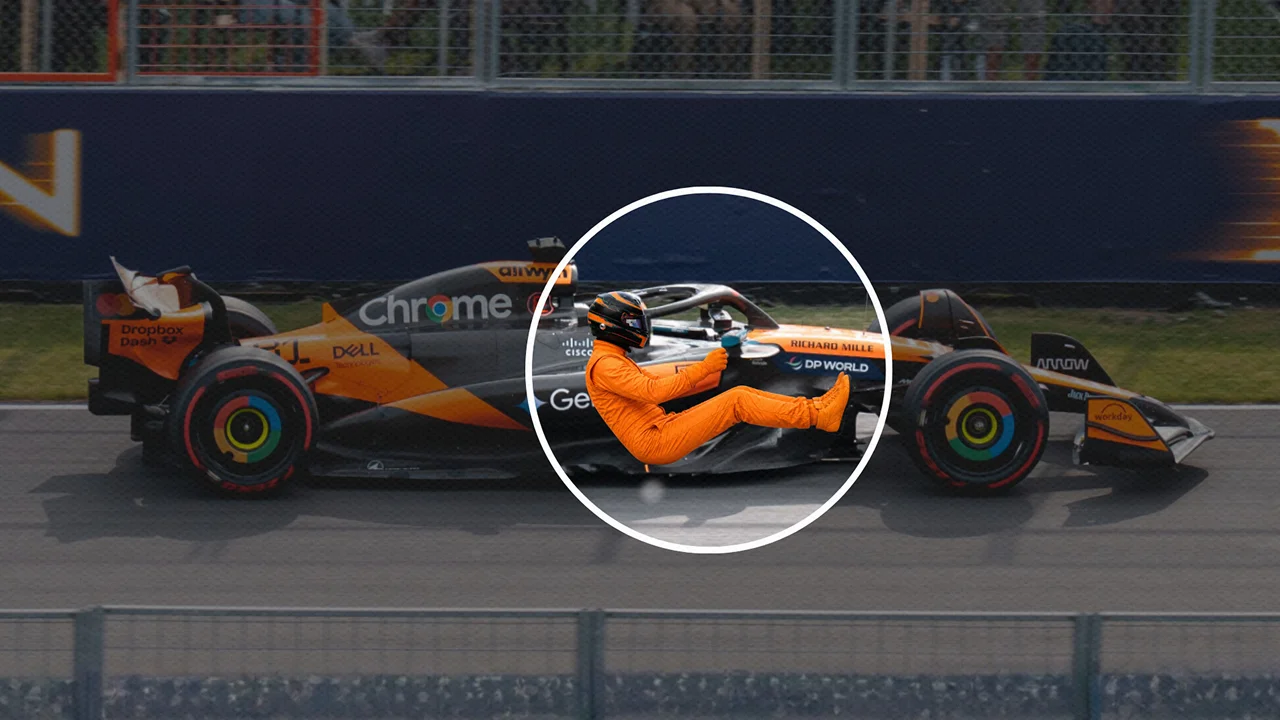
This is a configuration that traces its origins back to some of Newey’s earliest designs in the late 1980s, such as the March 881 (more on this one later), but he perfected the design in 1996, with the Championship-winning Williams FW18. Needing to adjust for Damon Hill’s height, Newey lowered the position of the driver’s seat and raised the height of the pedals.
These changes led to more advantages than just extra leg room for Hill. The new seating placement helped lower the car’s overall center of gravity, making it easier to control, and allowed for better positioning of the steering column. It also gave the car an overall aerodynamic edge, a boon that Newey has become known for finding.
The nose design that reshaped F1 aerodynamics
Newey’s 1988 March 881 may not have been a particularly successful car, but it did bring a revolutionary change to F1 aerodynamics that is used to this day by every team on the grid.
This was the first car to integrate the front wing and the nose into one piece, having the nose sit ‘on top’ of the wing, instead of the wing plates protruding out from its sides.
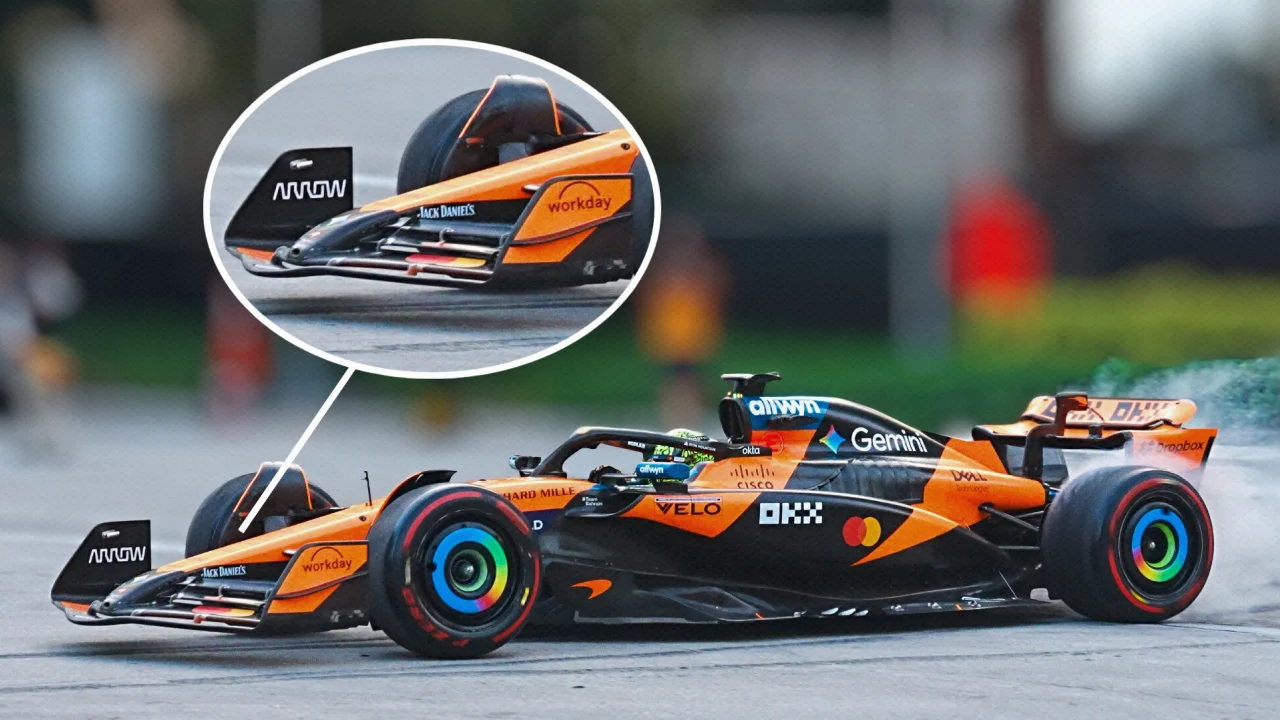
Newey made this change as part of an entire aerodynamics overhaul to give the March 881 an advantage in a field where its engine was not up to par. While all other cars of that season were using turbocharged engines, the March 881 was still using a weaker aspirated engine. The chassis of the car, as a result, ended up being much more compact than the rest of the grid’s, with the biggest change being to the nose and wing.
This configuration meant that the car could generate more downforce. The effect was compounded all the more thanks to an undercut, which in this case is not a racing strategy but a scooping area underneath the nose that created a vacuum of air, helping generate better airflow beneath the car.
All together, these changes made the March 881 one of the most aerodynamic of the field, and the ‘nose on top of the wing’ design a staple of the field. While Newey and Leyton House March Racing Team collected only two podium finishes and an overall sixth place in the Constructors’ Championship for their efforts, the car was one of the most aerodynamically efficient, inspiring other teams to take on similar designs.
Perfecting the rear bodywork’s shape
The Coke bottle shape, or the tapering of an F1 car from the middle going towards the rear end, precedes Newey’s entry into the sport, dating back to John Barnard’s design of the 1983 McLaren MP4/1. Nonetheless, Newey is credited with perfecting it and pushing it to its limit over the years, ultimately resulting in the sloping that we see on today’s F1 designs.
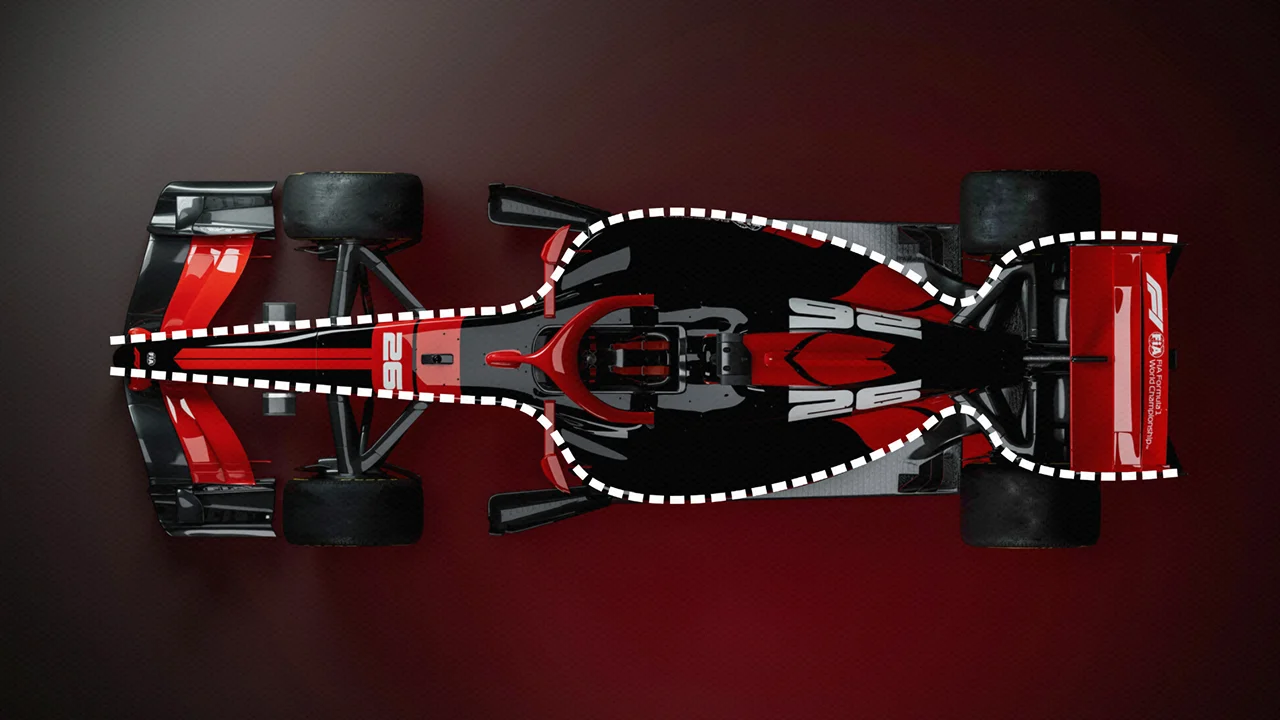
This is seen in the way that Newey’s cars get progressively more aggressive in their rear design over time. From shortening the sidepods of the 1994 Williams FW16B compared to its weaker predecessor, the FW16, to the extremely tight packaging seen in the Red Bull designs of the early 2020s, Newey has found countless ways to make the rear half of the F1 car as narrow as possible.
Like with all of Newey’s innovations, the Coke bottle shape is all about optimizing the aerodynamics of the car, helping to guide air smoothly over the top of an F1 car, away from the rear wheels and towards the rear wing. Over time, this narrowing became more common between teams and more extreme over time due to the massive improvement it made to F1 aerodynamics and thus performance. Today, the shape is one of the most distinctive parts of an F1 car, and Newey's contributions to its evolution make it hard to imagine what the grid might look like without him.


%20(1).jpg)

.webp)

.png)
.png)