
Formula 1 has always had an appetite for spectacle. The Las Vegas Grand Prix has perfectly embodied that vision, as its earlier iteration, the Caesars Palace Grand Prix, remains a painful reminder of its pitfalls. Together they have marked important turning points for the future of the championship.


Caesars Palace Grand Prix: F1's first foray into spectacle

The first three decades of Formula 1 looked dramatically different from the sport we know today, in large part because it remained a fairly amateur affair. Grands Prix taking place in major city centers used to be a rarity. For the United States, that was evident when the sport came to compete at Watkins Glen International.
Located in a sleepy hamlet in upstate New York, Watkins Glen was F1's first true American home, hosting the United States Grand Prix from 1961 to 1980. The track is nowhere near any major hub for air or sea travel, the town of Watkins Glen itself has rarely boasted more than 3,000 inhabitants since its founding in 1870, and the lodgings were as equally rudimentary as the track facilities. For a sport that in the 1960s was used to racing in the countryside of England, Belgium, and France, and that often failed to pay all but the top drivers a living wage, Watkins Glen was perfectly aligned with F1’s spirit.
But the sport began to evolve in the 1970s. Advancements in technology resulted in quicker cars, while behind-the-scenes politics brought about an increase in prize purses and the introduction of television broadcast package sales. F1 thus began to reach wider audiences, and the men in charge of the sport wanted to present Formula 1 as the pinnacle of motor racing in every aspect. That meant transforming the calendar.
In 1976, Formula 1 added a new race in Long Beach, California. Organizer Chris Pook felt he had an opportunity to tie the international glamour of F1 to the glamour of nearby Los Angeles in order to create an unforgettable event. And it worked: the race, called the United States Grand Prix West, attracted plenty of celebrity attention, and drivers enjoyed the technical circuit. Pook had shown The Powers That Be in Formula 1 that a street circuit in an eye-catching location could work.
So, F1 turned its eyes to Las Vegas.
The 1970s was a decade of transition for Formula 1, and the city of Las Vegas. Construction had slowed after much of the mafia money funding casinos had been ousted, but visitor numbers nevertheless almost doubled. Boxing had long been a favored Vegas spectacle, but when daredevil Evel Knievel was contracted to jump over the fountains in front of Caesars Palace in 1967, motorsport entered the conversation.
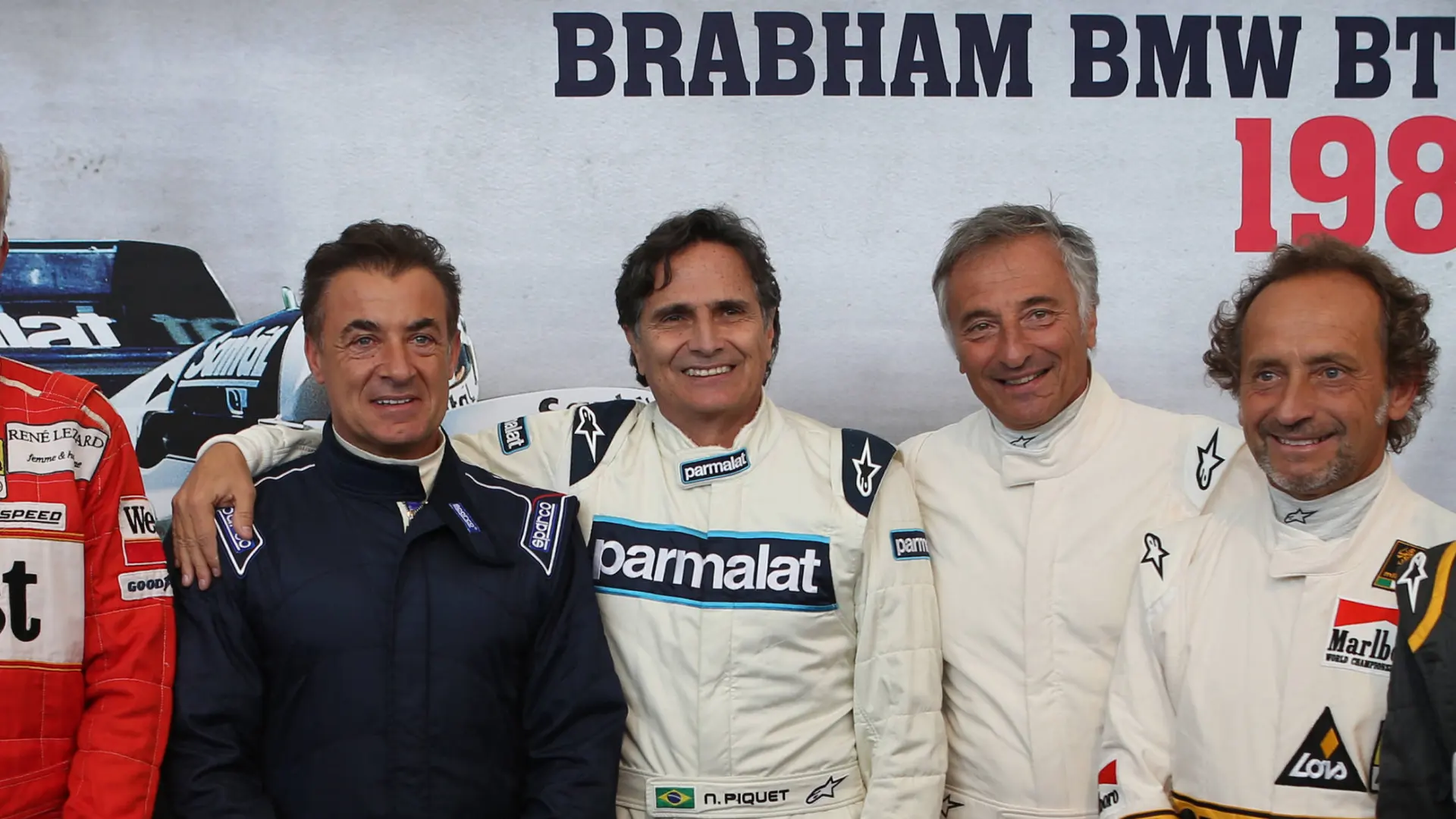
Bernie Ecclestone would be a key player in F1's initial Vegas debut. Ecclestone, a former racer turned driver manager, took control of the Brabham team at the end of 1971 and used his position as its head to rally fellow team owners together in an organization known as the Formula One Constructors’ Association (FOCA), which really helmed the push toward greater professionalization — meaning, bigger prize purses, better-prepared venues, and more global appeal.
Ecclestone's vision for F1 had outgrown Watkins Glen, and the success of the race in Long Beach illuminated a new path forward. In the late 1970s, he began chatting with different folks in Las Vegas, keen to negotiate a major Grand Prix there. He ultimately found common ground with the folks in charge of Caesars Palace, who believed there could be great commercial potential in hosting an international event in the city.
But there were problems right from the start. As he reflected in The Independent, “The only problem [...] was we couldn't run on the Strip, which is what I wanted to do. I wanted to make sure when somebody turned their television on they knew they were in Vegas, not in the desert. They promised me, ‘yes, we can do it.’”
As it would turn out, critical issues prevented that from happening. Caesars Palace spent a lot of money to bring the event to life, but it didn't want the track layout to bring free publicity to rival casinos that hadn't shelled out a dime.
The time to negotiate a race on the Strip also closed more quickly than expected; Watkins Glen had intended to host a Grand Prix in 1981, but went bankrupt before it could do so, prompting Formula 1 to scramble to fill in the gaps. According to Caesars Palace Grand Prix by Randall Cannon, it left F1 and Caesars Palace organizers just 45 days to construct a circuit. Negotiations to host a race on the Strip would almost certainly take longer than that. There was no choice but to build a makeshift circuit in one of the casino’s parking lots.
The Caesars Palace Grand Prix was scheduled as Formula 1's season finale in both 1981 and 1982, with the timing intended to maximize championship drama. The track, though, never delivered. In order to fit the track into a parking lot, the layout doubled back on itself in several places, making it difficult for drivers to distinguish one corner from another. It also introduced a unique physical strain on the drivers that was only made worse by the heat.
Caesars Palace never felt like it earned enough to justify what it was spending. So, the race was scrapped after the 1982 season.
Las Vegas and Formula 1 may have both had ambitions of becoming global entertainment hubs, but the race at Caesars Palace simply could not bring those goals to life. Both the city and the sport needed to change before this union could actually work.
The Las Vegas Grand Prix: F1's new American era

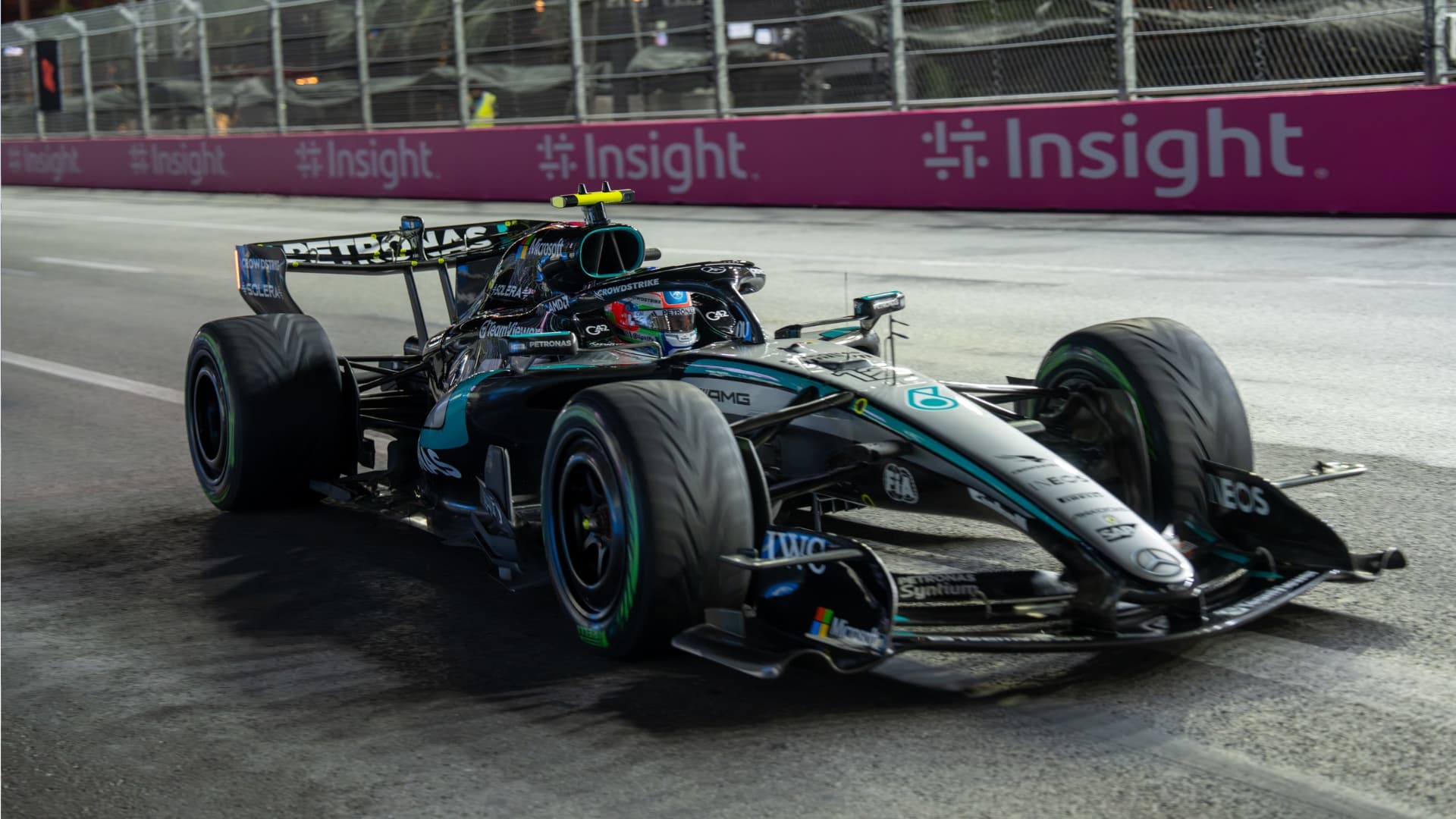
Several decades would need to pass — and Formula 1 would need to change hands — before a race on the Las Vegas Strip could actually take place. When the five lights went out in November 2023 to kick off the first race down the city's iconic thoroughway, F1 entered yet another era.
The light of that era made its first appearance in 2017, when American company Liberty Media acquired Formula 1 from Bernie Ecclestone. Ecclestone had been responsible for forging the groundbreaking television deals that launched F1 into previously unforeseen levels of popularity, but his innovative approach had fallen behind in the internet age.
Fittingly, Liberty Media went to work rebuilding F1's image on social media and streaming. The Netflix docuseries Drive to Survive was a simple gateway for new audiences to learn about the sport, which they could then follow more closely online before tuning into a live race. As a result, at the end of 2025, F1 reported it had 827 million global fans, which represented a 63% uptick since 2018, the first season with Liberty Media fully in control. Many of those new fans hit new demographics, too — these fans were often younger, female, and American.
In much the same way that a Grand Prix at Long Beach proved the viability of an additional American street race, so too did the Miami Grand Prix in 2022 as American fans scooped up tickets to these new, spectacle-heavy events. It was then time, to try Las Vegas again. This time, in a new way.
This time, F1 had the global cachet and American ties necessary to organize a Grand Prix along the Strip.
F1 races are traditionally owned and promoted by a corporation that then pays a sanctioning fee in order to host a Grand Prix. With Las Vegas, though, F1 made the decision to own and promote the race itself through a subsidiary, simultaneously establishing a home base for F1 in the city. It worked closely with the Las Vegas Convention and Visitors Authority (LVCVA) to organize a race along the Strip, while negotiating deals with many of the resorts and casinos to create unique ticket packages and ease tensions associated with construction and road closures.
It wasn't a completely smooth transition. There was controversy as construction closed local businesses and the weekend itself kicked off with a loose water valve cover that damaged Carlos Sainz's Ferrari in FP1 which forced a major delay for repairs. But the race itself went off without a hitch, and in doing so, launched Formula 1 into a new era of glamour and spectacle.
The core idea behind both the Caesars Palace Grand Prix and the Las Vegas Grand Prix was the same: Formula 1 wanted to find a way to thrive in a city dedicated to spectacle and largesse. The main difference is that now, in the 2020s, both F1 and the city of Las Vegas have built the infrastructure and audience they need to make racing down the Las Vegas Strip work.
Caesars Palace layout photo sourced from Yoyodu10 via Wikimedia Commons under the Creative Commons Attribution-Share Alike 4.0 Generic license.