


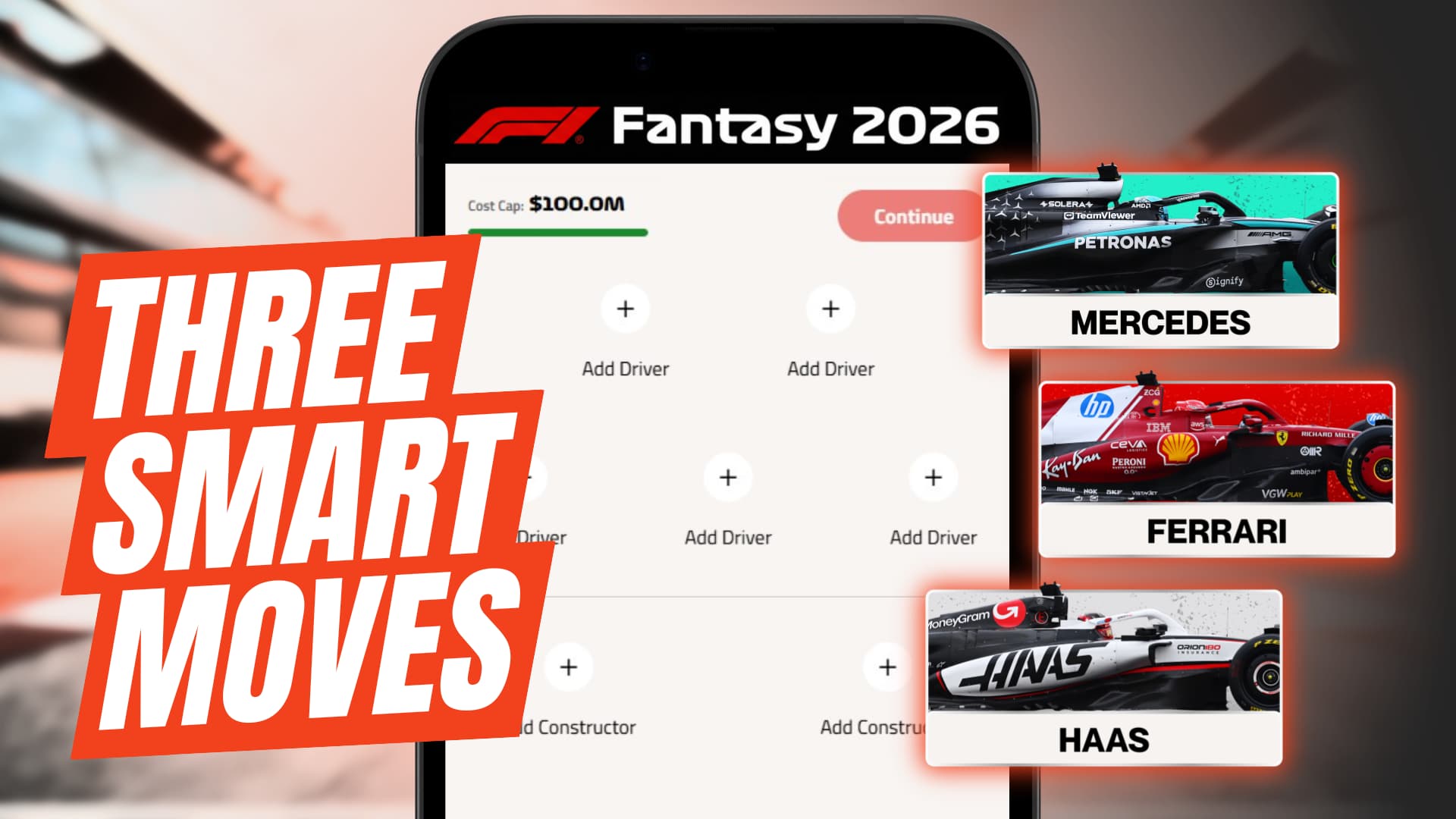



A new F1 Fantasy season always brings challenges, but maybe none more than 2026, with fresh pricing, new regulations, and most importantly, new opportunities to get it wrong.
Formula 1’s introduction of sweeping regulation changes and preseason testing showing a tightly compressed top four, the margin for error early in the season is smaller than ever. If you want to build budget, climb rankings, and avoid chasing points early in the season, here are the three smartest things you can do to start the year.


Prioritize Premium Constructors First
If there is one consistent truth in F1 Fantasy, it’s this: constructors win leagues.
Top-tier teams don’t just score points through finishing positions — they score twice. Every constructor earns points from both drivers, plus bonuses for qualifying performance and pit stops. That creates a scoring floor that drivers alone can’t match.
Preseason testing reinforced this idea. Mercedes logged the most mileage of any team and the strongest engine durability totals across all customer teams. Ferrari set the fastest lap of testing and showed strong race simulation pace. McLaren topped the simulated long-run projections. Red Bull were competitive as usual because they have Max Verstappen.
Those four teams are likely to dominate the front rows and race results early. In a $100M budget format with two constructors required, locking in at least one premium team is critical. Ferrari, in particular, appears underpriced relative to Mercedes and McLaren after testing. They will have a high ownership rate out of the gate for a reason.
Early in the season, it may be tough to run two of the top four, so finding value in the midfield could separate you early from the pack. Haas looks significantly undervalued for a projected P5 team. Pairing them with a premium constructor could lead to budget increases and getting two premium constructors fast.
The mistake new players make is overspending on drivers while skimping on constructors. Constructors provide consistency. Drivers provide volatility. Start with your foundation first.
Choose With Your Head, Not Your Heart
The F1 fan and the F1 Fantasy player are not the same person.
You might love McLaren. You might refuse to roster a rival driver. You might want to back your favorite underdog team. But fantasy rewards data, not loyalty.
As we mentioned in our new player guide, if you’re running multiple teams, designate one as your “heart team.” Get the emotional picks out of your system there. But if you want to compete seriously, you must be willing to pivot away from your favorite team or driver if the data says so.
There may be McLaren fans who rode Lando Norris and Oscar Piastri all last season and now have to consider a Ferrari-heavy build because of value. That’s not betrayal — that’s smart fantasy management.
Emotion is expensive in F1 Fantasy. Discipline grows your budget.
Build a Core and Be Patient
Early-season fantasy isn’t about bold predictions. It’s about stability and budget growth.
With a new regulation cycle in 2026, teams have a lot to learn about their cars. Even after two Bahrain tests, we don’t have full clarity on race pace or reliability under real conditions. That uncertainty makes aggressive early pivots risky.
The smartest approach is to identify three to four reliable pieces — drivers or constructors — who can stay in your lineup for multiple races. Look for:
- Strong preseason mileage (reliability signal)
- Competitive race-trim simulations
- Teams with stable operations
- Reasonable ownership and high points per million
For example, Mercedes’ durability totals and long-run averages suggest early stability. Ferrari’s qualifying ceiling plus balanced pace give them strong scoring potential. Haas’ reliability and midfield projection offer consistent value at a low cost.
Your number one goal early in the season should be simple: grow your budget.
Fantasy success compounds. Managers who increase team value quickly can afford better drivers sooner. Better drivers score more points. That lead becomes harder to erase as the season progresses.
Overreacting after one race, chasing differential plays too early, or stacking volatile teams before reliability is proven can set you back weeks in the budget race.
Patience isn’t boring. It’s profitable.
The Bottom Line
Preseason testing didn’t reveal a runaway favorite. It revealed compression at the top and opportunities for value with early pricing.
- Start with A-tier constructors.
- Separate fandom from fantasy.
- Build a reliable core and let your budget grow.
Do those three things, and you won’t just survive the opening rounds of 2026 — you’ll position yourself to attack them.
Want More F1 Fantasy Content?
Be sure to check out our F1 Fantasy articles and guides, including the best races to use the six powerup chips, how to grow your team budget, and much more.
You can also watch The Fantasy Formula on the official FanAmp YouTube channel every race week for detailed lineup advice, exclusive interviews, and a breakdown of the latest news.




%20(1).jpg)

.webp)
.png)
.png)