


One of the biggest racing events in IndyCar, and even the world, is just around the corner. Engines revving, fans on their feet, the Indianapolis 500 is the race of the year for hundreds of thousands of petrolheads. And having started all the way back in 1911, it has a long and rich history that will fascinate and surprise any racing enthusiast.
From two-man race cars, the only winner to NOT drink milk and more, let's dive right into it with three things about the Indy 500 that you probably did not know!


Racing in the Indy 500 used to be a two-man job
The earliest instances of the Indy 500, held over 100 years ago while it was still called the 500-Mile International Sweepstakes, looked nothing like the event that we are used to seeing today. From the cars of that era to the 2.5-mile track paved with 3.2 million bricks from which the Indianapolis Motor Speedway earned the nickname "the Brickyard,” the scenery was very different. And one of the biggest differences was the fact that each car carried not one but two people: the driver, and their riding mechanic.\
The role of the riding mechanic is a fascinating one. Typically sitting behind the driver, they served as an early version of a race engineer, warning the driver of cars coming from behind (this was before rear-view mirrors were a standard part of competing cars), keeping an eye on tire conditions and fuel levels, and acting as a point of communication between the car and the pit through the use of hand signals. They also kept track of any damage on the car or parts that may need fixing or replacing in the pits. If the car broke down on-track, it was up to them to fix it.
But beyond just that, they also had a direct role in assisting their driver, providing him with drinks, food or even cigarettes throughout the race. They sometimes even massaged the drivers’ hands if they got sore or cramped while steering. And given that the Indy 500 still relies on manual steering and pure physical strength to turn the car, this is certainly something that many pilots might appreciate even today.
Riding mechanics were a mandatory feature of the Indy 500 from 1912 through the late 1930s, except for a short stint between 1923-1929 (inclusive) during which they were made optional. In these seven years, only one team opted to keep using a riding mechanic, and the grid reverted to entirely single seaters in 1938 when the role was made optional once again.
The driver who broke the tradition of drinking milk
Perhaps one of the most well-known aspects of the Indy 500 is that, instead of drinking champagne after the race, the winners drink milk. The tradition dates back to 1936 when Louis Meyer, accompanied by his riding mechanic Lawson Harris, won the race for the third time, becoming the first person in history to do so. Immediately after parking his car, Meyer chased the win with a bottle of buttermilk.
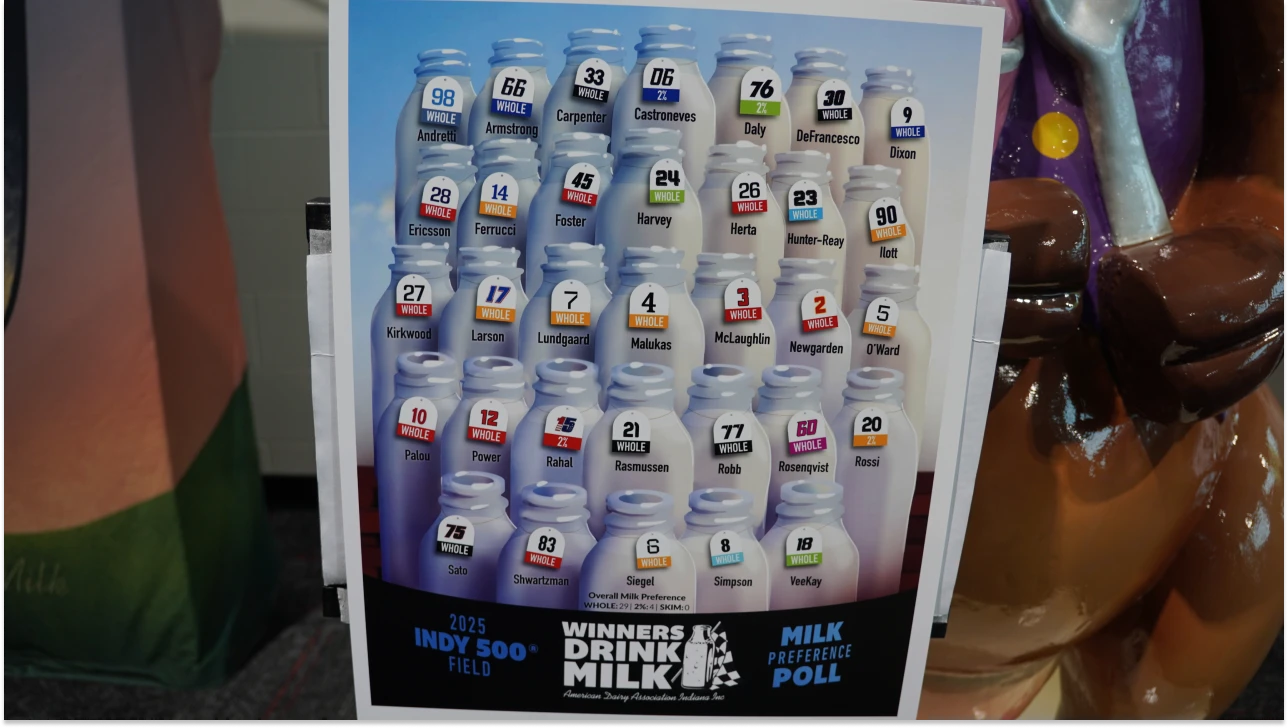
Since then, milk has become a staple of the winning celebrations, with drivers nowadays having the option to choose between whole, 2% and skim (Alex Palou, the 2025 winner, went with whole milk). In fact, the last time a driver opted for something else was back in 1993, and he paid a hefty price for it.
Emerson Fittipaldi took the win of the 77th Indy 500, and instead of drinking milk, proceeded to drink a bottle of orange juice. His decision stemmed from his desire to promote the citrus industry as an owner of a 500,000-acre orange grove in Brazil.
Needless to say, Indy 500 fans did not take kindly to the move, booing him in Victory Lane. Fittipaldi did take a sip of milk after being informed of his faux pas, but it was too late. By drinking orange juice, he forfeited the $5,000 of prize money that was donated by the American Dairy Association. He also later issued an apology to both the Association and fans of the Indy 500 for going against the beloved tradition.
The race that was decided nearly 5 months later
If you are a Formula 1 fan, you are all too familiar with the frustration that accompanies a graphic saying that an incident will be reviewed after a race is finished. Luckily, those decisions are usually made within hours of the checkered flag, which is the blink of an eye compared to how long it took to determine the winner of the 1981 Indy 500.
On lap 149, Bobby Unser of Team Penske, who was leading at that point, made an illegal pass while leaving the pits after the race had been put under caution following a crash between Tony Bettenhausen Jr. and Gordon Smiley. He had accelerated beyond the legal speed of the pace car, causing him to overtake 14 cars while yellow flags were still out. Unser wasn’t given a penalty during the race itself, and ultimately finished first, with Mario Andretti of Patrick Racing in second.
At 8:00AM the next day, after reviewing the race footage through the night, US Auto Club officials announced that Unser would be fined $40,000 for his transgression and, worst of all, given a one-position penalty. This put Andretti in first place instead, and he was declared the winner of the race.
But the story doesn’t end there.
Team Penske filed an official appeal of the decision, and then they waited. And waited. And waited.
On October 8th, 1981, 138 days after the Indy 500 race was held, US Auto Club officials overturned their previous decision, reinstating Unser as the race winner. They concluded that, while Unser did in fact make an illegal pass during the race, it should have been caught by on-track officials at the time. The decision was voted on by three officials, and made in favor of Unser 2:1.
After the fact, Edwin Render, a law professor at the University of Louisville and acting appeals board chairman for the case, said, “They should have acted when the foul was committed. You can’t call a foul after the game is over.”
Want more surprising facts about this year’s F1 drivers and race tracks? Check out our other Speed Reads:



.jpeg)

.png)
.png)