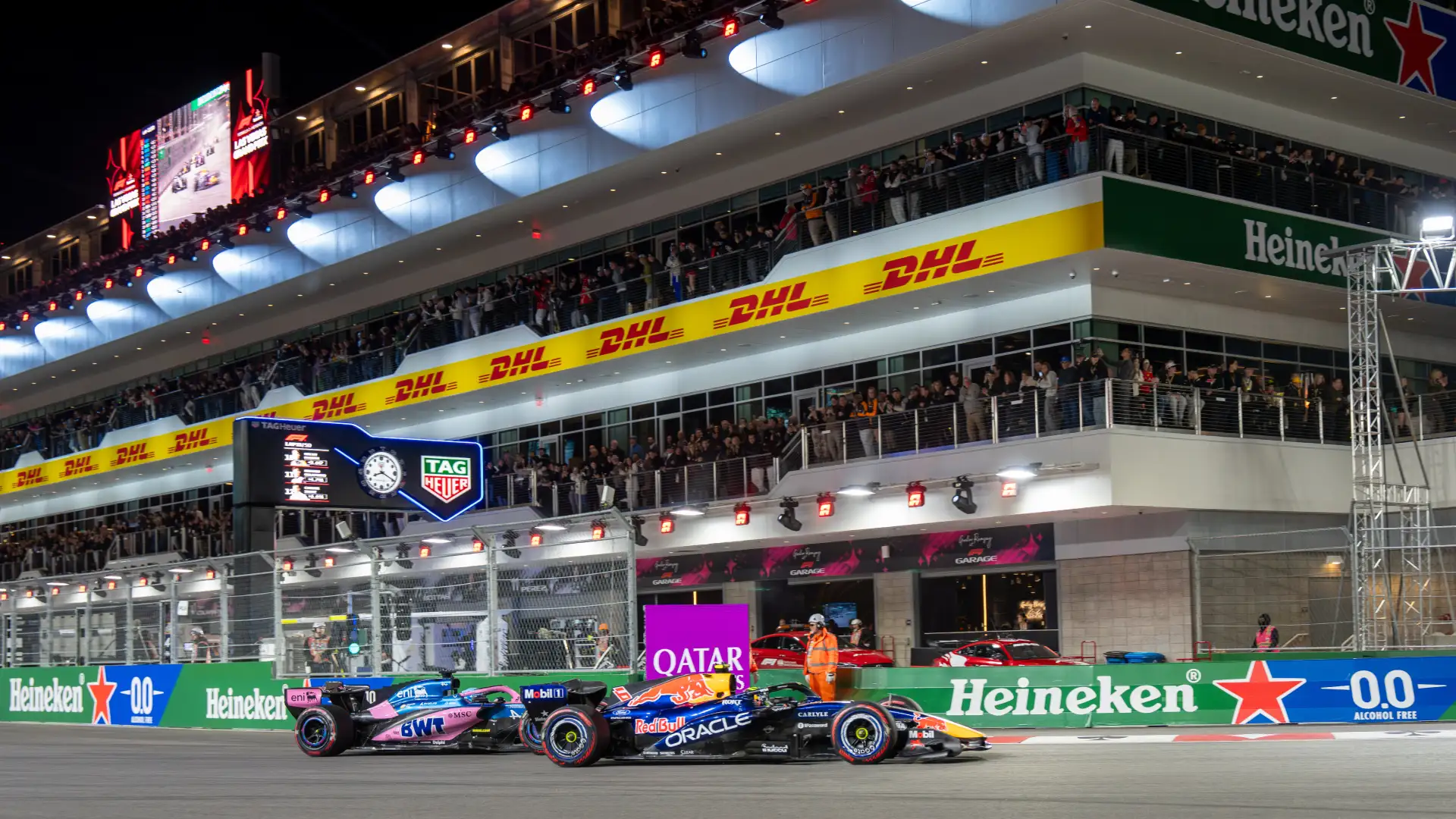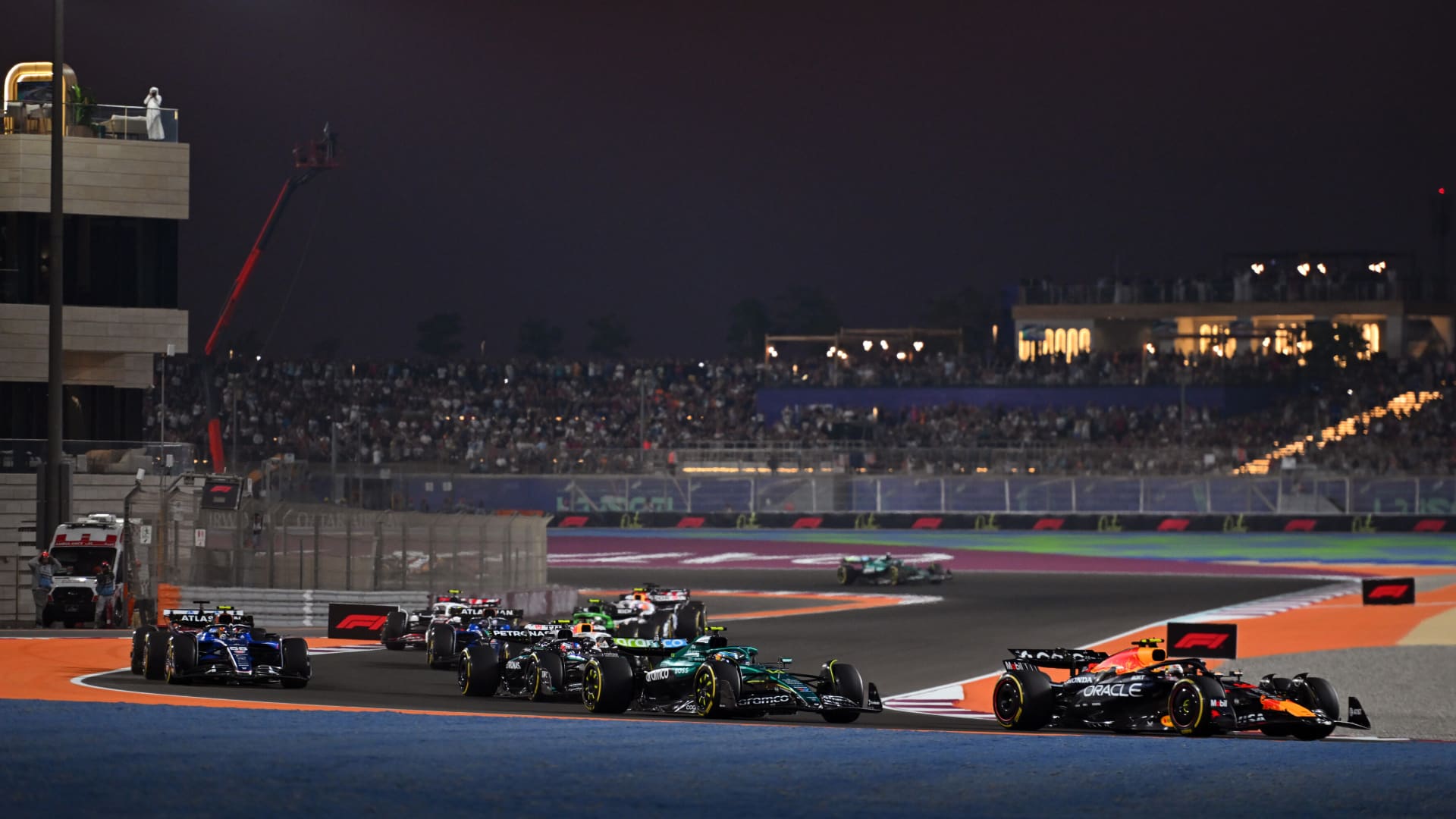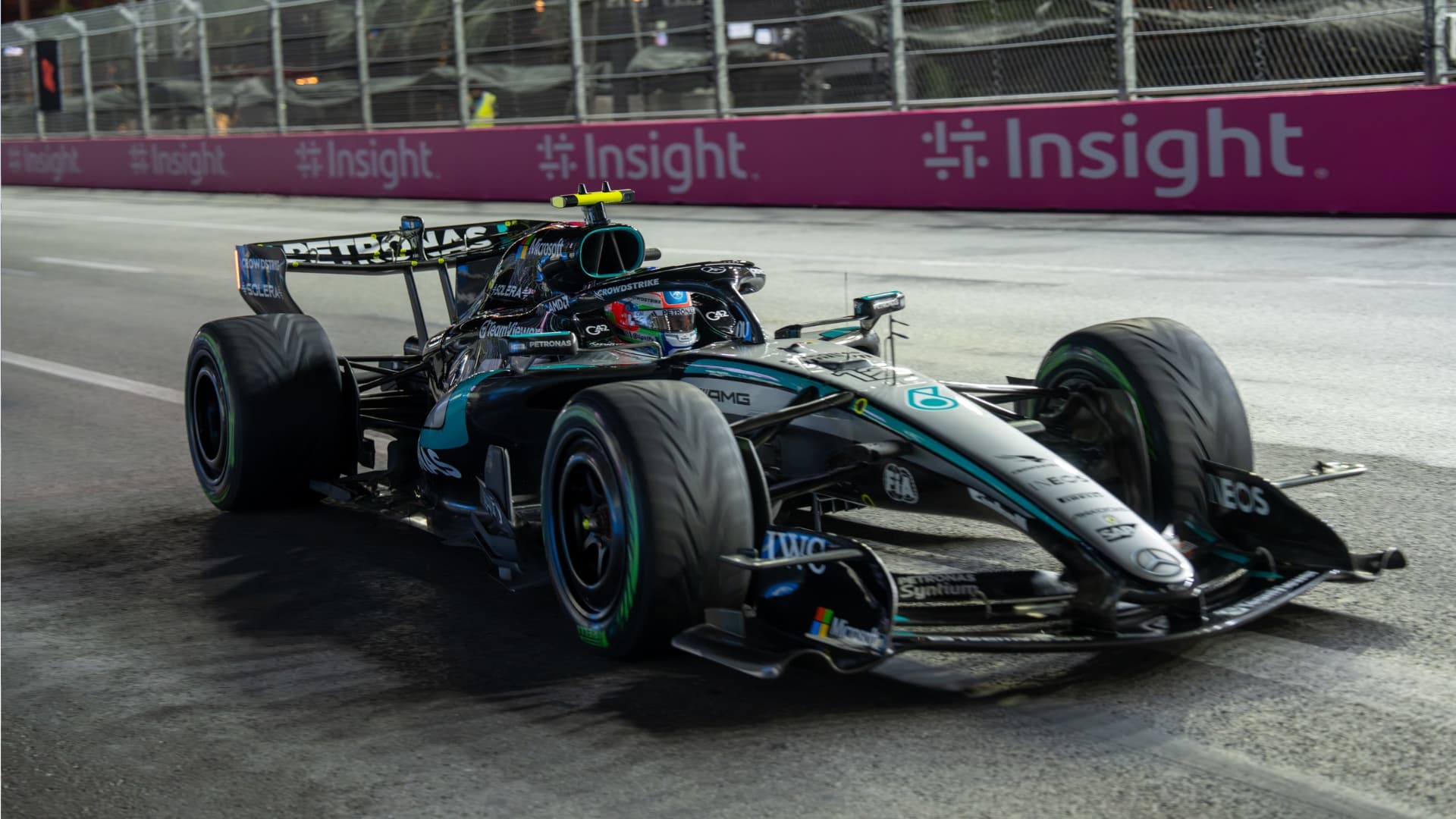


The Las Vegas Grand Prix (LVGP) is Formula 1’s first and only owned and operated race, built from scratch in a little over two years at an estimated cost of $650 million. In part one of this series, I looked at the infrastructure that makes racing on the Strip possible: the land, the paddock building, and the temporary lights, bridges, and grandstands installed every year.
But none of it runs itself. Part two is about the people behind a race that drew 165,000 unique visitors last year: the hospitality workers, police and medical teams, permanent LVGP staff, marshals, and more.
I read, listened, and even traveled to Las Vegas to find out. Here’s what I learned.
(Or, head back to read Part 1 covering the permanent and temporary infrastructure that makes racing on the Strip possible.)
Las Vegas’ workforce is ready, willing, and able
Before F1 hired anyone, Las Vegas already had a workforce built for scale.
“We have three hundred thousand people who work directly in the tourism and hospitality industry in Las Vegas. And probably two hundred thousand of them work in a location that is affected by the mobilization and demobilization of the circuit,” Steve Hill, CEO of the Las Vegas Convention and Visitors Authority (LVCVA), told me in the LVCVA offices as I asked about the workforce this race impacts. That sheer scale is partly what makes Vegas so capable at hosting an event of this magnitude.
The race also depends on the people who keep it safe. The Las Vegas Metropolitan Police Department covers the city of Las Vegas and unincorporated Clark County, and Steve said the race draws on about 30 other jurisdictions outside of it. He described the scale for police and fire:
“Las Vegas Metropolitan Police Department […] has thirty-three hundred police officers. […] We probably have a thousand officers that are involved in the event. It’s not just policing the event, it’s making sure all the sight lines are policed. All of that. Clark County Fire is kind of a similar ratio, where they have folks all around the circuit. And they also have everything else that goes on around the event.”
How does that compare to a normal week in Vegas? According to Steve, Super Bowl and F1 weeks are “probably double the impact, maybe, of a normal week,” though he downplayed the difference, noting every weekend in Vegas brings events and “there’s some ups and downs in that for sure.”
Then there are paramedics, EMTs, and nurses employed by providers like Community Ambulance, as well as the government and law enforcement agencies. No one would give me specifics on how many support staff the LVGP draws from those agencies, at any level of government. For a sense of scale, the Indianapolis 500, which sees over 350,000 fans attend for race day alone, had support from about 200 Department of Homeland Security (DHS) resources, among other agencies like the Secret Service.
The team F1 had to build
Last but not least are the people bringing the race to life. According to the 2024 impact study, the race supports 4,502 jobs generating $284 million in wages, of which nearly 1,200 are direct jobs tied to spending by Formula 1, the LVGP, and its partners. Another 348 are at suppliers and businesses that support the race directly, and most of the nearly 3,000 remaining jobs are tied to visitor spending, at hotels, restaurants, retailers and other local businesses.
Among those direct jobs is a permanent Las Vegas team that started from nothing. “I moved to Las Vegas in May ’22. And when we got here, and the part that people probably don’t know is that, we didn’t have any form of business operation,” said Emily Prazer, Chief Commercial Officer of Formula 1 and President and CEO of the LVGP and Grand Prix Plaza, during a Webby Sessions event the week before the 2026 LVGP. “So we had to set up offices, we had to hire a load of people. I think we’ve now got about 125 people permanently here.” That core team, which includes functions like partnerships, marketing, and race operations, leads the planning and execution of everything the race needs.
Around them, about 600 marshals also work the race. The LVGP’s marshal registration page says they are contracted and compensated with in-kind goods and services, including a subsidy for the official marshal host hotel.
Experience: The Vegas effect
The other critical part of the people component is experience, and experience matters when the average person visiting for Formula 1 spends more than $2,400 outside of race tickets, according to the 2024 impact study, nearly double the typical non-F1 visitor. Steve largely attributed that to increased room rates around the circuit where visitors pay a premium because they can “pretty much walk from any room you’re in to your seat and back.” Corporate buyouts of restaurants, nightclubs, and meeting rooms also contribute to that higher total.
“Tourism and hospitality, we’ve been known for, for decades. […] And we think there’s a Vegas effect on all the events that we bring here. And what we mean by that is not only is the event great, the experience around it is,” Steve said at the F1 Business Summit. To me, he made the point more specific: “We’re the only city in the world […] that can treat sixty-, seventy-, eighty-thousand people like a VIP all at the same time.”
Dan Bernbach, MGM Resorts’ SVP of Events, Entertainment & Development, shared a similar viewpoint. “We are not a destination that is afraid of large events. In fact, we embrace it, we encourage it, we thrive on it. And I would say F1 is no exception to that. Our employees do a phenomenal job embracing this [and] rising to the challenge.”
And that hospitality mindset extends outside of the literal hospitality industry, as Glen Simpson, Vice President of Community Ambulance, made clear in how his team cares for attendees: “People spend a lot of money to come to these events. Anything we can do to get them back to the event as quickly as possible, that remains our goal.”
The advantage of operating on “an island”
What I really found interesting was what Glen said to me about Las Vegas’ geographic location and how that isolation drives preparation. “One of the unique things about Las Vegas that a lot of people don’t necessarily think of is we’re in the desert, right? And we’re an island. So our closest resources, if we needed additional resources, for example, more ambulances, that sort of thing, are hours away. And so we get a lot of repetition out here. Again, everything from hosting the Super Bowl to NFL games on an almost weekly basis to massive music festivals, just to arenas, hockey, you name it.”
It’s that repetition and hospitality mindset, along with the infrastructure built for crowds, that let Formula 1 and its partners deliver a race weekend spectacle that is uniquely Vegas.
What else does it take to run the Las Vegas Grand Prix?
That’s it for Part 2 of this deep dive into Formula 1’s estimated $650 million bet on the Las Vegas Grand Prix.
Head back to read Part 1 covering the permanent and temporary infrastructure that makes racing on the Strip possible. Or, check back Monday for Part 3 covering the programming and what this all means for Las Vegas and F1.