


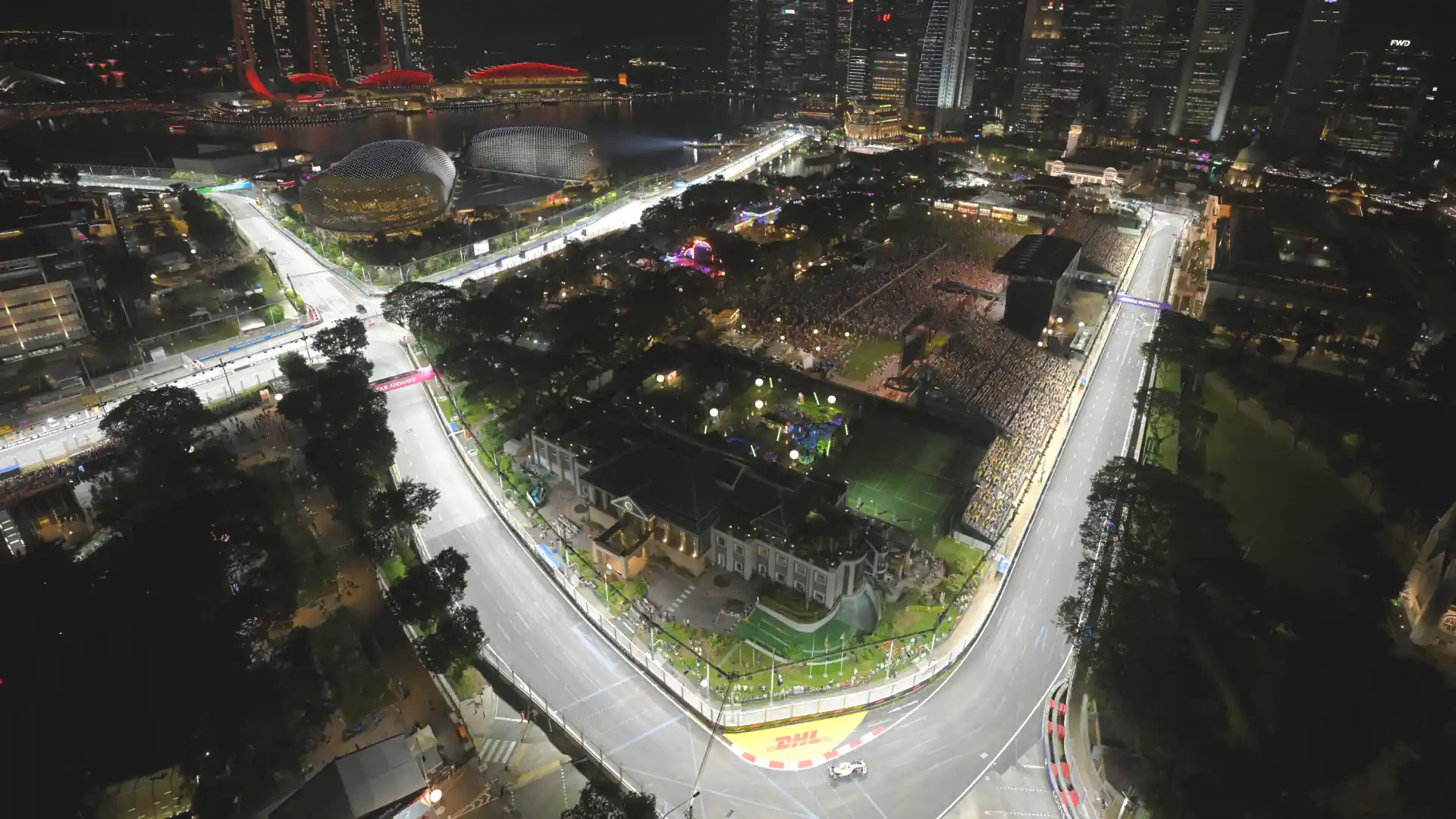


September 28, 2008: 1,600 floodlights illuminate the Marina Bay Street Circuit as 100,000 fans pack into the grandstands and over 400 million more tune in around the world. They sit fixated on the 20 cars lined up and waiting for the signal to speed down the track. What may seem like a typical race start is anything but, as it signals the beginning of one of the most thrilling experiments in recent Formula 1 history: the first-ever night race.
The 2008 Singapore Grand Prix finalized the playbook for racing F1 cars in the dark and kicked off a brand-new era in F1 that now includes six separate night Grands Prix on the calendar.
But it wasn’t an easy task to get there. This race was proof of a concept that even F1 and the FIA hadn’t fully thought through when the addition of Singapore was initially announced.
So, let's get into everything that had to happen for F1 night races to become a reality, and how Singapore paved the way for more to be added over the years.


Singapore triggered the development of night race criteria
From the moment it was first announced, the possibility of Singapore being a night race was a major selling point for the event. Not only was this never done before, but, if successful, it would allow international audiences across Asia, Europe and the Americas to watch despite the time differences between the three continents, improving access to F1 racing.
Yet there was one major problem.
"There are no [existing] criteria [for night races,]” said then-FIA President Max Mosley to the press in Monaco, shortly after the addition of Singapore to the calendar. “If and when we get an application to run a night race, that will have to go to the circuit commission, and that will go to the safety commission, and eventually the world council.”
In other words, the FIA itself had no rules for running an F1 Grand Prix at night. So when Singapore did apply to do this, the requirements needed to be developed. This included taking into consideration everything from track safety, both for fans and teams, to things like spectator visibility and global broadcast quality. What’s more, all of this would need to be carefully tested before becoming an official part of the F1 rulebook. And Singapore's application to become a night race was the push that got the ball rolling.
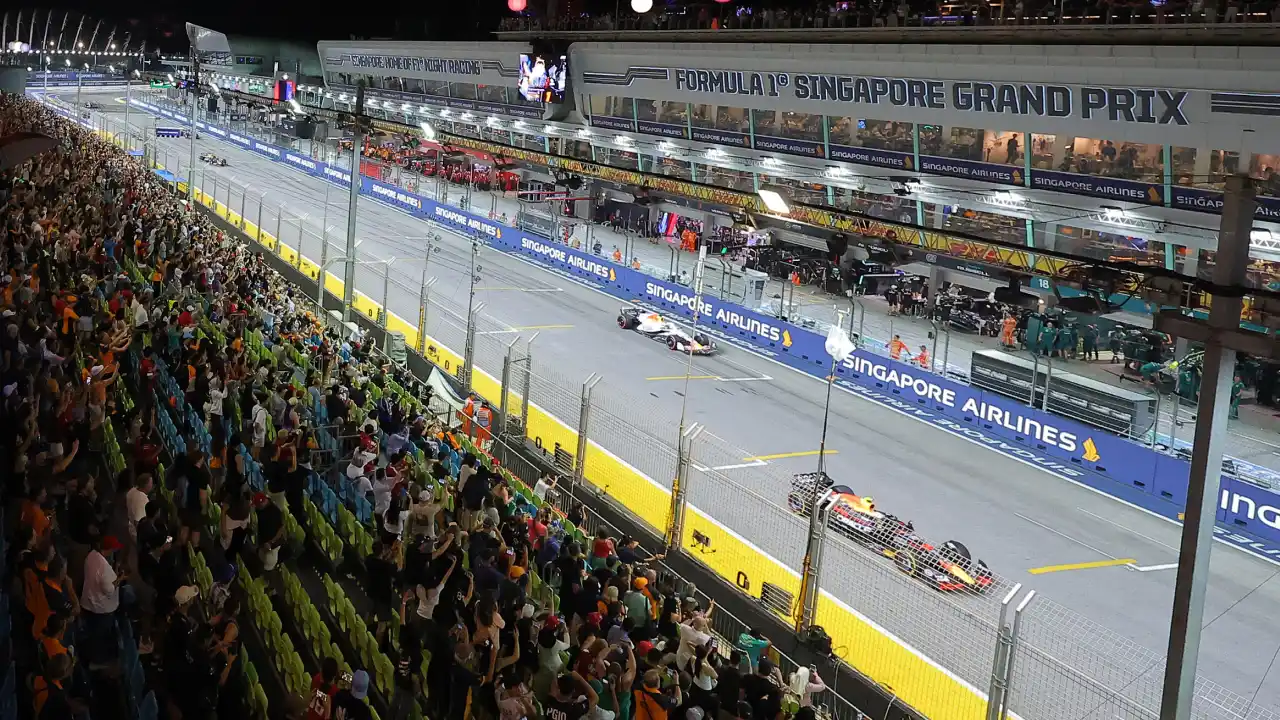
One such requirement that came out of these discussions was that lighting needed to emulate daylight, both in terms of its brightness and color temperature (cooler light looks more blue, warmer light looks more yellow). Glare and shadows on the track also both needed to be minimized. This allows the drivers, marshals, safety staff and the audience to easily see the track for both safety and entertainment purposes, and for broadcast cameras to accurately capture the on-track action for viewers at home.
But it's one thing to have a set of requirements and another thing to actually execute on them.
The complexities of setting up for a night race
Lighting up the Marina Bay Circuit is no easy task, requiring over 1,600 floodlights to be set up, using 137 miles (220 km) of cables and over 100 people on-site during the race weekend to make sure everything is running smoothly. For comparison, this averages out to more lights per track corner than an entire high school stadium would have, and those 136 miles of cable equate to 44 laps around the Marina Bay Circuit, or roughly two-thirds of the 62-lap Grand Prix.
In Singapore, this is all handled by DZ Engineering (DZE), an Italian company that designs lighting solutions for everything from historic sites to internationally broadcast sporting events such as football matches and motorsport races.
“The preparation for every race is exciting,” said DZE general manager, Roberto Grilli, in a 2022 interview with Tattler Asia. “It begins with heaps of planning and scheduling that takes place months before the actual event.” This includes everything from meeting with their clients, the Grand Prix organizers, to make sure that all logistics are laid out and ready to actually checking that the lighting fixtures–held in a massive storage facility in Tampines, Singapore–are accounted for and nothing is clearly malfunctioning before the on-location setup begins in June or July.
“The first switching on [of the lights] will be just a few weeks before the race,” said Grilli in another interview with Channel News Asia. This is when “we do all the troubleshooting, we make sure that everything works properly, that the lights are in a good shape and we start with aiming [of the light] as well.”
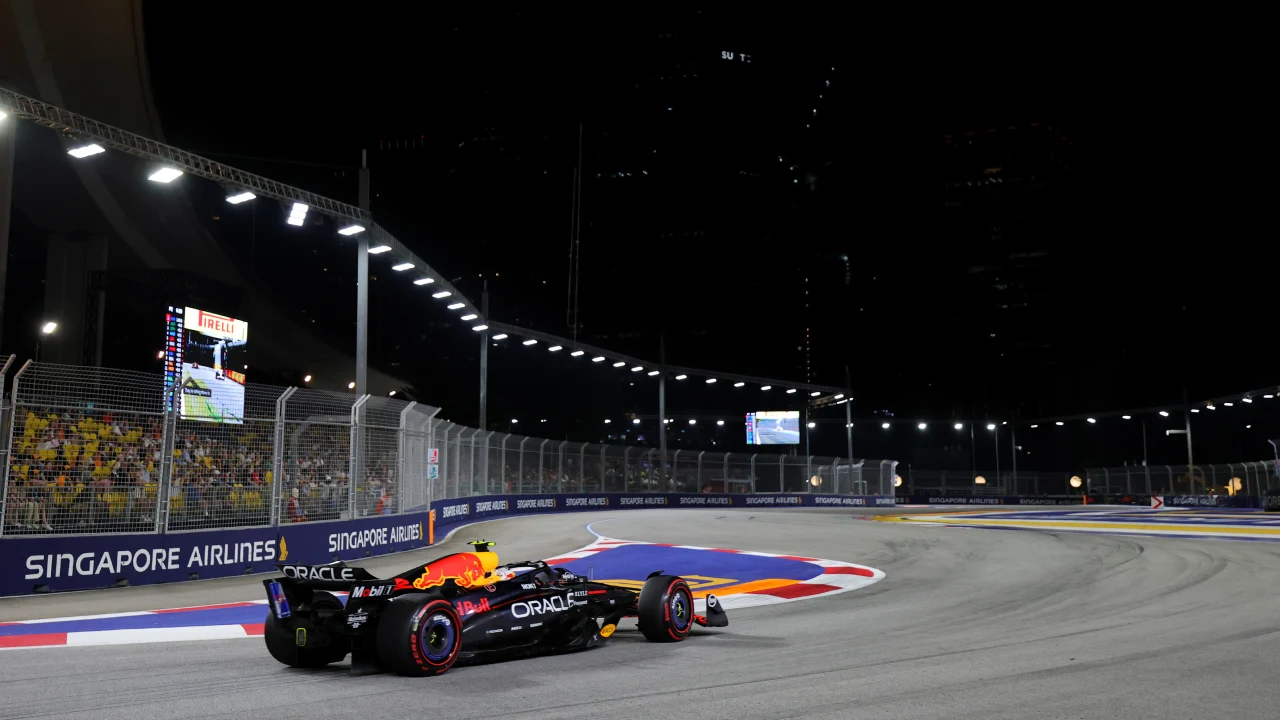
But the most important day for them is the Thursday of the race week. This is when everyone gets to see the lights in action for the first time, and is the perfect opportunity to make any last-minute adjustments before official racing sessions start.
“Usually [the feedback] is on Thursday,” said Grilli, “when there is a safety car that is testing the track. So if we have something that they might want to change … we can do it immediately after.”
Today, the circuit uses Philips ArenaVision LED gen3.5 floodlights, which are capable of producing 75 times more light than the streetlights you might see on your drive back home at night. The lights are set up on 33-foot (10-meter) tall trusses, which do not interfere with the city skyline, a consideration that was unique to Singapore until recently.
Proving that night races can happen anywhere
One thing that made Singapore a logistically tricky location for a night race was the fact that it is held on a street circuit.
“Because we have to keep the city going, it’s like starting from scratch every time the race comes around,” Grilli said to Tattler Asia.
Unlike on a dedicated racing circuit, street tracks need to be set up and taken down every year. This makes a night race all the more difficult, because equipment and lighting need to be built from the ground up each time.
“Before bringing everything here [to the track], we have to be sure that the area has already been cleared,” Grilli explained to Channel News Asia. This adds even more steps and considerations than for a night race in, say, Qatar or Abu Dhabi, which utilize circuits with floodlights already set up and waiting year-round.
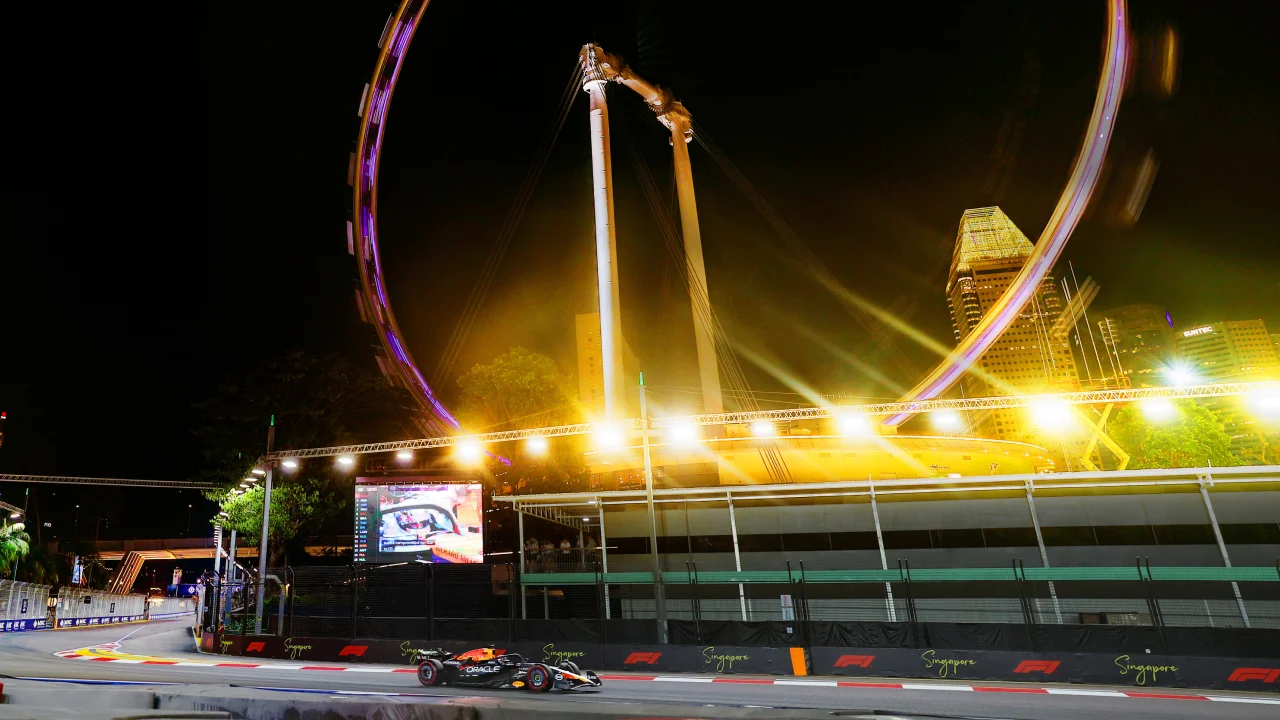
Crashgate aside, that first Singapore Grand Prix and the massive audience that it drew showed that if a night race can happen in a city, it can happen anywhere. And just the following year, in 2009, Abu Dhabi was added to the calendar as a day-to-night race, starting around twilight and ending in nighttime conditions. In 2014, Bahrain switched to nighttime and hasn’t looked back since, and in 2021 both Qatar and Saudi Arabia were added as dedicated night races.
Then came the debut of the Las Vegas Grand Prix in 2023. This race has an even more direct tie to the Singapore Grand Prix. After seeing how successful DZE was at executing the Singapore Grand Prix, F1 called on the company again to help light up the Las Vegas Strip Circuit. Working with local company Show and Design Group, DZE helped realize one of the most spectacular night race debuts since that first race in Singapore.
Today, night races are a standard part of the F1 calendar and rank among some of the most highly anticipated events of the year. But none of them would have been possible without Singapore and the blueprint that it helped illuminate. From launching the FIA into action to establishing the requirements that make it safe and entertaining, the Singapore Grand Prix took an experiment and made it into a must-have format that has defined modern F1.
.webp)

%20(1).jpg)
.webp)

.png)
.png)