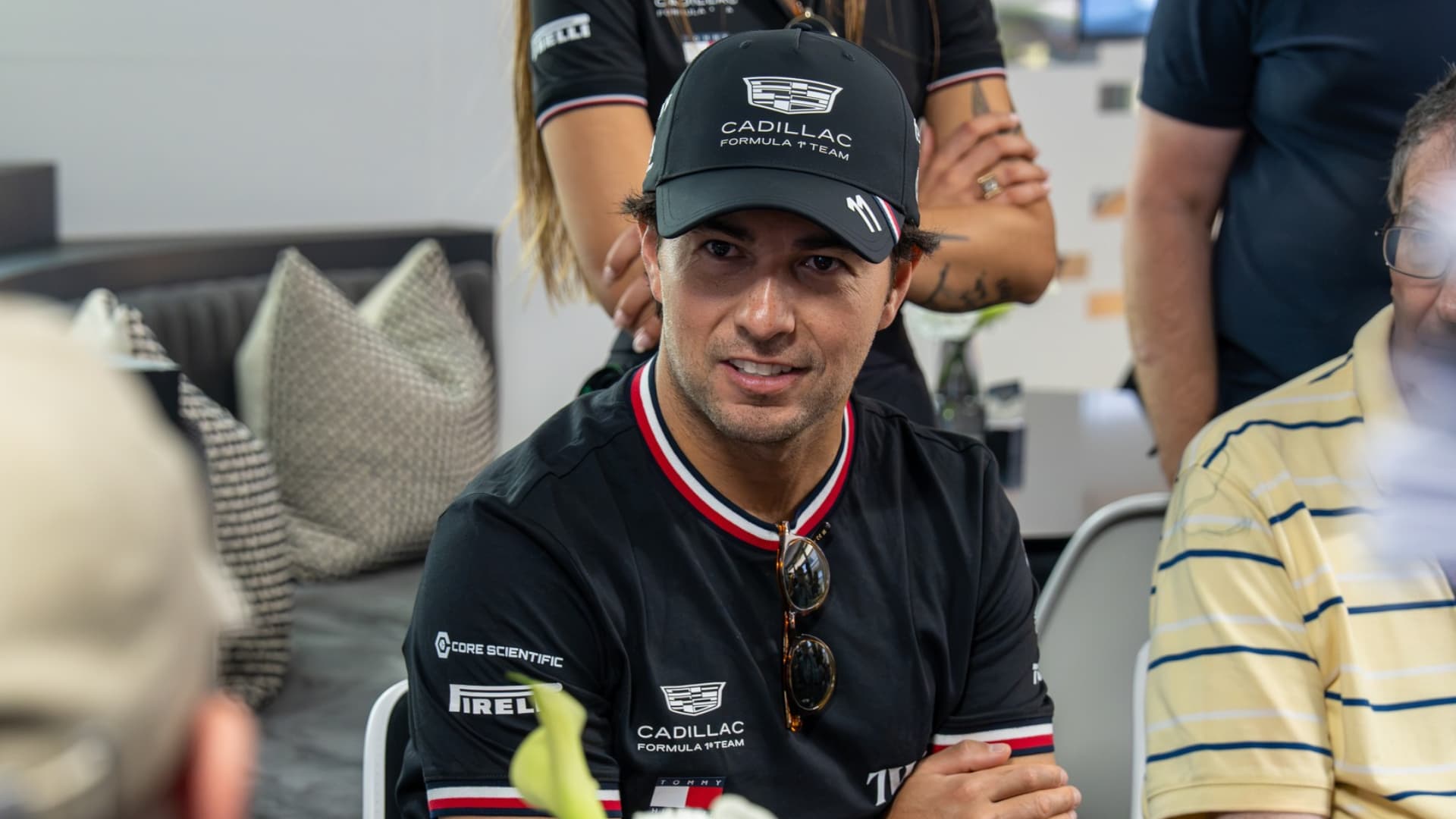

All eyes will be on Cadillac Formula 1 driver Sergio Pérez this weekend, because the Mexican driver's 300th career Grand Prix will take place at his home race, the Mexico City Grand Prix. And while many onlookers might pinpoint Checo's presence as the reason for the skyrocketing popularity of motorsport in the country, we can actually credit a different man for the feat: Carlos Slim Domit, who has been providing support to Latin American drivers through a program called Escudería Telmex.
For Pérez, Carlos Slim Domit is a “second father.” For other drivers he sponsors, Slim is an idol who has become a friend and confidant. For Latin America, Slim has done more than almost anyone to grow motorsport’s audience, from televising races throughout the region to putting its drivers on the world stage.
In order to truly gauge the impact of Escudería Telmex, I spoke to three drivers involved in the program: Sergio Pérez, Andrés Pérez de Lara, and Tatiana Calderón. All three drivers had nothing but praise for Slim; taken together, they paint a picture of a wealthy man who has used his fortune to raise the profile of racing throughout Latin America and abroad.


Carlos Slim Domit: motorsport’s Mexican godfather

Born in Mexico City on February 28, 1967, Carlos Slim Domit is a Mexican businessman who hails from one of Mexico's most exceptional families.
His father, Carlos Slim Helú, grew up in a wealthy family and began investing in various businesses after graduating from the National Autonomous University of Mexico with a degree in engineering. Those investments succeeded; however, he is most closely associated with two different telecommunications companies, Telmex and Telcel, that provide everything from landline phone service to internet access for folks all throughout Mexico. His investments there came just before the cell phone and internet booms, which then saw him amass even more wealth and eventually become Mexico's richest man.
The billionaire's son, Carlos Slim Domit, took up the mantle in the business realm — but one of his driving passions is motorsport, which led to the creation of a groundbreaking team that has provided support to drivers in Spanish-speaking countries throughout the Americas.
The birth of Escudería Telmex, Latin America's junior program
In 2002, Carlos Slim Domit established a driver development program called Escudería Telmex, which has been revitalizing the motorsport scene in Central and South America ever since.
In many ways, Escudería Telmex resembles the driver academies that feed Formula 1, such as the Red Bull Junior Team. The program signs talented racers from different disciplines, then provides them with the financial assistance and institutional support required to turn a love of racing into a career.
In terms of global motorsport, there are two major hubs: Europe and the United States. If a driver from a Latin American country wants to become a professional racer, he or she will likely need to make an early move to one of those regions — and that's a move associated with high costs. Motorsport itself isn't cheap, and neither is relocating a family. As NASCAR driver Brad Perez explained to me in a separate interview on what it costs to race up NASCAR’s ladder, even a single race in NASCAR’s O’Reilly Series can cost $40,000 or more with a car expected to finish 25th or lower.
That’s where Escudería Telmex can step in and provide its drivers with the help they need to make it to the next step of their careers.
A large number of racers from Latin America have ties to Slim's program. Sergio Pérez broke into Formula 1 with help from Escudería Telmex. NASCAR Cup Series driver Daniel Suárez used help from the team to propel himself into American motorsport via NASCAR's Drive for Diversity Program. Four-time Rolex Sports Car Champion and three-time 24 Hours of Daytona winner Memo Rojas started his career before the foundation of Escudería Telmex but was supported by the team almost immediately. And that's not taking into account Telmex's NASCAR team or its sponsorship of drivers in Formula 3, Formula 2, Nitrocross, rally, IndyCar, and karting.
Sergio Pérez's game changer
The team's most successful and visible alumnus is Sergio “Checo” Pérez, who is currently racing for the Cadillac Formula 1 team. I asked him about Escudería Telmex during the build-up to the United States Grand Prix, and he said that the program has “been super, super important to me. Without Carlos [Slim], I wouldn't be here, because he's been my biggest supporter since a very young age. Not just in terms of financial support; he's my second father, basically, because he really followed my career. He really followed me personally. He's a really close friend of mine; he knows everything — what's going on in my life. And he has always given me very good advice throughout my career.”
Checo first began racing under the Escudería Telmex banner in 2004, just two years after its founding. His skills in karting caught the eye of Carlos Slim, and with Slim's backing, a 14-year-old Checo was able to make his single-seater debut in the US-based Skip Barber National Championship. That enabled him to make the move to Europe, which then led to his advancement to Formula 1 in 2011.
“For Mexico [it] has been a huge thing, to get a Formula One driver,” Checo said ahead of the US Grand Prix. “We don't have much history in the sport, so to have a Mexican driver, to have a Mexican Grand Prix, it's a pretty big deal for us.”
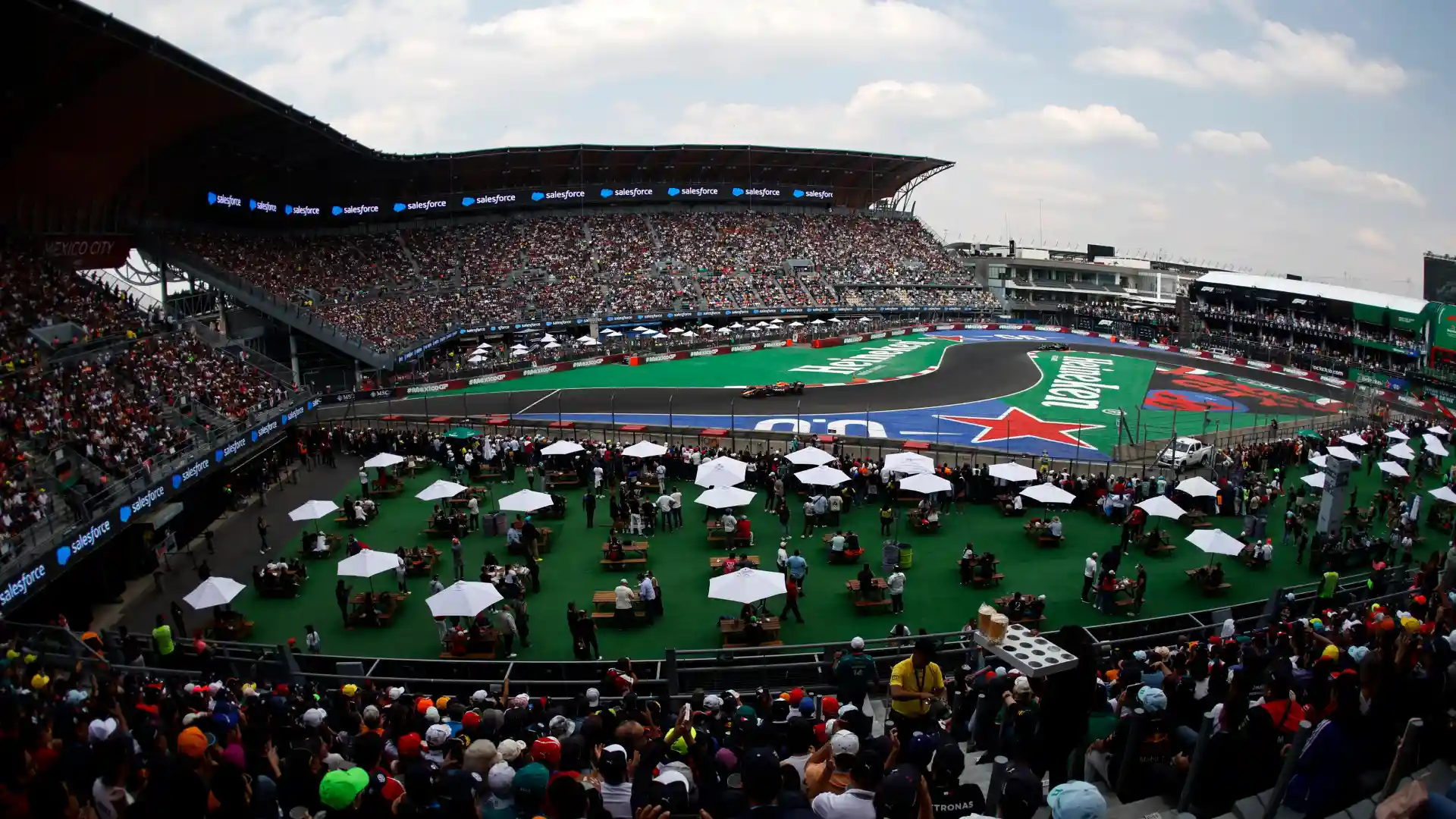
It should come as no surprise to learn that Slim was intimately involved in the revival of the Mexico City Grand Prix back in 2015, and that he's helped secure television broadcast contracts throughout various Latin American countries.
Even though Checo has been racing for decades and attracted sponsors from all around the globe, he's retained his ties to Escudería Telmex because, in many ways, those ties are as personal as they are professional.
Tatiana Calderón: Escudería Telmex's Colombian racer

While Carlos Slim often centers his focus on Mexico, he's never been shy about backing drivers from other Latin American countries — including Tatiana Calderón.
“I initially started conversations with Escudería Telmex in 2014 or 2015,” Calderón told me in a recent interview. “There was a go-kart race in Cancún that I won against some of the top Escudería Telmex drivers. Since then, I was in contact with them, and we quickly started to have a bigger relationship.”
Calderón made history in October of 2018 when she became the first Latin American woman to test a Formula 1 car — a feat accomplished at the Autódromo Hermanos Rodríguez in large part due to her backing from Carlos Slim. She's had a long career in open-wheel racing and endurance racing, including the IMSA series; today, she competes in several Brazilian series, including NASCAR Brazil and the Stock Car Pro Series.
Her first step internationally, though, came when she moved to Europe to compete in GP3. There, she was accompanied by an Escudería Telmex representative named Fernando Plata. A Mexican Formula 2 champion in 1994, Plata turned to driver management after retiring from active competition. In 2016, he came with her to Europe, accompanying her at every single race.
“I think it had a huge impact on my performance,” Calderón said. “Fernando had a lot of experience. I think that really helped me make the right decisions.”
But beyond serving as an advisor, Plata was an emotional rock for the young racer.
“I don't come from a racing family, so every time we had somebody that has experience in those areas, it shortens the learning period,” she said. “It was also super nice to have someone from Latin America [with me] because in Europe, it's different; not everyone speaks the same language as you.
“People don't look at you the same way if you're a Latin American than if you're European — but if somebody like Carlos [Slim] or Escudería Telmex are putting their name behind this girl, for sure she's gotta have something. I think that credibility really helped to at least put [my] foot in the door.”
More than that, though, her relationship with Escudería Telmex has given her a lifelong friend in Carlos Slim.
“The first time you meet him, you're not sure — you know, he's a sort of an idol,” she said of Slim. “Then he's a super nice person, super simple, loves racing.
“He wrote me a message on WhatsApp after my win in NASCAR Brazil, and we remind ourselves of when we met back in Cancún. It's been 15 or more years, and he remembered all of that. He's always ready to support; he replies immediately to anything that you ask him and he's always going to give you his personal view. He tells [you] how he can help, and if not, he connects you with the right people. It's a privilege to be so close to him.”
Andrés Pérez de Lara: From sim race winner to NASCAR driver

At 21 years old, Andrés Pérez de Lara is one of the younger non-karting racers in the Escudería Telmex program, and his current race seat in America's NASCAR Craftsman Truck Series can be directly attributed to his Escudería Telmex ties. But it wouldn't have happened without a sim race.
“During the pandemic, there was a NASCAR Mexico virtual race,” Pérez de Lara explained. “I joined without having any NASCAR experience, and I won the first race in Daytona without having any NASCAR experience.”
But he'd already had a relationship with Escudería Telmex through his father, who is also a racer. Pérez de Lara first met Carlos Slim as a young child; after that Daytona victory, Slim reached out to offer Andrés a seat in Escudería Telmex's NASCAR Mexico team in its regional version of the Truck Series.
Pérez de Lara was a teenager when he first joined the series, and at 15, he won the championship. That victory proved to Escudería Telmex that it had a new talent on its hands, and they continued to provide support as Pérez de Lara moved to America.
Speaking about his career prior to the NASCAR Mexico offer, he said, “I was doing Formula 4, so I was already in bigger cars. But this just opened a completely different opportunity for me.” He had a small amount of support from Escudería Telmex in F4; with the move to NASCAR, Pérez de Lara became far more involved. In fact, he credits the program with his success: “I don't think I end up in NASCAR if it's not for them.”
Racing in America today, Pérez de Lara says that it's easier to open his own doors now that Escudería Telmex has opened the door and built the foundation of a career. And he also knows he'll have the team in his corner.
“Carlos [Slim] has always been kind of a role model, not only for me but for everybody in Mexico,” Pérez de Lara explained. But the mentorship he's experienced from men like Jimmy Morales, co-founder and executive director of Escudería Telmex, has only served to deepen Pérez de Lara's ties to the global racing scene.
“The umbrella of mentorship they give you, and obviously the connections as well — it's a very complete program,” he said. “The biggest thing is the pride they take in [racing] in this country. The way they've supported just about every single Mexican driver that's done great things, they take a lot of pride in that, and they're always representing their country as best as they can.” And if that means Pérez de Lara needs to ask Morales for some advice, then he knows he can count on Morales for an answer.
Carlos Slim Domit: Paving the way for Latin America’s next generation of drivers and fans
No matter who you ask, the consensus is the same: Without Carlos Slim Domit, motorsport in Mexico — and in Latin America as a whole — would be nowhere near as successful.
“One of the biggest things is Checo in Formula 1,” Pérez de Lara said when asked about Escudería Telmex's impact. “He's always been very tight [with Escudería Telmex], and that really was eye-opening for everybody in Mexico, like how important their support has been to the racing in Mexico.
“I think the racing community in Mexico has grown a skyrocketing amount just because of Checo being in F1. He really opened the eyes to the public and to the community in Mexico to start following racing, and now it's one of the top sports in Mexico. Everybody knows who Checo is. Everybody knows racing. I don't really think that happens if it's not for Escudería Telmex and Carlos Slim. The whole racing community in Mexico would look so much different.”
Tatiana Calderón agreed that Slim's influence on motorsport in Latin America has been “huge.”
“He supports all kinds of motorsport — also with the media, with making motorsport more accessible to the general public,” she said. “That helps us drivers to get more interest from sponsors. They've always really helped us with the communications; for example, we're broadcasting NASCAR Brazil races on Claro Sports in 17 countries because he wants to promote this.” Claro Sports is the sports media arm of the Slim family's company América Móvil.
Calderón describes Escudería Telmex as a “motorsport village,” where things like nationality or gender matter far less than the fact that this group of people is united in the goal of promoting motorsport. There is no competition between drivers; everyone involved wants to see their compatriots succeed.
As Sergio Pérez prepares to celebrate his 300th Grand Prix start in Mexico City, the significance of his career extends beyond his own achievements. His presence has helped introduce an entirely new generation of Mexican fans to Formula 1, creating opportunities for the sport to grow in a country that has long produced passionate racing enthusiasts but comparatively few drivers able to reach its highest levels.
It wouldn’t have been possible without Slim Domit, a man who understood that building a deep-seated racing culture required far more than just sponsoring drivers. Pérez may call him his second father, but the influence of motorsport’s Mexican godfather has resonated through an extended racing family and an entire generation of fans throughout Latin America and around the world.
Photo of Carlos Slim Domit sourced from World Economic Forum via Wikimedia Commons under the Creative Commons Attribution-Share Alike 2.0 Generic license.