



Have you ever wondered what would happen if America's best IndyCar drivers challenged Europe's top Formula 1 talent to a duel? Believe it or not, that actually happened back in the 1950s, and it was called the Race of Two Worlds.
The event, hosted at the iconic Autodromo Nazionale Monza, came with a huge prize purse for the ultimate winner and the bragging rights to match — but as I'm sure you can imagine, tensions flared right from the very start.


The Race of Two Worlds: An Italian Grand Prix concept… gone wrong
The story of the Race of Two Worlds starts with an unloved renovation at Monza.
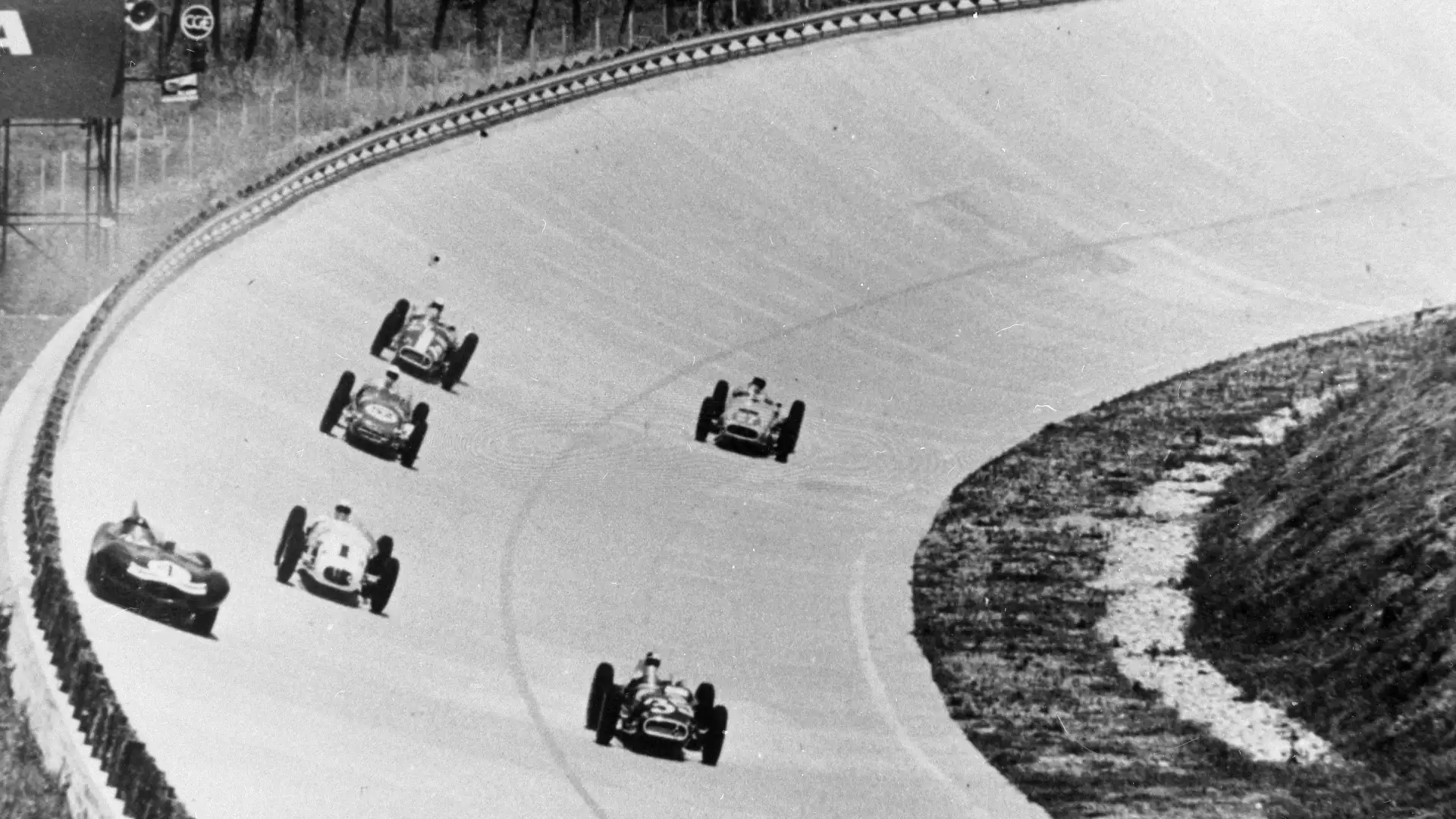
The Autodromo Nazionale Monza was the third purpose-built race track in motorsport history, and it was opened in 1922 with the idea that it'd be the perfect way for Italian racing talent to begin taking over the world. That original layout was 6.2 miles (or 10 kilometers) in length, and it was composed of two distinct features: a 3.4-mile road course and a 2.79-mile banked oval track. Organizers could host a race on either loop, or they could combine both loops to create a road course that featured a section of high banking.
Unfortunately, the banking turned out to be extremely dangerous. At least one driver was killed while racing at Monza almost every year, and when three prominent racers were killed in 1933, track organizers decided to scrap the banked section. It was just too dangerous. And when they set to work renovating Monza in 1938, they actually completely destroyed the banking.
It wasn't until 1955 that Monza's organizers started to wonder if they hadn't been a little hasty in tearing down the oval; the birth of Formula 1 and the rapid advancements in technology after World War II encouraged the track's stewards to reconstruct the banking for use in the Italian Grand Prix.
But as it would turn out… F1 drivers hated the banking.
For one thing, F1 cars simply were not designed to handle the centrifugal forces exerted by driving on a banked surface. Suspension-wise, Grand Prix cars were constructed to be low to the ground; racing on a banked oval pushed cars closer to the asphalt, which meant the underside of the body would scrape along the banking unless crew members stiffened the suspension to prevent it. But stiffer suspension was guaranteed to make for a bumpy, uncomfortable ride around the rest of Monza.
The tires of the era weren't equipped for that kind of loading, either. Over at the Indianapolis 500, tire suppliers like Firestone had decades of experience under their belt to accommodate oval racing, but that was a brand-new concept to F1's slew of tire suppliers at that time: Dunlop, Pirelli, and Englebert. There was a very reasonable concern up and down the grid that a tire could explode on that banked section and claim another life.
Juan Manuel Fangio won the 1955 Italian Grand Prix, followed by Stirling Moss in 1956. Come 1957, the drivers had managed to successfully protest the banking off the F1 schedule.
The idea of once again abandoning the banking after having spent millions reviving it did not appeal to the folks at Monza. Instead, they came up with an audacious marketing idea: let's invite the best drivers from the Indianapolis 500 over to Monza to challenge the Formula 1 field in a “Race of Two Worlds.”
“Cheese champions” vs. “uncouth scrappers”
American journalist Robert Daley traveled with the Formula 1 circus for several years, and, in his 1961 book Cars at Speed, he makes a case that the Race of Two Worlds actually created a rivalry between F1 and IndyCar that didn't exist before.
It's worth remembering that, while there may not have been a specific rivalry between the American and European racing scenes at this point, there were definitely significant differences in the respective approaches toward racing. In America, where racing was primarily done on oval tracks, there was a preference toward power and speed over all else. In Europe, with its twisty road-based race circuits, lighter and more agile cars had the upper hand, even if they didn't produce tons of horsepower. European drivers saw the four corners at Indianapolis and wrote the entire race off as being easy, even though F1 talents like Alberto Ascari tried and failed to make an impression at the 500. American drivers saw the small, underpowered European cars as being easy to drive, even though they often featured more mechanical complexity than an American car.
So when the Americans turned up calling the European drivers “cheese champions” — an insult levied at a group of men the Americans saw as doing nothing but eating cheese and drinking wine — the Europeans got a little defensive.
From the perspective of Europeans, Indy drivers, Daley writes, “are scrappers, men who have fought their way up from nothing to the point where an entire nation watches them for a few hours one day a year — and will have nothing to do with them the rest of the time, regarding them as reckless, uncouth, dirty.”
But for all of the head-butting, 1957's big race would almost fail to happen.
The European boycott jeopardizes everything
For as much as they loved the idea of the Race of Two Worlds, the organizers at Monza knew it would require a whole lot of money to enable it to go off without a hitch. To get the Americans overseas, they knew they'd have to pay for travel. To get Europeans to take part, they knew they'd need to offer a prize worth racing for.
The inherent differences between the American and European cars, though, meant that the race would need to be run in accordance with American standards. In the 1950s, Indy cars only featured two gears and needed to be push-started, so organizers agreed to host the race with a rolling start. That flew in the face of the standing starts that Grand Prix drivers were used to. American drivers raced counterclockwise, so Monza would host its race counterclockwise. And engine limits were determined based on the omnipresent 4.2-liter Offenhausers used by Indy drivers, even though the largest Grand Prix car engine was 2.5 liters.
It was clear to the European drivers that the rules were not in their favor. So, with the Americans already on the ground in Italy ahead of the June 29th event, they refused to race!
They formed the International Professional Drivers’ Union in order to present a united front, and the Grand Prix field declined in unison to take part. In moments, the whole prospect of the race looked set to fall apart, and the American drivers had their impression of European racers — namely, that they were chicken and couldn't handle the intense style of American racing — confirmed. Only Maserati deigned to enter a car for its driver Jean Behra, while a privateer named Mario Borniggia entered his own Ferrari.
An impressive contingent of Americans had already flown to Italy by this point — Tony Bettenhausen, Eddie Sachs, Troy Ruttman, Jim Rathmann, Johnnie Parsons, Jimmy Bryan, Bob Veith, Pat O’Connor, Paul Russo, and Andy Linden — and it looked like they would have an easy cruise to the checkered flag.
For a moment, at least.
The organizers of the Race of Two Worlds had managed to secure financial backing from a slew of oil companies, which meant that the prize for victory was a whopping $35,000 — or, over $400,000 today when adjusted for inflation.
While European drivers were often contracted to their race teams, meaning they were paid a salary and guaranteed a cut of the entry and prize purses, there were no other races on the continent that offered that much money for winning.
That caught the attention of a Scottish race team called Ecurie Ecosse. Now, Ecurie Ecosse didn't compete in Formula 1, but it had just won the 24 Hours of Le Mans the week prior with its Jaguar D-Type sports cars, and because the Race of Two Worlds regulations only specified engine displacement and not car type, it was totally legal to enter those cars. So, Ecurie Ecosse entered three of its own racers to challenge for victory. They had a much lower top speed than the Indy cars, but because the race was run over the course of three shorter heats, they felt they'd have a pretty good chance of at least raking in some impressive prize money. If the Grand Prix drivers would boycott, the Jaguars would make the most of it.
1957: IndyCar drivers dominate at Monza
As expected, the Indy drivers dominated at Monza during qualifying. Tony Bettenhausen, who would become a two-time champion in American open-wheel racing, snagged pole position with an average speed of just over 177 mph, which meant he lapped the track in just 53.7 seconds. For comparison, driver Jack Fairman was the best Jaguar qualifier, and he could only manage a lap time of 59.8 seconds. Mario Borniggia withdrew his privateer Ferrari without turning a lap after seeing what the American cars could do; Maserati withdrew as well when driver Jean Behra could only manage a time of 1:03.2 in a Formula 1 machine; it wouldn't look good to have an F1 car outpaced by both Indy machines and sports cars.
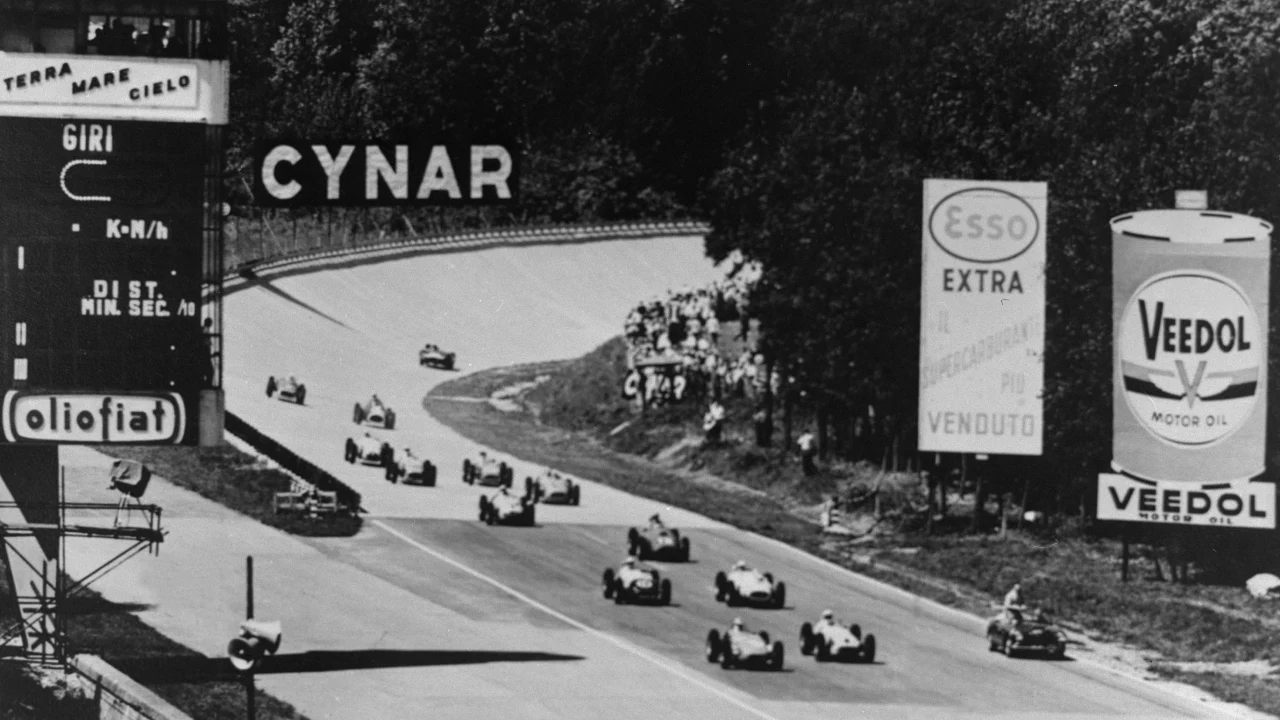
According to Robert Daley, the start of the 1957 Race of Two Worlds brought with it a whole lot of laughter from the European contingent. Because the Indy cars only had two gears, it took them longer to climb to their full speed, so at the conclusion of the first lap of the first heat, one of the Ecurie Ecosse Jaguars actually led the field. However, by the end of the event, the Indy machines were clearly the class of the field.
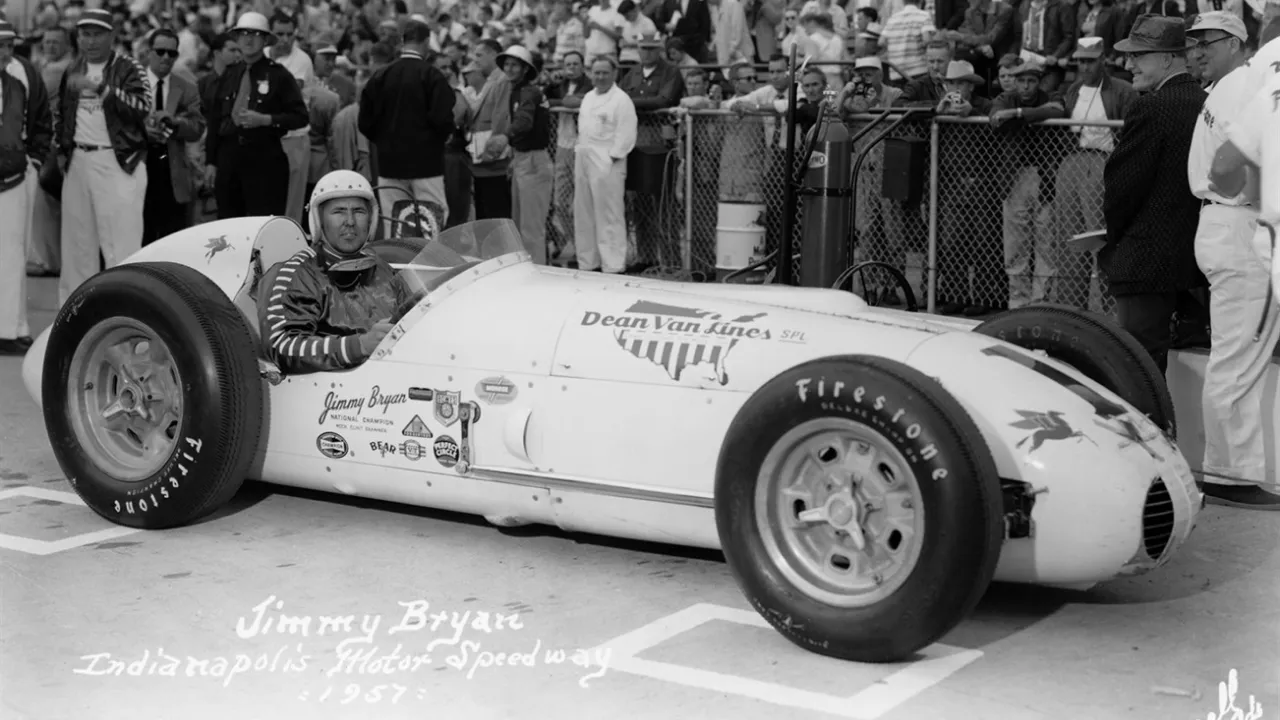
American Jimmy Bryan brought home the $35,000 prize as the only driver to complete all 189 laps over the course of all three heats — but the three Jaguars finished fourth, fifth, and sixth and brought home a seriously impressive paycheck of their own.
A challenge in America that Juan Manuel Fangio couldn't refuse
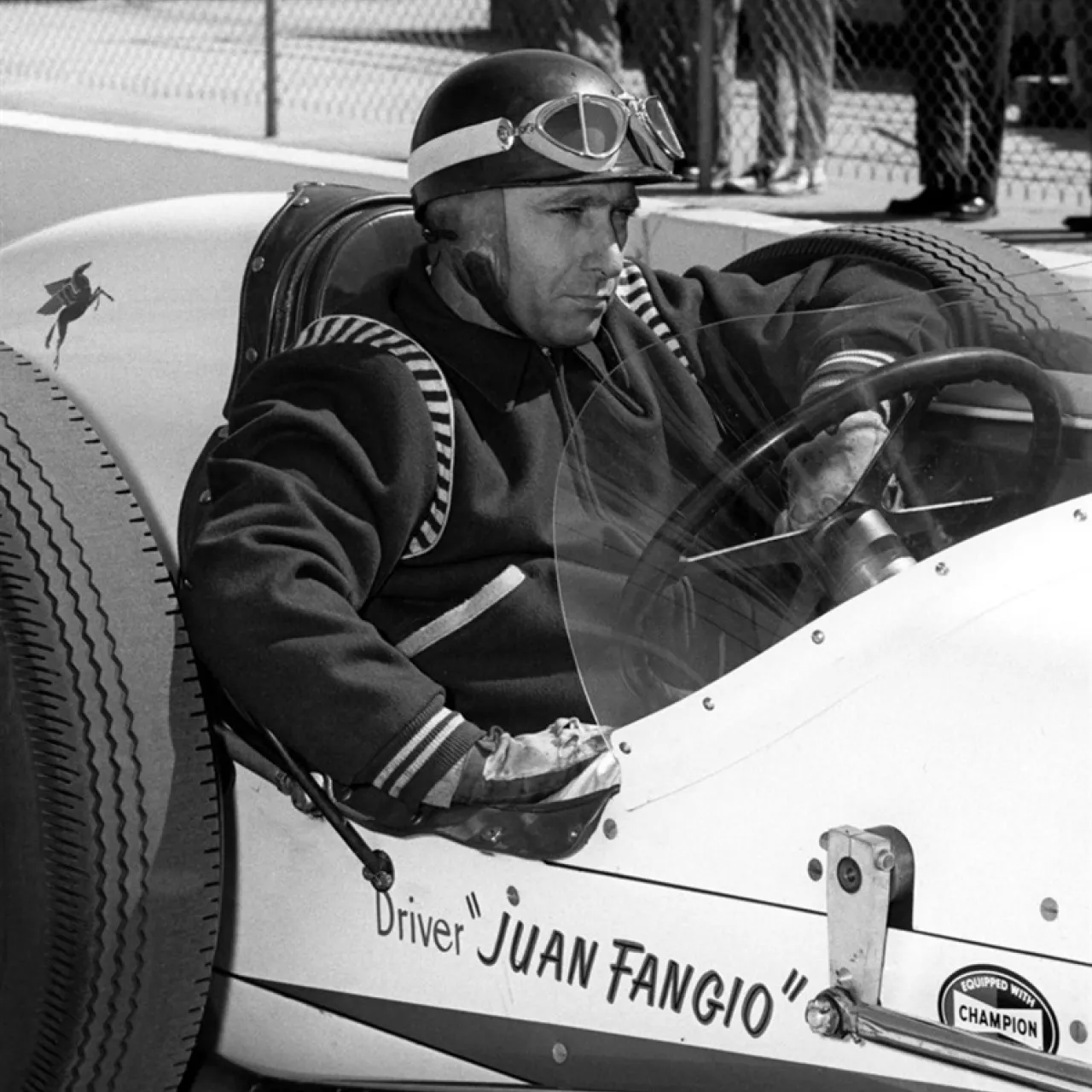
There was another major impact, too: Juan Manuel Fangio decided to try his hand at the 1958 Indianapolis 500.
When Fangio joined the European contingent's boycott of the Race of Two Worlds, American publisher turned team owner Floyd Clymer boldly claimed to the media that Fangio couldn't be considered a “true” World Champion if he didn't try his hand at the Indianapolis 500. In fact, he made a very public wager: If Fangio passed the rookie test, he'd give Fangio $500. If Fangio qualified in the 33-car field, he'd give Fangio $1,000. If Fangio finished the 500 higher than fifth while driving an American car, he'd give Fangio $2,500. If Fangio could finish the 500 higher than fifth while driving a foreign car, he'd give Fangio $5,000.
Fangio accepted. He passed the rookie test and took on a few practice sessions, but he ultimately withdrew from competition before qualifying. He donated the $500 he'd earned from Clymer to a local cancer charity, then flew home to Europe.
1958: Formula 1 finally comes out to play
The inaugural Race of Two Worlds was successful enough that the folks at Monza scheduled a second running in June of 1958 — and this time, the Formula 1 field was ready to compete.
It was the prize purse that changed their minds. A truly top-notch racer in Europe could only expect to make $35,000 over the course of a full season, but Jimmy Bryan won that much for winning a single race — and the Jaguars that had finished fourth, fifth, and sixth had brought home plenty of money, too. And with a similar purse on the line for 1958, F1 was ready to play.
Ten Americans were shipped over immediately following the 1958 Indy 500: defending Race of Two Worlds and reigning Indy 500 winner Jimmy Bryan, Rodger Ward, Jimmy Reece, Don Freeland, Ray Crawford, A. J. Foyt, Johnny Thompson, Ruttman, Rathmann, and Veith. But this time, there were plenty of Grand Prix drivers on hand to enter the fray.
In fact, two of them opted to compete in an Indy car: Juan Manuel Fangio and Maurice Trintignant both raced Kuzma-Offenhausers entered by different teams.
On the Grand Prix front, two entries came from Scuderia Ferrari, but the challenge of the race meant those two cars were shared between three drivers: Luigi Musso, Phil Hill, and Mike Hawthorn. An Indianapolis-spec Ferrari was entered by Luigi Chinetti's North American Racing Team for Harry Schell, while Stirling Moss entered a custom-built open-wheel Maserati. Ecurie Ecosse, too, came with two Jaguar D-Types and one custom Lister-Jaguar.
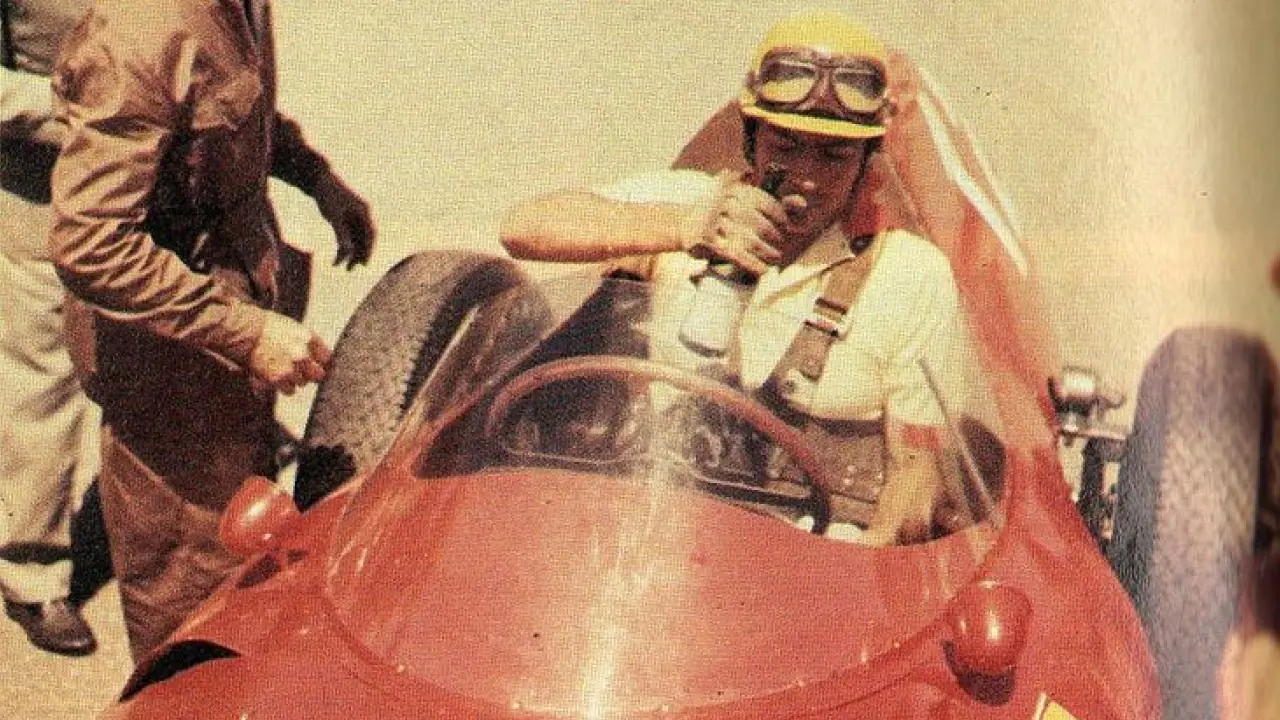
Once again, tensions between the Indy drivers and the Grand Prix drivers simmered away, even though three of the nine non-Indy racers were actually American! Masten Gregory, Phil Hill, and Harry Schell all raced under American licenses, though they'd opted to compete overseas instead of at home. And they weren't afraid to rib one another.
On race day, Daley says that Gregory pulled Jimmy Bryan to the side and announced, “I'll watch out for you in my mirror, Jim, and let you pass any time. Where do you want to pass, high or low?”
“Masten,” Bryan replied, “it don't make a damn to me what you do. I'll go by you so fast it won't make any difference at all.”
Chaos reigned right from the start. Rumor had it that Fangio had been handsomely paid by the organizers to compete in the Kuzma-Offenhauser as part of a ploy to get more fans in the stands. But every time he lined up on the grid for one of the three heats, he claimed some mysterious mechanical fault had plagued him, and he ultimately only contested three laps.
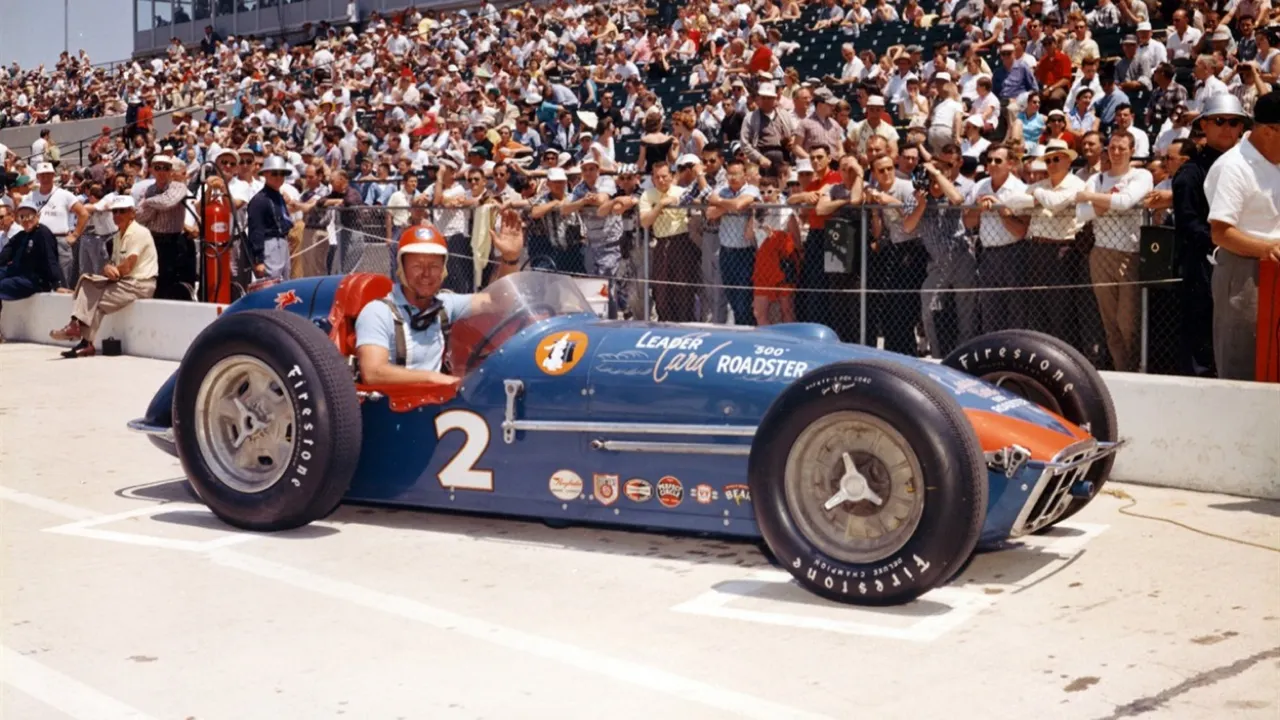
Yet again, an American — Jim Rathmann — came out on top. Only the Ferrari shared by Phil Hill, Luigi Musso, and Mike Hawthorn managed to last the duration of the race.
The racing stopped, the rivalries continued
Unfortunately, that would be it for the Race of Two Worlds. The prospect of seeing Indy cars challenge Formula 1 machines had failed to draw enough of a crowd for Monza’s organizers to make a profit off the event. Monza tried to re-implement the banked oval as part of its F1 layout for the Italian Grand Prix in 1960 and 1961, but the critiques remained, and the banking was abandoned.
In the years that followed, Formula 1 and IndyCar have remained separated by their cars, circuits, regulations, and racing philosophies. While the experiment failed to bridge these series commercially and culturally, there is something race fans can agree on this weekend: that whether you’re cheering for your “cheese champions” in Monza or your “uncouth scrappers” at Laguna Seca, there’s always a rival series you can root against, just like in generations past.

.jpg)

%20(1).jpg)
.png)
.png)