





For most people, driving over 200 mph (320 km/h) would be more than enough adrenaline for one lifetime. For Formula 1 drivers, it's just part of the job description.
But when the race is over and the helmet comes off, the need for speed doesn't always disappear. Some trade their F1 cars for dirt and gravel bikes, launching themselves over jumps and tearing across off-road tracks. Others take to the skies, swapping the cockpit of their car for that of an airplane. With so many ways to get their adrenaline fix, let’s take a look at some of the most extreme sports that F1 drivers gravitate toward in their free time.


Trading paved streets for muddy trails
If driving one of the fastest things on four wheels in a new part of the world every other weekend isn’t cutting it, how about going fast on two wheels?
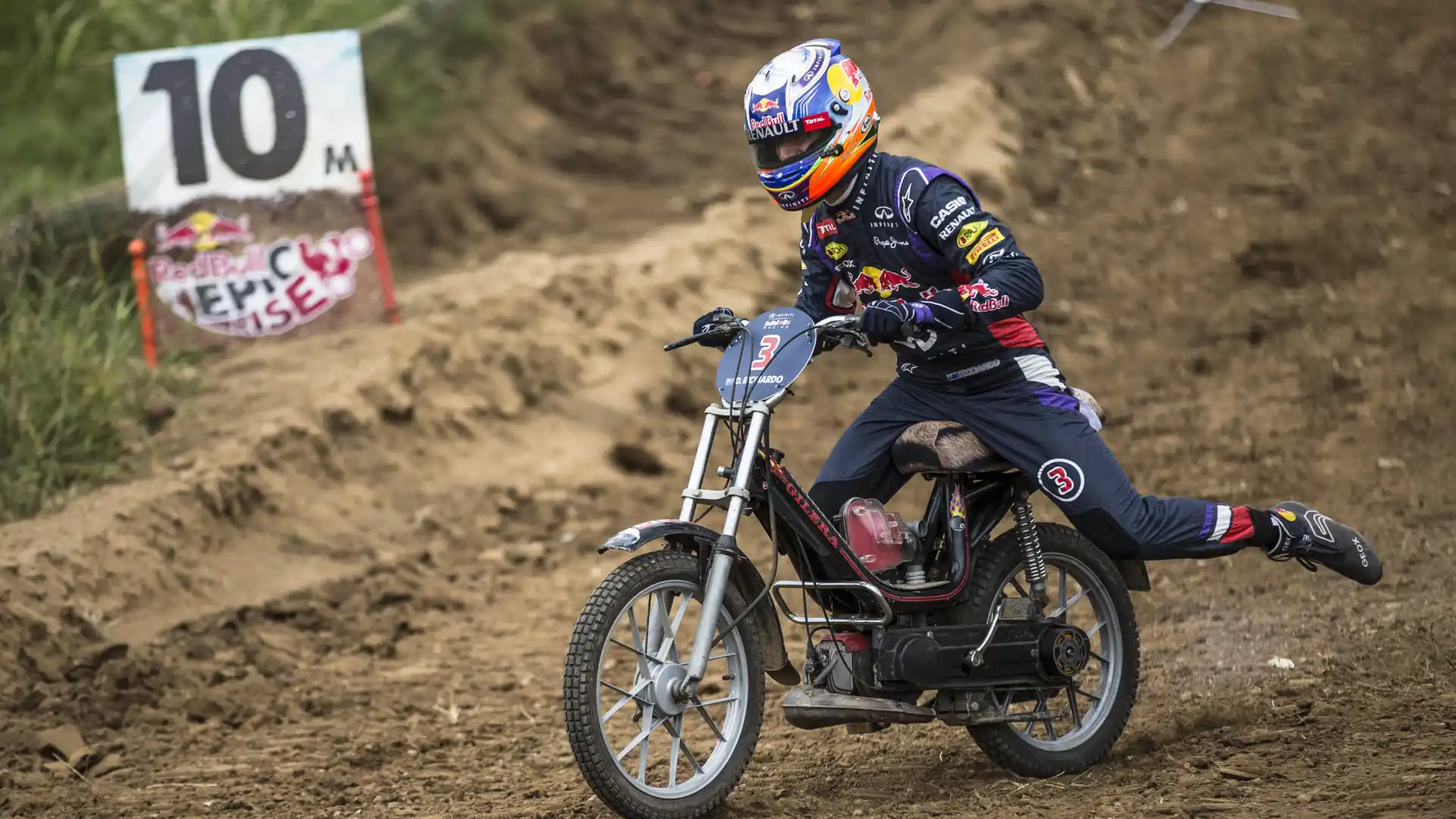
That certainly works for Liam Lawson and Daniel Ricciardo when they hop on dirt bikes.
For Lawson, dirt biking isn’t a hobby he only picked up after reaching F1, it is a passion that goes back to his childhood in New Zealand when a bike was always at the top of his Christmas list. While he rode with friends who owned them, he never had one of his own.
Now that he’s older, he’s built himself a track back home. Of course he enjoys the fun and thrilling aspects of the sport, but it also aids him in becoming a better racing driver, as it offers a healthy mental break and a different set of physical demands and sensations. In an interview with Lawrence Barretto in 2026 for the F1 series ‘Off the Grid,’ Lawson shared that he finds that the variability of dirt biking, specifically the "freest feeling" of being in the air, provides a rush he doesn’t get from racing cars.
It took Lawson’s Aussie neighbor, Daniel Ricciardo, a bit longer to make the transition from four wheels to two. Ricciardo started out riding quad bikes as a kid because his mother was not too keen on him having a conventional bike. However, now, in his adult life, he spends his time riding with motocross stunt athlete Axell Hodges.
Dirt biking is a world away from the precision of an F1 race, where every movement is calculated and every corner is approached with a particular line in mind. On a dirt bike, the terrain itself becomes part of the challenge, and getting airborne requires a different combination of timing, balance, and control.
That new set of challenges also comes with a new set of risks that one wouldn’t typically encounter behind the wheel of an F1 car. When Ricciardo injured his collarbone in August of 2025 after crashing on a dirt bike in Queensland's Daintree Rainforest, the danger was fundamentally different from an on-track crash. In an F1 cockpit, drivers are shielded by halo devices, harnessed into survival cells, and surrounded by car components and track barriers designed to absorb the shocks from any hard hits. On a dirt bike in the forest, riders are directly exposed to unpredictable terrain such as slick clay, hidden roots, and loose rocks, and even a low-speed fall forces the body to absorb the impact. The incident is a reminder that the risks of motorsports don’t necessarily end when drivers leave the circuit.
Going the distance on gravel bikes
It is of little surprise that many F1 drivers turn to other racing sports like running and biking in their free time, but every now and then they take it to the next level. One such driver is Valtteri Bottas, who has grown a shine to gravel biking in recent years.
“When I met my partner [Tiffany Cromwell] I began riding gravel a lot more,” said Bottas during an interview with performance bike brand Canyon earlier this year. “I fell in love with it. Obviously, Formula 1 is the priority for me, but cycling is a close second.”
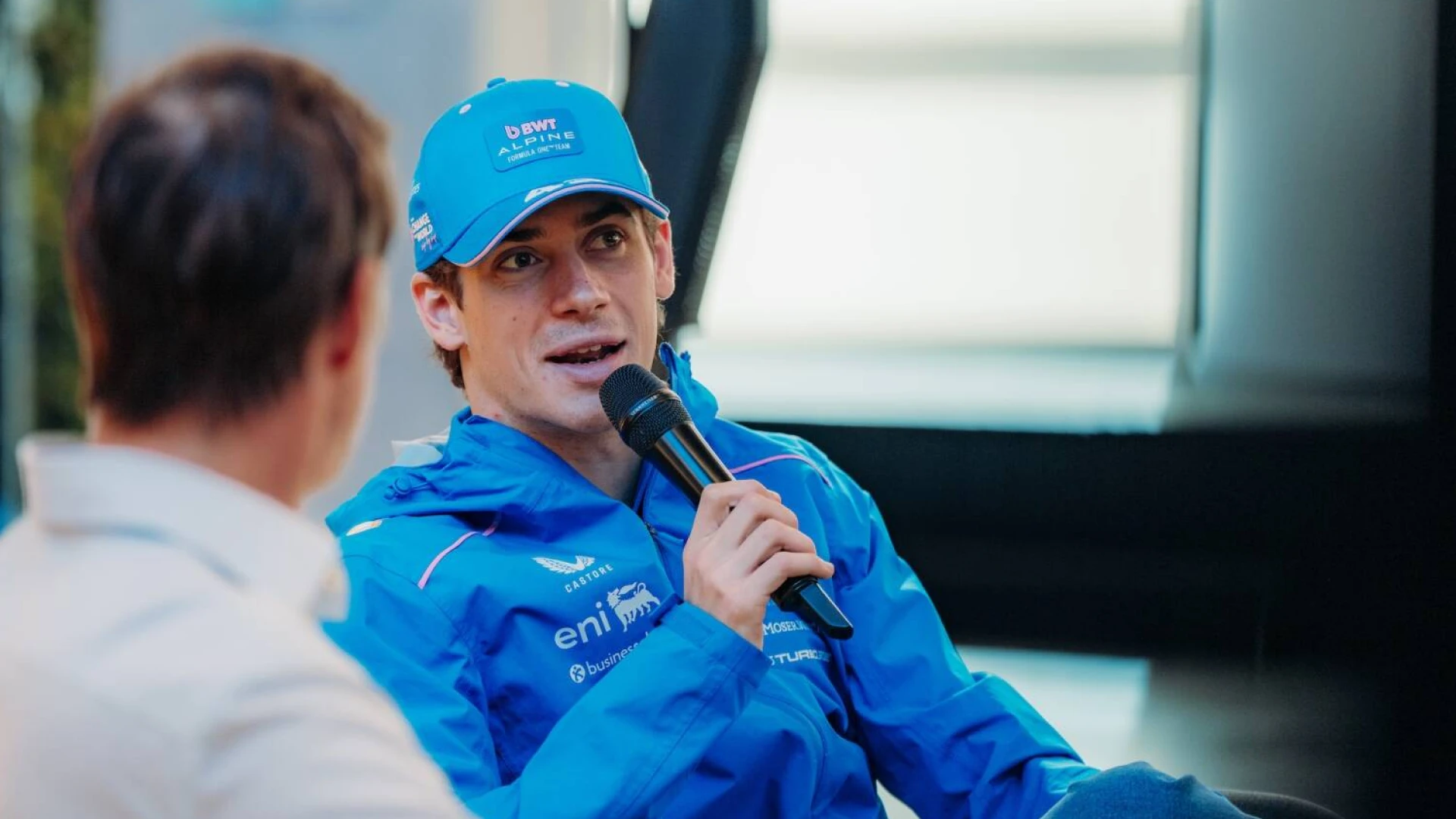
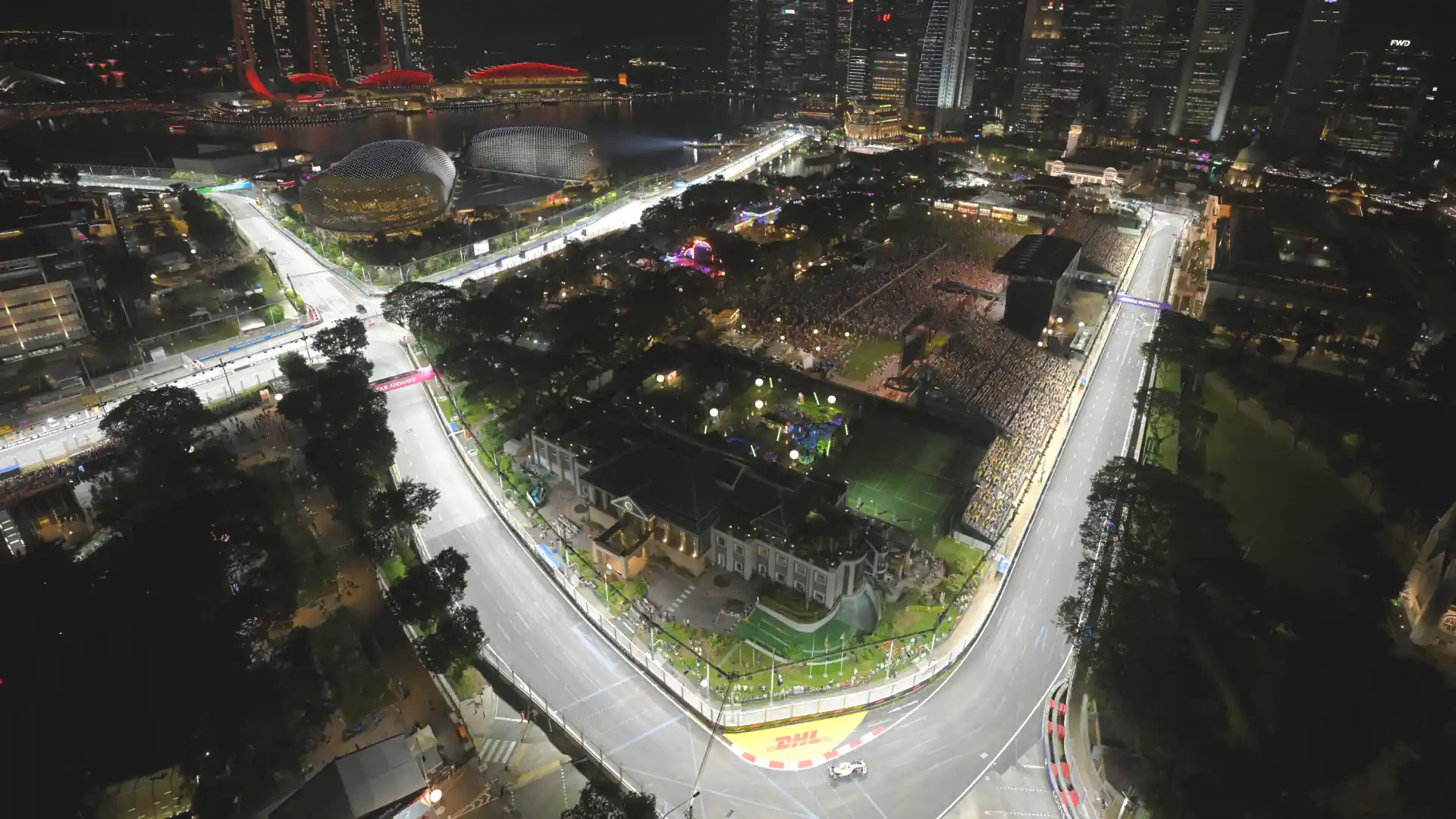
And indeed, we would be remiss to write about F1 drivers taking on extreme sports without mentioning his recent gravel biking adventure from the Bahrain Grand Prix in Malaysia to Singapore for the Grand Prix the following weekend.
While he could have taken the one-hour, 15-minute flight between Kuala Lumpur and Singapore, Bottas instead chose to go on a four-day journey, taking over 14 and a half hours to ride from Sepang to Singapore on his gravel bike. The trip saw him covering all sorts of terrain, from country roads to nature paths and trails.
"Sometimes you just have to jump into things," he said to F1. "You have to just go for it and this is what I did. It sounded a little bit like a crazy idea but actually ended up being absolutely fine."
But perhaps even more than just tackling something that seems impossible, his love for gravel biking stems from his love for exploration. In that same 2026 interview with Canyon, Bottas said “For me, the perfect ride is in a new location. I love to explore. Whether it is in Finland, in the U.S. or wherever I'm in the world, I want a new ride. You try to gain a bit of knowledge from locals and you have a blast. You see new scenery, new views, new roads, new surfaces. The ride would be on a gravel bike because that's my favorite at the moment.”
Indeed, this is exactly what he got on his international bike ride. New sights, new adventures, and the thrill of yet another ambitious mission accomplished.
It’s raining F1 drivers! When racers go skydiving
What do you do when you want to get as far away from your day job whizzing around on land? For a few notable F1 drivers, the answer is to go whizzing through the sky at staggering speeds. In other words: skydiving.
For Lewis Hamilton, who got his skydiving license in late 2018, skydiving is a means of resetting. “I’ve been learning the past couple of years and it’s one of my favorite things to do. It’s such a great way to clear the mind,” he said to Mark Riccioni of Top Gear on a rare day off between the 2023 and 2024 F1 seasons, which Hamilton chose to spend in the skies.
Thankfully for Hamilton, his then-team principal, Toto Wolff, made his stance on extreme hobbies very clear back in 2022 and took no issue with his lead driver jumping out of airplanes for fun.
"I allow everything,” Wolff said to Austrian media in 2022. "Because that's what makes Lewis special. Others meditate or run, but Lewis jumps out of a plane to clear his head. And he should! As long as the performance is right, he can do anything.”
Unfortunately, not all teams share the same view. When Ferrari driver Charles Leclerc revealed during the Autosport International 2020 in Birmingham, England, that he tried skydiving, the Scuderia was not as supportive as Wolff had been.
“You normally should [ask the team for permission],” he said during a Q&A session. “[But] I didn't for skydiving, because I just told myself that in case it [goes] wrong I will not be here to be told off. So, yeah, I just went for it, and then they were a little bit upset.”
Yet while some drivers go skydiving primarily for the sake of entertainment, others see it as a means of training. Mick Schumacher, for example, has learned to hone his body awareness throughout the 1,600-plus jumps he has done since he was a teenager.
"It is not only an opportunity for me to get to know my body better,” Schumacher said to Motorsport back in 2024. “You have this [co]ordination of feet, hands, body, head and eyes, and what they do. It gives you an idea of what to do when racing… Sometimes you might get pushed into a peculiar position so you have to act quickly, that I knew how to do from racing but it helps to emphasize it time and again, especially when you have no security around you like in a race car.”
Is it a bird? No, it’s a plane!
What’s the next best option if you need the roar of an engine but can’t get it on land? Well, the roar of a plane engine, of course.
For the late three-time World Champion Niki Lauda, that roar of a plane engine was an all-too-familiar sound. That’s because aviation was just another facet of a career that extended well beyond F1. While racing for Ferrari in the mid-1970s, Lauda experienced the convenience and freedom of flying privately, but he was never content with just getting from one circuit to another. As a driver, he built his reputation on precision, technical insight, and an ability to manage risk, and aviation demanded those same things but in an entirely different environment. Across his lifetime, he earned his pilot’s license, established and ran several airlines—Lauda Air, NIKI, and Laudamotion—and amassed over 18,000 flight hours.
The aviation bug must run in the Ferrari family’s veins, as Leclerc has also taken to the skies. But his aviation adventure looks a little different; rather than building an airline empire, the Monegasque driver got a taste of military aviation when, in 2024, he joined the French Air and Space Force for a 48-hour training mission aboard the Rafale, a supersonic fighter jet. Leclerc even documented the experience on his YouTube channel, offering fans a glimpse into a world where speed and precision look a whole lot different.
Whether it’s soaring through the clouds, falling through the sky, gravel biking from country to country, or launching off a dirt bike jump, these side quests offer F1 drivers something different from life in the paddock. Because apparently when you do it full-time, driving the most advanced cars in the world at over 200 mph isn't always enough.
.jpg)


%20(1).jpg)
.png)
.png)