

Before the checkered flag had even fallen on the 2015 United States Grand Prix, fans could tell the race was in trouble. The Circuit of The Americas (COTA), the event's home in Austin, Texas, had spent the full weekend being hammered by a hurricane. Fans who braved their way to the track for Qualifying were turned away or forced to shelter in the main grandstand, and Sunday was a wet and muddy mess.
The race itself settled the title fight between Mercedes teammates Lewis Hamilton and Nico Rosberg, but fans at the track — myself included — tend to remember the weather more than anything else, because it left circuit organizers desperately scrambling to appease spectators, government officials, and even Formula 1 itself to ensure the USGP lived on for another year.
To make that happen, though, the track would need a savior who could wash away the bad memories. And that savior came in the form of megastar Taylor Swift.


The hurricane that almost drowned Formula 1 in Austin

The 2015 United States Grand Prix had all the makings of a smash success — at least, to the extent that an American F1 race in the pre-Drive to Survive era could be a smash success.
The intense championship battle between Mercedes teammates Lewis Hamilton and Nico Rosberg had stretched into its second year, and tensions were particularly high because Hamilton could mathematically clinch the crown at the Circuit of The Americas. For the first time in almost a decade, an American driver — Alexander Rossi, racing for the backmarker Manor team — would be racing in a home event. And as the weekend got closer, the threat of rain promised to throw the running order into chaos.
That rain stemmed from a storm system named Hurricane Patricia, which made landfall on the west coast of Mexico on October 23, 2015. While the version of Patricia that hit land had weakened from its classification as the most powerful tropical cyclone ever recorded in terms of sustained winds, tendrils of that system still swept up into Texas, promising a wet weekend.
But no one was expecting how wet it would be. On Saturday morning, Austin had been drenched, and official track activity was halted.
I lived in Austin at the time and was playing host to three of my best friends for the weekend. We were one of the many folks who turned up at the track on Saturday; COTA had technically barred spectators for the day, but there was no easy way for fans to get back to Austin, and the track had to open its gates to provide us shelter in the main grandstand. We sat there as F1 and the FIA postponed Qualifying by 30 minutes every half hour, even though there was an inch or more of standing water at certain places of the track.
Come Sunday, the torrential rain had let up enough to allow the track to open, but all the other logistics were a disaster. COTA’s unpaved parking lots had turned into a muddy soup; the track closed all lots and required fans to arrive via shuttle. However, there weren’t enough shuttles to accommodate a smooth flow of fans, prompting waits as long as five hours after the checkered flag.
The general admission areas were a mess, too. I was one of the thousands of fans that churned the grass of Turn 1 into a sticky mud pit. No one could sit down. Everyone was damp, and we watched plenty of folks slip in the muck. My friends and I vowed not to use the bathroom or buy concessions, lest we risk the same fall.
The race itself was fun, but even before the race started on Sunday, I knew the aftermath would be bad. I just didn't know how bad.
COTA faces the chopping block for 2016

Hurricane Patricia hitting Austin during the USGP was bad, but it wasn't the only existential threat facing the track in 2015.
That year brought with it the return of the Mexican Grand Prix. COTA's Texas location meant dedicated fans from Mexico often crossed the border to catch the F1 race. Everyone expected to see a dip in attendance. Together with the hurricane, that’s exactly what happened.
Formula 1 tracks weekend attendance; in 2014, the track reported a three-day crowd of 237,406. In 2015, that number dropped to 224,011. And to make things even worse, those of us who did turn up weren't exactly interested in buying cold water or beer.
It was “a financially devastating weekend for the company,” COTA CEO Bobby Epstein said to the Austin American-Statesman. “We lost millions on concessions,” he added, “and we suffered from some fans having such a bad experience they won’t be back, though I hope we can change their mind.”
Then came another financial hit.
Each F1 circuit has to pay Formula 1 a sanctioning fee in order to host an event. While the full numbers are never disclosed, it was well known that the Major Events Trust Fund in Texas provided $25 million of that sanctioning fee each year, per Forbes.
The Major Events Trust Fund was established as a way to help Texas pay for the hosting of major sporting events in the state. For example, if the NFL wanted to host a Super Bowl in Texas, the Major Events Trust Fund would be there to help make it happen. And the same went for the United States Grand Prix.
But Governor Rick Perry, who had helped negotiate the $25 million F1 deal, left office in January 2015. By November, his successor, Governor Greg Abbott was moving to cut the state's funding of the F1 event from $25 million to $19.5 million.
Perhaps in a different year, that would have been fine. But COTA had taken a major financial hit after the rain-soaked 2015 race, and it couldn't make up the deficit on its own.
Bernie Ecclestone, the man in charge of F1 at the time, was not interested in cutting a deal. While the US GP was included on 2016's provisional F1 calendar, it came with an asterisk: If the track didn't pay its sanctioning fee, it wouldn't be allowed to host the race.
But COTA had something big up its sleeve for 2016.
One Taylor Swift concert helped change everything

Before the 2016 United States Grand Prix, COTA made several promises: If more than two inches of rain were to fall in the 24 hours before the start of the race, COTA would refund 105% of all three-day weekend passes, even if they decided to show up to the rainy race anyway. It paved more spectator zones to avoid mud should it rain. It promised lower ticket prices, and it also teased major musical acts that would make buying your ticket worthwhile. It even managed to negotiate with Governor Greg Abbott to recover the cost of the sanctioning fee and guarantee its slot on the calendar.
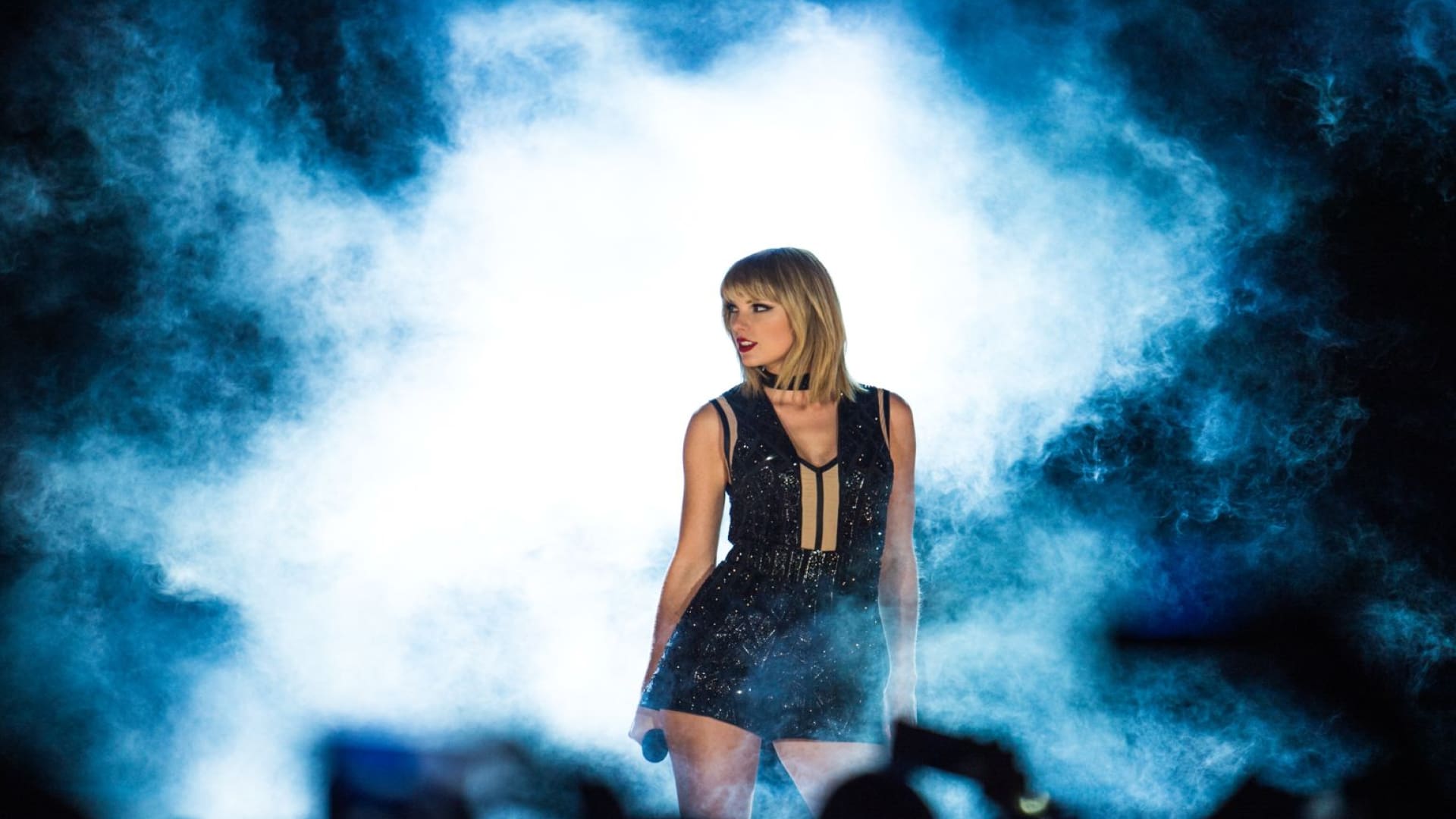
And then the big news broke: Taylor Swift would be the headline act on Saturday of the US Grand Prix.
Swift has been one of the biggest names in pop music since her self-titled debut album came out in 2006. Ten years later, her only live show of 2016 would take place at the Circuit of The Americas.
COTA did something genius here: Fans who purchased F1 tickets were automatically granted access to the concert, so if you wanted to see Swift in action, you needed to purchase passes for the race, and the cheapest option was the three-day, $150 general admission ticket. According to the Rolling Stone, the crowd for the concert alone was estimated at 80,000 people; at least one of the fans in the audience came all the way from Honduras just for the show.
The result was a then-record high attendance of 269,889 fans throughout the 2016 US Grand Prix weekend. While the track did not release exact demographics, CEO Bobby Epstein told The Athletic in 2024 that it was an early push toward accessing a younger, more female audience.
“When we look back, we feel validated for the vision that this group had to do that and offer more to the race fan and allow them to bring family members,” he said. “You can give a very full amount of entertainment, and not at all compromise the quality of the on-track action. You don’t have to take anything away from the race by giving more to the fans.”
Since its debut in Formula 1, COTA always made music a priority, but Taylor Swift headlining began the shift away from the older demographic of 2015, when Elton John performed, to a younger one. That trend continued with Justin Timberlake in 2017, Bruno Mars and Britney Spears in 2018, and Ed Sheeran in 2022. And while COTA wasn't the first F1 race to incorporate concerts into its weekend schedule, its bombastic Taylor Swift show encouraged organizers in England and Australia to follow suit.
The revitalization of the US Grand Prix

While I think it would be misleading to give Taylor Swift all the credit for saving the United States Grand Prix, I do think she played a massive role.
The attendance figures show a 20% spectator increase from 2015 to 2016; Swift's concert definitely encouraged that, but so did the good weather, cheaper ticket prices, and promises of refunds in the event of another storm. The real impact — at least for me, as someone who lived in Austin at the time and who had been going to the US Grand Prix since 2014 — has always been a little harder to quantify.
Back when I went to my first race, F1 was still a niche product in America. I didn't know any of my fellow students at the University of Texas who had even heard of it, and the city of Austin itself seemed surprised that there was a major international sporting event taking place that autumn. And if F1 wasn't resonating with the people in its host city, then it certainly wasn't a major phenomenon all across America.
The Taylor Swift concert during the 2016 US Grand Prix weekend was the first time I really saw F1 pierce the public's attention for the first time. Maybe Swifties didn't know what the US Grand Prix was, but they at least knew Taylor was playing her only show of 2016 there. There was a buzz on UT's campus that reverberated onto social media and into the greater American consciousness.
It was a short-lived moment of recognition, sure. But it was the first time that I, an American fan, really felt like F1 had pierced the greater cultural zeitgeist. The fact that this was happening just one year after the threat of losing the US Grand Prix due to a horribly-timed hurricane just made the whole thing even more remarkable. People who had never given F1 a second thought had become weekend ticket holders.
In the wake of 2015's Hurricane Patricia, that was exactly what the USGP needed. The race in 2015 had been packed with plenty of disappointment, and thousands of fans vowed never to return to an event buried in mud, debt, and uncertainty. Yet Taylor Swift set the tone for a future paved with popular modern headliners, and in doing so evaporated memories of mud and any doubts about the track's ability to draw fans. The fact that the Circuit of The Americas still hosts the United States Grand Prix is proof that its cultural pivot came at exactly the right time.