


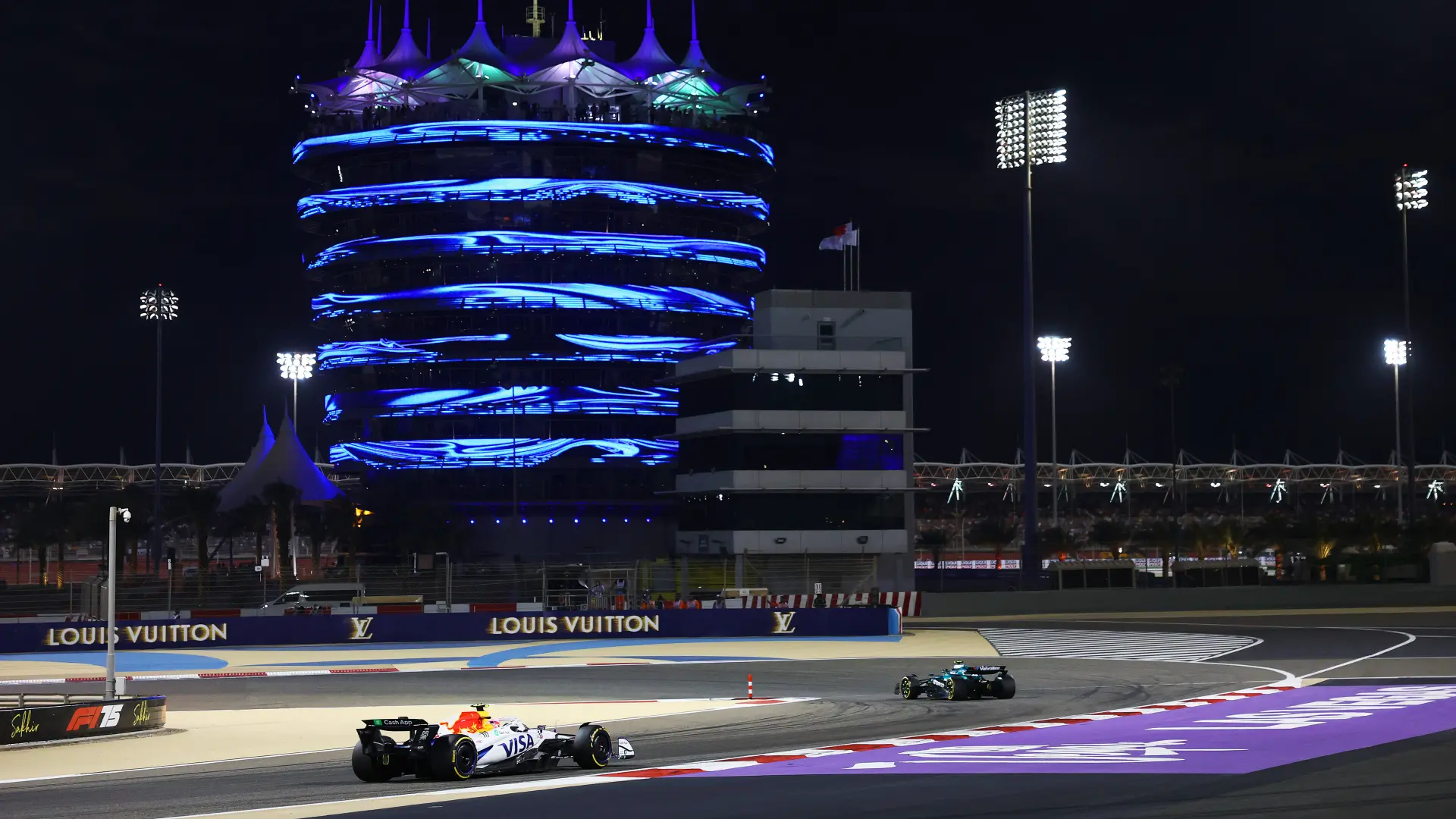


The Bahrain Grand Prix has proven itself to be a key part of the Formula 1 calendar. While it was originally set to take place April 10-12, 2026, the FIA made the critical decision to skip it as well as the subsequent race in Saudi Arabia due to the ongoing conflict in the Middle East.
But that doesn’t mean that the Bahrain International Circuit shouldn’t get its flowers (and rose water), especially given how challenging and versatile it is. So, from its flexible track layout to its unique podium celebrations and one of the longest standing records in F1, here are three great things that you didn’t know about the Bahrain Grand Prix.


The chameleon track with five different layouts
Designed by Hermann Tilke, and brought to life in 2005, the Bahrain International Circuit is an extremely versatile racing track boasting five different racing layout variations. Of those, three have hosted F1 races, with the most well-known being the Grand Prix layout, which is traditionally used for the F1 calendar. Its key feature is Turn 4, a sharp right-hander at the end of a long straight, making it a great place for overtaking.
In 2010, the circuit switched up its layout, going from the 15-turn Grand Prix variant to the 24-turn Endurance variant to honor F1’s 60th anniversary. The additional nine corners were added in one long and twisty segment shooting off from Turn 4, and saw lap times increase by over 20 seconds, nearly reaching the two-minute mark. The new section provided little opportunity for overtakes and was heavily criticized by both drivers and fans, ultimately leading to the Endurance variant never being used on the F1 calendar again.
Ten years later, in 2020, yet another layout made its F1 debut when the racing schedule had to be reworked due to the COVID pandemic, and Bahrain was set to host not one, but two races. The first race took place on the classic Grand Prix circuit, an event that will always be remembered as the day Romain Grosjean survived one of the most horrific crashes in modern F1. One week later the rest of the grid returned to Bahrain for a second race–named the Sakhir Grand Prix– held on the Outer Circuit. Featuring just 11 corners, this is an extremely fast circuit, with Bottas taking pole in just 0:53.377, compared to Lewis Hamilton’s pole time of 1:27.264 on the Grand Prix layout that same year.
Other circuit layouts include the Oasis, or the Inner Circuit, which is often used by supporting series during F1 weekends, such as the Porsche Supercup, and the Paddock Course, used by the V8 supercar series in the late 2000s. There is also an oval and drag strip, used for other local motorsport events.
Drivers don’t spray champagne during podium celebrations
Podium celebrations at the Bahrain Grand Prix are unique in that, while most other races give drivers bottles of champagne (currently Moët & Chandon) to spray on each other and the audience, that is not the case in Sakhir. Instead, they celebrate with a non-alcoholic drink called Al Waard.
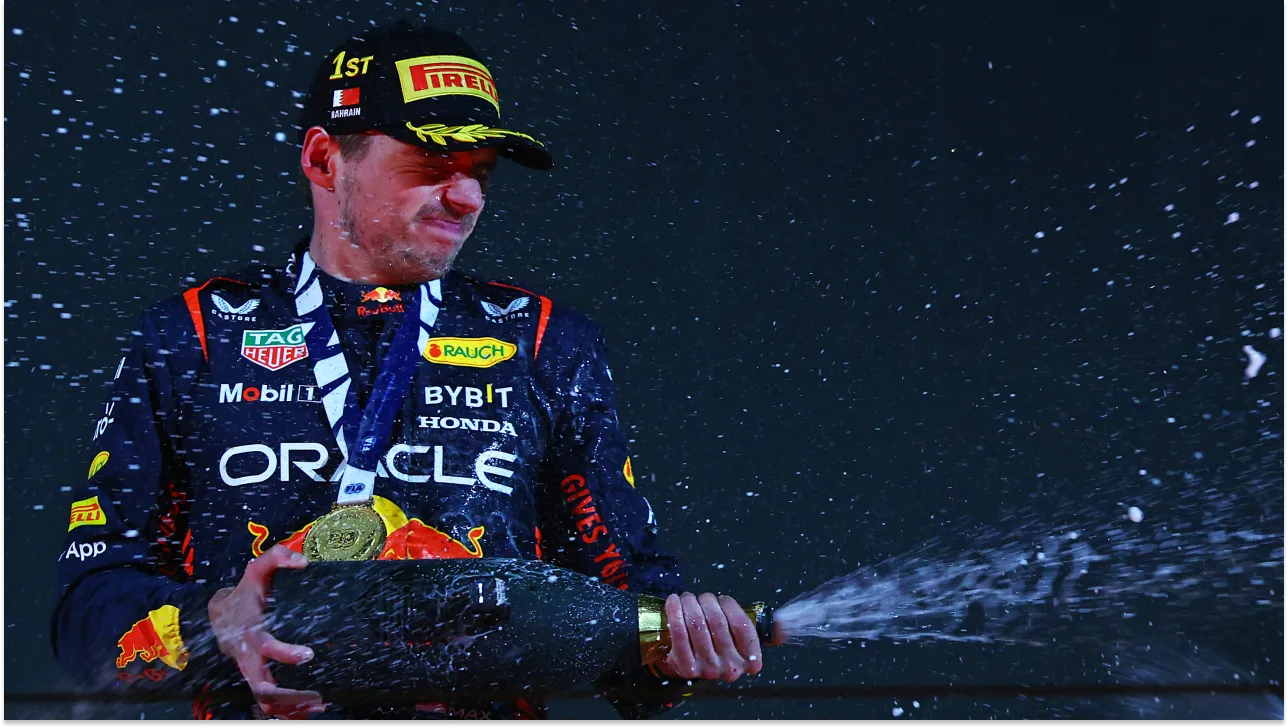
Developed by the Bahrain International Circuit itself, Al Waard consists of rose water, pomegranate and a local citron variant combined with carbonated water to give it a good fizz for spraying. The drink is mixed in Bahrain, then sent to South Africa where it is bottled and packaged for the Grand Prix.
The drink was created ahead of the race joining the F1 calendar as a means of respecting the local Bahraini and Muslim cultures.
"Shaking the champagne and spreading it on people, this is something I don't think people will accept," said Bahrain deputy speaker Adel al-Moawada ahead of the inaugural Bahrain Grand Prix.
"The organizers know how to run this event without contradicting the culture of the place they are in."
And indeed, a unique podium experience, getting to taste Al Waard is considered a true honor by many F1 drivers today.
Bahrain’s fastest lap is the second-longest standing record in F1
The second ever Bahrain Grand Prix took place on the third of April, 2005, using the classic Grand Prix layout. On that day, McLaren driver Pablo de la Rosa set the fastest lap time with a blazing fast 1:31.447 on lap 43. Today, a full 21 years later, that record still stands. In fact, it is the second longest standing lap record in F1, beaten only by Michael Schumacher’s Shanghai record, which was set back in 2004, making it just one year older.
De la Rosa’s record is all the more impressive when you consider that it has stood the test of time through several regulation changes. This includes the transitions from V10 engines (the last year of which was 2005) to V8s, and from V8s to hybrid engines, as well as countless changes to the way aerodynamics and drag are approached in the sport. In fact, if you look at all of the current fastest lap records, you’d notice that de la Rosa’s (and Schumacher’s) stick out as outliers among a sea of times set in 2019 onward.
What’s more, the record is not likely to fall any time soon (even if we were to race in Bahrain this year). De la Rosa set his time in an era where F1 cars were significantly smaller, lighter and produced less drag compared to today’s models. With Bahrain’s long straights, high straight-line speed and engine performance will dominate, and the current power units F1 uses just cannot match the V10 on this track.
Want more surprising facts about this year’s F1 drivers and race tracks? Check out our other Speed Reads:
- Speed Read: 3 Things You Didn’t Know About the Japanese Grand Prix
- Speed Read: 3 Things You Didn’t Know About the Chinese Grand Prix
Images via Red Bull Content Pool






.png)
.png)