


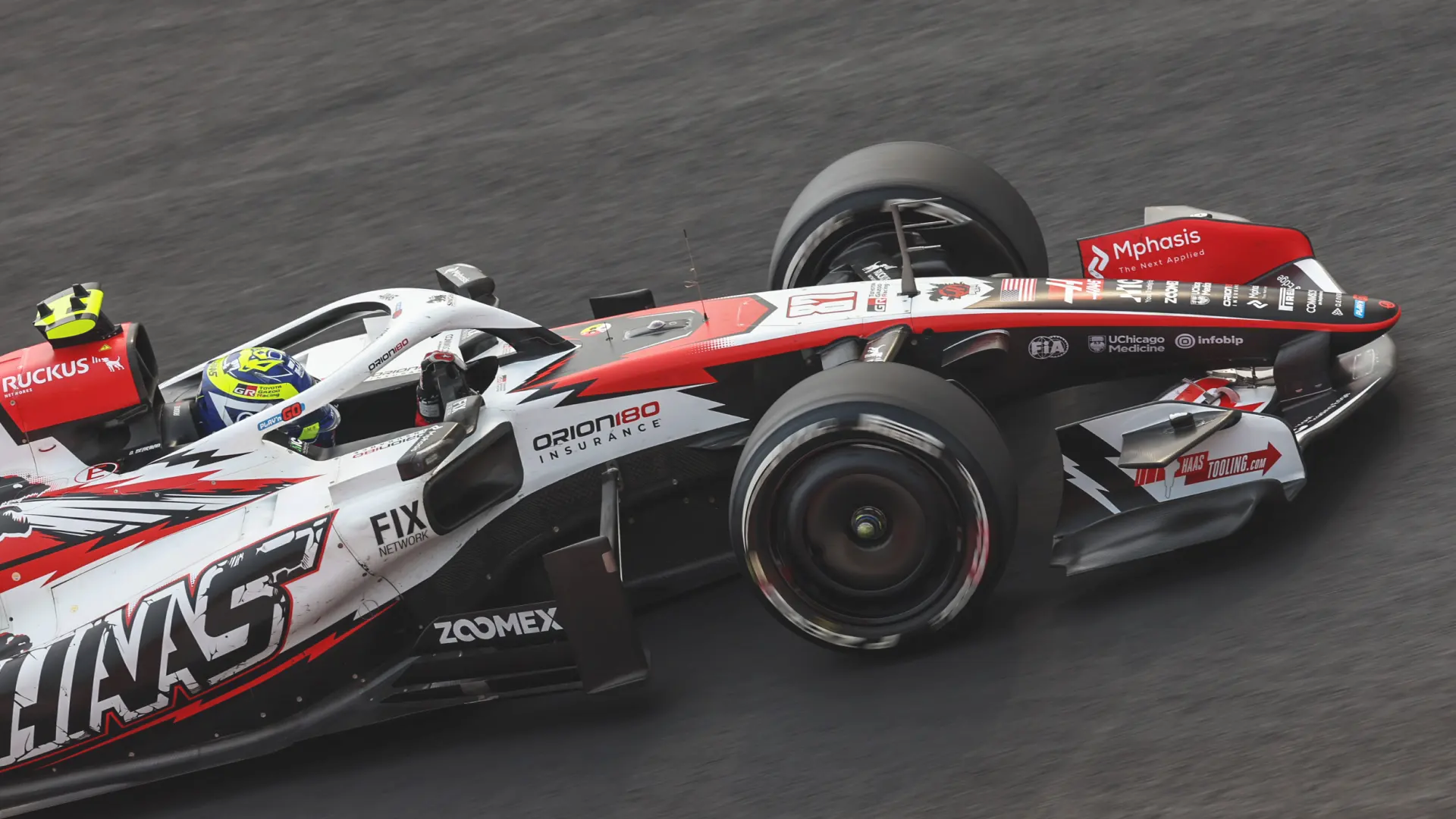


The 2026 Japanese Grand Prix left many Formula 1 fans with a sense of unease after watching Oliver Bearman take a heavy crash into the barriers of the Suzuka Circuit.
The incident happened as he took evasive action to avoid the much slower Alpine of Franco Colapinto. The resulting crash saw Bearman’s Haas destroyed, and the young driver limping out of his car. Thankfully, he was cleared by the medical staff shortly after, and was still present in the paddock for the remainder of the race, but the accident itself has prompted both drivers and fans alike to call for greater safety considerations going forward.
The FIA has been quick to respond in the past regarding injury prevention, with two recent incidents in particular coming to mind. The question now is: will Bearman’s crash yield the same response?


Survival cell construction and fire safety: Romain Grosjean, Bahrain 2020
The opening lap of the 2020 Bahrain Grand Prix remains one of the defining moments of that year’s F1 season. After making contact with Daniil Kvyat’s AlphaTauri, Romain Grosjean hit and went through the track barrier. The collision, which recorded a 53 G impact, ripped his car in two pieces and engulfed him in flames.
Miraculously, Grosjean walked away from the crash with only second degree burns to his hands and a sprained ankle. Medical examinations confirmed no broken bones or internal injuries, exemplifying how far safety in F1 has come. Nonetheless, it also showed several areas where improvements needed to be made.
During the incident, the U-shaped headrest of the cockpit became dislodged, obstructing Grosjean’s escape from his car. The impact also damaged the footwell of the car, which temporarily trapped Grosjean’s left foot. He was able to get out by removing his shoe, but both that and the headrest made his escape slower than it should have been. This prompted the FIA to re-evaluate its regulations regarding these components of the car, including sturdier construction for both, and improved load tests for the headrest.
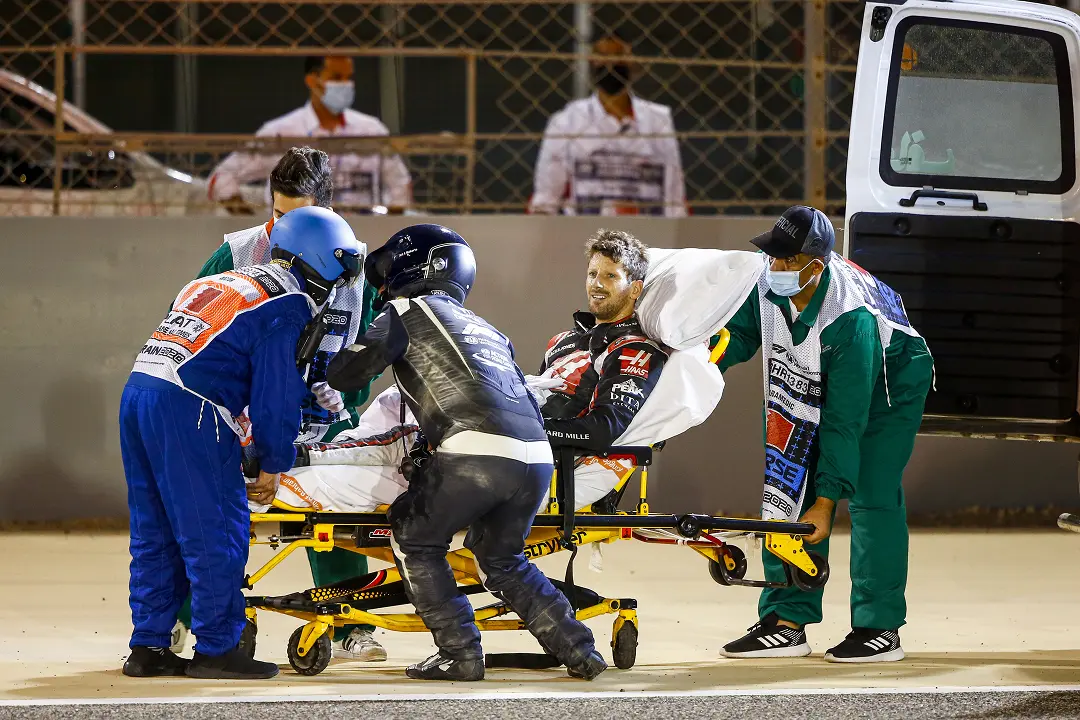
Beyond that, several other safety changes were made. Drivers started using gloves made of improved fire-resistant materials which delayed heat transfer by an additional 1.5 seconds compared to the gloves being used at the time. Adjustments were also made to the Bahrain Circuit itself, particularly the barrier at Turn 3, where the crash happened. This included adding tires to the barrier to help absorb any impact, should it occur in that area again.
Roll hoop design: Zhou Guanyu, Silverstone 2022
During the 2022 Great Britain Grand Prix, Alfa Romeo driver Guanyu Zhou was part of a multi-car crash involving George Russell and Pierre Gasly. Zhou’s car skidded upside-down across the track and through the gravel, eventually flipping over the barrier and into the chainlink fence behind it.
Remarkably, despite the intensity of the crash, Zhou did not sustain any serious injuries, and was back in his car just one week later for the Austrian Grand Prix.
Following the incident, the FIA took action, particularly looking at the roll hoops. The roll hoop is the structure just behind and above the driver, and is there to prevent them from hitting their head should their car become inverted. Changes were made to the forces the roll hoop must be able to withstand upon impact.
The FIA also mandated that the size of the rear view mirrors on F1 cars be increased. This was done to reduce the size of a driver’s blind spot behind them, helping them stay aware of their surroundings during races.
Driver safety continues to be a concern in the current regulations
This brings us back to Bearman’s crash in Japan, which also recorded a 50 G impact. At the time, Bearman was deploying his battery, while Colapinto’s had run out and needed to be charged. This resulted in a massive speed differential of 30 mph (50 km/h) between the two cars, ultimately causing Bearman to swerve to avoid crashing into the back of Colapinto’s car.
The concerning part of this is that while Bearman was able to physically walk away from the crash, an impact like that comes with a serious risk of concussions, which can have long-term effects both physically and mentally.
Bearman is not the first, nor will he likely be the last to endure such an impact even with major safety improvements. In the past five years alone, we have seen multiple drivers experience crashes of around 50 Gs or more: Max Verstappen’s crash at Silverstone in 2021, Colapinto’s crash in Las Vegas, 2024, and Jack Doohan’s crash in Suzuka last year are just a few of the ones that come to mind. For reference, this is the equivalent of being hit with a force 50 times your body weight.
It wasn’t until 2024 that Verstappen revealed he had problems with his vision following his incident in Silverstone in an interview with The Red Bulletin. When speaking about the United States Grand Prix (which happened almost three months after the British Grand Prix), Verstappen said, “Since my Silverstone crash, I've struggled with visibility problems, especially on undulating circuits or those with lots of advertising boards on the side of the track. In this race, I wasn't just fighting against Lewis, but also against blurred images.”
And while a concussion has not been mentioned in reports about Bearman’s injuries, a medical report is not necessary to understand the severity of the event. As Williams driver Carlos Sainz mentioned after the race, "Here we were lucky there was an escape road. Now imagine going to Baku or going to Singapore or going to Vegas and having this kind of closing speeds and crashes next to the walls."
While it has been reactive in the past to addressing the causes of severe accidents–as evidenced by the actions they took following Grosjean and Zhou’s crashes, among many others–thus far the FIA has responded to these events in a rather milquetoast way. Their official statement read, “It has been the consistent position of all stakeholders that a structured review would take place after the opening phase of the season, to allow for sufficient data to be gathered and analysed. A number of meetings are therefore scheduled in April to assess the operation of the new regulations and to determine whether any refinements are required.
"Any potential adjustments, particularly those related to energy management, require careful simulation and detailed analysis. The FIA will continue to work in close and constructive collaboration with all stakeholders to ensure the best possible outcome for the sport and safety will always remain a core element of the FIA's mission. At this stage, any speculation regarding the nature of potential changes would be premature. Further updates will be communicated in due course."
As we head into a five week break from racing, the ball is now in the FIA’s court to do something before a tragedy forces its hand. Hopefully its past actions will be indicative of future results regarding the current regulations.
Images via Haas F1 Team Media
%20(1).jpg)

.webp)


.png)
.png)