


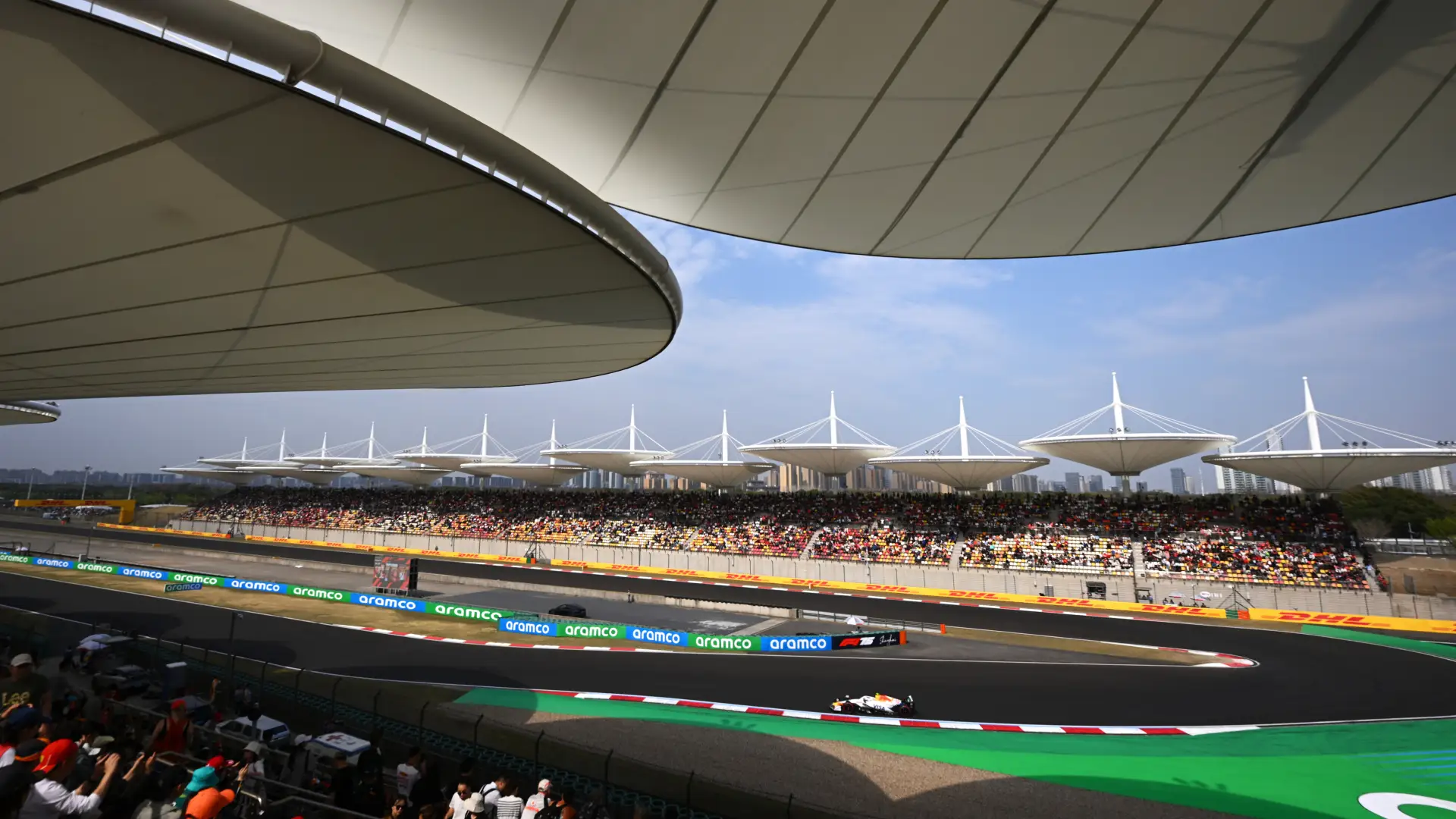


It’s race week once again in the world of Formula 1, and with the Chinese Grand Prix just around the corner. The Shanghai International Circuit may be one of the newer tracks in F1 rotation (at least relatively speaking), but it is still brimming with culture, records and some crazy racing history. Here are three amazing facts about this race to get you up to speed ahead of lights out.


McLaren lost the Constructors Championship because of a drain cover
If you’ve been following the modern era of F1, chances are you remember the drain cover drama of the 2023 Las Vegas Grand Prix. In short, Carlos Sainz ran over a drain cover during FP1, which caused massive damage to the bottom of his car and was a big enough safety hazard to have the rest of the practice session cancelled while crews repaired the track.
But did you know that this was not the only time in F1 history that something as seemingly harmless as a drain cover caused a major incident?
The Chinese Grand Prix was the 2005 season closer and played host to the final showdown for the Constructors’ Championship between Renault and McLaren. The two teams were separated by only two points going into the race and it was truly anyone’s game until just five laps into the race, when McLaren’s Juan Pablo Montoya hit a loose drain cover on the track. The damage it caused to his car was severe enough to take him out of the race, and with one man down McLaren’s hopes for the Championship were dashed.
We should mirror an ending section in all of these speed reads that link back to a past example and create a chain. Once we have enough banked we can add a tag, too, like Fast Lane. Take a look at what we do for FL
The circuit’s design is inspired by Shanghai’s history
The Chinese Grand Prix is held in one of the most unique venues on the F1 calendar, from the way the track and the grounds are designed to the motorhomes the teams use.
Built 23 years ago on rice fields and marshlands that lined the rural Jiading District of Shanghai, the Shanghai International Circuit plays homage to the history of its country and city in several different ways. First and foremost is the track layout; F1 cars drive through a circuit that resembles the Chinese character 上 (Shàng), which roughly translates to up, or above. This is the first of the two characters comprising the city’s name, Shanghai (上海 - literally meaning “above the sea”).
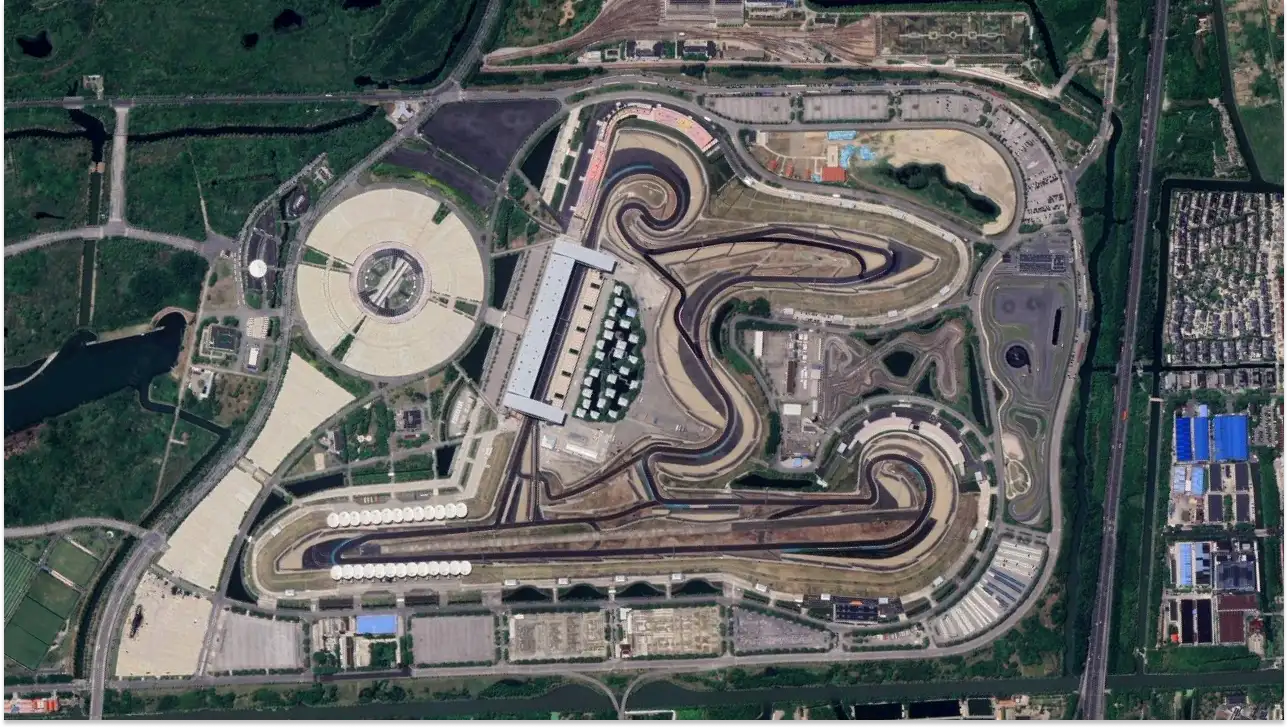
Spreading out from the track itself is the paddock area, with team motorhomes that are neatly arranged in a pavilion over a lake. This area was designed to resemble 16th-century Chinese gardens, with specific inspiration taken from Shanghai’s own Yuyuan Garden. This historic garden was first established in the mid-1500s, during the Ming Dynasty, and was praised as one of the most beautiful of its time. And indeed, this is further reflected in the Shanghai International Circuit as one of the most distinct paddocks in F1.
Of note, the team motorhomes are permanent fixtures of the circuit grounds, in contrast to the modular buildings that are built and disassembled by the teams themselves on most other stops of the F1 calendar.
The inaugural fastest lap remains unbeaten
The very first Chinese Grand Prix happened on September 26, 2004 and to this day, that race holds a record that has yet to be outdone: the fastest lap.
Michael Schumacher set the time during a weekend that has been described as the worst of that year for him, despite already securing the Drivers’ Title by this point in the season. Ferrari had trouble nailing the set-up of his caron the Friday of the Grand Prix, and he spun off during his first flying lap of Qualifying on Saturday, putting him all the way back in P19 for the starting grid on Sunday. The race itself was also a challenge, throwing spins and punctures Schumacher’s way. Nonetheless, he managed to go from P19 to P12, and set the fastest lap time on his penultimate go around the circuit.
Schumacher’s lap time was a lightning quick 1:32.238. In comparison, the fastest lap time of 2025, set by Lando Norris, was over three seconds slower, at 1:35.454. The closest anyone has come to Schumacher’s record was Kimi Raikkonen in 2005, but even he was over a full second off the mark.
Will 2026 be the year this record is finally beaten? Only time will tell.
Want to learn more facts like this about other tracks on the circuit? Check out our other Speed Reads:
Cover image via Red Bull Content Pool












.png)
.png)