


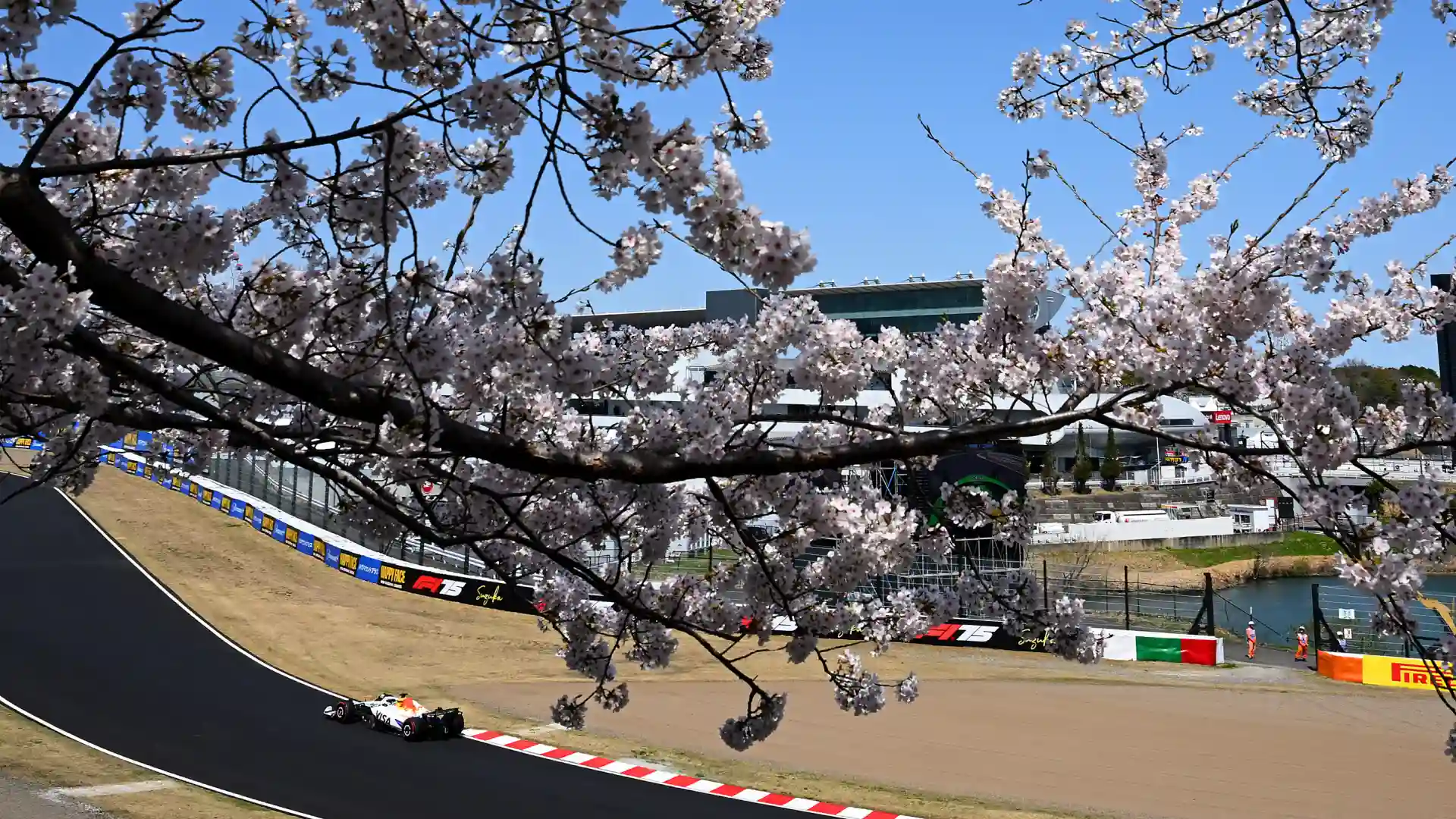


There is no denying that the Japanese Grand Prix is a highlight of every Formula 1 season. A longstanding fan- and driver-favorite, this race has been the backdrop to some incredible and historic moments in F1, including deciding a Drivers’ Championship title before the race even began.
To show just how impactful it has been over the years, we are highlighting three incredible facts about it below!


The Japanese GP has decided 22 total titles
Of the 39 Japanese Grands Prix to have taken place, 18 have crowned either a Drivers’ or a Constructors’ Champion–and sometimes even both. This has made it one of the most decisive races in F1.
In total, nine Constructors’ Championships have been concluded in Japan, with the most recent being Red Bull’s year of domination in 2023. The team had won 14 of the 15 races ahead of the Japanese Grand Prix, and wrapped it up with a first place finish from Max Verstappen to seal the title.
As for the Drivers’ Champions, 13 were decided here. Of those 13, 12 happened in Suzuka (the one outlier was at the Fuji Speedway), making it the circuit with the most title deciders in F1. Funnily enough, the first time a Drivers’ title was secured at Suzuka specifically, it happened before the race even kicked off. It was 1987, and Nigel Mansell crashed during a practice session, leaving him out of the race and handing the title to his rival, Nelson Piquet.
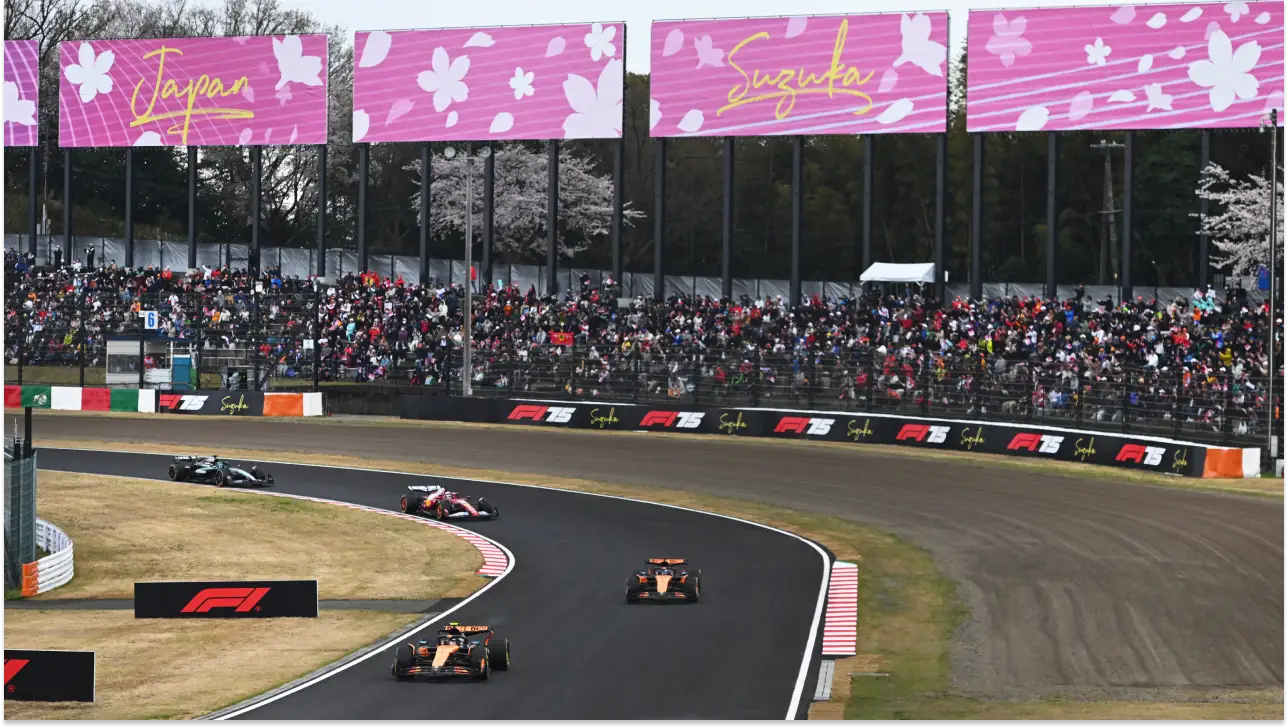
Unfortunately, it is now unlikely that we will see any more titles decided in Japan. While it was previously held late in the season, it now takes place in April, a move made to regionalize the F1 calendar. On the bright side, this makes it a great early benchmark for teams, and few things in motorsport are more scenic than an F1 race during cherry blossom season.
The location has bounced between circuits owned by two Japanese rivals
Today, the Japanese Grand Prix takes place at the Suzuka International Racing Course, but that wasn’t always the case. In fact, the first two Japanese Grands Prix (1976 and 1977) took place at the Fuji Speedway, before Japan as a whole was taken off the F1 rotation for a full decade.
When it finally returned to the racing calendar in 1987, the Japanese Grand Prix had relocated to the Honda-owned Suzuka Circuit. Originally built as a testing and development course (with three over-under sections in the early design plans), Suzuka quickly became a track beloved for its technically demanding layout that pushed drivers’ skills to their limits.
Yet in 2007 the race moved back to the Fuji Speedway, which had been acquired by Toyota–one of Honda’s biggest rivals. What’s more, the track had been designed by Hermann Tilke, a German former driver and circuit designer known for emphasizing infrastructure, safety, and commercial appeal. The response was mixed, however, as Suzuka had become an iconic part of the racing calendar and Tilke’s other track designs had gotten lukewarm reviews from drivers.
It was decided that the race would alternate between Suzuka and Fuji from 2009, in what was one of the earlier rotational schedules in F1. It changed hands only once more, however, with Fuji pulling out of its hosting duties from 2010 due to long-term economic issues.
Räikkönen’s miraculous win from behind at Suzuka
An incredibly challenging track for drivers, Suzuka has never been the easiest to overtake on. In fact, of the 35 races held at this circuit, 19 (54.3%) have been won from pole position, and a whopping 31 (88.6%) from the top three spots on the grid. This makes Saturday’s Qualifying a crucial part of the Japanese Grand Prix weekend, as it can make or break someone’s race.
It also makes Kimi Räikkönen’s win from P17 in 2005 all the more historic. A rainy Qualifying on Saturday saw him, Michael Schumacher and Fernando Alonso–the three leading drivers that year–all set to line up in the bottom half of the grid, with Räikkönen the furthest back.
A great take-off bolted him up five positions on the race start, and thanks to some safety car luck and a good fuel load strategy from the McLaren pit wall (this was in an era where refueling was still part of the game in F1), Räikkönen was chasing down Schumacher for podium positions by lap 22 of 53. He finally made an iconic overtake past the Ferrari on the 29th lap to continue working his way to the front.
It took Räikkönen until the penultimate lap to catch up to race leader Giancarlo Fisichella. As they began their final go around the circuit, the Finn caught a slipstream through the start-finish straight, and catapulted around the outside on the first chicane of the track to take the lead. He made history when he crossed the finish line as his pit crew burst into cheers and the audience applauded one of the greatest comeback drives F1 has ever seen.
Want more surprising facts about this year’s F1 drivers and race tracks? Check out our other Speed Reads:
- Speed Read: 3 Things You Didn’t Know About the Chinese Grand Prix
- Speed Read: 3 Things You Didn’t Know About the Australian Grand Prix
Images via Red Bull Content Pool







.png)
.png)