

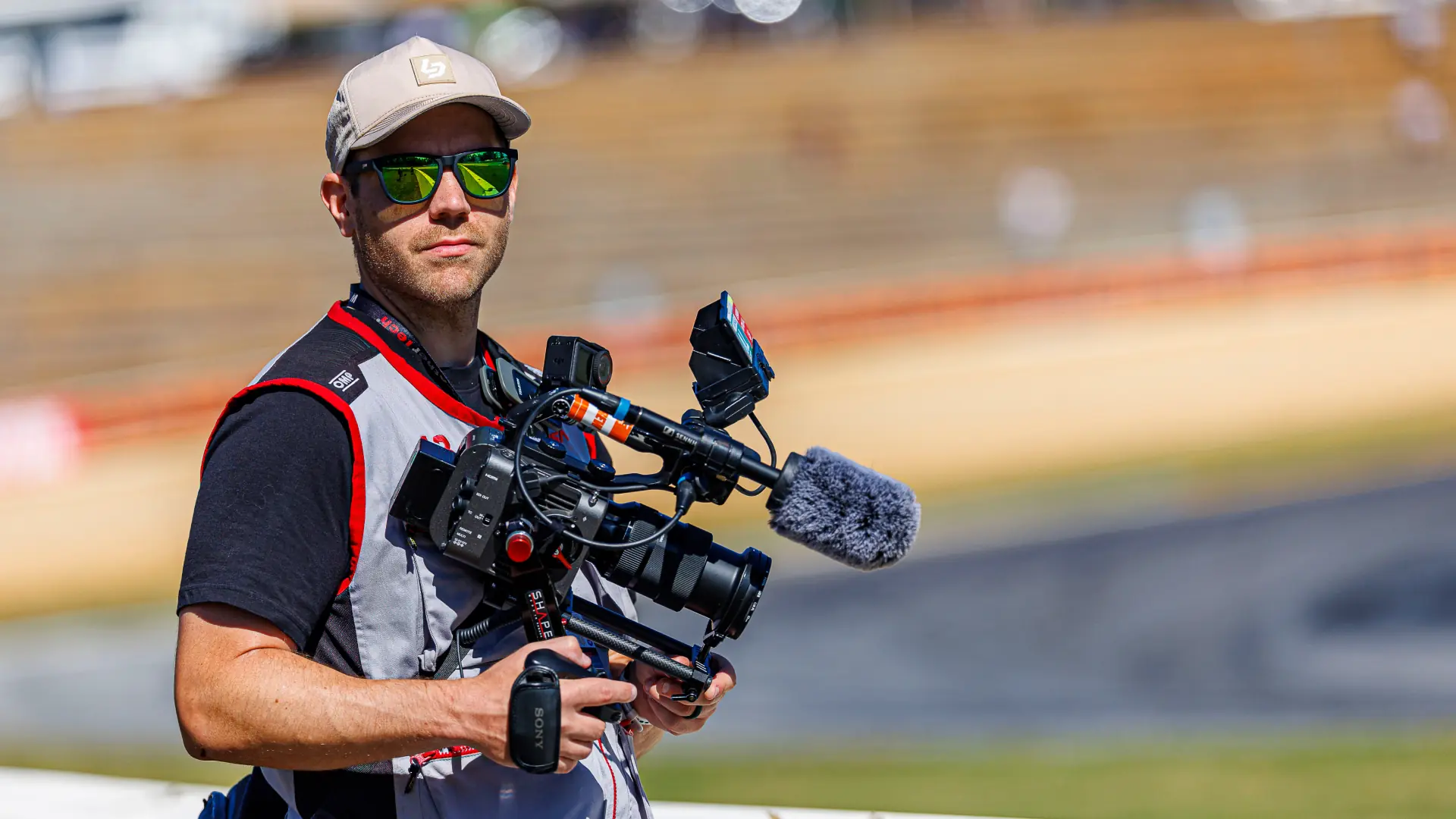


Who would have thought that sending a cold DM would lead to a full-time career in motorsports videography?
From shooting on the sidelines of the CFL to capturing 24-hour endurance races, Mark’s journey is a clear example of never giving up and continuing to pursue your passions, even if that means volunteering for opportunities via Instagram direct messages. The professional filmmaker opens up about the reality of life as a "glorified travel agent," the technical rush of nailing a victory shot, and why "just showing up" is still the best way to break into the world of motorsport.


Mark’s start in motorsports
What was the first moment that you discovered racing?
I think when I was a kid. My family on my dad's side was really into watching NASCAR. That was at the end of when NASCAR was really popular, like the early 2000s. And then I had an uncle on my mom's side that was really big into Formula 1. We watched Formula 1 now and then, and I think I really fell in love with it around 2005 or 2006.
When did you decide that the racing industry is where you wanted to build your career?
Not until much later in life. I was working in professional football for the Canadian Football League. I did a bunch of different jobs until I decided to be a videographer. I went to school for this, and then I went back to school and studied other things too. And then I was like, ‘I really want to do this.’ I did the football thing for a while, and then I was like, ‘I want to get involved in racing’, so I just started going to races as a fan. I would go to Canadian Tire Motorsport Park, and shoot races as a fan. And then I went to Mid-Ohio, and shot the NASCAR race there a couple of times. I went to a few other race tracks, just shooting around; and started meeting people and started networking and, by the beginning of 2019, eventually it turned into my new full-time job. It was cool.
Logan: Was it always sports that you wanted to go into?
I think I've always wanted to be involved in sports, and I was never really athletic, I didn't play sports as a kid at all. And I wanted to be involved in it because I just loved watching it. Obviously, I got really into car racing for a long time. And then I started getting into football in the late 2000s and I have that sort of thing where when I try something new and I like it, I become obsessed with it, it's all I care about. When I started watching football, it was all I cared about. I consumed so much football content. I was learning the history of the NFL, I was so into it. I don't do anything a little bit, it has to be all in or nothing.
I think once I got back into watching racing again, I fell out of it. My uncle that I watched Formula 1 with, passed away in 2013. And then I just didn't watch anymore after that, I just got out of it. And then when Lewis [Hamilton] had his run of winning all of his championships, I thought it was boring to watch. But I got back into it again, when I started going to races and shooting, started following it again. And then I was like, you know what? I think this is where I want to be.
I was working for the Hamilton Tiger-Cats at the time, and I really didn't like working there. It wasn't for me. It was so many hours and not great. So, I started doing all this other stuff on the side. And then once I found racing and started talking to people, I was like, ‘This would be super cool to get to do this full-time and work in this industry.’
What was that first moment or that first step that you took to launch your career in racing?
I went to the 24-Hours of Daytona in 2019, and I was able to get a media accreditation for that. And I pitched myself to a few different teams on shooting for them, like a couple of Canadian teams. And there was a team called AIM Autosport. They were based out of Woodbridge in Toronto and they ran the Lexus program at the time. It's still operating now, but they ran it at that time. And I just reached out to the team owner over Instagram and I was like, “I'm going to go to this race and I'll work for you for free because I'm going to be there anyway.” And he actually messaged me back and was like, “Yeah, that sounds cool. Awesome!”
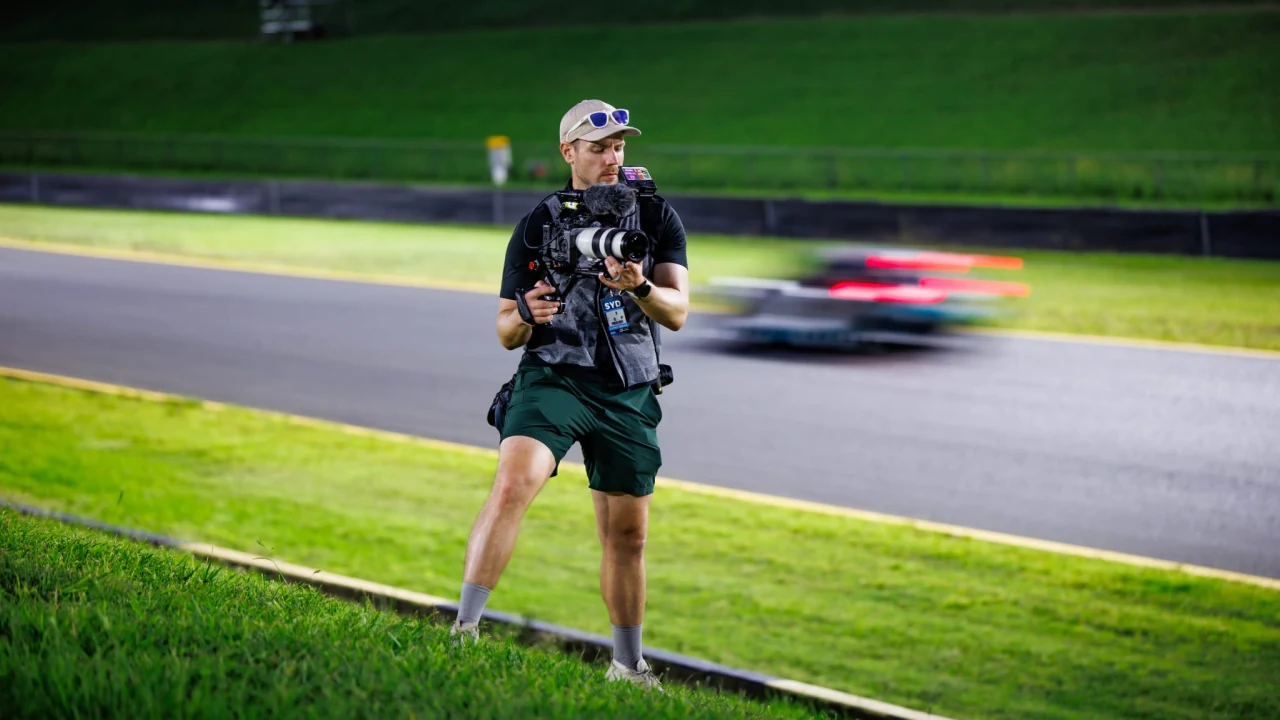
So, I did a bunch of content completely for free and it did quite well. They were really happy with everything. And then he reached out again and he said, “Do you want to talk about doing more of this?” And I was like, yeah, I'd love to do the whole season, that'd be really cool. I sent him all the details, and he was like, this works for us. Sounds awesome. I sent him the contract and before he sent me back the signed contract, I sent my two weeks notice to my current job because I was like, “He's going to sign it.” I just wanted to get out of there. It just wasn't for me. And I wanted to try the freelance thing. And since then, it's just snowballed.
Mark’s current role
What would you say is a standard day for you?
When I'm not at a race, usually I'm at home. I think people have this misconception that when we're at home, we don't do anything. You'll see when the mechanics or the drivers complain about the amount of race weekends, the fans post things like, “Well, they only work 23 weekends a year.” No, we don't. We're very busy.
Today I sat down at 8:30AM to start answering emails, and by the time I looked at the clock to get up, I was like, oh yeah, I have the interview in a half hour. I've been booking travel all morning because the Qatar race got canceled for WEC so we're now going to Imola instead. So, I have to book that. I had to answer a bunch of emails. I'm always pulling footage for clients. I'm always shoot-planning, a lot of shoot-planning. But the biggest one is a travel booking. It literally sometimes feels like I'm a travel agent who sometimes gets to see races because it's just like, it's crazy the amount of stuff we have to do.

Other than that, just client management. And then, when I have time off, I'm riding my bike. I'm that guy on the road at two in the afternoon. You're like, “How does this guy have time to ride his bike in the middle of the day on a Tuesday?” That's me. That's what I do when I'm at home.
Logan: What about when you're at a racetrack? How are those days structured?
The days of the race weekend are pretty structured, but still busy in the way that things pop up. You know that the first day of the weekend is the setup day. So, you're going to go and do the track walk, and you're going to film in the paddock and do those things. You have time to relax. And then, Friday you've got practice all day and you're starting to deliver content. So, it's pretty structured, but then there's still little things that'll pop up when they'll be like, ’We have a sponsor thing at 3PM, can you go do that?’ And you just add it to your list.
And a lot of it is working out, what do we need to shoot today to accomplish our objectives in the content? What session should I do pit lane for? What session should I go trackside to make sure I have enough content? And when you're managing multiple people, it's also keeping track of where all of them are. We actually have the things set up on the iPhone so we can know where each other is at all times. So we can figure out who's where. It's fairly structured, but again, also can be pretty crazy.
Logan: How much of that time is shooting versus editing at the track? How do you manage the quick turnaround times?
Very rarely editing at home these days. A lot of the time we're delivering everything before we leave the track because with the way social media works now, if it's not out right away, then when it's three days old that event is ancient history and no one's talking about it anymore. So, we're trying to get the content out as quickly as possible. And sometimes when you're working with manufacturers, it can be tough because it has to go for legal review, depending who you're dealing with, it could take a long time. But we try to get everything done as quickly as possible because clients want stuff. Especially if they won the race, you'll see us come back and we'll do what I call a priority send after the first session. I'll come back and cut a few Instagram story clips right away so that people have them, and they can start posting and then that'll hold you off for a bit. And then I can focus on more content. It's about getting things done as fast as possible. But then it's tough because you're also trying to keep your quality really high, but delivering quickly. It's all just finding that balance.
What would you say are the most rewarding and then the most challenging parts of your job?
Rewarding
I think the most rewarding thing is when you get the shot. Because in sports, you have no control over anything that happens. So, you can plan as much and you learn things through years of experience. I know where I should probably be standing at certain times of the race or certain moments, but when you get that shot, that's crazy because you just nailed it. You got an amazing shot and you had no control over what was happening. And especially when you put planning into it, you're like, ‘I'm going to set up here for when he gets out of the car to celebrate, because then it'll be back lit and they'll shoot the fireworks here and it'll look really cool.’ And then when it works out, it’s incredible; you've achieved something really cool. But a lot of it is just being reactive.
.webp)
Challenging
The most challenging part is traveling. I always roll my eyes when people say they love traveling, and nobody loves traveling because you're thinking about the destination. You're not thinking about the journey. The journey when you're traveling sucks. Nobody likes going to airports. I mean, there are a few very strange people that love flying on airplanes. I'm not one of those people. So, that's the worst, the amount of travel, how tired you are all the time, jet lag, changing time zones. That's the most difficult. And just being away from home. Last year, I was away for 29 days in a row, and that's a long time to be away from home. And I don't have kids or anything. I can't imagine what it's like for people who have children.
What would you say are the top three qualities that have helped you succeed in this job?
Interpersonal skills
I think the biggest one is interpersonal skills. I think you need to be very good at talking to people because that's going to get you your next gig.
Finding the strengths in your role
And then obviously the second one is going to be my ability as a shooter, I'm very good at my job.
Being proactive
And then the third would be just my proactivity. What I find now is a lot of people getting into it don't have that level of proactivity. They’re not going up and saying, is there anything I can do or thinking ahead to what would be good to do now to plan for the next thing. I just see a lot of people not really doing that anymore. I think if you are always thinking ahead, you're always thinking what your client might like or what they might want that can really put you ahead of everybody else.
Mark’s Advice
If you could go back and give advice to your younger self, what would that be?
I think early on in my career, especially when I was working in football and stuff, maybe I didn't spend enough time thinking from the other side. What I mean is putting myself in other people's shoes. I think you have to have a strong level of empathy to be a good freelancer because you'll always be ahead in the negotiation if you've already considered what the other person's viewpoint is. And I think that can really help. Especially when you get sent an email that upsets you, you have to sit back and be like, don't respond to this email right now. Wait a couple of hours and think about it and then respond. I still find myself doing that. And I wrote out a response to an email this morning and then just deleted it because I just don't see how me mentioning these things is going to change anything. I would just chill on the reply button a little bit and just don't get frustrated by things. Just think about where they're coming from.
What advice would you give to someone who's looking to be in your position?
I think the biggest thing is those interpersonal skills. Go to racetracks as a fan and talk to people. I think that's the biggest thing. And it can be tough because my industry is like the final boss for really timid and introverted people because most people in creative fields, especially photography and videography, are usually very introverted. And then also a lot of motorsport fans that I've met are very introverted people. You're coming from both worlds, someone who wants to do video and likes motorsport. So, it can be tough to talk to people and do those things. But it's important to break through that and chat with people because if you're someone that people like having around, then you're going to get hired. That's the most important thing.
I tell people all the time, if your work is mediocre, but you're awesome, and you deliver on time, and people love having you around, and you're fun and you can joke around with your clients, you'll never be unemployed because they just like having you around. And we all want to hire our friends. I want to hire my friends, it's how it is, but that's the biggest one, go to races as a fan. A lot of people use things like, “Oh, I can't get accreditation,” as an excuse, but just go as a fan, buy a ticket and go, and pick the right events. If you're going to go to Formula 1, that's not going to be the best event to go to because you can't get close to anything. You have no views, you can't really take photos. You need to go to your local grassroots stuff, and start lower. And just, if you can go to a grassroots event with people that don't really have budget and say, I can do some stuff for you, for free, because it's beneficial to you, because you'll get something out of doing it and it's beneficial to them because they don't have the budget, you help each other out. Those are all great ways to get started.
Logan: Do you have advice for people who are wanting to approach someone in the industry? What do you think different employers are looking for?
Lately, I've had a few people who've messaged me, and are very detailed, and say, “Hey, this is what I want to get involved with doing.” And they're very well thought out messages, but I do get a lot of people that are like, “I want to work in motorsport. How do I get to where you are?” Or like, “Can I come shadow you?” “Can I come work with you for a weekend?” And they haven't even said hello.
I think you really need to have an idea before you go into it, of what you're going to talk to people about, and what you can offer people. And you have to think what job do you really want to have; do you want to be a freelance videographer? Okay, think about the steps you need to be involved in that. I'm pretty open to chatting with people and giving them advice. I have a YouTube channel loaded with all kinds of videos that you can watch that I've made about getting involved. And I have a workshop series coming out with Paddock Focus that's literally a three-hour workshop on how to do this. You can check that out. I mean, there's so many things and you could go into it being like, “I want to work in motorsport”, and think you're going to do one job, and end up doing a different job. You need to be ready to pivot on things.
But the big thing is just asking yourself, why do you want to work in motorsport? And if it's just because you think it's cool, does it make sense for you? Can you adapt to that lifestyle? Is there going to be enough work for you to do? That's the biggest thing. Are you going to make enough money? Are you going to be happy? So you just have to think about that because I think it's really trendy right now, motorsport is incredibly trendy. Everybody wants to be involved. But then once they get to the track, they realize that the involvement in working it is not hanging out in hospitality and being friends with race car drivers. It's actual work.
Mark’s career highlights
What has been your most memorable moment working in motorsports?
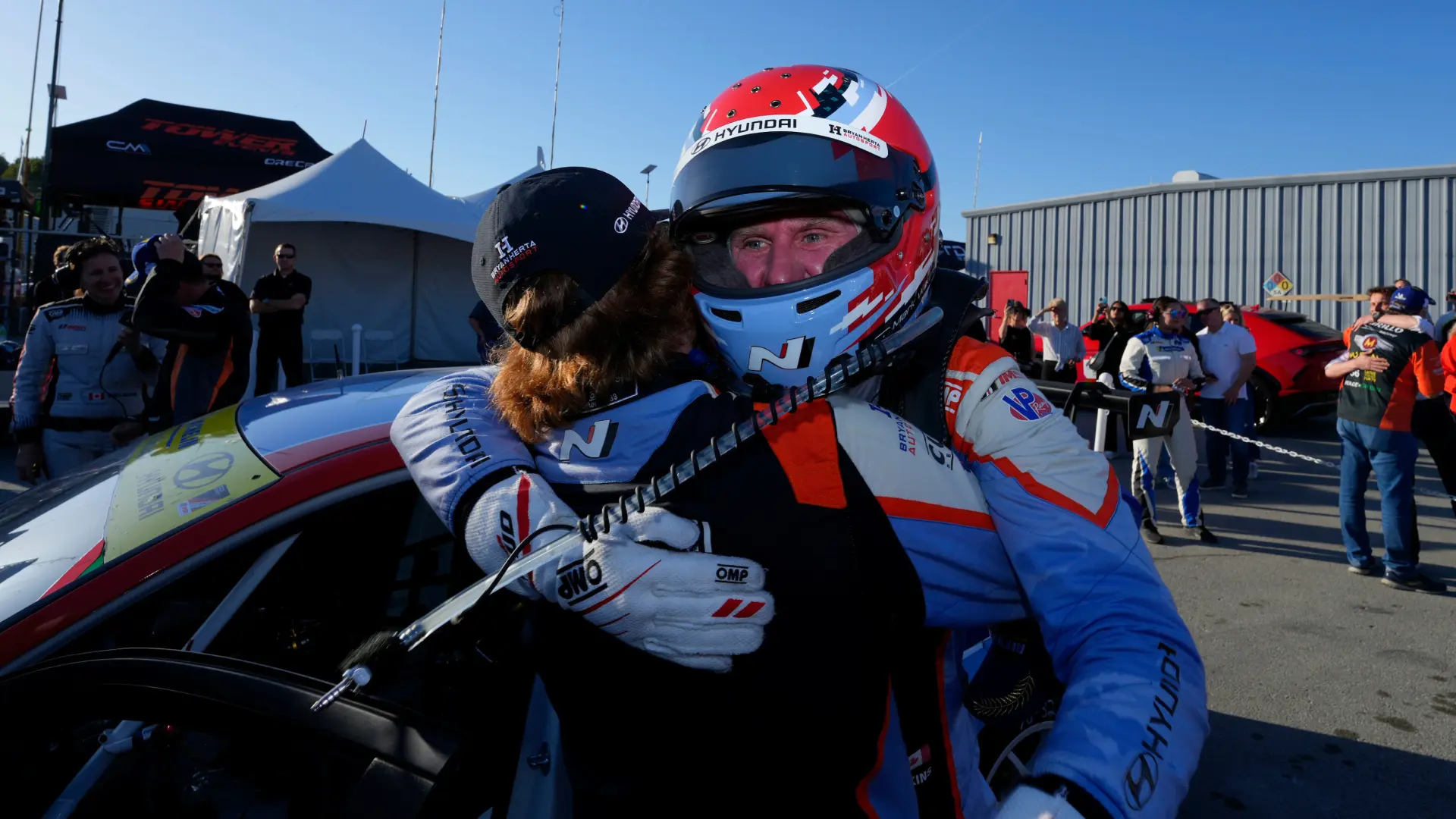
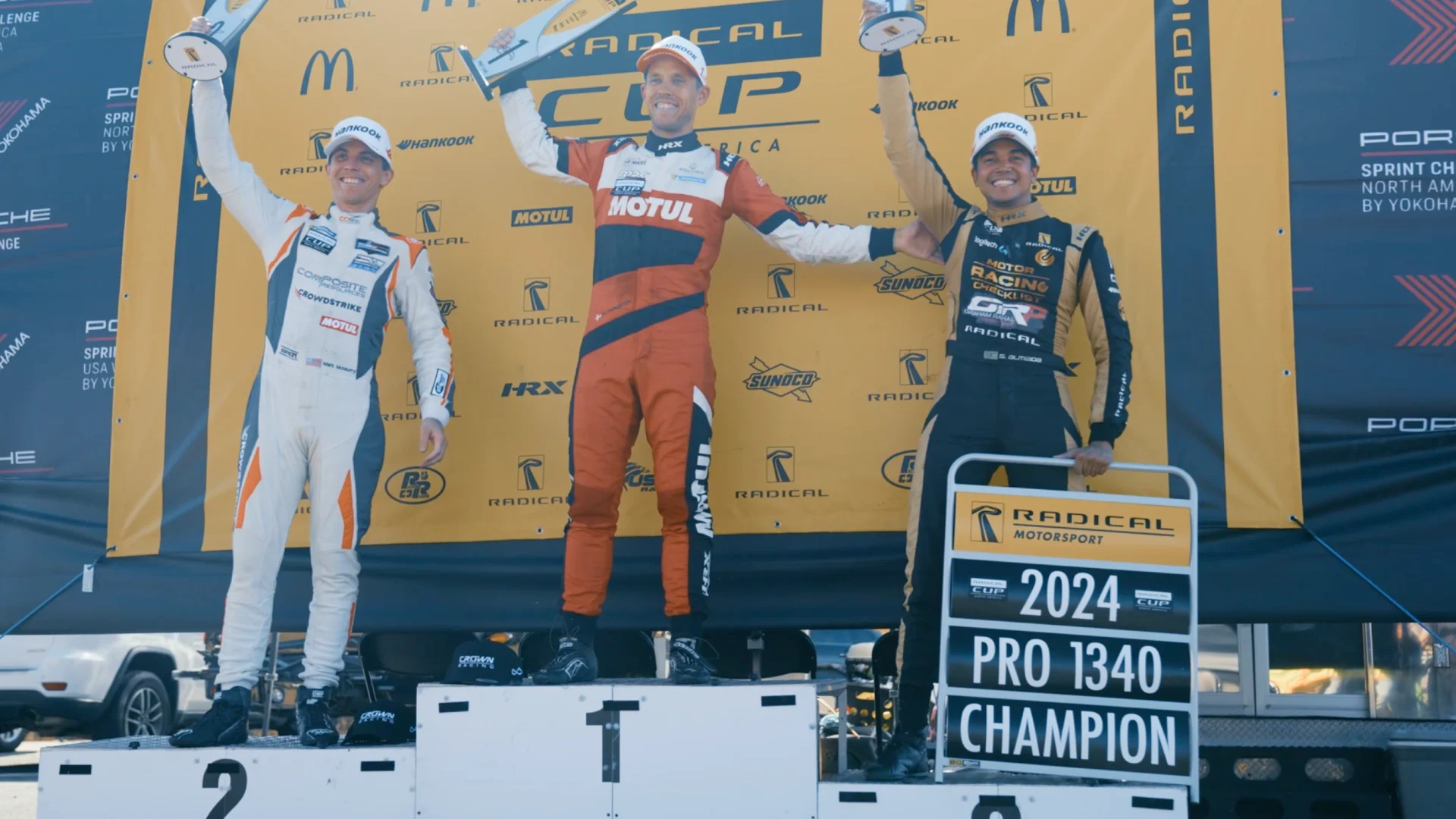
I have a few. When Multimatic Motorsports won the Rolex last year in GTD Pro, that was pretty big because we were doing some content for them, and I'd never won a 24 hour race before. We say that we've won, I mean, if our client wins, then we've won. That's the way that we look at it. So, I'd never won one before, so that was really cool. No, sorry, I did win the 24 Hours of Spa in 2022. I forgot about that. Anyway, they won it and that was amazing. And just the reaction to that of knowing where to be. There's actually a video on my YouTube channel that is my body cam that I had running while the win is happening, and just listening to my voice, you can hear me, I'm struggling. Like I'm scrambling. But it was really cool because I'm really close with a lot of those guys. And it made me cry because I got very emotional and it just makes you realize how hard these things are to win, and it makes it all worthwhile. This is so important to people. And then, when the tire guy was like, “Do you want to take a photo with the trophy?” I was like, “Yes, I would love to take a photo with the trophy.” It was just really cool. So, that's a big one.
And then, my first 24 Hours of Le Mans. We were working for TF Sport, and they finished second in the GT class; I was on the wall hanging out the window with all the crew, celebrating. And I had one of those moments where I was like, this is insane that this is happening right now. That was pretty cool. Those are really the two big ones that come to mind.
I have so many out of body experiences when I'm at the race thinking like, “I can't believe this is happening right now, this is so crazy.” I remember watching Kamui Kobayashi get his first podium in Formula 1, his only podium. And I have his number in my phone, that's just weird, right? That's so crazy when you think about it!
Do you have a dream race or a dream client that you'd love to shoot for?
I'm very fortunate in the fact that I've done most of the races that I always wanted to do. So, it's pretty cool, but I think the couple I have left on my bucket list, I really want to shoot the Macau GP, I think that'd be really cool. A good friend of mine is the event photographer for that and talks about it really highly. So that'd be a really cool one. And I'd really like to do some sort of rally, whether it's shooting the Baja 500 or shooting the Dakar Rally would be really cool to cover. I've heard it can be quite a slog for three weeks in the desert sleeping in a tent. But I think it'd be cool to do once just to try it out. Those are the main two, but I've done most of the ones I've always wanted to do.
Logan: Are there any other standout moments for you?
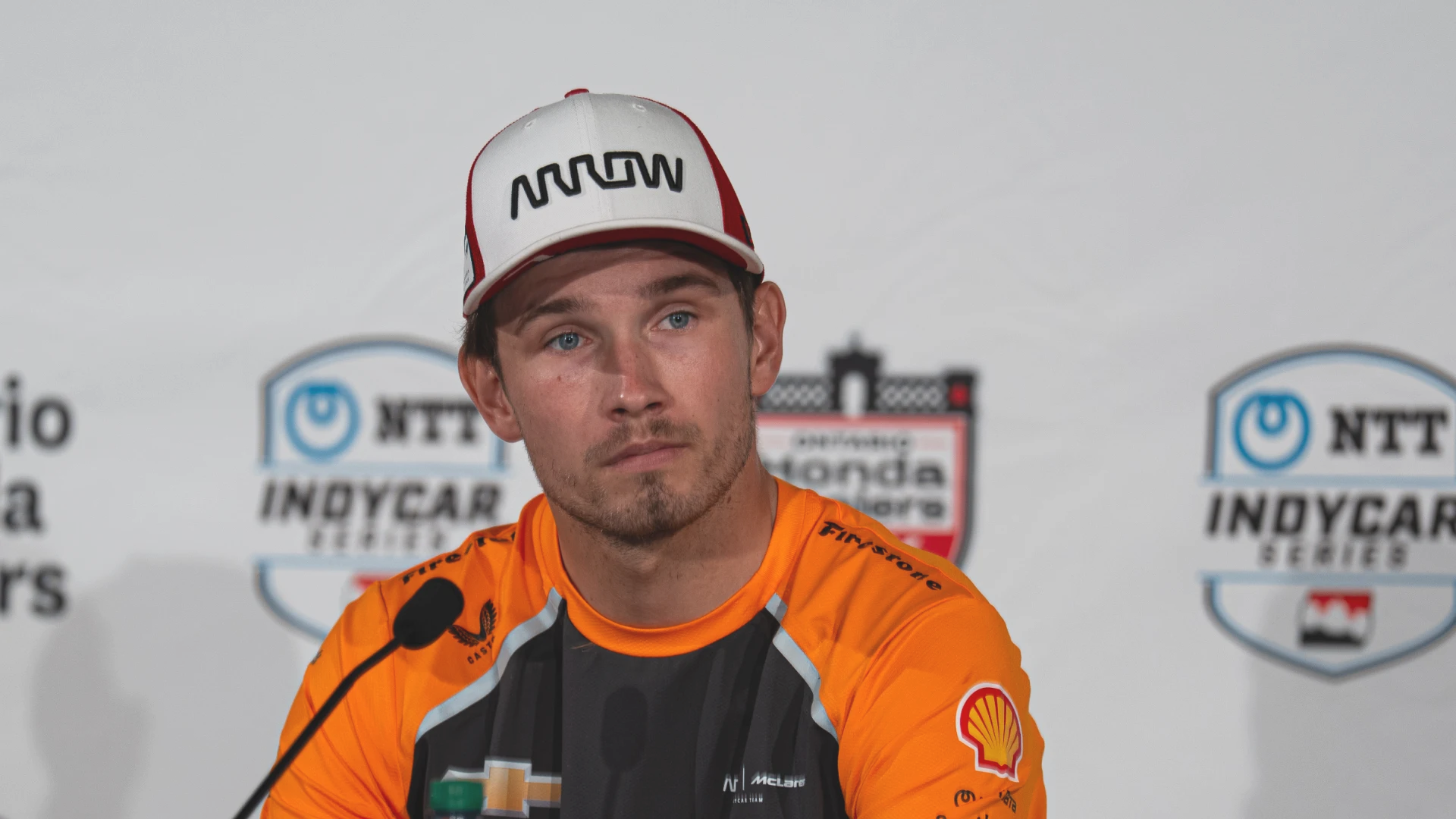
I think, again, it's just those really weird experiences where I shot a partial season of IndyCar in 2022 for Dalton Kellett, who was a Canadian driver at the time. And I remember there was a time where we went for dinner in Sebring because we were testing in Sebring, and we were at [Don José], I can't remember what it's called, the Mexican restaurant in Sebring that everyone goes to. We went in, and I was having dinner with him and Ryan Briscoe, who used to race in IndyCar, and his coach. And then, at the next table, all at one table, was Dario Franchitti, Scott Pruett, Jimmie Johnson, Kevin Magnussen, Marcus Ericsson, Alex Palou. And I was like, that's insane that they're all here right now in this restaurant, right there at one table. That was wild.
That's just another one of those experiences where you're like, this is so crazy,12-year-old me would be freaking out right now if they were here. But then again, those things just become so normal. I don't get starstruck, I never really have in my life. Especially if you come into it and you want to work in the sport, the biggest thing you can do is treat those people like regular people. Because I think as soon as you treat them differently, they just think you're a little bit strange, like, “Oh, this person is like too much of a fan” or “They're a little too much of a hanger on.” At the end of the day, they're just a person.
The other big one I should have mentioned is learning about road cycling because drivers love road cycling! So you always have something to talk about. You can always talk about—that's another big one. It’s to the point where the teams are like, please don't ride your bike anymore because guys keep crashing and getting hurt. It's cool.
Want to learn more about other professionals across motorsport series? Then check out all of our Fast Lane interviews, or jump right into one of these:
- Shooting motorsports photography with Jamey Price
- Owning a Motorsports PR and Marketing Agency with Éliane Gilain
Cover image by Karl Noakes

.png)
.png)