


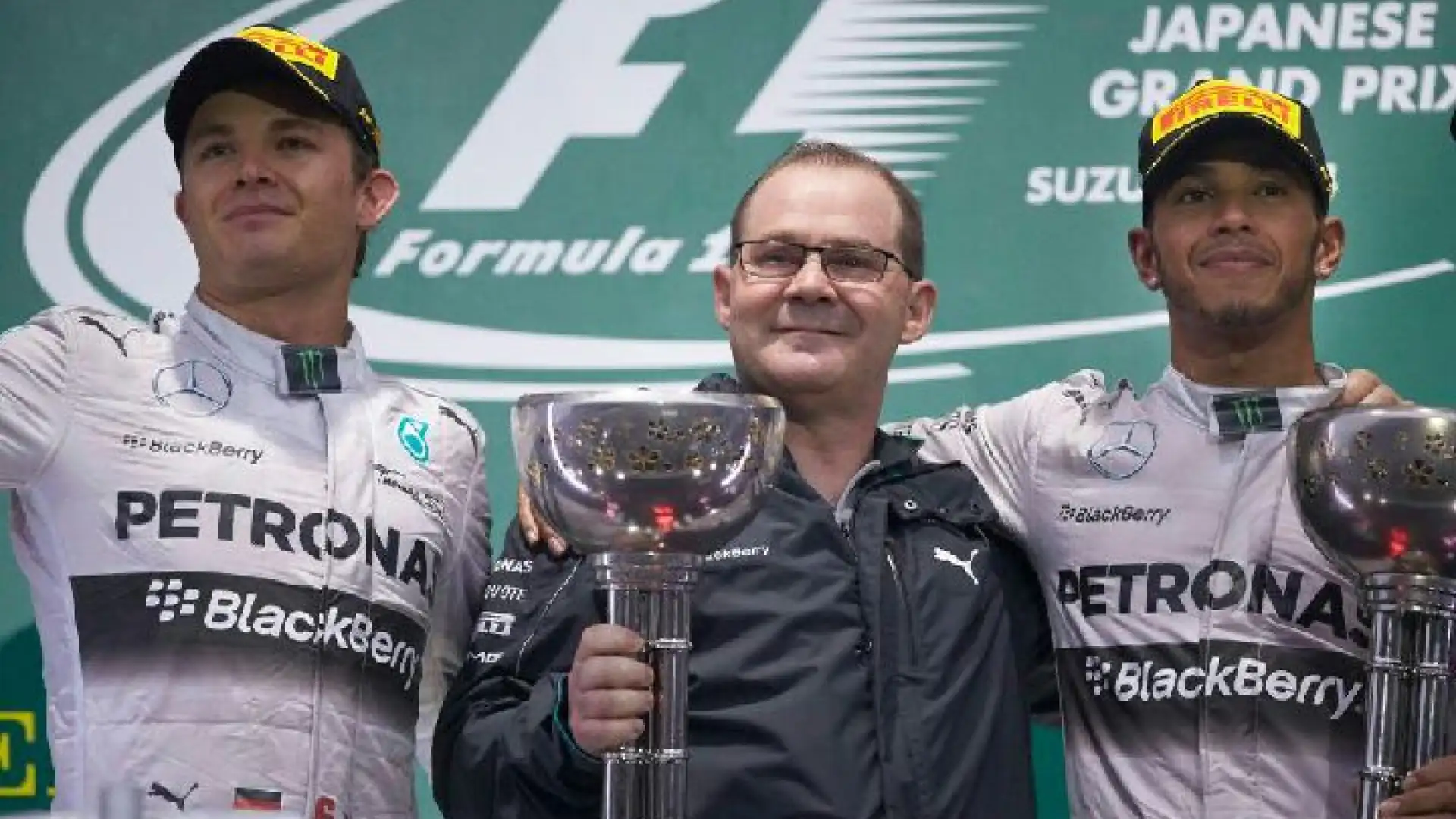


What does it take to go from being a young mechanic in Auckland to winning Le Mans and becoming Head of Build for the Mercedes Formula 1 Team as they’re racking up championships?
Peter Hodgkinson shares the reality of moving thousands of miles away to chase his dream of working in the motorsports world. From adapting to American culture while living in Detroit and working in IMSA, to winning Le Mans, leading Mercedes F1’s build team, and even saving Lewis Hamilton’s car after a crash, Peter has lived through it all. Even with countless championship wins and memories of flying F1 car parts on private jets, the most rewarding part of his career isn't the trophies; it's watching his teams flourish.
With over 40 years of experience at the pinnacle of motor—and now water—sports, Peter offers a rare look at the hard work required to survive and thrive in the world’s most demanding sports.
Position: Leadership Consultant and former Head of Build and Head of Employee Engagement at Mercedes AMG Petronas F1 Team
Day to day: Ahead of the season it's all about building the cars, and then during the season you're making upgrades: performance upgrades and reliability upgrades.


Peter’s start in racing
When was the first moment that you discovered racing?
I left school when I was 16, and the next day my mother sent me to the job center, and I had a list of things they asked, ‘what was your number one job?’ And I thought golf course greenskeeper because in New Zealand, you're outside in the sun. Second one was cricket greenskeeper, and my number ten job I wrote down was mechanic. Of course, I got mechanic and I was sent to work for a guy in a garage in Newmarket in Auckland, and it was great, but it was just the two of us. So, he couldn't give me an apprenticeship, and through the help of my grandfather, I managed to get an apprenticeship at McMillan Ford, which was a Ford dealership, which was a nice, big place. I was there for a couple of years, and then they decided to go car racing. They said, ‘who's interested?’ And I thought, yeah, this would be right. I put my hand up and I managed to get on this team.
It was just bare basic saloon car racing. And I got to go round the whole of New Zealand and stay in motels and do this series. And I did it with all sorts of other formulas and everything else. I thought, this is great. This is really cool. And that was the beginning of it. I started to go and watch street races for touring cars because we started to get some of the big teams from the UK were coming over like Tom Walkinshaw, and they were bringing Volvos over from Europe that were lethally quick with their turbocharged four cylinders against the big V12’s and V8's with the Jags and the Rovers. It was great to watch, it was great racing, and that got me hooked. I wanted to go and be a part of that; and to be a part of that I had to leave New Zealand.
Greg: What was it for you, knowing your skill set and what you were working on, that made it click to say, okay, not only do I love this, but I actually see a path for myself?
I thought I was a pretty good mechanic. I was quick, in 40 hours, I could book 80 hours’ worth of work. I could do a cam belt and seals on a Cortina in 35 minutes. And that was three hours bookable. I mean, I had a skill that I could work at pace, work under pressure, and I liked working. I think in racing you've got to like working and you've got to be able to perform in those moments. And I like that, I like the idea of pit stops, and there's a bit of danger in it as well. When you're in a pit lane for the first time and there's other cars whizzing by you, there's a little bit of fire, you spilled fuel, there's all sorts of chaos that goes on. And it was all very exciting and new, and it's like, wow, this is cool! And it just gets under your skin. I don't know why.
You ended up at Roush Racing. What was that step to get there?
There was a guy at McMillan Ford, called Glen Hamilton, and he worked in the bay next to me, and he went to America in 1985, and he came back and he said, I've just been racing in America for a year. You should come over, come back over with me. And so, I'd saved up a fair bit of money anyway because I just wanted to get out. He went back to America before me. And then I joined him in January of 1986. And he didn't have any job. We didn't have any jobs. But Glen had enough contacts and he called around and then we finally got a call from Roush because they had just split with Gary Pratt, I think from Protofab. Ralph was looking for mechanics and we were just in the right place at the right time.
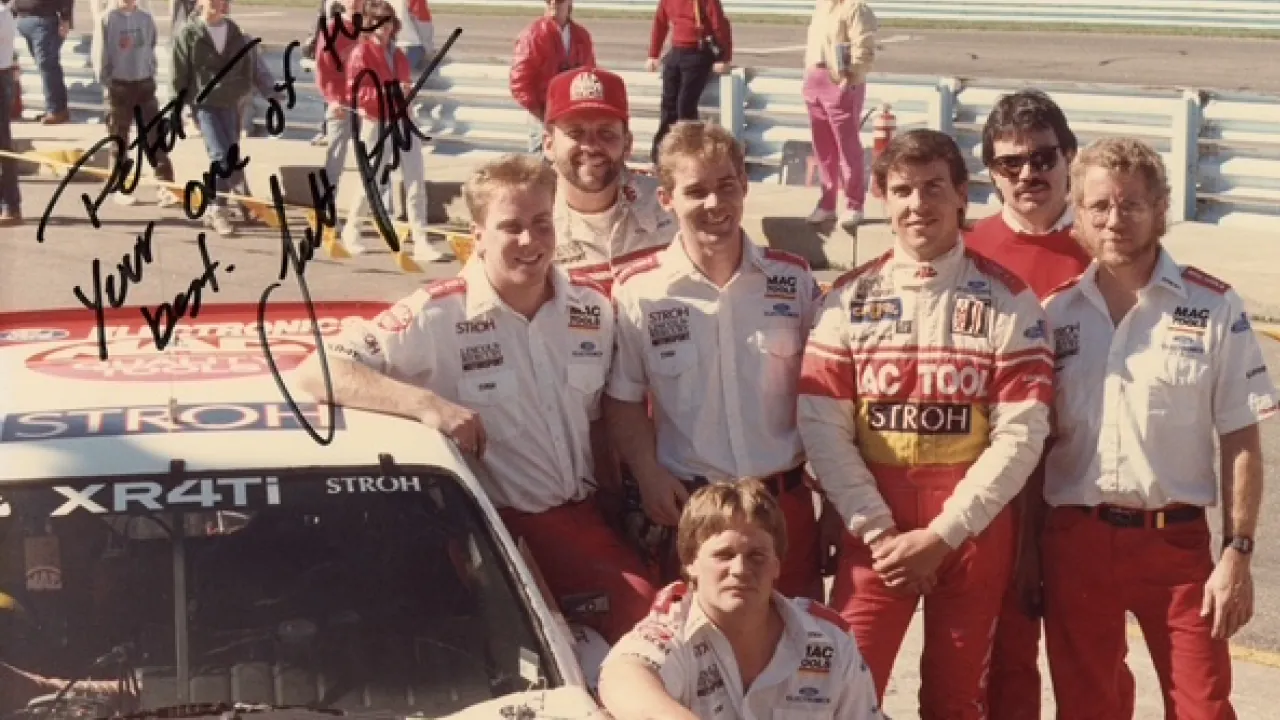
We had to buy a car and drive across America because we were in San Francisco. We bought a Toyota Corolla station wagon that blew all its oil out every hundred miles, so we'd have to stop. We ended up in Detroit and I was assigned to the IMSA GTO side of it, Glen was assigned to the SCCA Trans AM. They split us up. And away we went. And the big learning curve began because all of a sudden, it's not just some little tin top, is it? It's now a big six-liter V8 making 650 horsepower, and tube frame chassis, and Weismann five-speed gearboxes, and Ford nine-inch differentials. It was big.
Greg: What do you think helped you get up that learning curve?
The first thing is you have to shut your mouth. Because I was so out of my depth, I'd never done anything like this. All the confidence that I'd had, I'd built up through my three years of apprenticeship, and all that experience and knowledge that I had, I just threw that in the bin because this was now the big leagues, and learning how to make brake lines and all these other things that I'd never done before. I had to really keep my trap shut, keep my head down. And I just had to work harder than anyone else.
And also, to be accepted. It was hard. We were foreigners working in America, in Detroit, and that was difficult. That was another thing we had to get over, to win over the hearts and minds of the Americans we were working with. And to become accepted because we were working illegally.
Greg: What was your support system and what helped you learn that?
What I learned was sports. I figured out very quickly that Americans are obsessed with sports. And that was all they talked about whatever, if it's baseball season, they're talking about the Detroit Tigers or the Wolverines. If it's football season, it was the Lions. And of course, ice hockey in Detroit with the Red Wings. And so I learned sports. Whenever I had time off, I would sit in a sports bar watching American football with an American next to me, and I would just ask them questions if I didn't understand. But I learned how to talk about sports, and because of that, away I went. It broke down so many barriers. And that was a huge help. The rest of it, I don't feel like I needed a support structure because every day was like the best day of your life because everything was new. And what was it not to love?
Peter’s role in Formula 1
For someone in your world, such as build operations management, what does the day-to-day look like at work?
I think you have to have a lot of experience to get to that level. And again, when I arrived in Brackley in 1999, I'd just come from Le Mans; I'd dabbled with Formula 1 a little bit before. But I had two goals when I left New Zealand, one was to work at TWR on the Jaguar program for Tom Walkinshaw, which I achieved. And the second one was to get a proper job in F1. So, it took me 15 years to get to F1. When I started, I was a factory-based chief mechanic and there was a lot of imposter syndrome because I had never worked in F1 before.
To be given a low-level leadership role straight away was difficult because you had to learn a little bit about grand prix cars. I'd never worked in a racing team that was 350-400 people. And again, it was sort of mouth shut, head down, establish your status a little bit. And because you've got an in-depth knowledge of how racing cars work. They're all fairly similar. Just the level of complexity that's in them, but also the status of the formula that you're in. Formula 1 is like nothing else. There's nothing else that can compare to it.
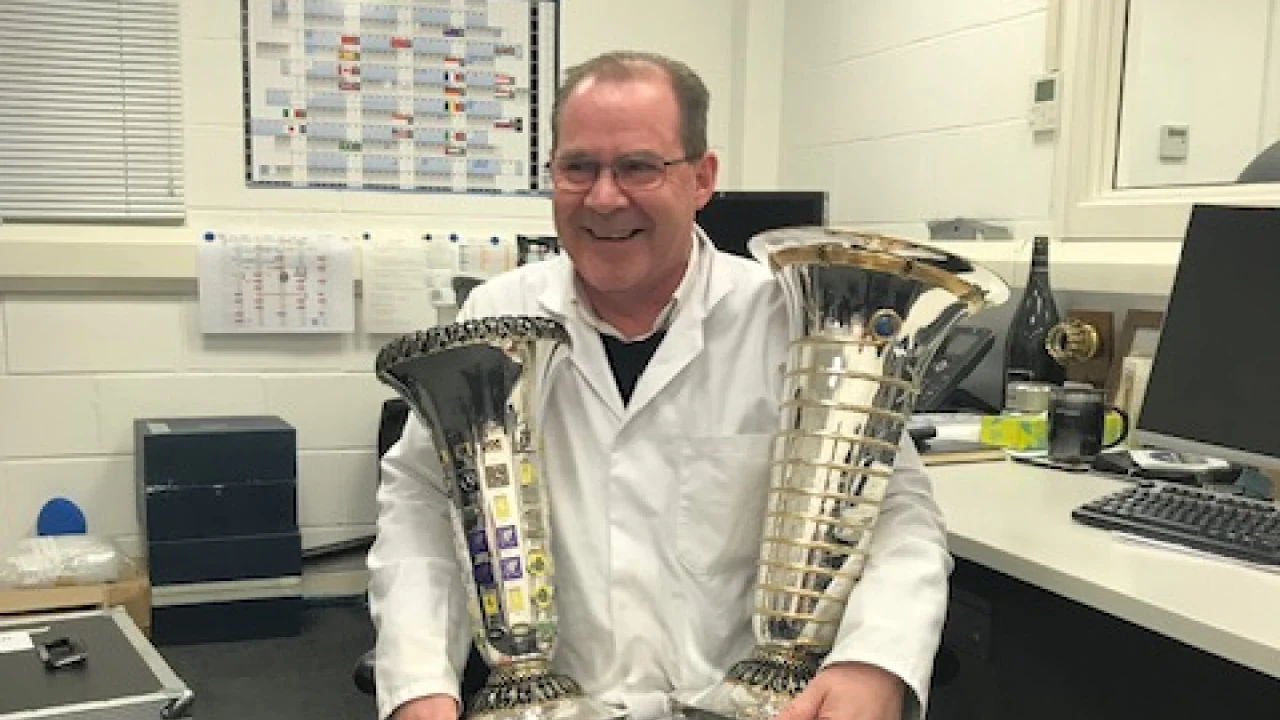
I would start at six in the morning and I would try and talk to the night shift, just to see what had happened overnight or what hadn't happened overnight. What parts hadn't come in from suppliers or what hadn't come off the machines or what had come off the machines, etc., to know what our status was going to be. And then from six until 10 minutes after eight in the morning, that was my time. That's when I did my work, and my work was reading emails, planning and trying to figure out and communicating what had changed in the last 24 hours. Because it changes. It changed every day. The plan, what parts we were going to run, what the spec of the car that we were trying to put together. There were all sorts of things that were changing. So, you're managing this change, and then you're communicating it and you're also pushing back on people. Then from eight onwards, I go and talk to people. Just go and talk to as many people in my department as possible. That department was over 100 people at times. You need to go and talk to the other humans.
Up until January, you're building new cars, so you're just trying to get three cars out the door plus a crash test car. Then, once you get into the season, you're making upgrades, you've got performance upgrades, and you've got reliability upgrades. When you're dealing with reliability stuff, you've got to do prove outs. So, you might have to go and run across a rig, then take it down to the [dynamometer]. You're introducing new gearboxes or things like that. So, if there's a problem with this gearbox, what's the next gearbox in line? Always having another gearbox in your back pocket, so to speak.
If you do have an accident, what's the strategy for that? You're always trying to think, at least as far ahead as you can possibly think, in that highly fluid environment. And F1 teams, I think if you can operate 80% plan 20% chaos, you're doing really well. I mean, the chaos though is the great bit. That's what makes it fun. And that's why you're in the sport because that's where the challenge is. It's quite a fluid, dynamic environment. Brilliant though, brilliant.
Greg: Do you have a fire drill moment that you remember?
The one that always sticks with me is when Lewis Hamilton first drove the car in 2013. He crashed, should be four laps into his first run and he had a brake failure and it went straight into the wall and broke the front wing nose, floor, front uprights. And we had to be running the next day. We didn't have a spare nose or we didn't have a spare front wing, and we didn't have a spare floor and we didn't have spare front uprights. They were in Brackley. This was 11 or 12 in the morning and at some point overnight we had to get parts there so we could run the following day. I remember very clearly—I was sitting at my desk and Aldo Costa, who was the engineering director. He walked in and said, ‘Lewis has just had an accident.’ And he goes, ‘what are we going to do?’ And I said, ‘I don't know what you're going to do, but I'm going to lunch.’
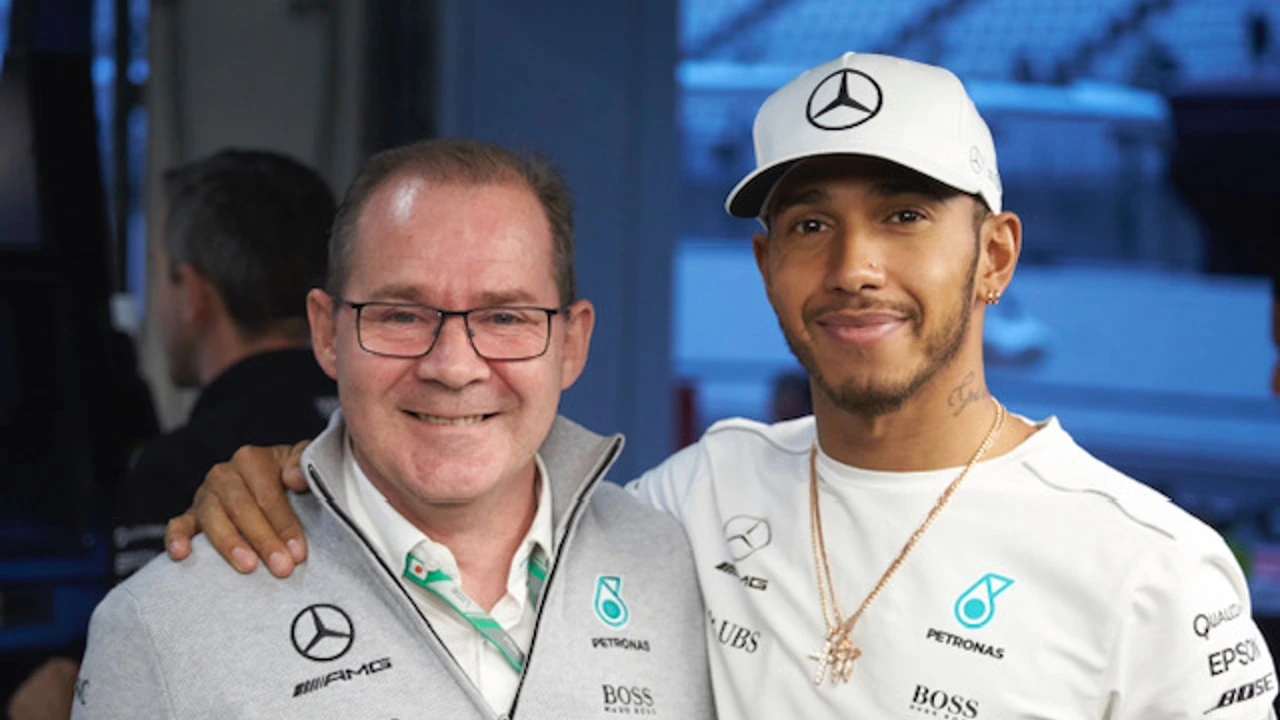
I just went downstairs and sat in the canteen, which I very rarely did. I normally ate at my desk and I just sat there for 20 minutes and thought about things, and thought, ‘Wow, this is a big moment, right? What's my plan here? How am I going to manage this?’ I would go and talk about private jets, and how big is a door on a private jet? Will the floor fit through the door? How complete was the spare floor? How many composite people can I put on the private jet to work on the floor on the way there, and all these sorts of little things. And the other guys went away and sorted the front wing and another guy sawed off the front uprights and, which was still on a machine.
So, we had all these little problems and we just kept walking and talking, we got everything there and the car ran the next day; and from the outside it looked like we had a brake failure and we fixed it, and away we went. But in reality, we just scraped by and just threw a bunch of hard work and real, proper teamwork. No shouting, no big flaps, no hero moments, just a group of human beings working together for one really clear purpose. Our pride was hurt that we'd given a World Champion a car that had a problem which had caused him to crash. Our personal pride as a team was damaged. So, we had to repair that. And so, we had to get it running the next day to show him that we were a team worthy of him.
What were the most rewarding and challenging parts of your job?
Rewarding
Everyone will expect me to say the championships, and the championships are what you're working for, but some of the really rewarding bits were seeing people that you recruited grow into jobs and really flourish. And perhaps some people hadn't quite made it on the race team. And yet they'd come back to the factory, worked in that environment and they really flourished there. The circuit is not for everybody. They might have really wanted to be part of the team, but it didn't quite work. And they came to the factory and did an amazing job, and really, really grew.
I really liked recruiting people and then seeing how far they would take it. If you come to F1, don't expect someone to map out your career path for you, you create your own career path. You own your career. Someone else isn't going to look after your life for you, are they? You've got to own that career and you've got to put that effort in as well. If you want to really get in there, and get to the top of it.
Challenging
Managing the constant change; just one upgrade after another. And the hardest thing was when you're having reliability issues and as human beings, sometimes, if something goes wrong or something breaks or something comes apart, we're very quick to blame the human being, because it's an easy thing to blame.
“They.”
And you just think, well, that's not the right word. It's a “we,” we're a team together.
That was hard when we were getting blamed for stuff that perhaps wasn't directly our fault. We did a lot of work with check sheets and quality documentation to support the technicians, to help prevent human error, because human error is inevitable, and you've got to support the human being to do the job because we're all fallible, we're not perfect. And it was when things went wrong it was a difficult time because people took so much pride in what they did as well. And they didn't want to be the one that stopped the car, and there's a lot riding on F1. You know how many billions of people around the world are watching every Grand Prix, and every practice session, every lap of Qualifying? There's a lot riding on it these days. So, you've got to support the human being as much as you can. And that was a great evolution at Mercedes. We got through that difficult time. And when we got to those championship years, we just kept improving, and growing, and developing. Not only our technical performance, but our human performance as well. And changing the way that we talk to each other, and building responsibility and accountability.
What are the top three qualities that helped you succeed in your role?
Hard work
I think I worked pretty hard, it was the number one thing.
Good with people
Perhaps, I don't know, it's hard to say if you're good with people or not. Everyone likes to think they're great with people. I'd like to think I was fair and consistent with people.
Never stand still
I think you've got to be a good storyteller. You've got to get people behind the intent of what you're planning to do today, this week, this month, in this block of work that we've got. I've always tried to think about how we could get better as a department. That was quite important making sure we had enough available resources, budget, etc. to get better. That was quite important to me.
Peter’s advice
If you could go back and give your younger self advice, what would it be and why?
I'd just say good luck, enjoy it. Seriously, I wouldn't give my younger self any advice at all because I wouldn't want to cloud my younger self's thinking. My younger self wouldn't have listened.
What advice would you give to someone looking to be in your position?
Just go for it. I know it sounds easy. I was lucky because I had two really clear goals: one of them was working for Walkinshaw and the other was getting to F1. And they were the things that drove me. I think having really clear targets in your own mind and really clear intent of what you want to achieve in five years, ten years, etc. These are big, long-term things. And stick at it. By the time I got to Brackley in 1999, I'd only worked for three teams: Roush, Walkinshaw, and Don Panoz.
I'd only worked for three people. I'd worked for Walkinshaw for ten years. And getting into an organization like that, and then really sticking with it through good times and bad teaches you resilience, teaches you to stay in these really tough moments because there are lots of difficult moments and really difficult programs and challenges. And you've got to stick it out, as long as you're working towards what your end goal is.
Peter’s career highlights
What's been the most memorable part of your career so far?
I think winning Le Mans in 1990 was really something. Because after that race, there was like a light bulb moment. I was like, wow! You've been a part of something big here. This is your car. The car that you and a few others put together has won a very big race. And you'd done some stuff during the pit stops to help the team win that race. And that was big, and I never forgot that.
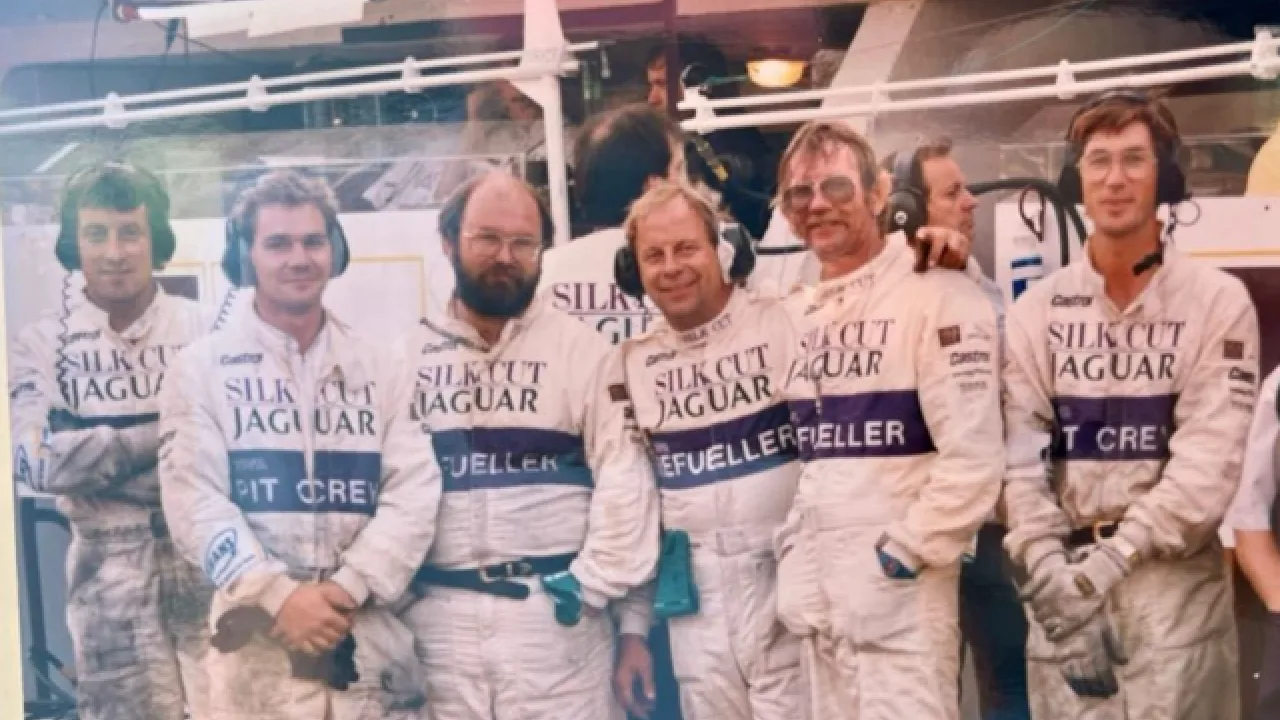
Greg: What makes Le Mans so big?
It's the challenge of Le Mans itself. To be able to run 24 hours, to build a car—especially in those days. And because you have to win the race, you have to beat the racetrack. You have to be there at the go, to be there at the end, and be able to deal with all the situations that come your way during the race. And then if you've beaten the racetrack, and you've done really well overcoming all the obstacles, you're probably going to be pretty close to the front of that race. Therefore, you've got a good chance of winning it. And it's just a special thing. There's the Indianapolis 500, Le Mans, and Monaco. They're the big three in motorsport.
I suppose the next big thing in my career would be Brawn, the magic of Brawn. That magical season. Before that winning a first Grand Prix in 2006 with Jenson [Button] in Hungary, and then Brawn in 2009. That was amazing. It was really difficult—so many documentaries have been made about that experience. And then that magic run.
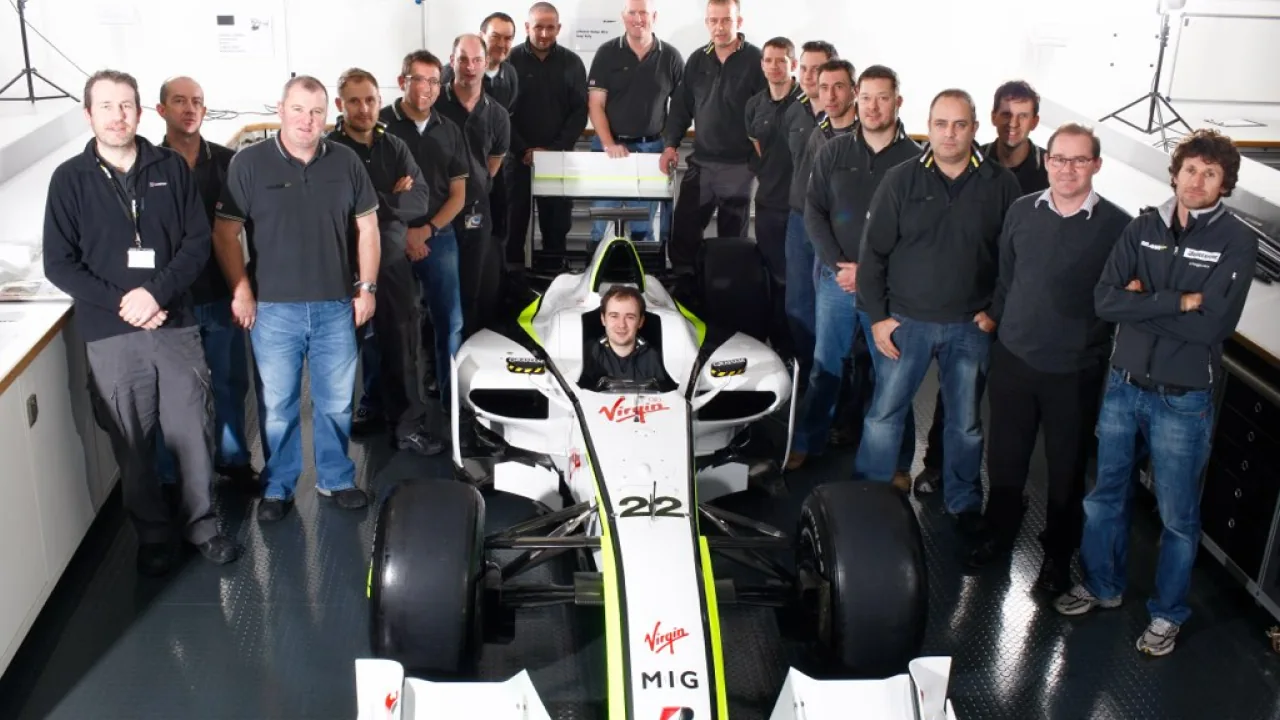
You've been on championship-winning F1 teams, won endurance races that people can only dream to even finish. You've also been at the pinnacle of sailing. What are the big differences and surprising similarities from each of those?
The sailing was really interesting because everything's so big. It was just the size of it; the hydraulic pressure was massive. Everything you picked up was big. It was amazing. And the work that the marine technicians do is phenomenal.
What really got me was the surface finish that is required on the foils. The amount of work that went into the foils and all that area of the yacht was incredible. You obviously don't want separation or cavitation or ventilation, all these sorts of things. And you can get cavitation very quickly if the surface finish of the foil is not perfect. You think in F1 that all the wings and everything are absolutely beautiful. The finish of them is nothing compared to what is on the finish on the foil of an America's Cup yacht. It is a great sport. It's a beautiful yacht, beautiful boats. And again, the people on the marine side of things, they're so knowledgeable. It's incredible. Absolutely incredible what they do. It's very manual, very hands on as well.
A big thing I took away from endurance racing is your ability to learn how to fix things quickly in a pit lane, in a pressurized environment. It drives your creativity of how you're going to overcome a problem really quickly. I remember when we were testing one day, we broke the rear bumper of the car and we didn't have the right bit of steel. And I looked at the fabricator, and we looked at the fence around the racetrack and we thought, that's tubing on that fence. That's about the right diameter. So, me and the fabricator went over there. We just cut the bit of steel out the fence and put it as a support for the rear bumper on the back of the car. And then the next day the team manager went and got some tubing and we went out there and welded it back in. But we needed something quickly.
You have to be creative. The gear lever is not returning to the neutral position? Alright, let's get a bungee cord and just wrap a bungee around it, connect it somewhere, and let's just get it going again. Then we can fix the problem that evening when we stop running.
Greg: Speaking of creativity, going back to the F1 side and Lewis’ crash, did you get the floor through the door of the private jet or did you have to do something else?
We got it through. And over the years I've seen a lot of things flying, a lot of private jets. Even at Roush in 1987, we flew an engine on this plane and it wouldn't fit through the door of the plane. So, he had to take the cylinder heads off the engine, and had to fly two engine guys with the engine to put the cylinder heads back on when it landed. You do what you need to do. And private planes have always been a big part of that.
Peter’s expert opinion on the 2026 Formula 1 season
From your POV and the build side of things, what's going on now that they've canceled two of the F1 races? How might teams be managing everything?
Obviously having a sudden gap in the calendar is a great opportunity for some of the teams that are struggling a little bit, like McLaren. Even though there were issues in China, it sounds like they came from the engine, from HPP on the Mercedes engine side. It gives them a golden opportunity to all the teams to really focus on their performance and reliability issues. But for Honda and Aston Martin, it's obviously going to be a godsend for them to get a lot more dyno running down to try and resolve their issues and bring the performance.
Is this just a completely negative experience to go without two races?
Of course you're losing data points. You're losing that on track learning, but F1 has become very good at off track learning because of the testing—the huge reduction in testing and what you're allowed to do. There are so many other capabilities that are available now to do that work. The fact that pretty much all of these cars got to the first test in Barcelona and were pretty reliable straight out of the box. Shows you that this sport is no longer reliant on track testing as much as it was. I know those factories have huge testing capabilities and you've got to have it if you want to be competitive.
Who then is going to benefit most from this?
McLaren. I think McLaren will benefit most. Red Bull as well. With the Ford engine, I think they've had some issues. Must have been little things, but I think McLaren and Red Bull will benefit the most.
Anyone from the midfield that might stand out because of it?
I think Alpine have done quite well, you know, and Racing Bulls as well. Everyone's talking about [Williams] having a heavy car. It's a great opportunity to try and introduce some lighter-weight parts, to shave some weight off. Weight makes a big difference, more than you think. But weights, if you're shaving weight, you can be shaving off reliability at the same time. So, you have to be a bit careful. Hopefully Williams will come up.
And of course, Cadillac, General Motors, they're not going to want to sit for very long two seconds off the pace. So, let's see if Cadillac have an upgrade package in the pipeline, if they can bring that forward in that gap as well trying to get them just a little bit closer to the back on the field.
Want to learn more about other professionals across motorsport series? Then check out all of our Fast Lane interviews, or jump right into one of these:
How Answering a Newspaper Ad Led to 9 F1 World Championships with Nicole Bearne
From Pit Stop Performance to Building Champions with Sarah Harrington


%20(1).jpg)
.png)
.png)