


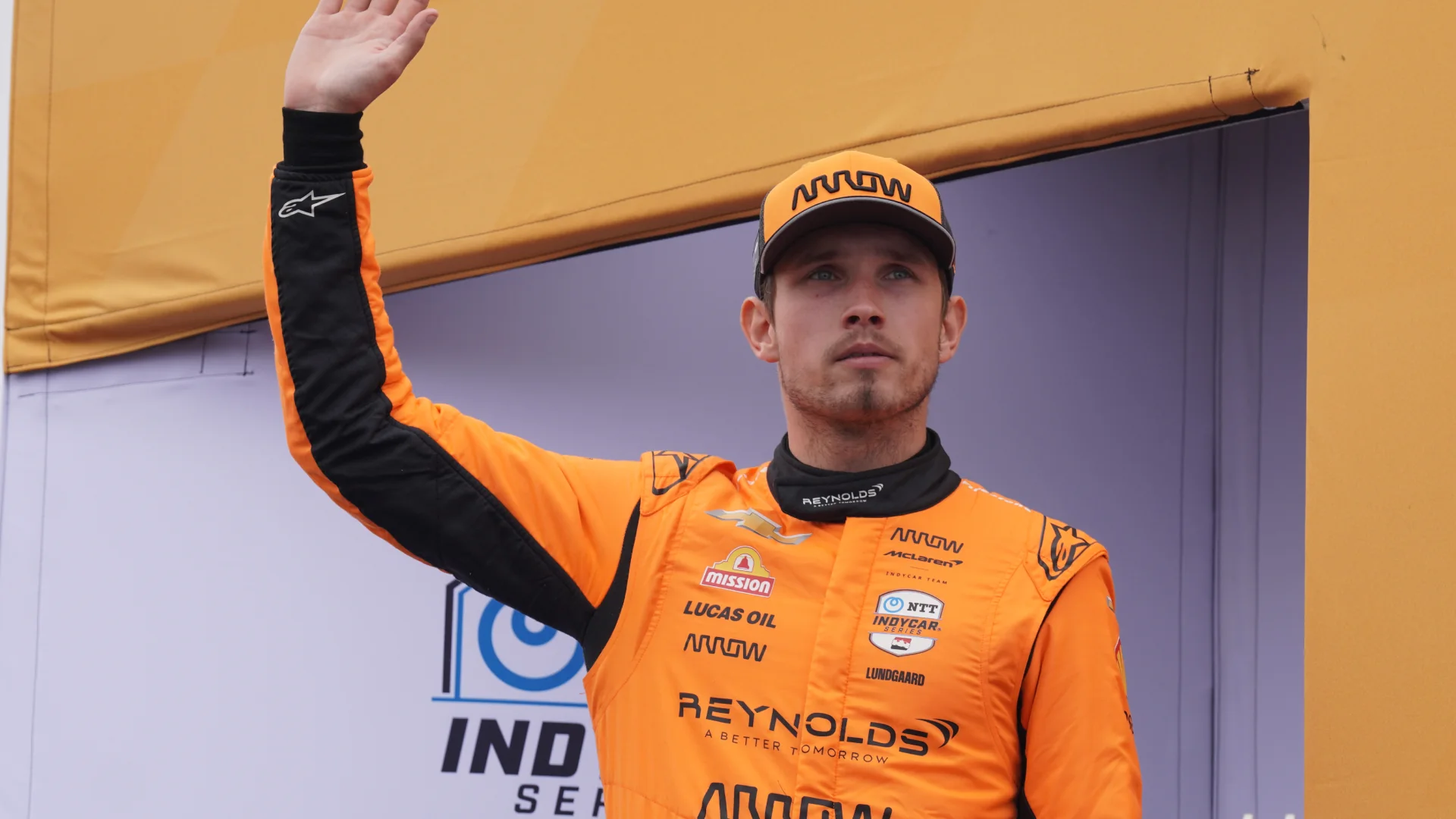


What happens when you realize the dream you've been chasing isn't a reality?
For most drivers, the goal is simple: make it to Formula 1.
But as the "ladder" to F1 becomes increasingly crowded and shaky, even champions like Oscar Piastri find themselves struggling to reach the top.
Much like you or I weighing options to move up to a dream role in our careers, for Christian Lundgaard, the realization that his dreams might not play out the way he always thought they would led to a choice. He could either stay in Europe and wait for a promotion that might never come, or risk everything on a spontaneous move to IndyCar.
Christian opens up about what it took to walk away from the Alpine F1 Academy, the humbling reality of his first IndyCar drives, and how a switch to Arrow McLaren in 2025 enabled him to double his IndyCar career podium count in a single season. From the complex dynamics of a growing up in a racing family to the challenges of chasing wins in 2026, this is a real look at what happens when you stop worrying about how high the traditional racing ladder goes and instead focus on enjoying the climb.


Formula 1: The hardest ladder to climb [0:00]
Greg: For drivers, the goal is simple.
Christian: The goal was always to go to F1.
Greg: The pathway may be called a ladder, but for most, it's not tall enough to reach the top. Even championship winners struggle to finish the climb. Take Oscar Piastri. He won the F2 championship in 2021, but had to wait an entire year before getting a seat in F1. And for 2026, Arvid Lindblad was the only driver to receive a promotion onto the 2026 grid.
Greg: The idea is doing a feature profile on you and your career, and then where you are now and the year ahead.
Christian: I can do that. I think [Jokingly].
Greg: Christian was exactly where every young driver dreams of being. He was on the cusp. He was racing with a big-name team in Formula 2, and he was backed by the Alpine F1 Driver Academy. But ultimately, he had to make the same choice that anyone watching this video has had to make in their own career.
What would you do? Would you stay in your current role in Europe waiting for the promotion that might never come. Or, do you pack your bags and take a gamble on a new role, with a new company, in a completely new work environment?
Christian’s early career in the Formula series [1:09]
You moved up the F1 ladder very quickly. You were racing for ART Grand Prix both in F3 and F2. You also tested an F1 car. You said you felt very comfortable right away. What was racing in that whole universe like? What clicked for you and made you feel comfortable at the time?
Christian: Moving on. You never really have time to reflect. You want to move up the ladder. You don't think so much about what happened the prior year. You just see the results on paper, and you go to the next category, and move on that way. The goal was always to go to F1. When that became clear that wasn't going to be the case, I got the opportunity to come over here, and at this point, I never looked back. At the end of the day, I'm in a very different situation now than I was then. I'm a lot more mature. I'm a lot more understanding of racing in general. And it's just different cultures.
The moment a dream does NOT turn into reality [2:02]
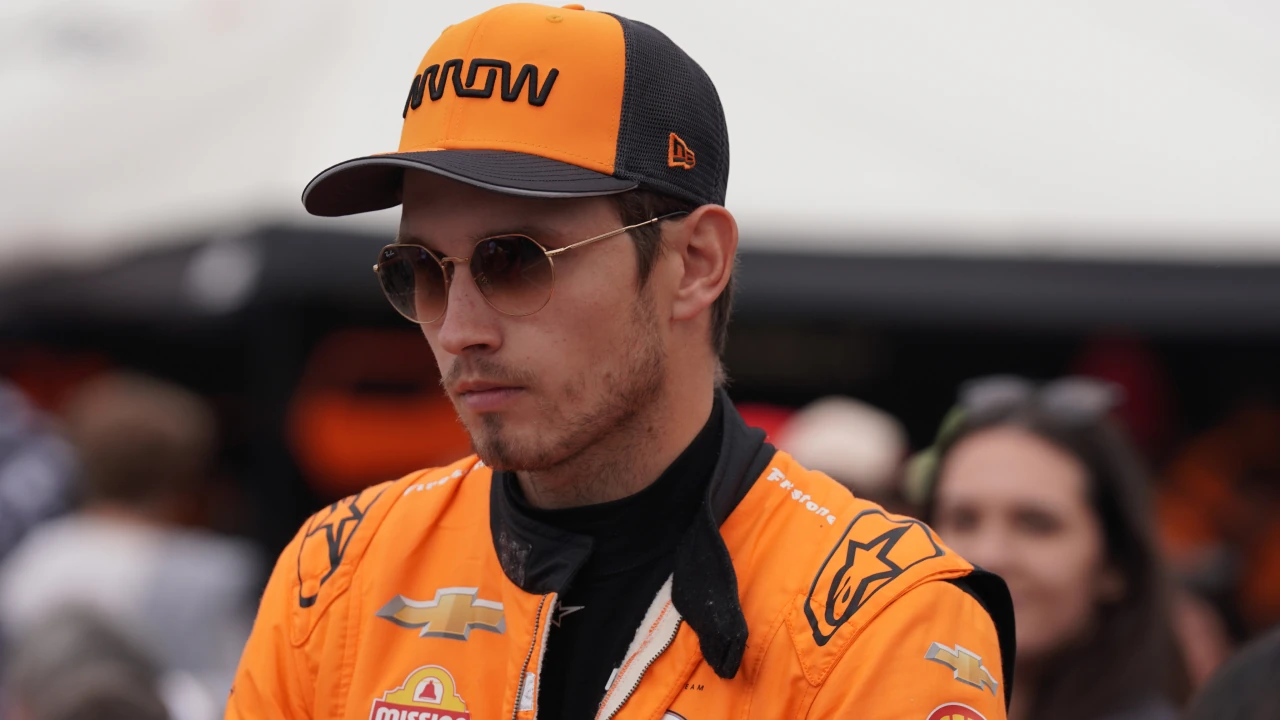
Greg: What happens when you realize the dream you've been chasing isn't a reality? There's a specific kind of bravery in admitting that the path you're on is a dead end. Christian recognized that waiting for his turn in the F1 world was a trap.
Was there something that helped you click? Because I saw you talk at the time saying, I don't think they would take a guy who finished P7. What was it that helped you realize, ‘this is the path I want to go. I want to go to IndyCar. This will feel good for me?’
Christian: It's difficult because the change from Europe to the US was very, one, spontaneous, and two, very quick. There is this opportunity. Do you want to try it out? Sure. You don't really think ‘Hell yeah, I want to do that’ because you're so narratively focused on Formula 1, that that wasn't something that I was really looking at specifically. But when the opportunity came, you will never say no to driving a race car. And that was the case. Do you want to do this test? That is now a possibility. I did the test and then doing that whole process, it also became more and more clear that there wasn't going to be an F1 seat. So, you're going to go and spend the year outside in the hopes without knowing that, hey, you have a seat in F1 in a year or two, you're not just going to sit around. So, coming over here was probably the best thing that could have happened.
A fresh start in IndyCar… all the way across the world [3:21]
Greg: What was it like adjusting to new cars, new tracks, new teams and new competitors? The gamble Christian took paid off, and it changed the course of his career.
You qualified P4 in your debut, and actually, I was talking to one of the guys out there who said they were sitting in the room, they were on your team at the time, and they were like, “Holy shit!”
Christian: I will be honest and say I left that weekend thinking, ‘hey, if I come back and drive this series, it's going to be pretty easy to win.’ That wasn't the case. So, I learned it the hard way.
Christian on joining Arrow McLaren and seeing better results [3:52]
Greg: IndyCar has a way of humbling the uninitiated. It took grit to turn that initial shock into results. After securing three podiums with RLL, Christian made the move to Arrow McLaren in 2025.
Christian: I’m with a new group, new team, learning new people.
Greg: And the results were immediate.
You're now with McLaren; you've been here for the year. What is it about this team that's made you feel comfortable?
Christian: Everything. I think the team in general is a step up. It's very professional. I think this place is a statement to that, and the progression that this team has made since I joined IndyCar, I've had multiple conversations with a lot of people around here that weren't necessarily in the team at the time, but this was one of the teams that I didn't see myself driving for back then when I came to IndyCar. And I think that is just a testament to how much they've done since then and the progression the team has made, not just from results, but from behind the scenes, from the organization. And that was also a big part of why I ended up joining the team. And it was a great first year, and we're just going to build on that for this year.
Greg: On that, you had three podiums, your first three years with RLL, you doubled it just last year with this team [Arrow McLaren]. Did something click? What happened?
Christian: That's a great question. You can argue. Okay. Is the car faster? Potentially, yes. Is that the only reason? Absolutely not. I have a great group on the #7 car, but I think ultimately, it's the teamwork. It's how the pieces of the puzzle fit together. It's your personnel, your race engineer, your strategist, your crew, your pit stops. It's everything. It's what I've seen the biggest difference be.
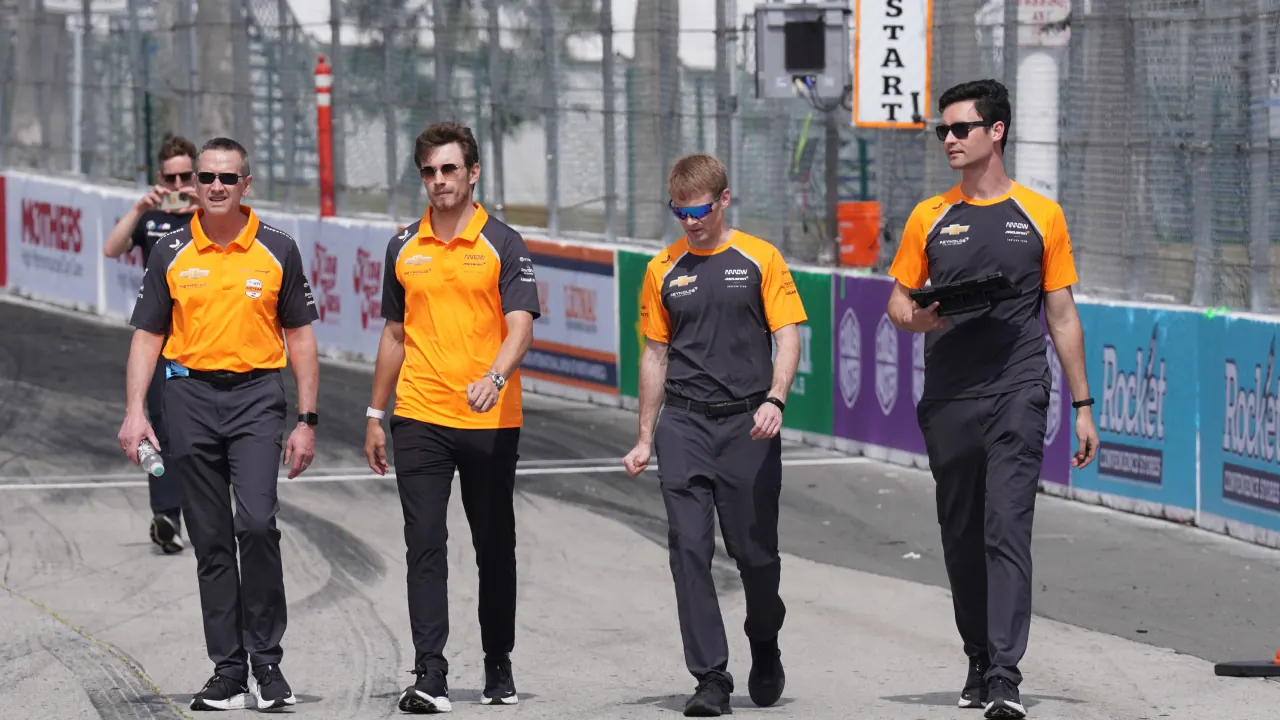
How Christian started racing and his family dynamic [5:31]
Greg: Christian's experience in both the formula series and IndyCar now sets him apart from the competition. But he didn't just show up on day one and decide to race. Although he has raw talent, it was nurtured by his support system at home, and his racing roots go all the way back to when he was initially too scared to even hear the cars in person.
I heard that when you went to try karting, you cried because it was too loud.
Christian: Yes, that was my first ever experience. Yes, in a parking lot.
Greg: I used to cry getting dragged to Little League games, so I’m curious for you—talk about those first moments, getting in a car; that experience. But also, what started to get you into racing?
Christian: The first experience, it's new territory. You don't really know what you're doing, but once I really got into any sort of racing or just driving a go kart was really from my dad. My dad was an old driver. My mom did motocross. My brother is three years older, so he started a little before I did.
Greg: Did you ever feel pressure for you to get into it because he had done that, or was this something you just naturally gravitated towards?
Christian: Never. And I think that's the beauty of it. There was never really any pressure. You were never obligated to do anything. It was more, ‘do you enjoy this? Do you have fun?’ And, other than the first time I was in a kart when it was loud, I would say I probably had more fun just driving the thing than caring about lap time. You do it, you enjoy it, and then you never look back. And then now we're here. Pretty much.
Greg: How about the relationship with your brother? I grew closer to mine as we got older, and we had differing interests and you guys…
Christian: Yup, very much so.
Greg: So, was it the same?
Christian: Very much so. We basically used to hate each other growing up. There's a lot of fighting and just a lot of arguments. And at the end of the day, we were both driving, which is where it's so tough because at the end of the day, someone's going to live the other person's dream. t was very clear. And once that change came, we became a lot closer. To this day, we speak multiple times a day and whatever it might be, if it's just a, ‘hey, how are you doing’ call or ‘let's chat about this. Do you have an idea? Do you have advice?’ Whatever it might be, which we never used to have.
Greg: We asked you in St. Pete last year the best advice you've had, and you told us at that time you said, from your dad,
“Hard work beats talent, when talent doesn't work hard.”
What role has he played in your career?
Christian: He's played many roles and he still tries to this date. He's one of those that has a dream in himself, and wants to teach you to not make the same mistakes he did, which is just more of a burden in the moment. Because now I'm old enough to differentiate right or wrong, but growing up, it was always, why aren't you doing this? Why are you doing that? Or vice versa? And it was always just, I don't want to hear this. And that was dad being more of a driver coach than a dad. Which was tough at the beginning because parents only want the best for their children. And it felt more of a, I'm here to coach you versus be here for you if you need anything, kind of thing. I think it's a very different situation that we're in now. Obviously, I live 6,000 miles across the ocean. Don't see them as much as I want to. But again, they're always there when you need them.
How Christian is channeling 2025 progress to make his 2026 goals a reality [8:41]
Greg: How would you define what 2025 was for you? And what do you want 2026 to be?
Christian: I would say 2025 was the start that I hoped for. Getting to do it was just a statement to that's now the baseline. We need to progress from here. And our philosophy on the #7 car was we just want to be competitive every single event. We don't care about what the result is. If we're fighting for podiums in every single event, we're going to have a chance at the end of the year, and that was the situation that we were in. I guess we can tick that box off and say we were successful at that. But again, that's now the bare minimum for 2026.
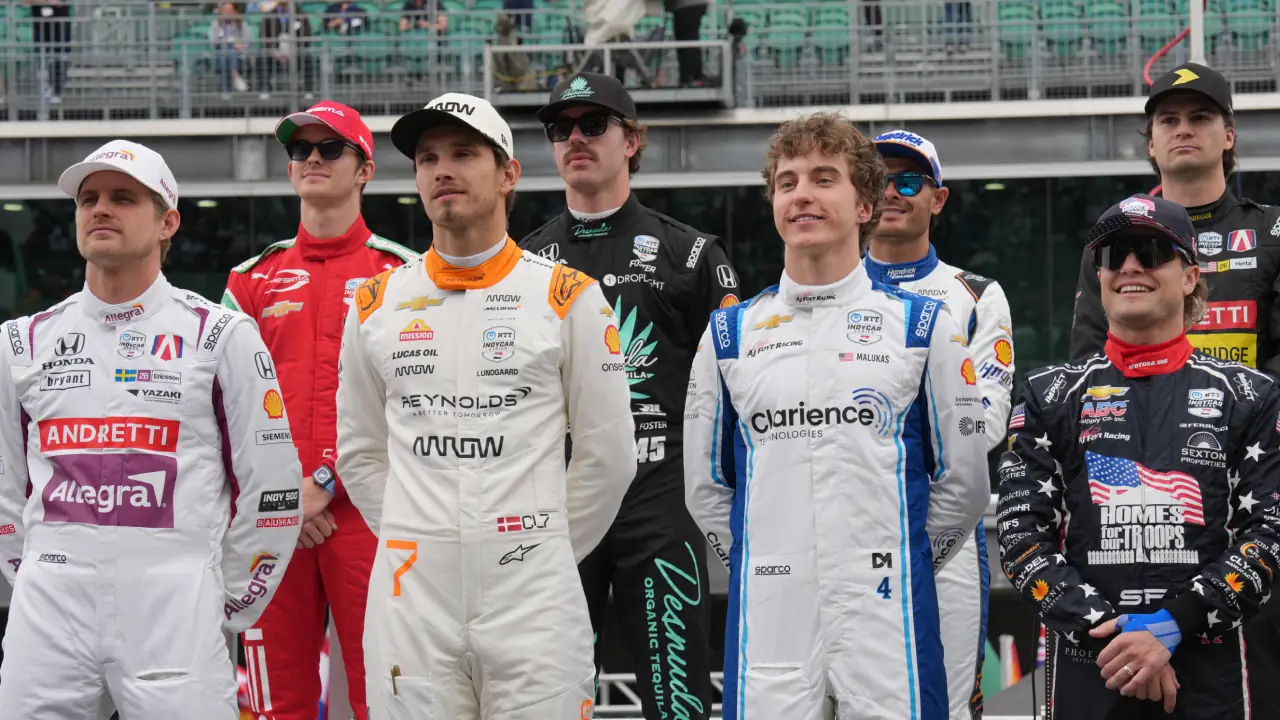
Greg: Like any career, climbing up the racing ladder is fraught with risk. Is the foundation stable? Is it tall enough to reach the goal? And just because you make it to the top, are you in the position you thought you'd be? Ironically, the only way to find out is to keep climbing. Christian channeled his inner Truman, and despite all the gambles, all the risk and all the uncertainty, he persevered and climbed into the unknown.
Greg: After a breakout 2025 with McLaren, where he doubled his podium count and finished fifth in the standings, Christian has proven he's on the right ladder and still climbing.
Want more exclusive Insiders?
Then you're in the right place! Head to our YouTube playlist for more, and be sure to subscribe to be the first to see new episodes. Or you can check out some of our recent episodes below:

.webp)


.png)
.png)