


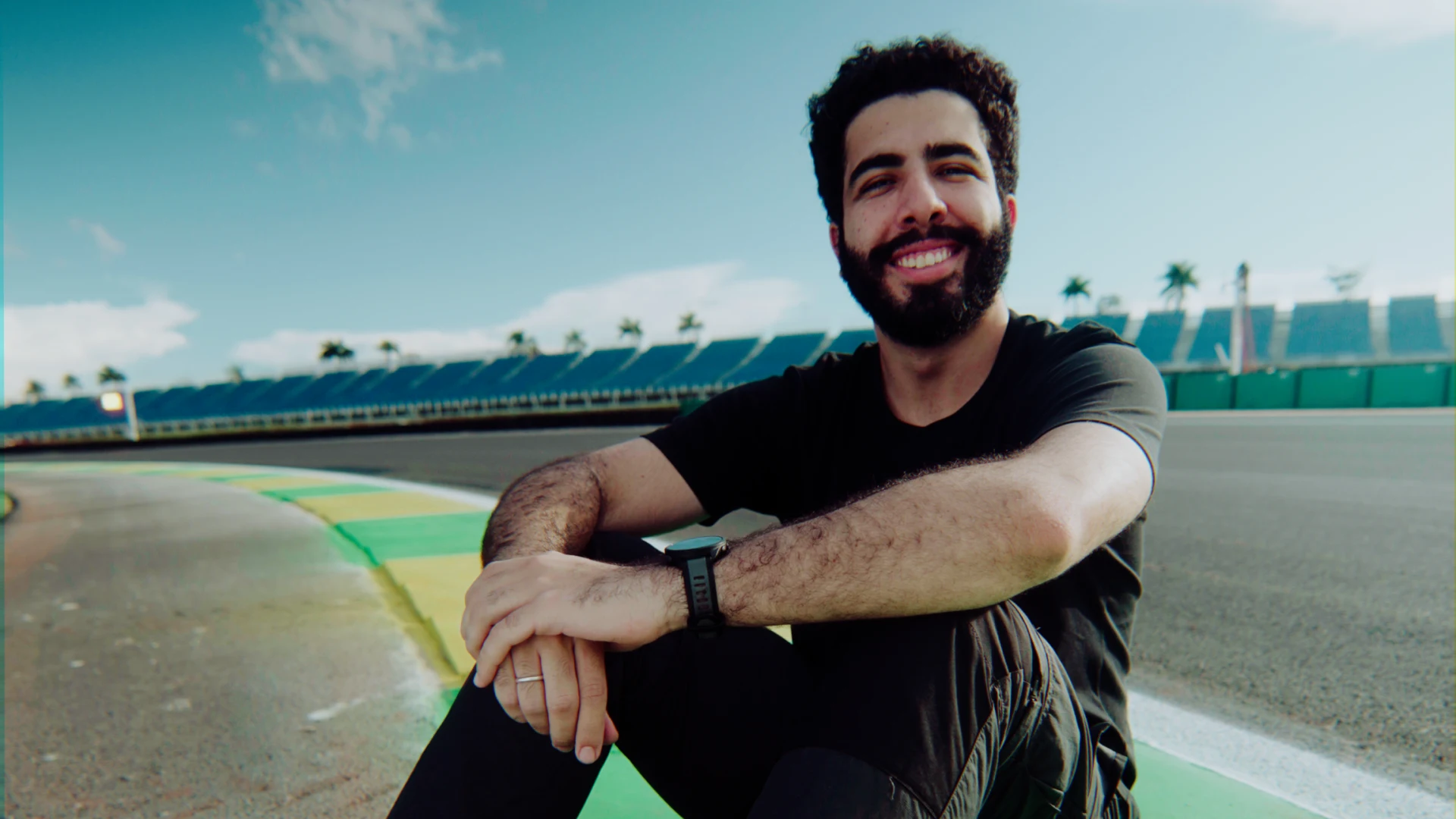


While most Brazilian kids grow up obsessed with football (soccer), young Pedro Maruxo preferred watching Formula 1 with his father. But not even that early passion for motorsports could prepare him for landing his dream role reviving Brazil's fading MotoGP legacy.
Sitting side-by-side with his father in 2010, Pedro Maruxo saw firsthand how thrilling F1 could be. He marveled at the stories of some of the greatest drivers in its history, including Ayrton Senna and Sir Lewis Hamilton. But when it came to working in the sports industry, that challenge felt like a pipe dream.
Instead of giving up, Pedro started with design work for consumer brands to hone his craft, and in the meantime he used that money to buy tickets to races just to be close to the action. Then one afternoon it all clicked. An agency replied to his Instagram DM and soon enough he had a media pass to the NASCAR Brazil race.
Fast forward and Pedro is exactly where he wants to be: marketing MotoGP and its Brazilian race to domestic and international fans alike, working to bring back a sport that had not raced in the country since 2004.
So how did he go from consumer brands and zero motorsports experience to working at the pinnacle of motorsports in Brazil? Keep reading to find out!
Position: Marketing Manager for the MotoGP Grand Prix of Brazil.
Day to Day: I'm reviving one of the biggest motorsports events that has ever happened in Brazil by showing and teaching everyone about MotoGP.


How Pedro Discovered Racing and Started His Career
What was the moment you discovered racing?
I used to watch a lot of sports with my dad at home. And the first one, I think for most people, was Formula 1. I was born in 2002, but I started watching F1 around 2010. I used to watch with my dad because he liked [Lewis] Hamilton’s driving a lot.
Hamilton was his favorite driver at the time. Of course, he always spoke about [Ayrton] Senna too—how he loved his driving and everything about him. So, I got to spend time with my dad and watch something that is cool. It's unpredictable because every race is different from the other.
After that, I liked watching it by myself. I started to see more types of racing. I watched Formula 1, then rally, and motorcycle racing too. I kind of went to everything motorsports-related. In Brazil, since we had Felipe Massa and Rubinho Barrichello, Formula 1 was the mainstream racing series. So, it was kind of difficult to watch anything else. But I found a way to watch it, and I started loving it.
Before breaking into motorsports, you were handling design work at creative agencies. What was that like?
When I started university, COVID hit, so I spent two of my four years at home, which was difficult. Since I liked doing stuff in Photoshop, I got a job in the creative part of the agencies — mainly making art for communications and social media, for chips and drinks brands and the like.
That was the first real job I had, and I used all the money I made from it to buy tickets to watch Formula 1. It helped me a lot with the creative skills I still use today. So it was important to me.
When did you decide you wanted to build a career in racing, and what was your first step to break in?
In Brazil, football is the main sport, and I always wanted to work with sports. But personally, I'm not the biggest fan of football, so it was difficult because I would love to work with something that I love. At the same time, there was a risk that I might not love it anymore after a while. So, I knew football could be a way, but I was talking to a lot of people in my university [about opportunities in other sports].
Also, I was on LinkedIn looking for everyone that works in football or in racing and anything else. I was looking at the events that they go to, the things that they do, and the majors that they get in university. I was starting to plan about it, like, “Okay, if I don't get a job in the sports marketing [industry] in one or two years, I'm going to do this master’s degree to try to do something in Brazil or outside of Brazil.”
At the same time, I was going on LinkedIn and saying, “I did marketing in university. I really love sports. I really want to go to an event to see how it happens, how it works."
On Instagram, I was doing the same type of approach, and I got an opportunity to go to the final race of the year for NASCAR Brazil, at Interlagos. I got a media pass to go around to see how the event works, and I got to talk with a lot of people.
After that, I got an opportunity to talk with Fábio Seixas. Right now, he's the communications director of the [Confederação Brasileira de Futebol], the Brazilian Football Confederation. At the time, he was building a team to work in Sertões, which is the rally that we have in Brazil—a series that once featured Carlos Sainz Sr. So, it was big.
[Fábio] was saying that he needed someone to do social media. I knew how to do social media, but not the strategic part of it. I just did the creative part and the visual part. He said, "If you want to try it, you can try it. You love sports, I like the way you talk about it. I like the passion that you have behind it. Let’s see if it works." So, I said, “Okay, yeah, let's do it. Let's go forward." That's the way that I got to see more about motorsports. So, it was approaching people in the industry through LinkedIn and Instagram.
Greg: Who was it that ended up reading that DM and giving you that first opportunity with NASCAR Brazil?
I saw an agency that was responsible for all the commercial contracts of the drivers in NASCAR Brazil. I said, “Okay, it’s a way, since they know the drivers, they are in the events, and they know how it works.” So, I sent a DM to the profile. I was just saying that they did good work. I wasn't even asking to do anything, and they responded to me saying, “Thank you so much. Do you like sports?” It was more of a chit-chat than anything else.
And with that, I started conversing with them. They said, “We are going to be in São Paulo. There's going to be the NASCAR Brazil final race of the year. Do you want to see it?” I said, “Of course, I would love to do it."
But they didn't say if I was going to be in the paddock or I was going to be in the grandstands or just outside of the Interlagos circuit. At the time, I discovered there was a media pass that could allow me to go into the paddock, to see how the pit stops and to network. It was great.
Unfortunately, we can't give the same opportunity that I was given, because those types of sports and events are really difficult to give credentials and give a space to be there in the event. I don't have that much control that people had when I had the opportunity. So, it's a great way to try it. It might help, it might happen, like it happened to me. But I had luck with me. So, it wasn't an easy way. Big events like that, it's kind of difficult to make it work.
Pedro’s Current Role
How did you then end up in your current position?
So, like I said earlier, I had the opportunity to talk with Fábio Seixas, and I started doing social content for Sertões. After that, I progressed to a higher position because I was looking at the whole structure of the company, and I saw there wasn't marketing there — because in Brazil, rally racing is not that big. I mean, the people who race in rally are mostly CEOs or C-levels who have money to spend on a car to race in Brazil. It's really expensive. It's also really difficult to do a live transmission of the events, because they’re throughout the entire country.
Most of the time, you don't have signals, or you don't have the structure, because it's really difficult to do it. The Dakar Rally does a pretty good job because they have the whole structure. They have helicopters, and they have satellites with the internet, so they do it well. But in Brazil, it's kind of difficult to do it. So, I started talking to the CEO and the board of the company, trying to convince them that we needed to have marketing, that it's something important.
I know that we already had all the clients we needed, but we needed to try to get it to the mainstream, to make the sponsors and brands even more interested in the event itself. I continued talking with them, and one time, I got the opportunity to say, “We need to create the marketing area in the company." And the CEO was like, “Okay, you can build it, and you can be the manager. You can do it." At the time, I said, "Okay, no problem.” But inside, I didn’t know what to do. I didn’t know how to start it.
So I started understanding what I needed to do, which changes I had to make, which improvements, and which assets that we had that weren't working already. It's really difficult because you need to see the company entirely, but you can't make changes on the entire company. But that’s what I was trying to do: changing the marketing, changing the transmission to create more space for the sponsors and brands. During that time, Francisco [Mattos], who was the executive director of [the Formula 1 and MotoGP race promoter] in Brazil, went to the office and started talking with our CEO. That was the first time that I saw Francisco.
I never spoke to him at that time. Two or three weeks later, I went to LinkedIn and started looking for some jobs. I was open to work because I wanted to do bigger things because there were a lot of barriers that I couldn't break in the company. Barriers like wanting to stay the way things are and not having enough resources to make the changes I wanted.
The first time you hear it, you might not get it the right way. But right now, I understand what they meant and I could have taken it in a different direction. I mean, experiences make you learn, because they said, "We don't have what you wanted to do to make the company be like that," but there are other ways we could have approached it to get there.
At the time, I didn't have the mindset for it, and right now I have it. It was the first time that I was working with an event company, basically, and I was young too. I know that. Francisco even jokes that my mind is from an old guy, but I'm young.
So, I got approached by a headhunter for Formula 1 and MotoGP in Brazil, and they were looking for someone to do marketing for MotoGP in Brazil. They approached me, everything went smoothly, and I got to where I am today.
How would you describe your current role?
I'm reviving one of the biggest [motorsports] events that has ever happened in Brazil. MotoGP was like a phoenix. It wasn't ruined, but nobody was looking at it. It was hidden.
Not counting this year, the last time MotoGP was in Brazil was in 2004. We had a Brazilian driver, [Alex Barros], and [the series had raced in] three cities—Goiânia, São Paulo, and Rio de Janeiro. When you compare it to Formula 1, as an example, Formula 1 stayed and created a revolution in Brazil, and everyone loved it.
Of course, we had the Liberty Media effect in the last years, but [F1 was always] something you could walk in the streets and talk about. MotoGP [on the other hand] was something that nobody knew [much] about anymore. We had a Brazilian rider, [Eric Granado], in the sport in the past, but it was in Moto2 and not MotoGP.
So, to bring a big sport like MotoGP back to Brazil, and not in a mainstream city, like São Paulo or Rio de Janeiro, it's difficult because you don't have the public that you had 22 years ago, you don't have the places that you were 22 years ago, and you have a Brazilian [MotoGP rider] who was born 22 years ago.
[Diogo Moreira is] driving right now, and he made it to MotoGP, but no one knows the hustle to go from Moto3 to Moto2 to MotoGP. Nobody knew about it. So, it's difficult to gather everyone who is still watching it, to create a community where they feel safe to talk and to share everything they think of the sport.
So, it's difficult to get [MotoGP] back to the mainstream. That's the work that we do. We try our best to be seen by everyone and to teach everyone about the sport. Because you can be seen, but they may not understand it.
What does a standard day look like?
The main challenge is to have information and to give it to the public. So, even on race week, most people don't know it’s a race week or that a race is going to happen. So on a daily basis, we communicate about the races. We teach the people about the sport, because we know there aren't so many media companies talking about it. We say, "Right now, there is going to be the [Motul Grand Prix of Japan]. If you want to see it, here are the times. Here are the channels where you can see it.”
We do it with social media. We do it with email marketing using CRM companies to get emails of people interested in motorcycles and MotoGP and things related to it.
Greg: And what's your job like as the race weekend approaches?
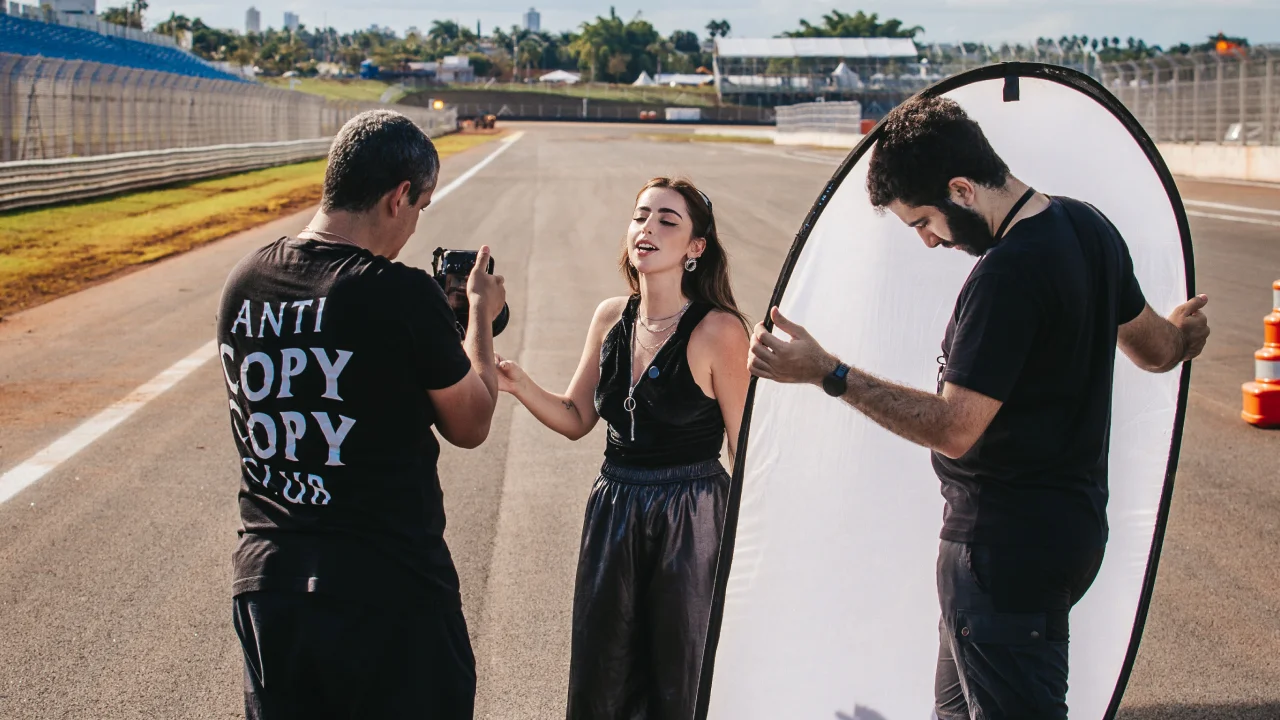
In Brazil, we do some things we've learned from Formula 1, and we bring them to MotoGP. People want to see the event turning into reality, they want to see the track getting ready, they want to see the circuit, they want to see the backstage. That's why I spend so much time in Goiânia. It's months of work that we do before we tell the public how to buy the tickets, what you need to know about the city, what you can do in the city, what is going to be expected at the circuit, and what we’re going to do for you in a different way.
We say internally that the pre-event is way more important than the event itself, because we understand the concept of attention and the fear of missing out, and how important those are for the event and for sports itself. For example, I love the [National Football League]. I'm a Seattle Seahawks fan. Every time I see a game on TV, I really want to be there, and I can be there, it's just that I don't prepare for it. So when you see [behind the scenes of] an event, the process of building the grandstands and everything else, it gets you to say, "Okay, I'm going to prepare to go there next year. I want to see this. I want to be there.” So, that's the main focus that we have pre-GP.
What are the most rewarding and the most challenging parts of your role?
Rewarding
Seeing the public that loves the sport living it during the event. They always wanted to live it, but most of them didn't have the opportunity to go outside of Brazil to live it. So, after all the hard work that you go through, the months and years before, and then to see people going out there, watching the race, and being extremely happy. So, the most rewarding part is to see that they got the opportunity to, most of the time, live a dream with sports, and that I was part of it.
Challenging
The most challenging thing is to get information and opportunities to everyone who wants to live it. I know there are a lot of people who still want to live it, and they haven't seen our communications or the transmission or anything else. So, I know that to bring an event of that magnitude in the world to Brazil, in a way that they need to understand everything, is difficult. And there are a lot of tricky questions and situations in Brazil.
What are the top three qualities that have helped you succeed in your role?
Level-headed
In events, you go through a lot. I mean, a lot. So, you need to go through it and understand more about it—the stuff that you don't need to keep in mind, just let it go, let it happen. And also to understand what is going to be beneficial for you. So, you need to have the right mindset, because during the event, you don't have a lot of time to think. You don't have time to say, “Okay, let's sit here and understand.” No, you need to do it at the right time, at the right place. You need to be stable, and to understand what you need to do in those types of situations. You don't need to overreact.
Passionate about the work
You need to enjoy what you do. It shouldn’t be something that you feel you are being forced to do. That's the worst thing that can happen at work, because if you feel forced to do something, you're not going to do it in the right way. You already have the right mindset, but if you feel forced to do something, you're doing it wrong.
Takes inspiration from others
You need to be looking around, and I am not talking about job opportunities. You need to look around at the quality of other events and ask what they are doing differently. So, for example, the NFL’s Super Bowl halftime show. Everyone knows it's a big example of entertainment.
There's the Isle of Man TT, and it's something that you can learn about. In Brazil, there are a lot of people who would love to have camping at the event. There's already camping in Formula 1 and MotoGP, but the Isle of Man TT has a different way of camping. Because the whole island itself, they have different types of ways of getting the public there, to stay there, and to live and watch the event.
So, you need to look around for every type of event, and it doesn't necessarily need to be a sports event. It can be any type of event. It can be a food event; it can be a commercial event. But you need to look around and to understand, because most of the time, there are some tips, tricks, and stuff that they do that you can bring to your reality, in your way, and to be innovative with it.
Pedro’s Learnings and Advice from Marketing MotoGP
What have you learned from trying to build something international versus your work with brands serving a domestic audience?
Brazil is big, but the world's way bigger. For us, of course, it's easier to make the event a reality with the people nationally. So, we need to gather everyone from Brazil to go to the event. At the same time, we need to think about the international fans from Germany, from the United States, from Spain, and everyone else who wants to watch a MotoGP race outside of their country because it’s a great opportunity for them to learn about Brazil.
While we are trying to make something for the public in Brazil, we already know how they work. We also need to understand there's a public outside of Brazil that doesn't have the same culture as us. We don't have the same structure that a person is going to have in Europe.
We have, to talk to the national public and to the international public in different ways, but kind of in the same way which is the experience on the track is going to be amazing. Outside of the track, where we have control, it's going to be in a Brazilian way that you're not going to see anywhere else in the world.
If you could go back and give advice to your younger self, what would that be?
Don't be hot-headed, because I am. I know that. Most of the time, when you're either angry or you don't like someone's decision, you don't try to follow the way that you need to follow. You end up more off track than on track. So, if you don't like something, if you don't like the way that it's going, just breathe in and try to understand the whole picture.
Sit there and just stay alone, and after that, go and do what you need to do. That's something that, I think, I could have done differently at Sertões. If I wasn't as hot-headed at the time, it could have been different.
What advice would you give to someone looking to be in your position?
You need to be seen. You need to be in the right places at the right time.
What I am trying to say is that you need to understand which type of event unites people in the market. So, the people that work in the sports market in Brazil, where do they spend their time? Where are they in the events?
And you also need to understand how to get there, whether it's easy or it’s not. If it's not easy, you need to go in a more educational way. Obviously, there are not a lot of opportunities here, but some universities in Brazil have sports programs. With that, you can meet some people who are running the market. Either they are the professor, or they are invited to speak in a class—just go after the person, say hello, say your name, and say that you love the sport. If you can get a yes or a maybe, it's already a profit.
If those two ways don't work, there's also social media, which we see mainly in MotoGP right now. You need to go on your social media, create a profile, and create content, because it helps.
Fun on the Job
What's been the most memorable part of your career so far?
We did a countdown in Goiânia. We got a big logo of MotoGP, with a countdown of 60 days under it, and [projected it] in a public place. There was a big statue in the city, and we put a projection on it at night.
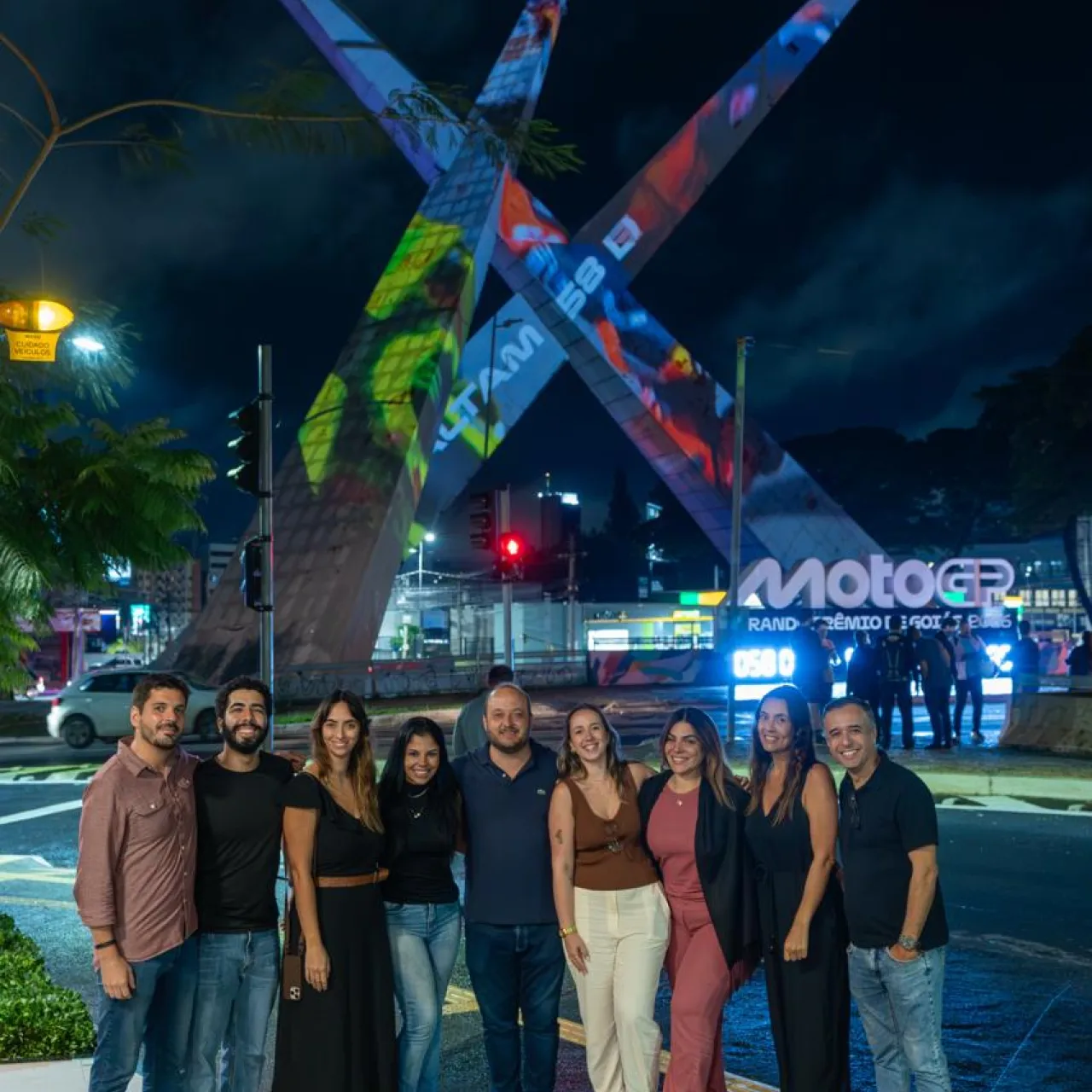
I had the idea, and I tried to make the idea into a reality and build everything around it, and it worked. It was something that showed me, “Okay, we can make changes easier than we thought.” The moment I saw that, it turned a key in my mind that it's going to be different. You're going to live something that is different from what you did. That moment was really special.
What is your dream motorsports event that you haven’t yet been to?
That's a hard one because in Brazil, to be honest, I think I'm in the position that I always wanted to be. So I love what I do and where I am. But worldwide, I mean, I do love the passion that the Europeans have for motorsports. I went to the [Monster Energy Grand Prix of Catalonia in Spain] and the [Red Bull Grand Prix of San Marino and the Rimini Riviera] in Italy. I saw the love they have for the sport—it's crazy. It's amazing.
In 2027, I'm going to the Indy 500, to watch it, to see it, and to understand it. So, I think probably when I watch the Indy 500, it's going to be the one that I want to work on sometime in my life.
Want to learn more about other professionals across racing series? Then check out all of our Fast Lane interviews, or jump right into one of these:


.png)
.png)