


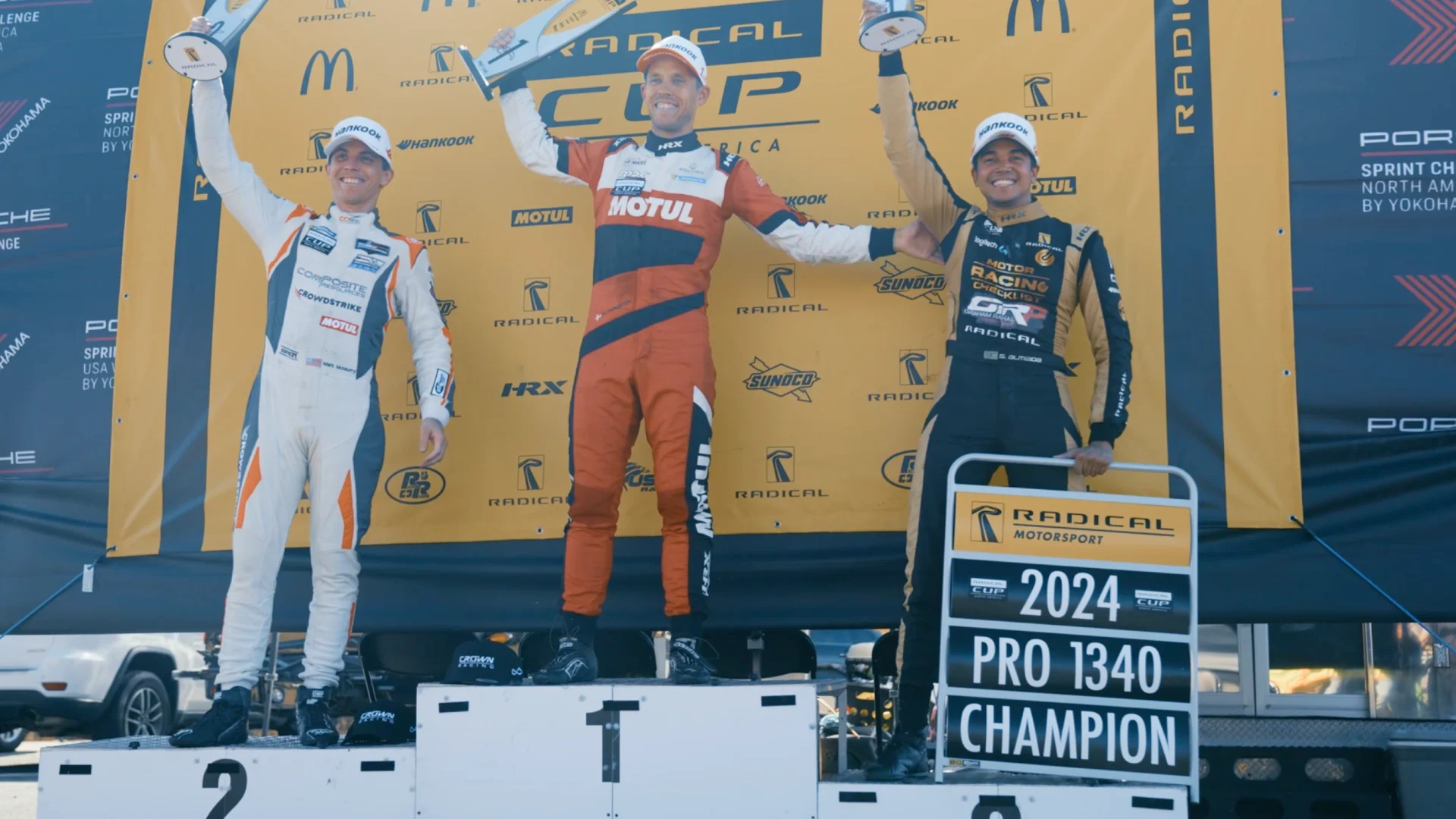


Suellio Almeida learned English playing video games and started coaching sim racers to help pay for a piano master’s degree, but his side hustle quickly eclipsed the music career it was funding.
Calling himself a gamer before anything else, Suellio grew up playing Gran Turismo until he graduated to Assetto Corsa. However, it wasn’t until he finally convinced his parents to buy a $200 Logitech G29 race wheel that things changed.
He started coaching sim racers for $20 an hour, and that quickly snowballed both in hourly rate and clients until he couldn’t handle the workload. That’s when he decided to focus his passion and energy into sim racing full-time.
After researching how to scale his time, Suellio founded the Almeida Racing Academy and began producing courses. He became so successful that he was invited to race in the real world, both as a driver and as a coach for students driving their own real-world cars.
So, how does a classically-trained pianist go from a basic steering wheel in Brazil to running one of the world’s leading online racing academies?
Keep reading to learn more!
Position: Coach and Founder of the Almeida Racing Academy.
Day to Day: I do a lot of editing, spend as much time as I can on Discord with the community, and coordinate tasks with my team.


Suellio’s Start
What was the first moment you discovered racing?
It was probably from Gran Turismo, on the PlayStation. I was eight, nine years old, just being the weird kid in Brazil who didn't like football. That is where it all started, and I never stopped. I always liked playing video games. Actually, I call myself a gamer before anything. I'm a gamer before a pianist, before a racer. That's how my life developed.
I learned English through gaming, and I did a lot of sim racing. So, I started Gran Turismo 1, Gran Turismo 2, 3, 4, and then when I was a little bit older, I was able to convince my parents to buy me a Logitech G29. And I got one, I started in Assetto Corsa, and I loved how difficult it was to drive and I loved how realistic it felt. I started actually reading books about all this.
Gran Turismo already felt real. It was not Need for Speed, where you have nitro and you're racing in the city. Gran Turismo felt real because it was on a circuit. And I liked that more, for some reason. Then Assetto Corsa is the next level from that, because now I'm not on a controller, I'm on a PC game where you can adjust the setups and you see the tire temperatures. It's very real.
I also did three years of engineering. So, I'm already obsessed by the physical aspects of the universe, by mathematics and physics and all that stuff. So, for me, racing was this beautiful combination between physics and sports, where understanding both at a deep level is required for you to do well.
Why did you pursue music in school if you had a passion for engineering and racing?
I never thought racing was possible. It was just a fantasy. It's something for rich people. I'm not going to do that. I asked for a while if I could get a go-kart, if I could race. My parents were like, that's absolutely impossible. We did not have the money to even go weekly on a rental car. We couldn't do that. So, I did piano because we had public universities that were free in Brazil, where I could do something. And I was good at piano. I really enjoyed it. Same reasons I enjoyed racing. You have to understand two very different aspects of life, which is like the physics of sound and harmony and a little bit of art and humanity. So, it was just feasible for me to do music.
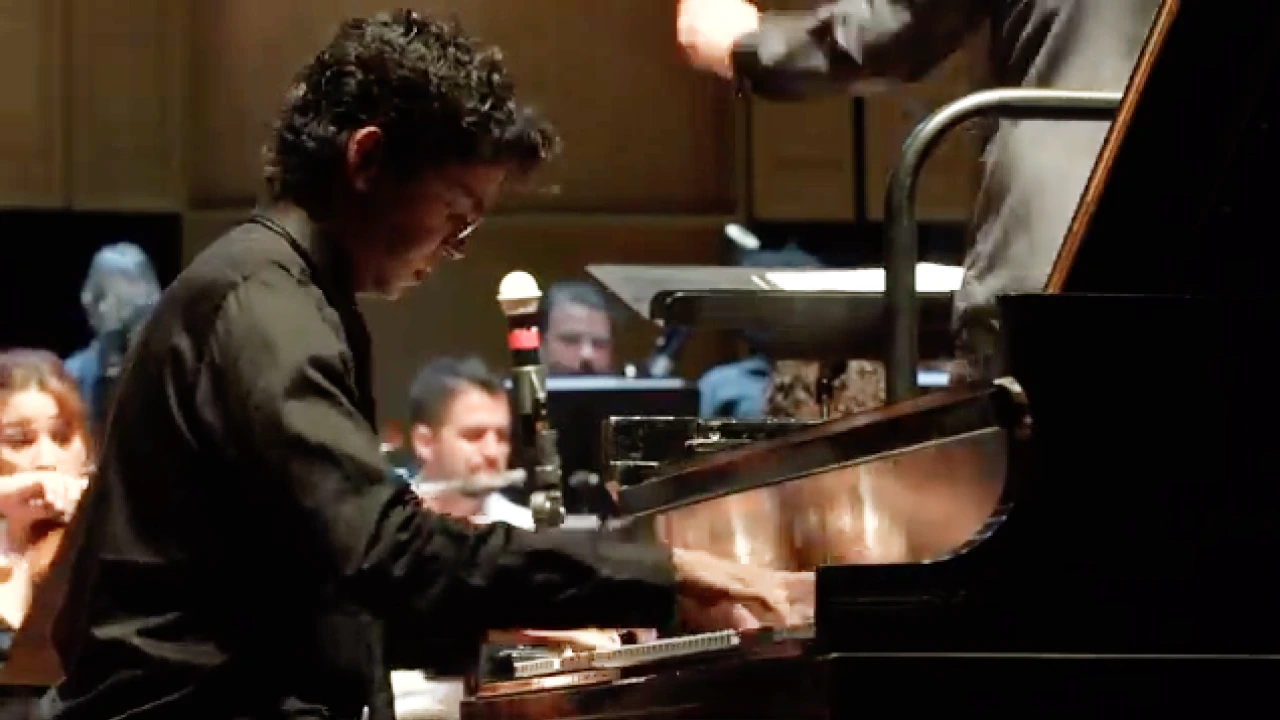
I did that for many years, and I started doing competitions, and I started winning competitions, and I started playing with orchestras. Then I got admitted to do my master's degree in Canada. I already spoke English because of playing video games. I just had to add French to it.
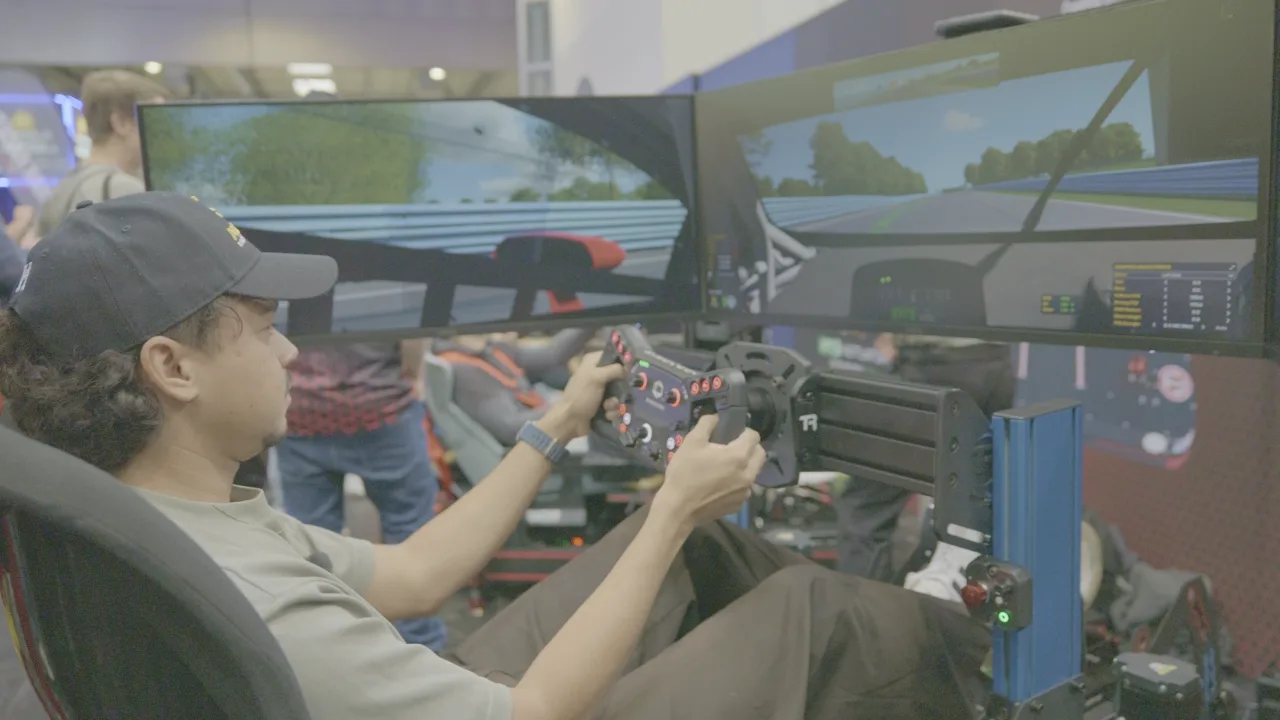
I did not have the money to pay for the university tuition. So, I started doing sim racing coaching to save money for my music graduation. That's when I realized how good I was in sim racing. At that point, I was already top 1% in iRacing, still with a Logitech G29.
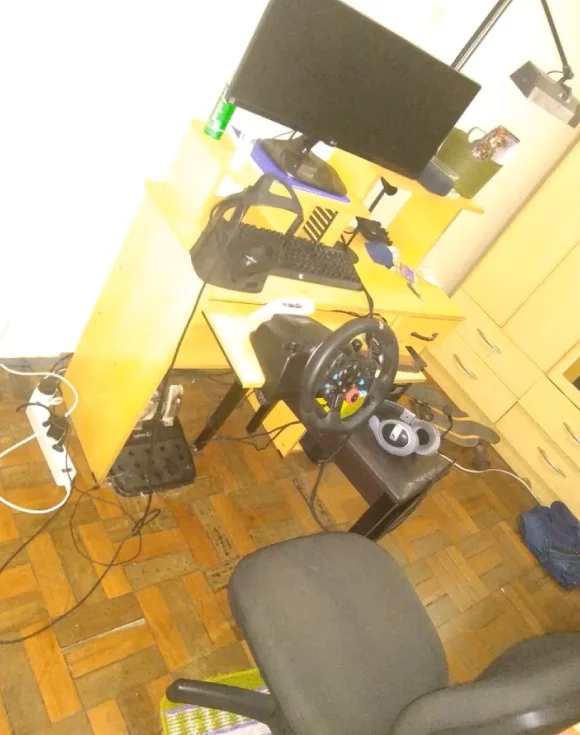
That was my simulator in 2019, when I was already coaching at $20 an hour, to save money to fly to Canada and do my piano master's degree. I was already good enough to coach people that had a $5,000 rig, and I saved the money.
Was there a point that you realized you had a talent for sim racing? And for real racing?
I never realized. I was just playing video games. It was fun. It was difficult and I needed to learn. I didn't have to think about that. I was just having fun with friends. It was the most natural thing ever to just continue racing because I loved it. It was my break from studying eight hours per day on the piano. I wanted to race. I love jumping the curbs and fighting for position. I'm going to study and I'm going to change the setup and I'm going to practice for six hours, and then I'm going to beat them.
By the time I realized I was good, it was late. When I realized I was too good, that was when I won, and that's the turning point for my racing career too. I was in Canada and I was invited to do the Canadian national championship in iRacing, the Porsche eSports Sprint Challenge Canada. And I did that for fun, because I had some friends in it. And I won, I won a lot of races and I was champion.
Then someone called me. This dude called Marc-André Séguin calls me, and says, “Hey, do you want to race a real car?” And I'm like, “No way. It's too dangerous.”
I never thought about it. I'm doing my music university. It's too expensive. I was already making good money, but still not enough to race. Then he insisted, he's like, “No, trust me. Just a track day. I'm going to instruct you. I'm going to help you.” And after a while I said I’ll do it.
So, I went and this dude essentially raised me. I call him my dad of motorsports, because he raised me in motorsports. He got me my license. The whole story is crazy. If you watched Gran Turismo, the movie. That scene where the dude tells him, “There's no reset button.” I lived that exact same word. The guy who was issuing the racing certificate was looking at me and saying, “I don't think it's safe to put you on the track. Bro, you're coming from a video game. Marc, why are you bringing this kid here?” There was an actual discussion, and I had people actually saying to my face, “You are not going to do well. It's dangerous, you don't understand that, and I don't want you to crash into me.”
Then obviously, I did the fastest lap on that track and I was the safest and I got the license. Then from there, he invited me to do an actual full championship.
Greg: When you started driving the car, did it feel completely natural to you? Did everything you had learned translate or was it a foreign experience?
It was the weirdest experience ever because it was this very new environment where I knew exactly what to do. It was kind of surreal because, yes, in the first hour, I was breaking a little bit too hard, trailing too hard because the pedal of that car specifically was too soft, and I never had experienced anything too different from my simulator. Then Marc-André started telling me to try this, try that. You have to understand, you have to talk to the car and calibrate your own body to the car. Four hours later, I matched his lap time.
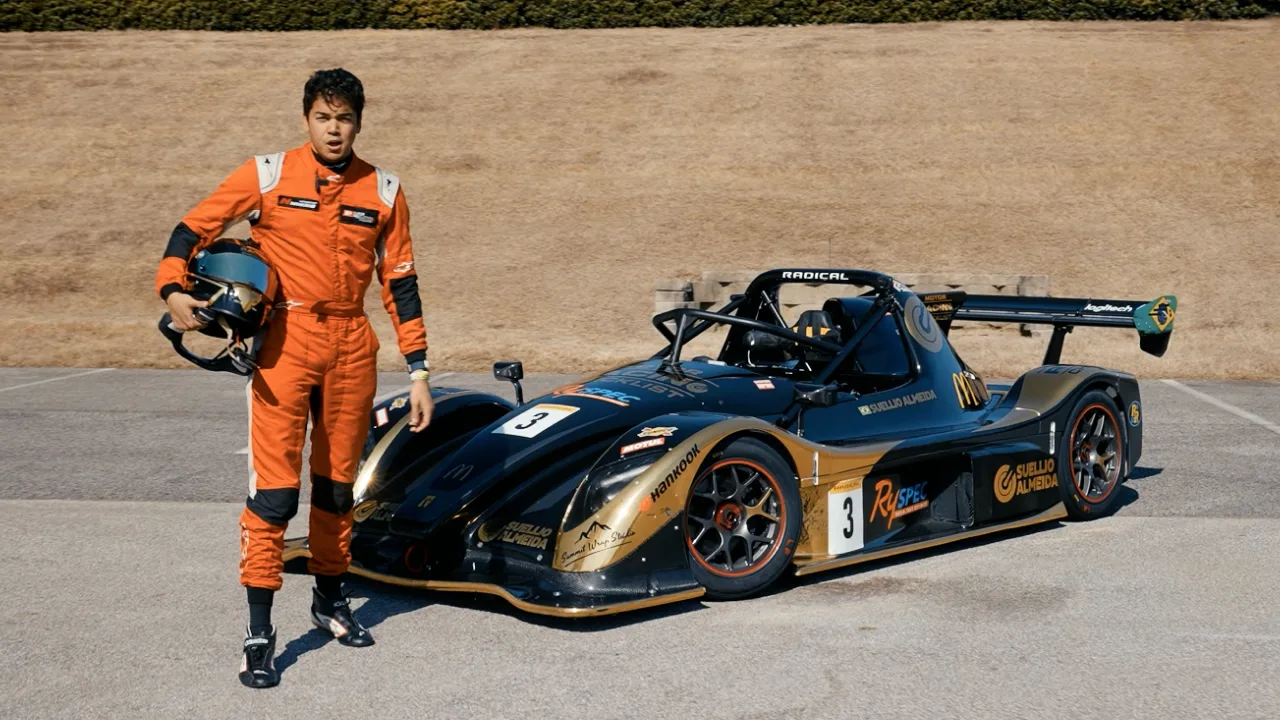
Obviously, there's more stuff that you have to learn and there's the variance of real life. There's parts and things break, and then there's the heat, there's the G-forces, but in the end, I think the best description that I use today to my students is: sim racing has less data points.
Real life is sim racing, plus something, plus the G-forces, plus the seat of your pants—you feel the yaw, you feel the elevation changes, you feel the rotation more clearly. So, it's much easier to transfer from sim to real, because you're going from an environment with less data points to one with more data points, but the opposite way is really difficult. A lot of people who have 10 years of experience in real life, they go to the sim and they will say that it's terrible, they will say that it does not match their experience. Why does [Lewis] Hamilton hate simulators? Because he did not grow up with them. But Max Verstappen grew up with simulators, and he absolutely loves it. So, I think if you start with sim racing and real racing at the same time, you find the connections much more easily. If you don't have experience in sim racing first, then you're going to be in that group of people saying that sim racing is not realistic and that it doesn't help you and so on.
What felt different about the coaching that made you willing to leave your musical passion behind?
Money. I was not going to make as much money in piano. I was already developing some sort of toxic relationship with music, because music is another beast. It's just like racing. Like, you need musician parents. So, it's an extremely competitive, toxic world where if you miss one note or if you're not absolutely perfect, everyone's going to actually come down on you big time, your teachers, your friends. And I started very late. I started music at age 11, and I always played catch up my whole life, because there were younger pianists being better than me. Yes, I won competitions and I was doing well, but as soon as I went to the top level in Canada, then I realized how behind I was still.
So, I had this toxic relationship. I was getting older and realizing, what am I going to do with this career? I really love it, but I'm not going to be as successful as I am right now with sim racing. And the amount of money that I was making with sim racing was unthinkable for me and for my family, and coming from Brazil where the currency was insane.
The first students were recommending new people and saying, “Oh my God, this guy is good as a coach. Go get his coaching session. It's literally $20.” A lot of people started coming, and then just like mouth to mouth, the thing exploded. Fast forward six months, we're in COVID, I was already in Canada. I made so much money that I told my parents, you don't have to send money anymore. I'm going to send money to you guys. At this point, six months after I started coaching, I was already doing 35 coaching sessions per week. I had to raise the prices because I could not handle the amount of students and it did not change anything. I was still getting 35 students per week, so I raised the price even more. I went from $20 to $50 to $75 to $100 to $200 an hour, and I still had too many students, because it seemed like changing the price was not affecting it.
Charging $20 an hour, I was making more money than my sister does in Brazil being a doctor. Then I started charging $200 an hour, and I was making in one hour what she made in 11 hours of work, as a doctor. So, when I saw that, I was like, “Oh my God, I don't need to leave this.” I like it, I'm very good at it, and I can scale it.
That's when I started really reading business books and studying, doing online courses. How can I scale? How can I make more money? Because it's linearly limited right now. I only have this amount of hours per week. I need to write a book or do something that can be sold at scale. That's where I created my first online course, and it absolutely exploded. I went from $20K a year to $200K a year.
So, that's the decision. For me, it made no sense to have to bear that pressure from music, while at the same time, not making any money from it. While in this little hobby, I'm literally supporting myself and my whole family financially.
Suellio’s Current Role
What’s your current role and what does a standard day look like?
I do a lot of editing. And it's actually funny how optimized it is right now. If you look at me editing on Premiere Pro, my girlfriend jokes about it too, it looks like I'm playing Counter-Strike, because the way I created my shortcuts just to be as fast as possible, I can do the cuts and adjust the volume, and I try my best to do the most. Even today, right before we called, I made a two-hour long video, and I'm cutting it into 15 shorts and I'm doing it all today. Just like… doing the whole thing.
I spend as much time as I can on my Discord talking to the community and seeing the questions and seeing how things are going. Obviously, check with the team and see what tasks we have. They give me tasks, I give them tasks.
It's weird to say, but I don't really miss spending a lot of time on the simulator because I know that I'm building what eventually could become a big racing school, like Skip Barber. My dream is to be the next Skip Barber. I think I'm achieving some part of it just from quotes from people that actually worked with them or that worked with Ross Bentley, that read Ross Bentley's books, and they said, “Man, what you're writing, what you're creating is the next frontline of the vanguard of racing literature.” Because I had to create actual new concepts to explain what I needed to explain. I read the books and I was like, this is not good. I read all the books, all the famous books. I was reading them, and that's why I decided to write my own book, because there was a lot of stuff missing.
How did you learn to translate your coaching into videos, and what made you successful at building that channel?
I was lucky, very, very lucky, because I always liked editing for fun, for myself. I didn't even show people the videos. I was editing video game edits. Before I started racing, I was already in Premiere Pro just doing cuts and this and that. So, when I started Twitch, I needed to learn a little bit of OBS. Then I went to YouTube, I needed to learn a little bit more on how to be faster with the cuts and everything. So, I always had that editing skill on the back of my mind. And for me, editing is a way of communicating. So, when I needed to create videos for the course, I already knew everything. I already knew how to organize the lessons. I already knew exactly what things I needed to say the most to my students. So, when I decided to create the course, I already had hundreds of students, one-to-one. So, I had a little file where I organized what the most common techniques were that people needed to learn.
Then over the years, I started even building a little ladder of what things you need to learn in order to be able to properly learn this one and this one and this one. So, that's one of the things that I built that is now very optimized and very structured in the online courses that we have today. I already had the editing skill, I already had the communication, I already knew how to talk to the camera. I was already streaming a lot, for fun. So, making the shift to make that a monetizable thing was… Actually, there was no shift. I just needed to post it and say, “Guys, if you want to pay for this, you can pay for it.” And everyone wanted it.
What aspects did you struggle with when switching from sim racing to real-world racing?
Fear and pressure. Yeah, I was deadly afraid of crashing. I knew I only had one car. I spent 100% of my money to buy a Radical race car when I raced in 2024, and all the money coming in from that month was absolutely dead on exactly what I needed to pay the team. So, I was constantly with zero money. The money came from the sales, pay the team, and then go fly, go do this, do that. So, because I had to be perfect, I wanted to get a personal trainer and a sports psychologist, because I just wanted to optimize myself. I wanted to use every possible tool to enhance my performance and to get better results.
What are the most rewarding and the most challenging parts of what you do today?
I have a very neutral way of seeing things. It's difficult to discern good and evil. Think about the runner's high. The runner's high is like, you're actually enjoying that kind of struggle. So, that's why it's difficult for me to describe it.
Challenging
I think the challenging part is the amount of work needed, because of how the world works today in social media. I have almost 2,000 videos posted. I have enough material that if this was like 100 years ago and I was selling those things in books, I would be done for life, because everyone would have access to that and it wouldn't be buried. Nowadays, my content is buried by the algorithm every week, which means you have to constantly do it, and a lot of the times I have to post repeated stuff so that new people can see it, because the system does not show old stuff to them. And by old, we're talking weeks, maybe months. That's the challenging part. It’s the grind that you have to keep doing, even after having created something. I'm so proud of the structure that we created and everything, but I still have to push it so much, because otherwise, I just become forgotten very quickly. So, I've gone through burnout last year because of that. Just too much work to do, too much stuff. It's infinite. Like today, right now, I spent the whole day editing and it feels like I've done nothing.
Rewarding
There's a lot of gratitude from the community, there's a lot of trust. The rewarding part is how I can see that I've changed people's lives a little bit. I've had students saying that they had really bad lives and they were feeling depressed and everything and sim racing was their way of escaping from it, and the way I built their confidence and made them drive better actually affected the other areas of their lives. And also, real-life drivers who are spending hundreds of thousands of dollars, that were crashing their cars and spending so much money in repairs, they stopped crashing and they're like, “Man, you really enabled this thing for me.” So, on a personal level, there's a lot of feedback and there's a lot of nice messages from the community.
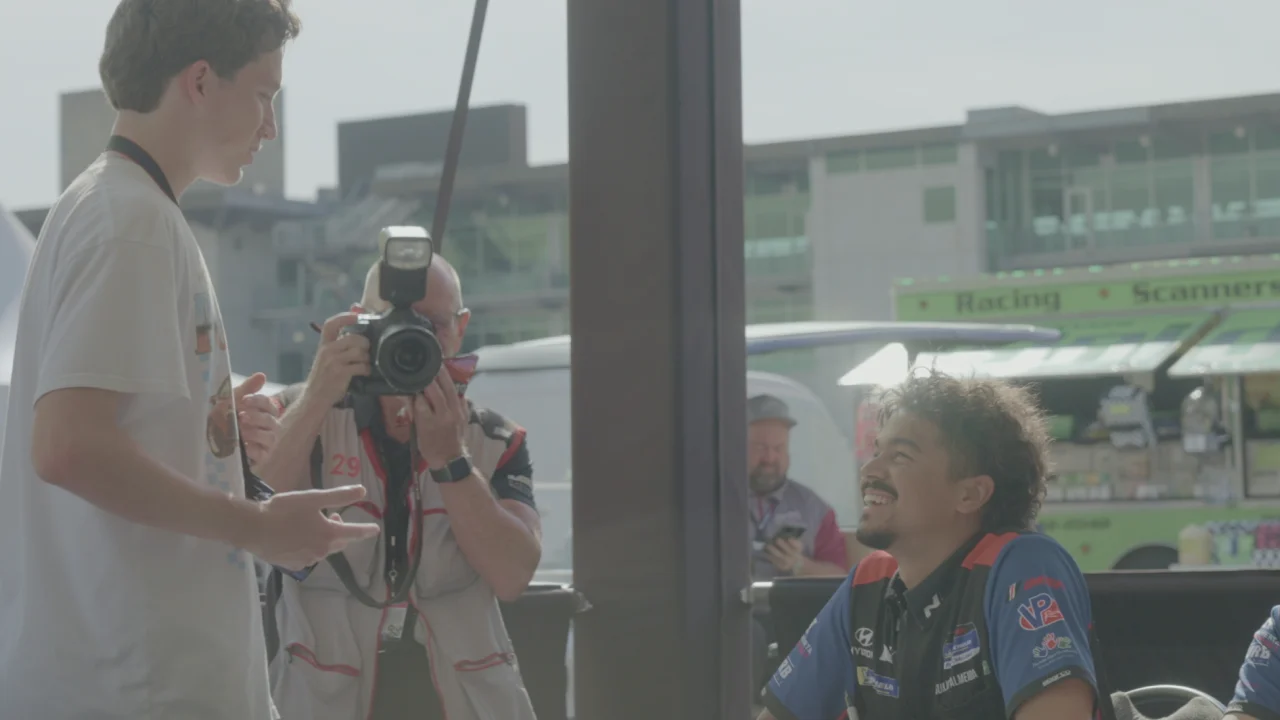
Obviously, there's the financial reward. It enables me to race. It enables me to travel, to have a good life and allows me to have this as a main job, which is a dream for a lot of people. So, obviously that's something that I have to be grateful for.
What are the top qualities that have helped you succeed up to this point?
Attention to detail and clear communication
Obsession for details. Obsession for clarity in communication, too. I think I really like this sort of transparency in the way information is transferred from one person to the other and this sort of effectiveness of what you're talking about. Just imagine someone hates chit-chatting. I really like talking about something that will make a difference.
Technical competency
The most important thing is just this obsession for technicality. Obsession for describing things, for concepts, for being aware of how the world works. Being a scientist, I think is a good description. I see myself as a life scientist in a way. I ask questions more than I answer questions, a lot, in my personal life.
Suellio’s Advice
If you could go back and give advice to your younger self, what would that be?
You cannot predict the future, and whatever you're doing, just have fun and learn from all the things that happen to you.
That's what I told myself five years ago, and then I would say the same thing. Like, yes, last year was difficult, whatever, but I am the person I am today because of that. Which means I keep telling myself, just enjoy it. Learn from it. Enjoy what you're doing.
What advice would you give to someone looking to be in your position?
Always listen to different opinions and always ask questions. Do not think that you know everything. If you're humble and you're in a racing team and there's someone that maybe is at your pace and you're trying to be better than them and you close yourself and you don't listen to what they have to say, you just lost an opportunity to learn something. I think I was always open to asking questions. I was being the scientist that I talked about, right? I always want to hear what you have to say, because I might learn something, and I want to be very harsh against the idea, never against you. Doesn't matter whose idea it is. That's how you grow. There’s absolutely no point in having a big ego.
Fun on the Job
What's been the most memorable moment of your career so far?
You know, when you're in a flow state and you don't realize what's happening, and then at some point you get out of your body and you realize, oh wow, this is happening. These aha moments, realizing where I was, it was at the end of the third race at Road America when I was racing the Radicals. That weekend was the weekend where I won my first race, my second race, and my third race.
At the end of race three, after I had won, adrenaline had gone down, I'm crawling back to the pits, cooling down the tires, and then I just get this realization: what am I doing here? Like, I just won a race, I'm a racing driver, I'm in a real car, I'm at Road America. I've done a billion laps at Road America in the sim, and I was there for the first time ever, winning three races in a row, in a race car that I bought. So, suddenly I got this whole surge, and I started just crying big time, like a baby, realizing that all that had happened, that was not a dream, that was not a movie. That was real life, I was there. That was, I think, the most memorable racing moment.
One other memorable moment was when my rival hired two professional World Endurance Championship drivers to race that weekend. Gave them the right setup, gave them the lines, and coached them, and actually actively pushed me off track on the race. So, I was racing 1v3 against them, and they were actually pitting and exiting the pits in between them and me, and then actually deliberately slowing me down on the corners. It was ugly, and they were doing that, and you can see the video. We did not script that.
So, I had to sustain that for three races. There were three races in the weekend, and I was literally holding up in P1 against two WEC drivers for like 30 minutes. Basically, I just needed to finish ahead of him, not these other two drivers, to win the championship, and I ended up winning the championship. So, it was insane. I think I rarely use the word unbelievable, but that one was like, I was looking around and I was like, how is this happening? And the other drivers from the grid were coming to me and saying, “How do they feel good about that? How do you literally hire two drivers to help you?” Because everyone was super angry at the other guy who did the hiring. So, that was definitely a moment right there.
Le Mans is your dream race to compete in. Who would your teammates be?
One of my dreams that is very close to happening right now is to race with students. I want to teach them and I want to get in the car and do a Creventic endurance event, for example. Something like that.
And I just got invited to do the 12 Hours of Sepang in a Ferrari GT3, with a student. This might not be happening because he got invited for another Ferrari Challenge race, and then I'm going with him to coach, but not to race. The plan now, because of all the stuff that I've been building and because of the success from a lot of students, I have students that won the six hours of Abu Dhabi, 24 Hours of Barcelona, Ferrari Challenge, multiple races, and so on. So, because of that success, now more real-life drivers are starting to ask if I can be their co-driver, which is a dream, right? 2024, I was saving up money, working as much as I could to buy a car. Now, I'm being paid to drive, which is insane.
Right now, I'm sharing the car with Alberto Naska, who's a very famous Italian racer, YouTuber. It's really cool to share the car with someone who's also so good with the camera. We make the videos, he races very well at the track as well. But yeah, I think 24 Hours of Le Mans with two students would be insane.
Do you have an equation or a concept that you've coined in your name?
Yes. So, we have the overall method and mentality of finding the limit. It's called the Almeida Method. And the description of it is:
“If you can cause it, you can prevent it.”
Basically, a driver in real life comes to me and he's like, “I'm very, very, very afraid of spinning in real life. How do I avoid it?” I'm like, “Spin for me, please, on the simulator. Spin on purpose. Show me how you do a spin.” And then they try to spin and they can't. And that's literally why you're afraid of spinning, because you don't know how to cause it.
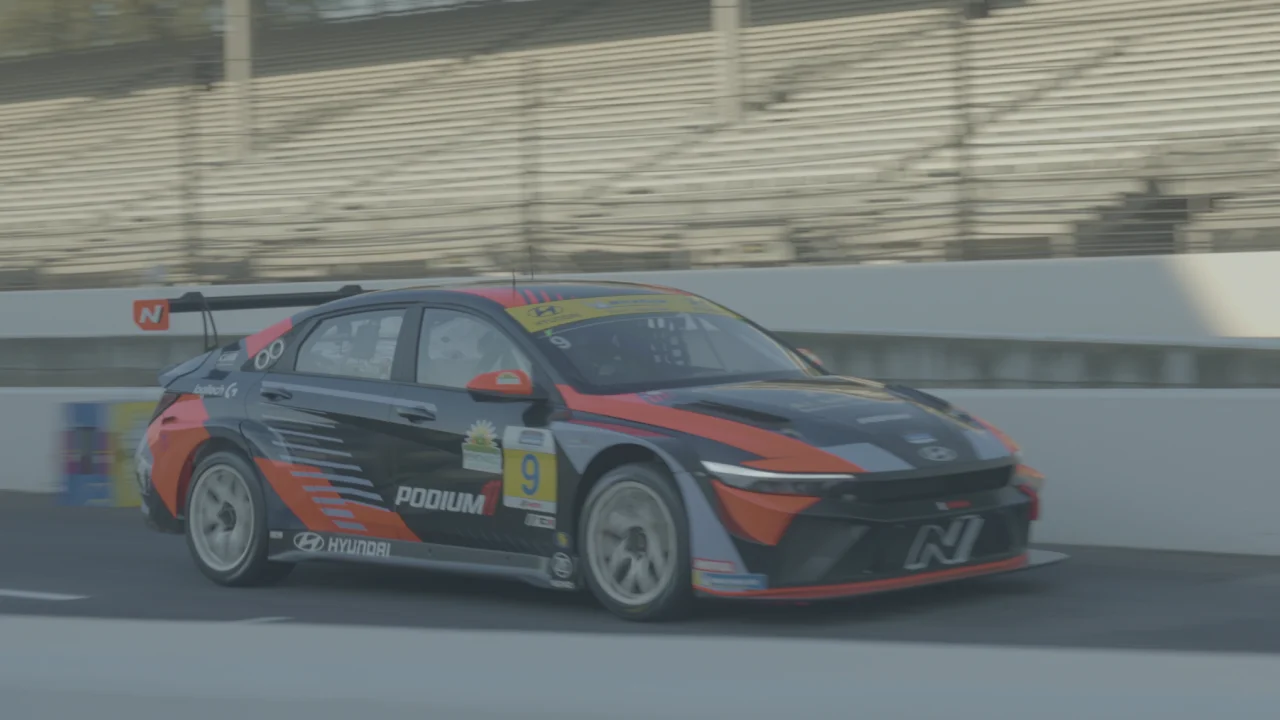
As soon as you understand exactly what you need to do, what percentage of brakes, what gear, what amount of steering to make the car have so much front grip that you actually lose the rear, your fear of spinning completely disappears. I did that two days ago with a driver who was going to race in Japan. I made him spin for 30 minutes. And then he was like, “Oh my God, I didn't realize that causing the thing is exactly what's going to teach me how to tame it and how to prevent it when I want.”
And I learned that from my therapist because I was deadly afraid of the rain, and she's like, the fear comes from the lack of confidence and the lack of confidence comes from the lack of information. So, if you can understand exactly how to drive in the rain, by driving in the rain, your fear is going to drastically decrease. And that's exactly what happened. I had a pouring rain race in real life in the Radical, and I was like, that's it, I'm going to have to learn right now. Then I won that race. Since then, I never have issues. I actually kind of like rain.
Want to learn more about other professionals across motorsport series? Then check out all of our Fast Lane interviews, or jump right into one of these:


.png)
.png)