




When six-year-old Robin McCluskey watched his hero, Bill Elliott, race 500 laps in Monroe, Washington, he had no idea he'd one day become a motorsports legend himself.
After quitting his decade-old racing career because it was too “expensive,” McCluskey wanted new ways to make good use of all that experience without hitting the reset button. So, he packed his race car and everything else he owned and drove straight to London, Ontario to apply for work at a race shop.
At the time, he had no guarantees or referrals, but he did have grit.
So when he finally found a job six months later, he poured everything into it—his racing expertise and his undivided attention.
Years later, he's won a record-breaking six championships and can look back with pride knowing that his one-way trip to Ontario earned him a place in history.
So, how does a driver-turned-crew-chief become the most accomplished in the NASCAR Canada Series? Keep reading to find out!
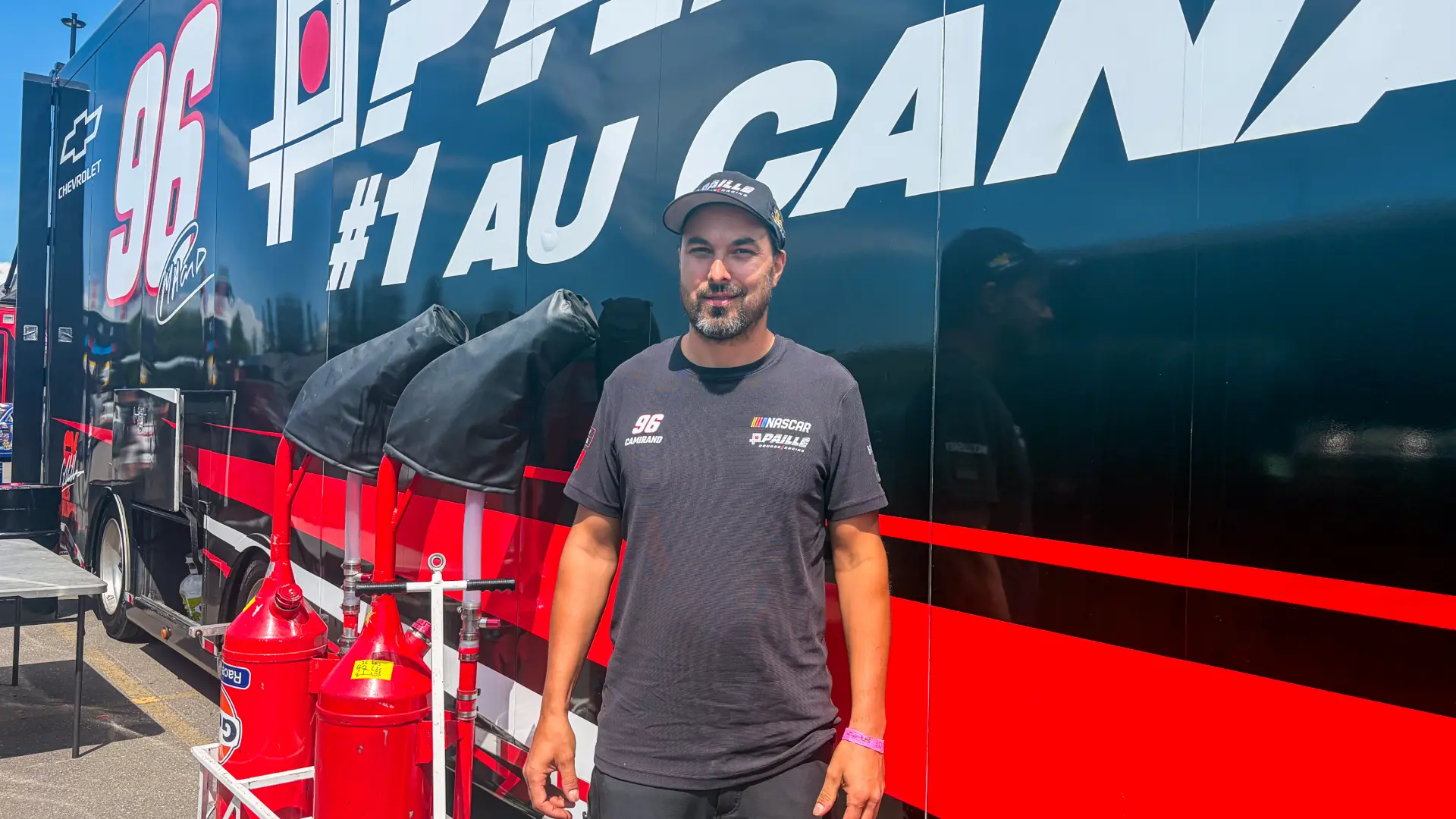
Position: Crew Chief for the No. 96 GM Paillé/Chevrolet in the NASCAR Canada Series.
Day to Day: I'm one of two full-time employees, so I do everything — fabrication, mechanical work, R&D, and even sometimes working as a janitor.


How Robin Discovered Racing and Started His Career
When was the moment you discovered racing?
We had a home track back in Lumby, British Columbia, and it shut down when I was three years old. So, I just got a taste of racing from my very first memories of life. It was kind of in my subconscious — the burning rubber smell and the beautiful race cars — and I just remember Lumby Raceway, in the mountains in British Columbia. I just always wanted more once the track shut down.
Then my dad took me to a race when I was six in Monroe, Washington. My hero, Bill Elliott, was going to that race, so I had to go watch. And I was so into the racing that I watched him for basically 500 laps. I watched his every move, and I just loved racing. You never know if a kid is going to get really into racing, but I have four brothers. They liked it, but they weren't like me. I just really clicked—I just loved it, everything about it.
When did you decide you wanted to build a career in racing, outside of just loving it as a fan?
I started out as a driver, and I did that for about 10 years. I worked on the car myself most of all those years and had my uncle, Dave, and my father helping me work on them [too]. So, I learned so many valuable skills working on the race cars all that time. At one point, I decided to quit racing because it was just getting too expensive, and I moved away from my family.
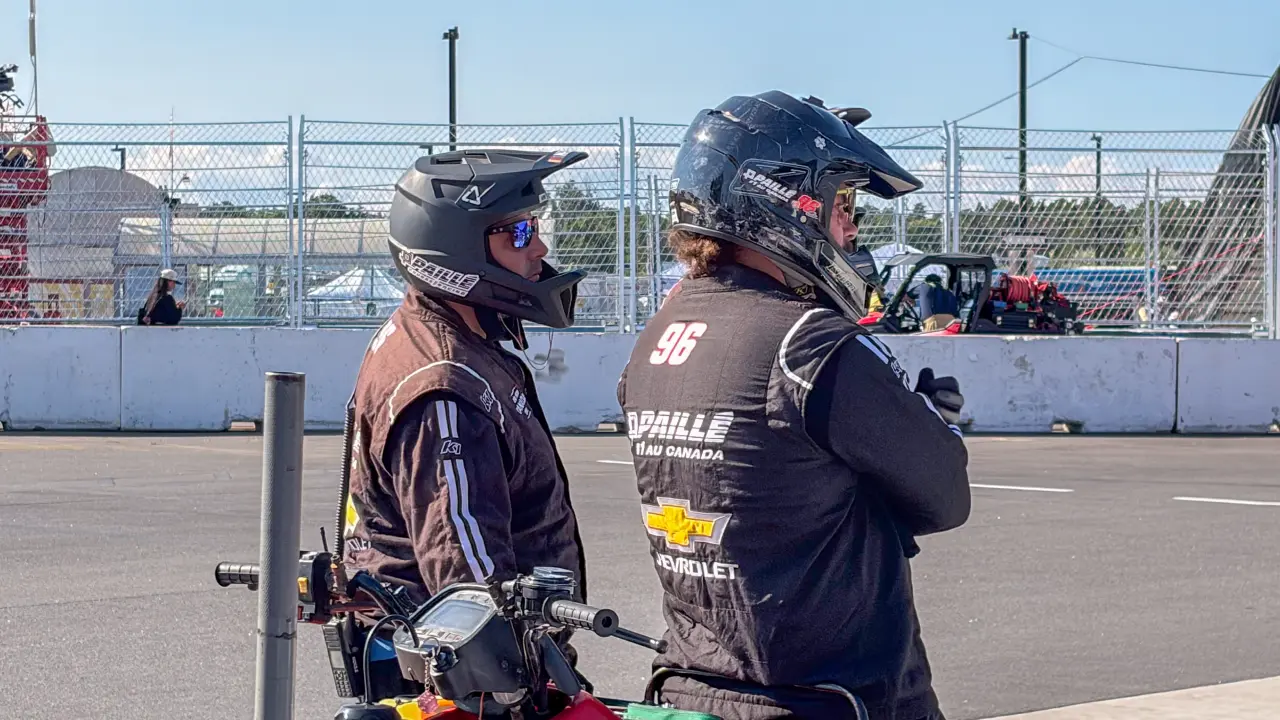
But I was like, am I going to just quit driving and then go to another career and start from zero? Or should I use what I invested in myself, some of the skills that I learned? In the end, I just decided to keep going with that. I figured, why start from zero and go to a different career? I'll just keep going with it, but in a different role. I really never wanted to be a crew chief, like ever. I just wanted to drive, and I also love building race cars. So, I decided to move to London, Ontario. There's a lot of shops there that build race cars and stuff like that. And I just wanted to build race cars and also drive them, but I just ended up just building race cars.
I don't know how I got into the crew chief stuff. It's just, when you're the best guy on the crew, it's like, “Okay, you're the crew chief.” Okay, I'm the crew chief, whatever. I started out like that. Not that I wanted to do it, but I just decided to keep going with it. I learned so much when I was driving, so I just kept that investment in myself and just kept on that career.
Robin's Current Role
What's your current role and what does a standard day look like?
Well, in Canada, you've got to do everything. It's a lot different than IndyCar and NASCAR down south. Those guys have multiple levels of management, and they have the fabricating crew and the mechanical crew and engineers and all that stuff. Whereas in Canada, it's really about two full-time employees. So, if you're the crew chief, you're one of those full-time employees, and basically, you've got to do everything.
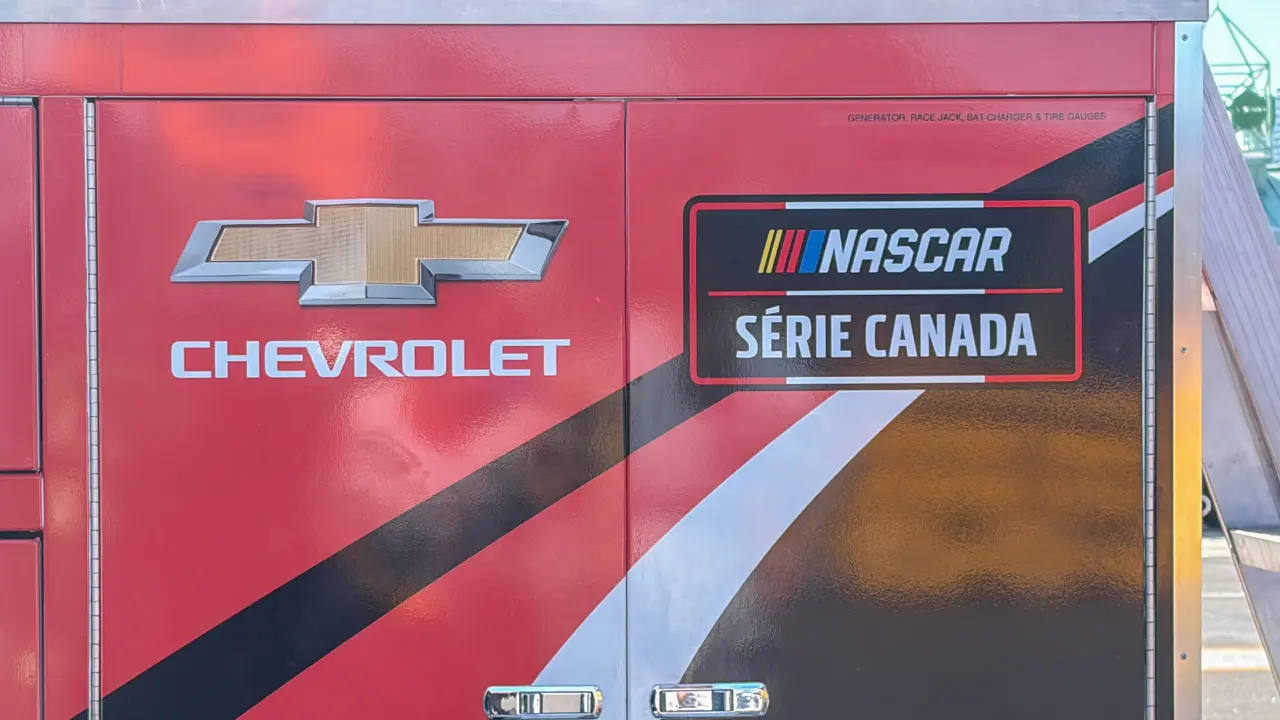
You've got to fabricate, you've got to do mechanical, you've got to do a lot of R&D [research and development] and innovate, you've got to be a janitor, you've got to be everything. I like that because it's not boring. You've got all these different jobs you can do, and I like all of them. Down south, I would have to stick to being just a crew chief or just a fabricator, but down there, they do so many races. It's a lot different.
What did you learn from your driving days that helps you now?
Well, now that I'm a crew chief, it's really valuable, because when I'm talking with [Marc-Antoine Camirand] about the handling of the race car, I can really communicate with him well. I really know what he means.
There's a lot of guys that just have an engineering background who have never raced, and they can't really talk on the same page because they've never really felt how it feels in the race car. So, as a driver starting out and working on it at the same time, I knew if I did this change, I can feel it out on the track, and I needed a certain combination to win. So, being a driver helps out a ton.
What are the most rewarding and the most challenging parts of your job?
Rewarding
Winning, but it's really more of a relief. When we win the race, it's just a relief. I get to keep my job for another year. We're doing good, but that's all it is. Once we load the trailer and we've won the race, that's the biggest relief or reward.
Challenging
Balancing family and doing this national tour. It takes a lot out of your summer, and the only time I have to spend with my kids to really enjoy it is the summer. We like to go camping and stuff. But we're always on the road, so it's really hard to balance family. In the winter, we get some time, but me and my kids don't really like winter activities too much.
Claudia: Do your kids like race cars too?
Yeah, they like it. I'm not sure as much as I did. Well, obviously not. They would be begging me for go-karts and all that stuff, but they do enjoy it when they come, maybe not quite as much as I did, but I'm not going to push them into racing. We'll see if they like it, and I'll help them get into it if they want.
What are the qualities that have helped you succeed in your role?
Attention to detail
There's so many details in these race cars. It's just unbelievable. You can have it all ready to go, and you can still be checking things and even innovating even more and reading a book or calling down south and getting new ideas.
There are so many little details that you can put into the car that a lot of guys figure, you can do 9 to 5 and just get it done and go home. For me, I just keep going, and I get every detail perfect. So, I think that really helps us. But then, that's a bit hard on the family life. I do all this overtime and all these little fine details, and I think that's something that really counts.
Focus
With our team, we can just focus on the one team. We don't have teammates, and we don't have other customers and jobs. Our sponsor and team owner, Jean-Claude Paillé, lets us focus on the No. 96 car. That really helps out a ton, that we can focus and get all the details perfect. So, when we show up to the track, a lot of people notice we're not working. The car is ready. We're just getting ready for the tech inspections and getting our day ready. We show up with an advantage already, and I think that's a big one.
Patience
You have to have a lot of patience in this. When I first started out, I was way over my head, and there was just so much that I had to learn. It was just insane, but every race gets easier and easier.
You really have to have patience. Sometimes something bad happens. Like, a lot of the time, we get tires that are not good. For no reason, the tires are just not that good. But you just have to have patience and be like, “Okay, let's figure out the problem, don't panic.” A lot of people might panic and change their whole setup on their car and maybe it's just the tires, you know, something like that. You have to just be patient and not change the whole car because of the weather or the tires or something.
Racing experience
Being a real racer helps a lot. I drove, and that helps a lot. Then building the race cars from the ground up, building the chassis and the suspension and all that. Being able to talk with Marc because I've done the racing side of it. I think I'm an all-around racer.
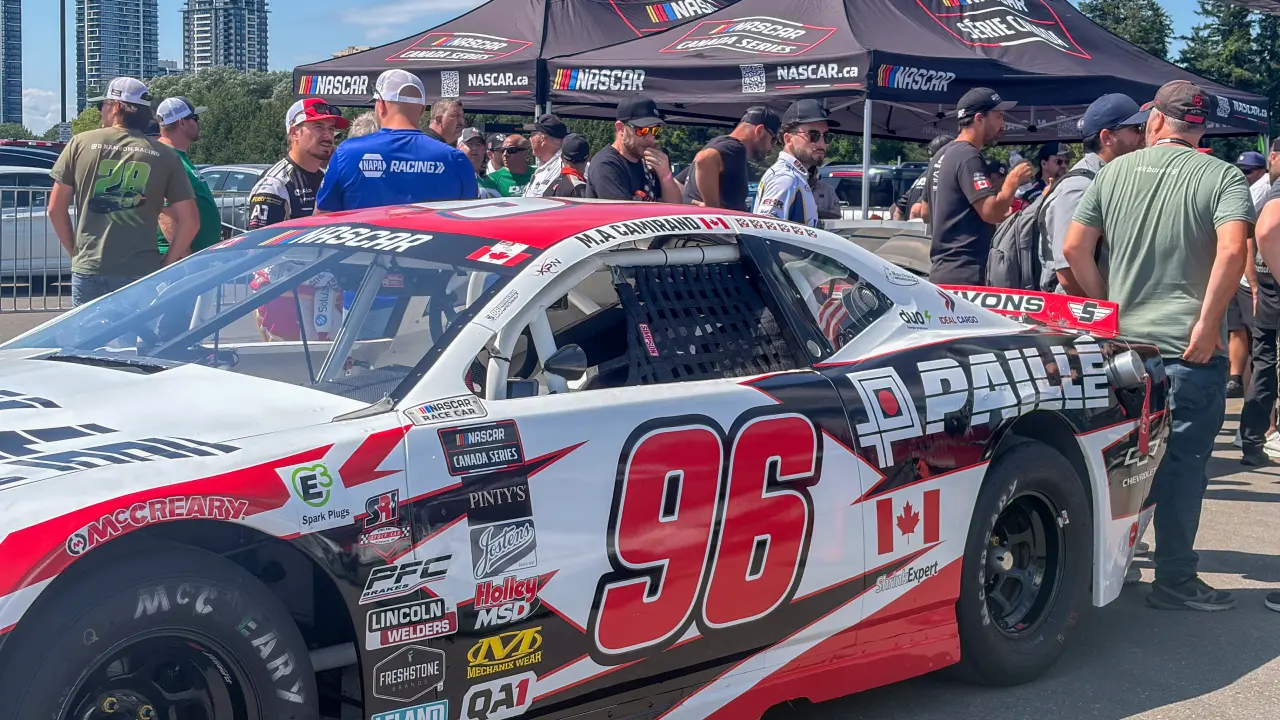
There's other crew chiefs that are like that too, like Donnie Thomson and Gary Klutt's crew chief, [John Fletcher]. Those guys, they've raced, they've built chassis from the ground up, they've set them up, and all that stuff. So, I think they've got a bit more of an advantage [when] talking with the drivers.
Robin's Advice From His Time as a Crew Chief
What advice would you give to someone looking to be in your position?
Be patient, because, like I said, when I first got into the racing industry, I had already been racing for quite a long time and learning on my own in the backyard. When I came to the real racing industry in London, Ontario, and went to work for Mike McColl, I was like, “Holy, this is so hard.” There's so much to learn, and it's all professional.
I had to do it perfectly, and Mike McColl doesn't have the most patience with rookies. It was like going to boot camp for building race cars. It's so hard, but every day I'd learn a bit more, and I'd get a tiny bit better. Then after a few months or a year, it's like, "Oh, it's kind of getting easier. I'm starting to find my place a little bit at a time."
Then when I got into crew chiefing, I came to the first race, and we're so unprepared. This was a long time ago, and we're so over our heads, and I'm just like, I don't even want to do this. It's crazy. I don't have the right help, and I'm just totally unprepared. But each race, it just gets a tiny bit better, and if you just have patience and you just stick to it, you just keep getting better and better. And here I am, something like 15 years later after starting crew chiefing, finally starting to feel comfortable and confident.
Claudia: It worked out.
Yeah, it worked out in the end. I almost quit a few times because of balancing family and racing and just trying to have the patience to try and get to the level we're at now with the wins and the championships. I got with a great team, and I'm so happy, and everything's working great. So, I just hope we can just keep going like this forever.
How would you recommend young people that want to work in motorsports find opportunities?
You have to go and do it. You can't just stay far away and just make phone calls and stuff. If you don't have the experience, like a great resume, you've got to go there and be persistent, knocking on the doors and keep asking.
When I was in British Columbia, there were a lot of really great, hardcore racers out there and a lot of great tracks, but there was no real racing industry. There were no full-time jobs for racing out there. So, all the time I was out there, I was eventually planning on moving to North Carolina. I was going to move there and find a job where all the big race teams are.
Then I was like, well, I've got to get my green card and all that stuff to work in the States. And I just decided one day there must be some racing industry in Canada. So, I just started looking at the maps, and I'm like, “Oh yeah, there's quite a few race teams and shops around London, Ontario,” which was kind of the hub, southern Ontario. I just started to research that, and I called a few places, and they said, “Well, we can't hire you over the phone, you've got to come here.” I didn't really want to come and talk and go back. I just wanted to go.
So, I hooked up my truck and trailer with my race car and everything we owned. It was like an open trailer and an old '75 pickup. I brought my girlfriend at the time and my brother, Cameron, and we just packed in there, side by side, and left. It almost looked like the Beverly Hillbillies with all our furniture in the back of the truck and the trailer, and [we] just came straight over to London, Ontario.
I went straight to McColl Racing and asked for a job. “I'm here now. Can I get an interview?” He knew I was going to race at Delaware [Speedway], so he wanted to see if I was going to wreck his customers first. So, I started racing at Delaware, and Mike McColl saw that I was a clean driver, and I just kept asking him every week, and I got a job after maybe five months or six months.
If I would have just flown over, did an interview, and gone back home, I'd still be waiting right now. I'd be waiting 20 years later. So, you've just got to go and do it sometimes. You've just got to get in your truck and go.
Fun on the Job
What's been the most memorable moment of your career so far?
My first win in this series. We won at Mosport, and there's no big TV screen there, so we didn't even know if we were leading until they came around the last corner, and we won the race. We were happy. I was up on the top of the toolbox, and I leaned over to give the guys a high five.
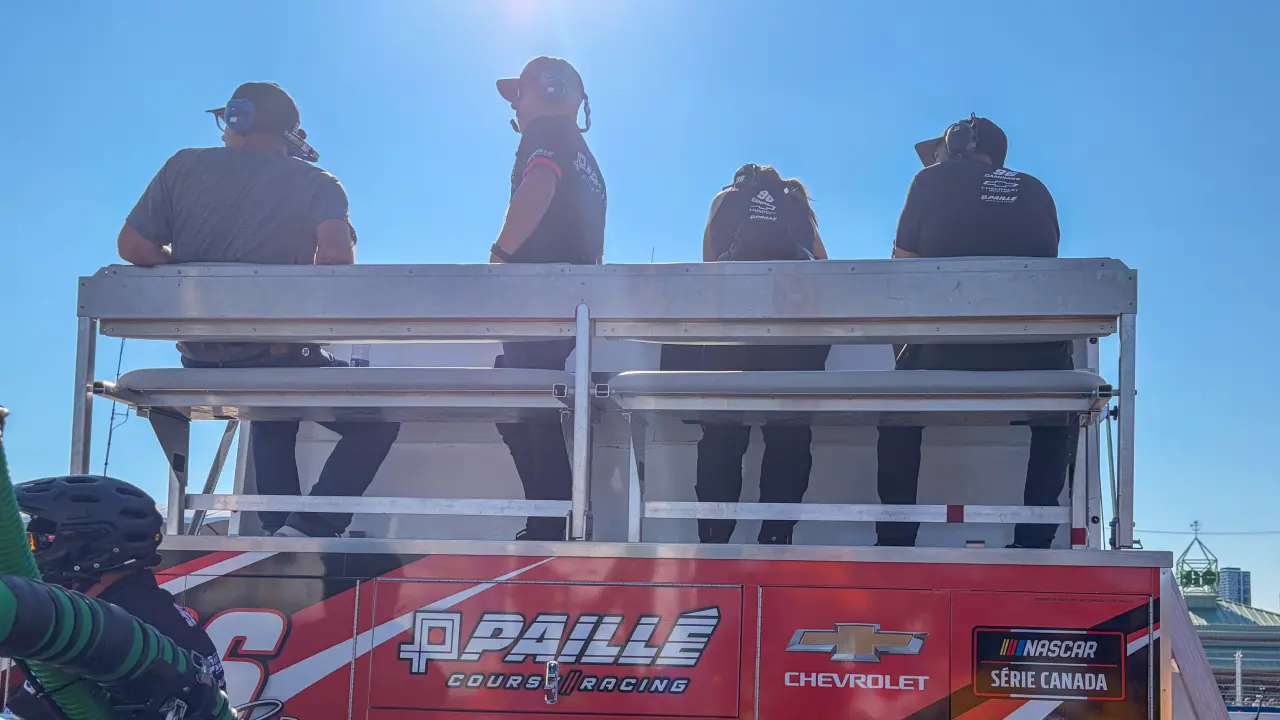
I just remember the TSN guy running towards us with the camera pointing right at me. Then all of a sudden, the top of the toolbox that holds all the computers—it's like a big desk—it just snapped and fell down. Instantly, I felt like I was going straight headfirst into the ground. Luckily, one of my main guys, Soot Rice, saved me. He's a big guy. He just put his arms up, and boom, he stopped it. I was 100% sure I was going headfirst into the ground on television. But he saved me, and I'm like, "Oh, I'm not dead? Okay, well, let's go celebrate." So, that was pretty memorable.
And there's a lot more, like our first race ever with this No. 96 team. It was a totally new team that we started from scratch. We figured the first year would just be like a building year. We would just hope for some top-5s and just do our best. But I worked with Marc before, like four years before that, and I knew he was a great driver, and we had really good communication. I knew we had a great sponsor with Paillé, so we put it all together.
I knew we would be good, but I had no idea we would come out and just be dominating that first season right away. Our first race, we led 220 laps out of 300, and it was just an amazing race. I just couldn't believe we won the championship in our first year together with the No. 96 car. And I [had] just won the championship the year before with the No. 47 car. So, it was just unbelievable. I just couldn't believe we did that, and it was just so much hard work.
That was hard on the family too. I had to work 24/7 that whole winter, just nonstop. Well, I took Christmas Day off, but almost every other day. I kept telling my wife, "Once we get this built, we can take some more time [off]." It was actually busy for the first two years. Now it's starting to get a bit livable. Now it's nice, I've got a bit more time.
Want to learn more about other professionals across racing series? Then check out all of our Fast Lane interviews, or jump right into one of these:


.png)
.png)