


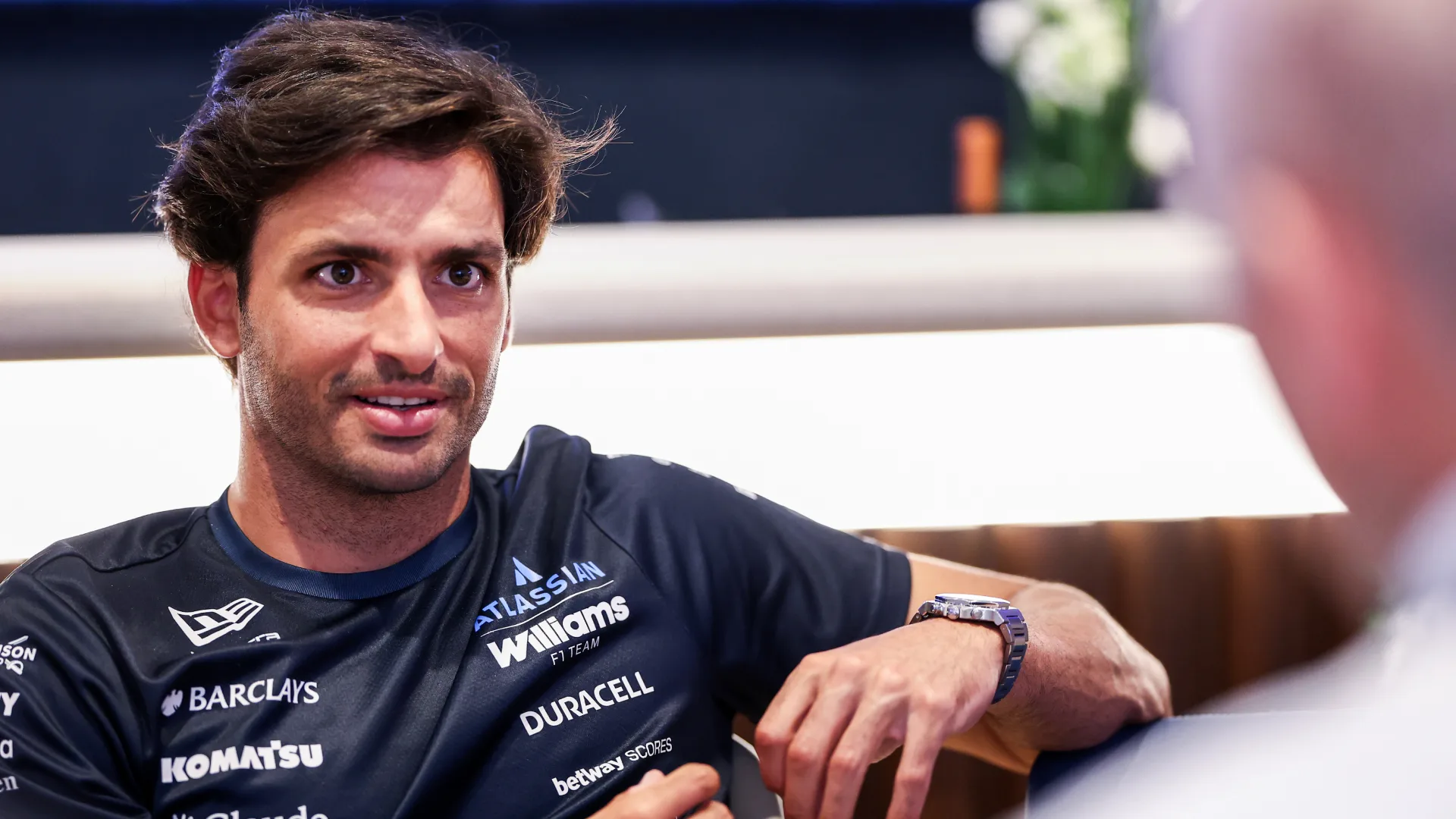


The Spanish Grand Prix has bounced around quite a bit, calling several circuits since even the very first season of Formula 1. And this year it adds yet another to that list as Madrid prepares to host the race on its brand new street circuit, the Madring. From Carlos Sainz crafting his true ‘home race’ to Villeneuve’s unexpected win in an "absolute dog” of a car, we’re celebrating this inaugural occasion with three surprising stories about the Spanish Grand Prix that every fan should know. How many are new to you?


Carlos Sainz will finally race at home, on a circuit he helped shape
A Madrid-native, Carlos Sainz has been yearning for a moment like this since even before he joined F1 in 2015.
“It's something very difficult to describe for me,” he told F1 pundit Lawrence Barretto earlier this year, “because it's something that I always dreamed about, just having the opportunity to race at my hometown.”
And now that dream is coming true in a way that involves Sainz much more directly than he likely ever imagined. As the ambassador of the Madring circuit, the Williams driver is not only involved in the promotion of the race, but has a say in the design of its new home as well, giving the Madring developers much-needed input from the perspective of someone who will actually be driving on the circuit.
"The drivers have asked me about the circuit, the corners, the layout…” Sainz said during an initial presentation of the circuit’s layout last year. “I’ve told them not to worry, that I'm going to try to help as much as possible to make the circuit a good show."
And while designing a track that runs through a city is always going to come with unique challenges from the local terrain, Sainz is making sure that those challenges are not stopping both drivers and fans from having a good time.
“For me, where I'm trying to help is the two main overtaking zones,” he said during last year’s Canadian Grand Prix, “to make sure that the braking zone, the approach of the cars and the way the corner opens up is big enough for overtaking… Look at Baku. There really isn't a corner in Baku that is nice from a driver's point of view. But if it has a very long straight and creates a good spectacle. Everybody loves Baku. That's what we're looking for.”
Madrid’s last victor wasn’t supposed to win
When Gilles Villeneuve described his 1981 Ferrari as a “big red Cadillac” it wasn’t because he knew that the American outfit would join the grid 45 years later. It was because Ferrari’s car that season, the 126C, was rather clunky compared to its competitors, with poor handling that made it difficult and slow to get through corners.
And this was exactly why nobody expected Gilles Villeneuve to stand a chance of winning at the Circuito del Jarama, a track in the Community of Madrid that first hosted the Spanish Grand Prix back in 1967.
“Jarama would be what you would call a traditional one-line racetrack,” said former F1 driver John Watson, who was racing for Marlboro McLaren back in 1981. “If you ever get off-line, then you’re going to get into rubbish and whatever else.”
But while the 126C was poor in the corners, it was speedy and powerful elsewhere, and Villeneuve used that to pull himself from P7 on the starting grid all the way to the lead over the course of the race. His competitors stayed tight behind him, forming a sort of procession of F1 cars, but Villeneuve did not put a single toe out of line, leaving them no opportunity to overtake him no matter how close they got.
“It was outstanding, he used the straight-line benefits of that car very efficiently,” recalled Watson. “But he was manhandling an absolute dog of a car around the corners.”
Villeneuve slid into victory with the next four cars all within 1.24 seconds behind him, making it one of the closest finishes in the history of F1 and him the last person to win in Madrid (the Spanish Grand Prix was not held again until 1986, when it moved to Jerez). Of note, this was also Villeneuve’s last F1 victory, as less than one year later he would die in a tragic accident in Zolder, Belgium. His passing made this win all the more significant, cementing it as one of the best drives of his career.
Where Niki Lauda proved his doubters wrong
When Niki Lauda first joined Ferrari in 1974, nobody knew who he was. Questions about why the Scuderia chose this unknown young Austrian arose from everyone—from the fans to the media—particularly as Ferrari had not won a Championship since 1964 and the Tifosi were hungry for the title.
“When Niki came, the media in Italy did not agree,” recalled Clay Regazzoni, Lauda’s teammate during his start in Ferrari. “‘Why Lauda?’ They were always pushing for an Italian driver.”
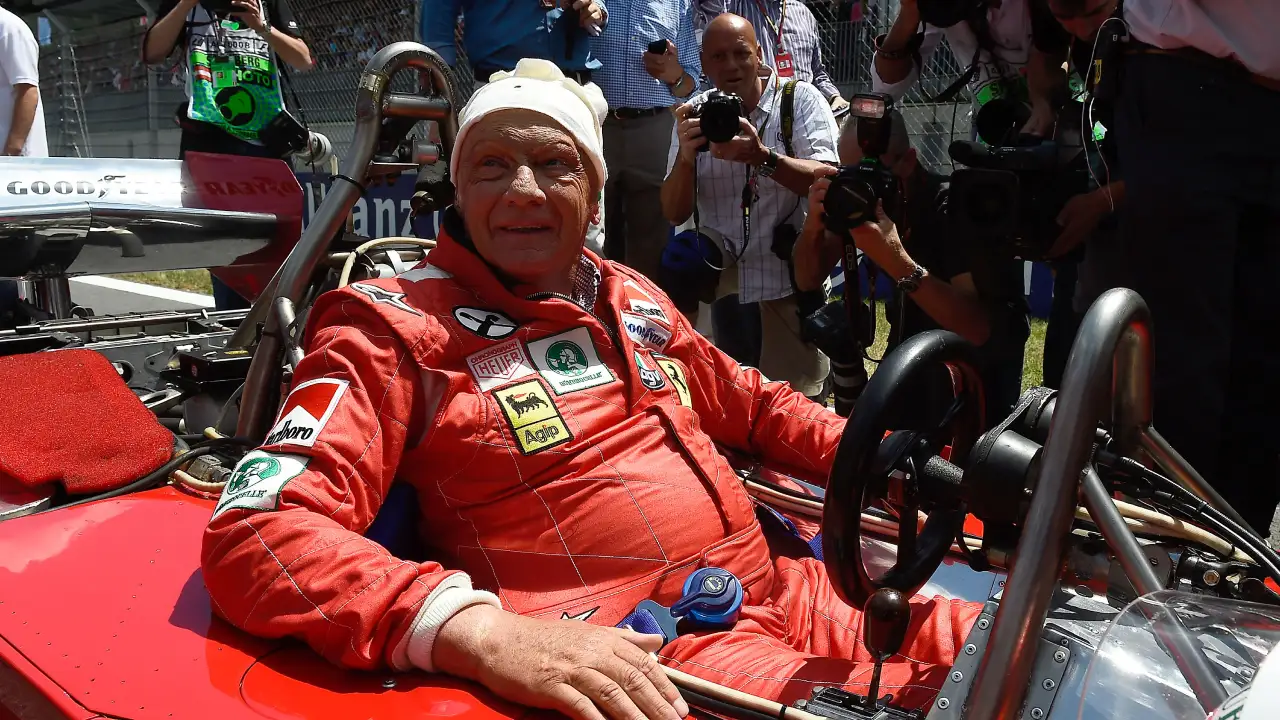
Regazzoni himself–who had already been teammates with Lauda in British Racing Motors the year prior–urged Ferrari to sign Lauda despite his relative no-name status at the time.
And that no-name status would be shed quite quickly, as Lauda proved himself to be a fast and efficient driver right off the bat. In fact, it only took four races for him to get his first win for the team, and that win came in none other than Madrid at the 1974 Spanish Grand Prix.
It wasn’t a straightforward win. Despite claiming pole around the Circuito del Jarama on Saturday, Lauda lost the lead on the race start and had to claim it back through rainfall and a wet track. The conditions were tricky and the race was stopped after just 84 of the 90 planned laps, but that didn’t matter. What did was that Lauda came out on top (with Regazzoni in a close second to give Ferrari a 1-2 finish), kickstarting the Tifosi’s belief in him and proving to anyone who doubted Enzo Ferrari’s choice to sign him.
Want more surprising facts about this year’s F1 drivers and race tracks? Sign up for our newsletter for a bonus fact about Spain, and be sure to check out our other Speed Reads:


.webp)

.webp)
.png)
.png)