


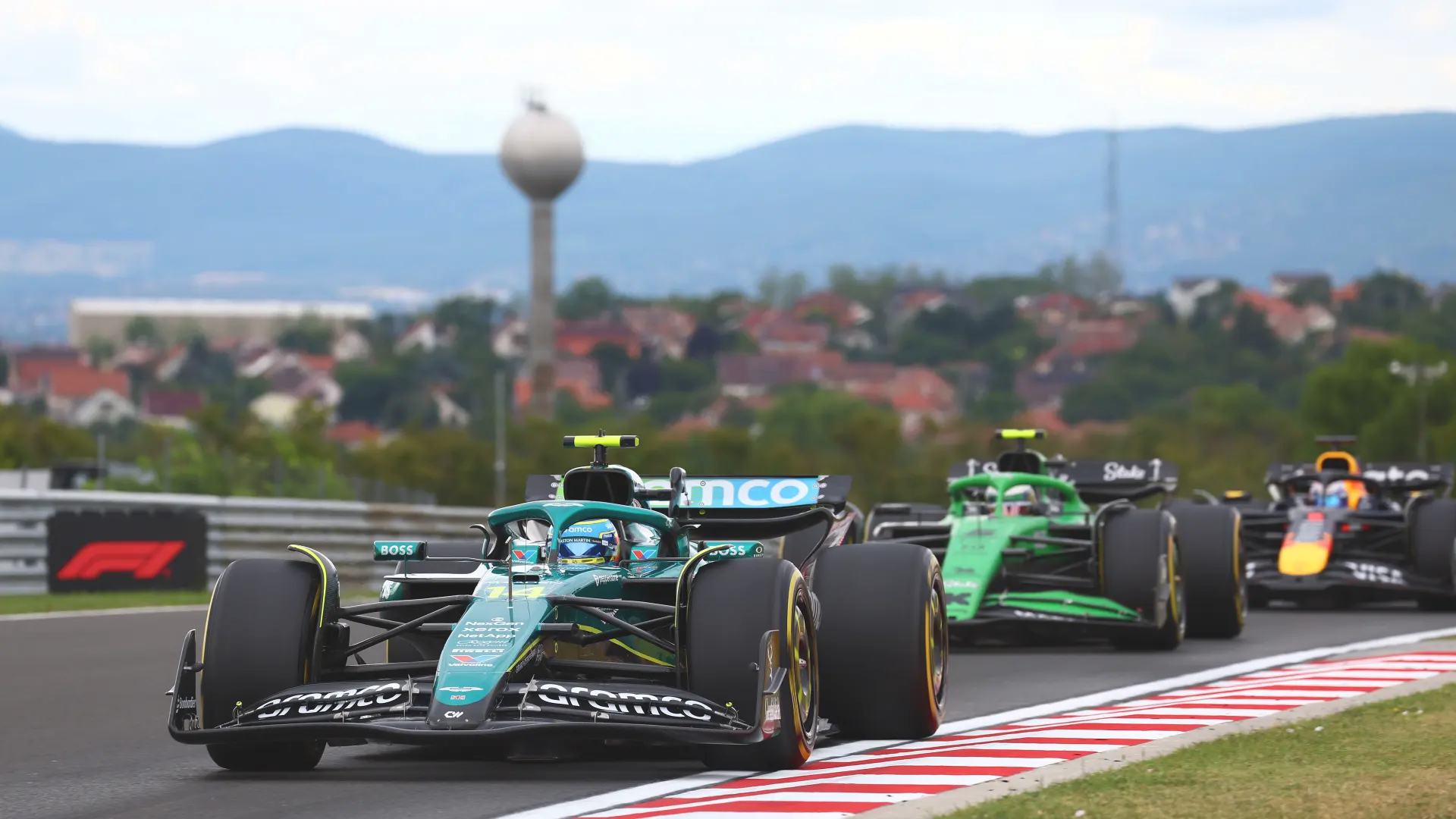


From the Russian Army intervening in the broadcast to Jenson Button breaking a seven-year streak of heartbreak, the Formula 1 Hungarian Grand Prix has produced some truly fascinating motorsports moments. Here are three of the biggest stories that you might not have known.


The Russian Army blocked aerial shots of the Hungarian GP
Back in 1986, the inaugural Hungarian Grand Prix was the first F1 race to be held behind the Iron Curtain, the boundary which divided–both physically and politiically–the Soviet Union and its allies from non-communist countries.
The story goes that in 1984 during a trip to plan for a Russian Grand Prix, Bernie Ecclestone was flying to Moscow over Hungary with Tamas Rohonyi, an F1 race promoter and friend of Ecclestone’s. As they passed over Budapest, Rohonyi turned to Ecclestone and suggested the Hungarian capital as a race location instead.
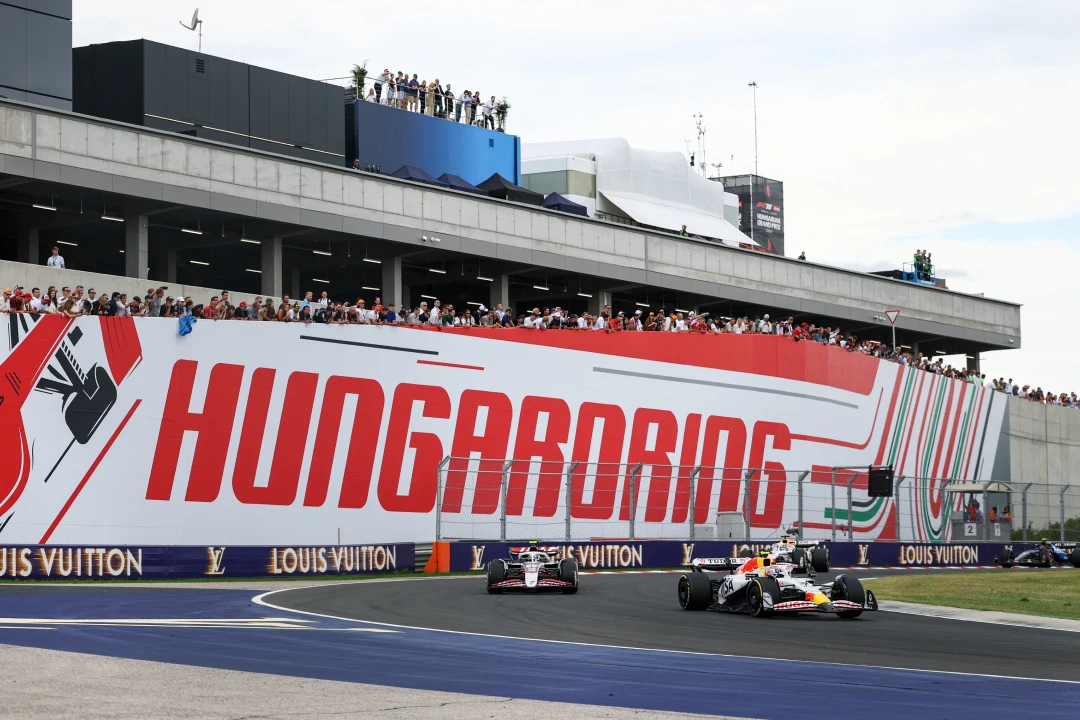
After a bit of reconnaissance through the area, Ecclestone agreed and preparations for the Hungarian Grand Prix were under way later that year. Originally, the race was set to be held on a track in Népliget, or the People's Park, Budapest’s largest national park, but ultimately a new track was constructed in the village of Mogyoród: the Hungaroring.
According to Hungarian journalist Andrew Frankl, during preparations for the inaugural Hungarian Grand Prix the BBC was looking to set up aerial shots of the race using helicopters. This idea, however, was swiftly blocked by Russian generals.
“The reason? The Russians had a rocket base about three miles from the track,” said Frankl.
Today aerial shots are part of every F1 Grand Prix, even Hungary. So what changed? Turns out that the Russian rocket base is no more. Per Frankle, “It’s now a supermarket...”
Jenson Button’s victory after nearly seven years of heartbreak
Three teams. Seven seasons. 113 races. That’s how long it took for Jenson Button to get up to the top step of the podium. And it happened at the 2006 Hungarian Grand Prix.
The conditions were not in Button’s favor that day at the Hungaroring. Not only was it the first time in the 20-year history of the Hungarian Grand Prix that rain had hit the track, forcing everyone to contend with wet conditions they’ve never faced before, but Button was also starting at the back of the grid, despite a good performance in Qualifying.
"We had an engine failure over the weekend and you got a 10-place grid penalty,” he explained during a Sky Sports Watchalong of the race. “ I had qualified fourth, right next to Rubens [Barrichello,] my teammate, and we were looking strong… But because of the penalty, it put us back in 14th.”
Nonetheless, the Honda team had looked great all weekend, and Button was able to turn Sunday into a historic comeback drive. He climbed up to fourth by lap seven, overtaking Michael Schumacher for the position, and eventually got the lead thanks to some good strategy from his pitwall that put him in front of Fernando Alonso late into the race. Once Alonso retired due to a loose wheel nut on his car, the rest was history.
"In a way, it gifted us the victory,” said Button about Alonso’s retirement, “but looking at it now it's actually a shame. It really is a shame. I think we would have had a great race."
Still, that did not stop the celebrations for Button’s first win after more than one hundred race starts.
"I gave my dad a hug before the podium and then when I was on the podium, he was the first person I tried to hit with the champagne.”
Damon Hill miracle win that never was
The world of F1 can certainly be a tough one, and the start of the 1997 season was just that for Damon Hill.
After getting the boot from Williams at the end of 1996, despite winning the Drivers’ Championship that year, Hill found himself struggling at the back of the field behind the wheel of the Yamaha Arrows throughout the 1997 season. The car suffered from reliability issues, lack of both downforce and power, and more, with Hill having a DNS and four straight retirements during the first six races of the year.
Then came Hungary, a track that the Arrows A18 was actually well-suited for.
“There were certain features about Hungary which I think I coped with well,” said Hill in a 2003 Motorsport interview with Adam Cooper.
“Plus the car was ideally suited to that track, as it’s not a circuit where you need a lot of horsepower. And Bridgestone turned up with a very good tire, whereas Goodyear made a bit of a mistake.”
This showed in Qualifying when Hill put the car into P3, and took the lead on Sunday by lap 6 of 77. Things were looking great for him for most of the race until the curse of the A18 struck again with a hydraulic pump failure on lap 74 that left Hill vulnerable. He fought valiantly, but his former Williams teammate and rival, Jacques Villeneuve, got the edge over him in the final meters of the race.
“I remember thinking, `Bollocks!’ But then you think, `Second ain’t bad, I suppose,’” recalled Hill. “I don’t think anyone felt that we’d been cheated.
“You had to laugh really, because we shouldn’t have been there in the first place.”
Want more surprising facts about this year’s F1 drivers and race tracks? Sign up for our newsletter for a bonus fact about the Hungarian Grand Prix, and be sure to check out our other Speed Reads:
- 3 Things You Didn’t Know About the British Grand Prix
- 3 Things You Didn’t Know About Charles Leclerc
Images via Red Bull Content Pool

.jpg)

%20(1).jpg)
.png)
.png)