


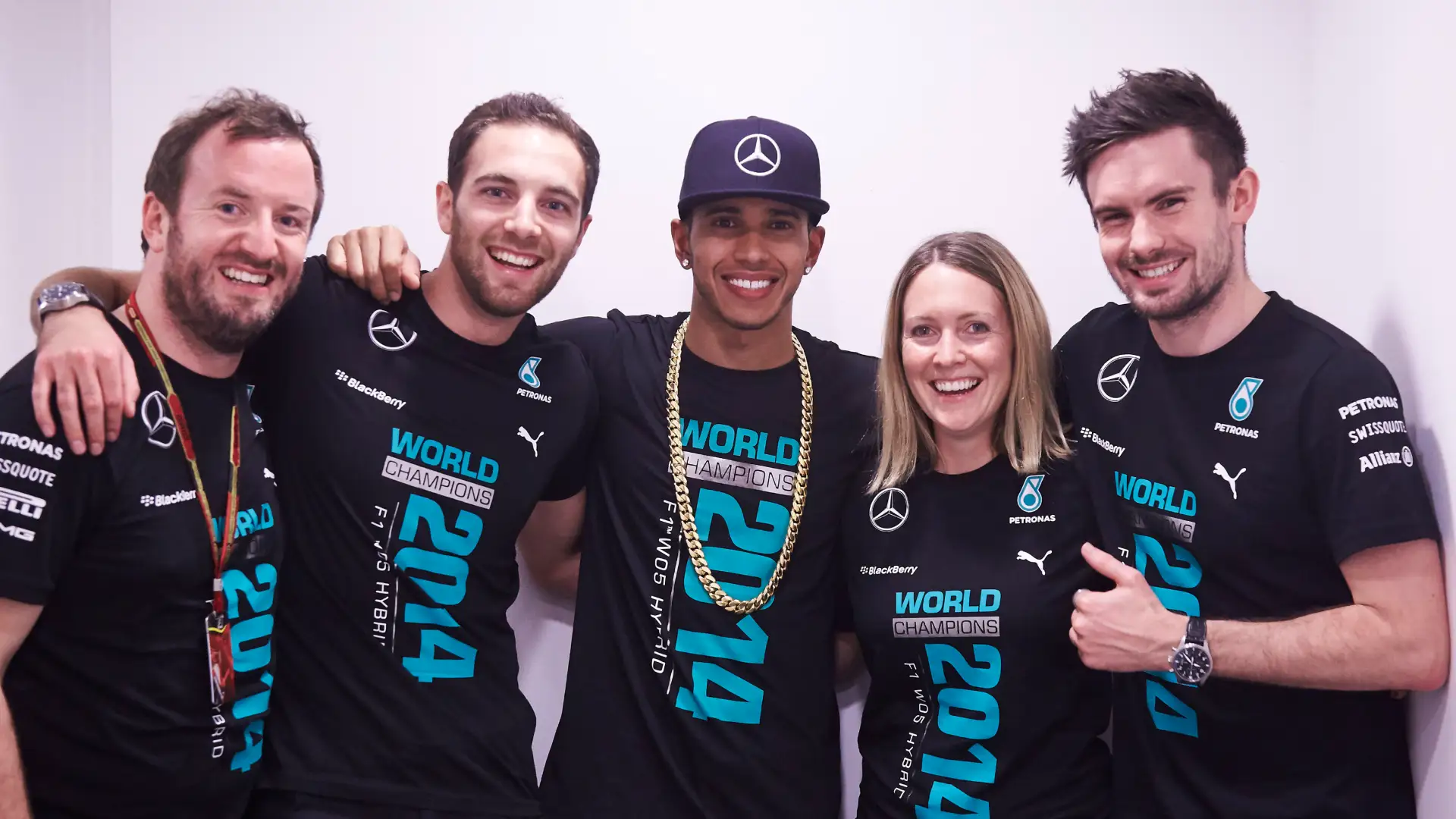


He slept in his car to keep his dream of working in F1 alive. Today, his motorsports agency is nearly 50 people strong.
Ben Cowley’s journey from college dropout to Founder and Creative Director of Pace Six Four is a shining example of what positive attitude and sky-high ambition can deliver.
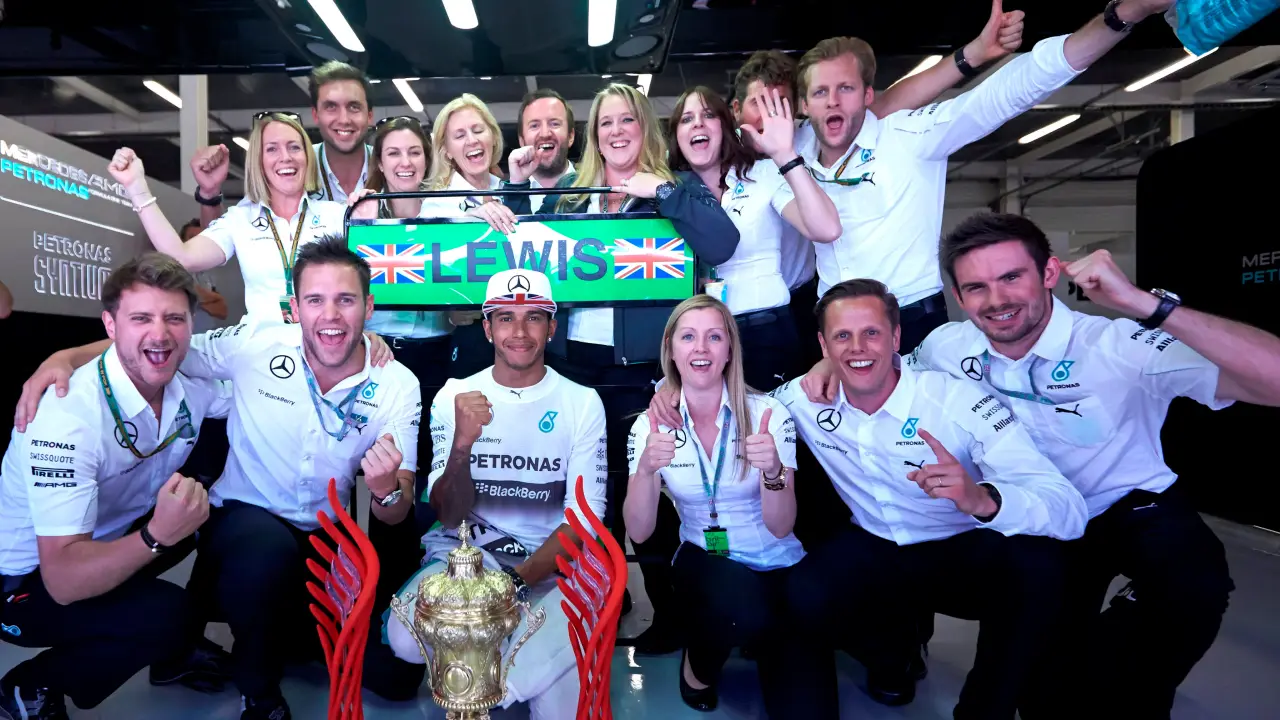
He started bricklaying to pay for karting, only to be forced to give up on becoming a driver. But instead of turning away from racing, he fought to get his foot in the door. He quickly rose to become the Head of Content at Mercedes F1 during the team's dominant era, capturing the championship wins as Lewis Hamilton and the team brought them home.
From serving as Lewis's Press Officer to learning from leading minds like Toto Wolff, Ben has lived every high and low of the paddock and helped shape the digital era of motorsport.
Keep reading for Ben’s story, including his leadership lessons, how to survive life on the road 18+ weekends a year, and why transparency is one of his secrets to success.
Position: Founder and Creative Director at Pace Six Four
Day to day: Empowering the creator side of the business to do its best work.


Ben's start in motorsports
#1. What was the first moment that you discovered racing?
My discovery of racing... I mean, honestly, it's in my blood. It's very much a family passion. My dad used to race motorbikes at the common level. He grew up not far from Brands Hatch Circuit in Kent, which is where my family still live. So motorsport was on the TV pretty much all day, every day. Likewise, as soon as I was old enough to get on the back of my dad's motorbike, I would be riding with him up to Brands Hatch to watch whatever was there, whether it was British Superbikes, British Touring Car Championships, sidecar racing, whatever it was. We'd be there at least once a month just soaking it up. I guess it's never really going to be any other way.
#2. When did you decide that the racing industry is where you wanted to build your career?
Well, I did try to become a driver myself for a little while. I guess that was the turning point. My dad, being massively into bikes as he was, he tried me out on motocross bikes for a little while. Turns out I have a terrible sense of balance, so that didn't end very well. Unfortunately, I didn't inherit that gene from my dad, but I still loved it.
My dad and my uncle used to live next door to each other. My uncle has always been hugely into cars and racing, and he started karting. I must've been 10 or 11, and I just went along with him to mechanic for him just because it's a racetrack; there are things going fast. Of course I wanted to be there, so I started going along and helping him out. I just became obsessed; I've got to do this myself.
By that time, my family weren't in a position financially for me to go racing. I started saving up my own money. I had weekend jobs; I had evening jobs, working with my dad where I could. My dad's a bricklayer, so I used to go and work on-site with him on the holidays. I just saved, and saved, and saved, and saved until I bought my first go-kart from my uncle I think for £400. Again, we still couldn't afford to go racing. We just did practice sessions, so we just went to whatever track had the cheapest rates and just did laps, and laps, and laps, and laps.
Then finally when I turned 16, because I could get a proper job, I had enough money that I could enter the Buckmore Park Karting Championships down in Kent, the club championships. That was where I started. A year later, we did a few rounds of the Super One Championship, which is one of the highest profile karting championships in the UK. Again, I did okay.
Then the point came where I had to make a call on what was going to come next. I went and spoke to a few teams and there was some interest. I did some trials and impressed them, but we just couldn't find the money. That was it. And that was the point at which I really started asking myself how am I going to make sure that I spend my life in this world if it can't be as a driver.
I went to university because I didn't really know what else to do because I always wanted to be a driver; now that dream was gone. I went to do modern languages because it's what I was strongest at at school. Found after a year and a half that I just didn't really know where I was going with it. I had just chosen it because it was something I was strongest at with my school studies, so I dropped out and had a bit of a reset. I worked in a bar to try to pay off some of the student debt.
Then I sat back and thought okay, what do I really want to do? What are my strengths? What were the things that I felt were going to get me into that industry in a way that I want to? I'd always been pretty good with words; I'd always been quite creative. I signed myself up for a marketing course, a marketing business management course.
Greg: Where did you find that? What was the course structure?
I did a marketing business management course at a different university. That was a challenge because I'd dropped out of uni the first time so I couldn't get the same student loan again. I was working full-time alongside a full-time university course. I was either at my job or I was in university from 6:00 a.m. through until 6, 7, 8:00 at night seven days a week.
Greg: When you were doing that, was the goal still to be in this industry and just figure out what the professional stamp is? You said you were a mechanic for your uncle at 11; had you thought about doing that instead?
I had thought about it, but the honest truth was I wasn’t very good at it. I looked at it, and it was something I enjoyed, but it wasn't something that came naturally to me. I'd always been good with words; I'd always been good with people. I'd always been quite creative and I thought okay, those are my strengths. If I'm going to get into this industry which is so competitive, I've got to play to my strengths.
#3. What was the first step you took to launch your career in racing?
I completed that course and when I graduated the UK was in recession. Jobs were just not really going anywhere and I needed money, so I went into recruitment. I just really knuckled down, worked hard, made as much money as I could so I could then start effectively applying to places as an intern, unpaid if needed, to get some experience. That was really where it all kicked off and escalated very quickly.
I was firing my CV off to all sorts of places, and I just got really lucky. I connected with a guy called Phil Kennard on LinkedIn who, at the time, was the Commercial Manager at what is now the Alpine Formula 1 team. I just sent him a message and said look, your career path is one that I really admire. I'd really appreciate five minutes of your time just to give me some advice if you'd be happy to do so. I got him on the phone; we ended up talking for over an hour. We got on really well. He gave me loads of great advice, and I was incredibly grateful for that. I put the phone down, thought nothing more of it.
Then a couple of weeks later, out of the blue, Phil calls me and he says, it's the summer shutdown coming up and most of my team are on holiday. I've got a couple of big projects I'm working on and could use an extra pair of hands. Do you want to come and get a couple of weeks' work experience? I couldn't have said yes fast enough. I said yes, went to my manager at my recruitment job and said, I need two weeks off effective now.
Then it got to the end of the two weeks and Phil said look, I don't have a job, but yeah, you've made a commitment here, and you're working hard, and there's real potential here. I'd love to keep you on. I can't pay you but you're welcome here for as long as you want to stay and as long as it's useful to you. At that point, I made probably the biggest decision of my life and just quit my job on the spot.
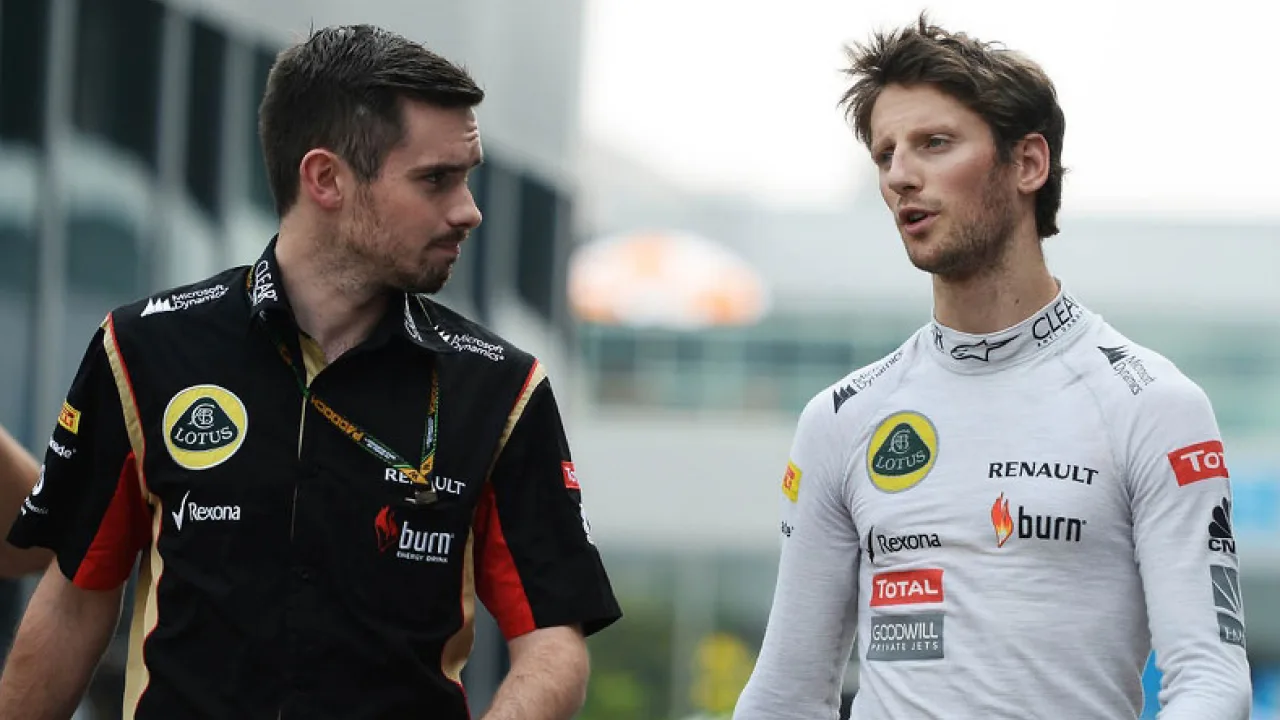
Over the course of six months that followed, I basically volunteered my services to anybody that would take them within the team. At that point, it was on the commercial side, so I was doing research for sponsorship decks, building our presentations and that sort of thing. I did everything from photocopying to making teas and coffees to standing at the door at partner events, anything and everything I could get my hands on. I said yes to everything they could throw at me.
Then towards the end of that six-month period—bear in mind this is all unpaid. I was just using my savings I made from recruitment. I got an opportunity to help out on the PR and comms team doing some written work because one of their guys had left and they needed an extra pair of hands so I, again, volunteered. It was coming to a point where it was crunch time. I was running out of money. Not a lot of people know this, but there were periods where I was actually living in my car in the car park. I was eating three meals a day in the subsidized canteen because it was cheap. I was showering in the factory gym, and then I was just sleeping in my car because I was running out of money.
I got to the point where I thought, this isn't going to happen. I was single, basically homeless, broke, and I thought man, I'm not sure this was the right call; I've thrown away a lot here.
Then I just got really lucky in the sense that they were looking to expand the team for the following year. They came and said to me, look, you've certainly proven you're committed. You're a bit rough around the edges, but we'll take a gamble on you if you want the job. I got a full-time role starting in January 2012 and it was that close to not happening. Then fortunately, it did and the journey from there has gone like that.
#4. What were the next few years like on the team side, before we get to the agency side of things?
The team side was unreal. It was something that will stay with me my entire life. I did two years full-time traveling in a social media/PR/comms role with what was then Lotus, is now Alpine, before I got headhunted for Mercedes and then went there in a similar role initially and eventually worked myself up to Head of Content within that team. I did a total of I think five years full-time traveling, so every race, every test. In the Mercedes days as well, I was also helping out the DTM team, the German touring car team, so I was even going to DTM events. There was one year—I think it was 2015—where I was out of the country so much I almost qualified for tax breaks because I just was never at home.
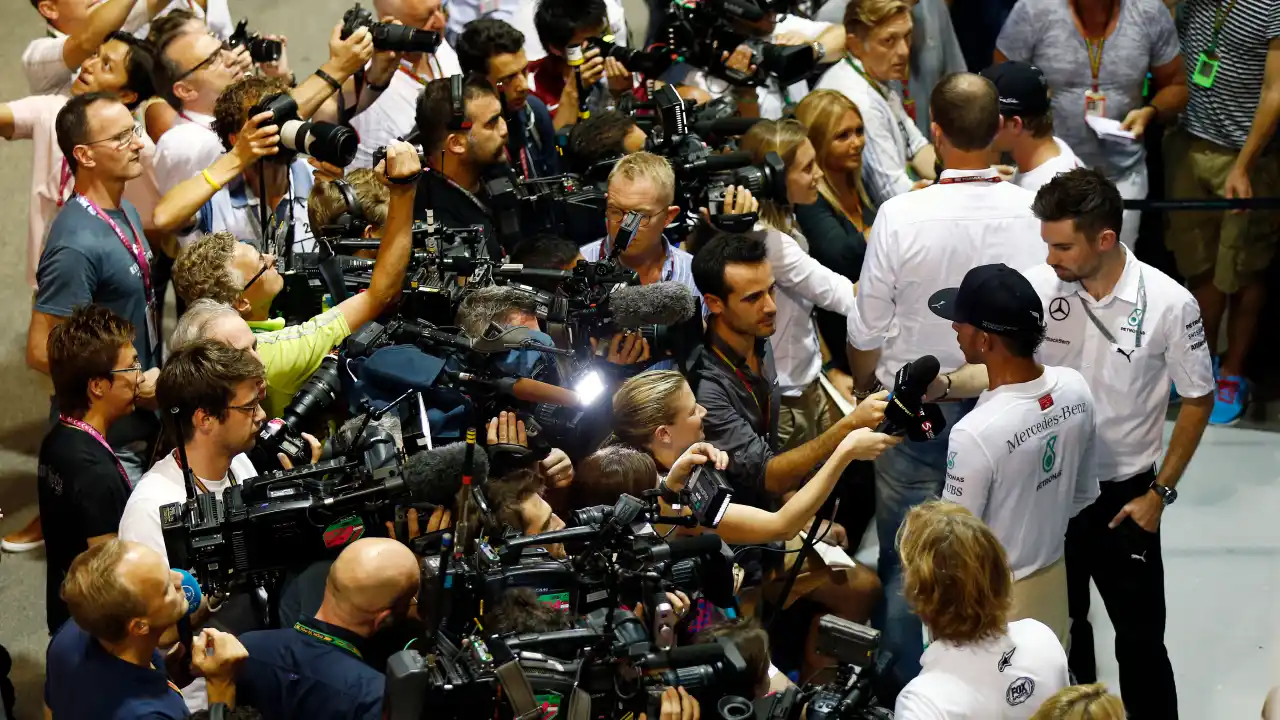
That experience is something that will live with me forever. It taught me a lot in the sense of just resilience. It's grueling doing that amount of traveling. It looks incredibly glamorous and don't get me wrong; it's a lot of fun, but it's hard. When I was doing it, the season was 16, 17, maybe up to 18 races. Now talk about 24 and going to even further parts of the world. It's intense. It's one of those where I'm glad I did it at that point in my life. I was a lot younger; I was single. I had no real commitments at home; I could just go and enjoy it and throw myself into it. I loved every single second of it, and I got to meet and interact with some of the most brilliant minds not just in motorsport but in the world, the sort of people you interacted with on a daily basis. I had daily contact with people who—take Mercedes for example, people like Toto Wolff, James Allison, one of the most brilliant technical minds in the whole world. I was having regular interactions with these people and just learning. Obviously not necessarily what they do in their day-to-day because that was way beyond my level or engineering cases, my expertise, but just seeing how they operated, how they managed people, the way they led teams was just hugely inspiring. I learned so much from that experience.
Greg: What was it like being responsible for content for a team that's in that phase of its journey?
It was an unbelievable privilege to be there and to witness that. To me, Lewis Hamilton is the greatest of all time, without a shadow of a doubt. Numerically, obviously, that stacks up as an argument but as a human being, being his Press Officer for two years and being that close to him on a daily basis, especially when we were traveling, anything I could've thought about what he would be like, it was that times a thousand. He was humble, caring, loyal, just the most phenomenal guy to be around. You look at what he's done for the sport. It's so far beyond what he's achieved on the racetrack. To even be in regular contact with somebody who is that way was hugely inspiring.
Then to be tasked with being part of the team that brought the story of his next great success to life, especially given how intense that 2014 season was going right down to the wire in the battle with Nico Rosberg, the final race in Abu Dhabi, yeah, it was a lot of pressure, but I loved it. Again, it comes down to personality type. I thrive under pressure. Honestly, if there's no pressure, I'm useless. I need that intensity. I need that pressure. I need something to be like, you've got to do this. This is do or die. You've got to nail it. That's when I bring out the best in myself, so I loved it and thrived in that pressure.
Ben's current role
#5. What prompted you to start Pace Six Four?
Including the internship period, I was with Lotus for two and a half years; I was at Mercedes for five in total. I got towards the end of the fourth year with Mercedes and had become Head of Content for Mercedes. I had traveled the world, been to these amazing places, had these incredible experiences. I'd then been tasked with building a team underneath me to go and help grow the digital and content space within the team and the outfit.
Even when I started at Mercedes in 2014, it just wasn't a thing. Motorsport was so far behind other industries in terms of the adoption of content and digital. Even in those early days with Mercedes, 2014, and probably as recently as 2016, I was Lewis's Press Officer. I ran the website, wrote the press releases, ran the social media channels, and did the behind-the-scenes photography. This was one person. You have teams of 10, 12, 15 people doing that now in Formula 1 teams. I got in just as it started to become accepted that this was something motorsport needed to do, and it was lagging behind. I was really building one of the first proper digital and content teams in Formula 1 by building a team underneath me.
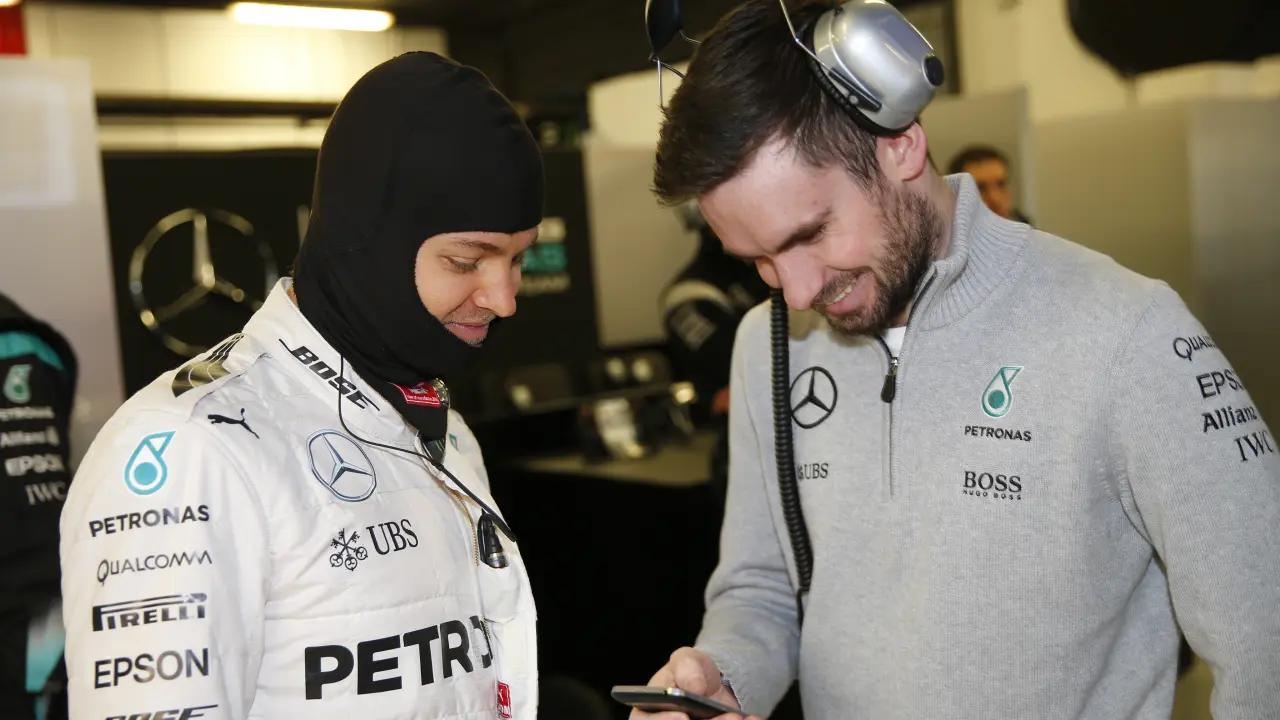
I did that, and I hired some brilliant people. We worked with all sorts of brilliant partner agencies as well who helped support us upscaling what we were doing. It really got to a point where honestly, I felt a bit redundant. The people I'd built around me were doing such a great job that—don't get me wrong; I still had my place and I still added value, but I didn't feel like I was contributing enough and growing enough for my own liking. If I'm not pushing myself and challenging myself, then I'm unhappy.
So I started to think about okay, what's next? There wasn't really space for me to go any higher within the team because my boss, Bradley Lord, who's now the Global Motorsport Communications Director, you now see him on TV being interviewed in place of Toto at certain events. He wasn't going anywhere and honestly, I didn't really want his job anyway. I wouldn't have been able to do it to his standard because he's an unreal operator.
I didn't really want to go to another team because I felt like I'd be doing more of the same thing. I thought well, what else can I do? What's going to push me? What's going to challenge me? What's going to take me out of my comfort zone? That's when the idea came to me to go out and set out on my own. I thought about it, started scribbling some notes, developed the concept of what it could be looking at the experience I had working with agencies, what people had done well, where I thought there were gaps and it could be done better. I thought yeah, there's something in this.
I was on a six-month notice period, but I gave Mercedes a full year. I said to Bradley, I want to do this. I'm telling you now so you can plan, but this is what I want to do. We had some discussions and they were keen for me to stay, but Bradley was very understanding that I wanted to go and keep pushing myself. He supported that decision and started slowly transitioning away as the year went on as they brought other people in.
#6. How would you describe your current role?
When I started the business, it was just me on my own and very much as a social media and content consultant. The company is now much bigger than that. We're nearly 50 people and we do the creative side of things and the digital side of things is very much my world, but we also do more traditional marketing. We also do the commercial side of things with sponsorship acquisition and mergers and acquisitions and partnership activations. There's now two other Directors in the company as well. We decided when the third Director was added in March this year that we should divide and conquer in that regard in the sense that I would be responsible for the creative elements of the business. Christian Dixon, who's the latest addition as a Director, would be responsible for the marketing side, and James Robinson, who joined me about three years in, would be the commercial side.
The decision behind that was really just to split up management of the team because there was a point where I was managing 25 people, and that's too much. You can't dedicate proper time to those people; they deserve better than that but also just to really show the world, from an outward-facing perspective, that we're not the social media agency that we were five years ago anymore. This is a full-functioning multi-service agency and we have these Directors at the top who are specialists in these areas who are leading those parts forward.
What that also allowed me to do is really focus and draw down into my strengths and focusing on helping the creative side of the business grow but nurturing that atmosphere where people have the space to be creative and to go and have the time and capacity to go out and find inspiration because that's what ultimately breeds creativity. Really, I see my role as empowering the creator side of the business to do its best work because frankly, the people that I have on that side of the team and across the team are much better at this than me. My job now is to give them the platform, the tools, the creative freedom they need to go and be the best in the business, so that's my job.
#7. What have been the most rewarding and challenging aspects of the job?
Rewarding
The things I'm proudest of are all related to people; it's as simple as that. I would go as far to say I don't really feel like I'm particularly gifted or talented in any one thing, really, to be honest with you, as a specialist. The one thing I do credit myself with is I'm very, very good at spotting emerging talent. That's what's built the success of this business is that I've had an eye for great people who've got great potential, and that's the thing I'm most proud of. Everything we've achieved has not been built by me. It's been built by me bringing in people who are hungry, who are passionate, who are good people, who want to learn, want to grow, and just want to be proud of the work that they're doing. That's what I'm proudest of is we've built that, continued that culture as we've grown and I'm hugely proud of the people who've been part of that journey, the ones who are with us now and the ones who have gone on to do other things equally.
Challenging
I found one of the biggest challenges personally is because I have such a level of pride in this, what it is, and particularly the people within it is that I'm fiercely protective of this company and everybody in it. When things don't go well, when we do fail, when we make mistakes, when a member of my team has an experience that isn't a positive one and they might be unhappy about that, I take that incredibly personally. I sometimes really struggle to get past it and to forgive myself for letting it happen.
I'm told constantly, especially by my wife, I need to just chill out and not take things quite so seriously and not be so hard on myself. I think it's part of who I am, and it is challenging. When something means as much to you as this does to me, any little thing that goes wrong, you analyze it, think okay, what do I need to learn from this? How can I do it better the next time? When you own and run a business, especially when it gets to this size, it happens and it's going to happen because you can't help it. We run across so many different things and there's so many different people, there's never going to be a situation where everybody is perfectly happy and everything is running as smooth as it possibly can be. There's always going to be things, and it becomes quite relentless. That’s where I'm now, again, hugely grateful that I've got two Directors by my side rather than it all being on my shoulders. At least I can share the load with them. I can sit down at the end of the day and go guys, today was brutal. Can we just grab a beer for half an hour and just talk about what we're going to do here? That's massively beneficial, being able to bounce off other people. I think that's the biggest challenge.
I'd say alongside that, again coming back to that level of commitment and passion and how invested I am in this personally, it's balancing that with home life. I'm a husband and a father above all else. I love this company; it is something I'm immensely proud of, and it means the world to me. It will never mean as much to me as my wife and kids. I'm a husband first; I'm a father second. I'm a business owner third, and it will always be that order. Sometimes it flexes. There are times when your priorities have to shift a little bit. Maintaining that is hard as well because you're being pulled in one direction or the other at any one given time, and how do you balance that and make sure you're giving everything the right level of attention it deserves and being the best version of yourself that you can be for those different roles that you have? That's not just true of motorsport; that's true of life. That's true of anybody who wants to achieve great things but also be a good person to the people that matter to them. I think that's a challenge we all will face at different points in our lives.
#8. What are the three qualities that have helped you succeed at this role?
Staying mentally ‘fit’
One of the big things for me is focusing on the maintenance and mental health where possible. Again, I'm very open with the fact that I've suffered with mental health issues throughout my adult life. That's all come and gone in waves over various different periods and various different chapters in my life. I've been on antidepressants in the past. I've been to therapy in the past; I still do go and see a therapist on a semi-regular basis. It used to be weekly; it's now monthly. Now it's more maintenance. I'm not going to solve a problem; it's more just keeping my mental health in check like you go to a gym to keep your body fit. Going to keep my brain fit as well.
George Russell, we did a campaign with him around mental health in partnership with Meta. Part of that, we took him to a mental health clinic in London and he was talking to the therapists there about their roles and the importance of it. He actually came out with that exact line. I have a physical trainer to train my body. Why would I not have somebody to help me look after my mental health as well? To hear someone of his age, particularly by then because he was in his early 20s—quite early in his career—and to be brave enough to come out and say yeah, I do things to take care of my mental health as well. It's important. It's just as important as my physical health; that was huge. I was really proud in that moment. I thought yes, this is someone who gets it and is saying the right things and getting that message out there.
That's a huge premise for me is I know that I cannot bring the best version of myself if I'm not looking after my own mental health. A lot of that ties to physical as well. Exercise is a huge thing for me, for example, and just making sure I'm as strict as I can be. I'm not sacrificing that. I know when I need it. I know when I need help. I know when I need to get out and go for a run and just scream into the abyss for a half an hour but not shying away from that. I need to stop for a minute; I need to reset. I need to go and do this because I'll come back better for it.
Transparency
I think bottling it up and trying to deal with and internalize that stress and pressure, it will break you eventually. Now granted, I need to still maintain a level of composure because I'm in a role where I’m responsible for running a business with a lot of people and I can't just be breaking down every five minutes, but having those moments and not being afraid to say to the people around me, whether it's my fellow Directors or even the board of the company, guys, I'm having a tough day. I'm struggling today. I need some help. I'm out of ideas on this. Can you pitch in? There's no shame in that. We don't all have all the answers all the time.
Routine
This varies, obviously, hugely by personality type. As I said to you earlier, while I thrive best under pressure, I also perform best within a routine and a structure. I'm not brilliant with unstructured scenarios. I'm quite good at marking my time out for things. It changes; of course it does, but even if I would say there were two or three things in the day, for example, going to the gym on my lunch break, that's set. The world is on fire; I'm not moving that. Then I can piece everything else around that. Having that routine allows me to go right, okay, these are the markers in my day; these are the markers in my week. I can build around that.
You've got enough structure there that for me, it feels like I've got a plan, but it's loose enough around that that you can be flexible. If you try and have a rigid structure, it would never work, particularly in a role like mine because things move and change too quickly. You need enough of a structure there that you've got something that's anchoring you and you can always come back to say, okay, I know these are set points in my day.
#9. What did you take way from your time with Mercedes, from working closely with Lewis, that you've applied as a manager and business owner?
There's so many things. I think one of the big things for me and I suppose the one that stands out the most when I think about that question would be a couple of things from Toto. The first one was the no-blame culture that he built at Mercedes. There was obviously a phrase very much coined by Lewis but this, ‘we win or lose together’ approach. It really was true. There was a no-blame culture. If something went wrong, you sat down, you analyzed it, you learned from it, and you moved on. There was no finger-pointing, no guys, you screwed this up. It was a collective learning experience. I love that mentality of not being afraid to fail, empowering people to go out there and try and fail and for that to be okay because you've learned. Collectively, the team will be stronger for it.
I think being around those kinds of people really taught me to toughen up a little bit in some ways in the sense that it's a ruthless world, motorsport, and you've got to have a thick skin. You've got to be able to deal with some crushing days when things go wrong but know you've got people around you who have your back and who are going to help build you back up. It was a wonderful environment to be in, surrounded by and led by people who genuinely brought teams to their own mentality and really believed in it and delivered it with such conviction that everybody else shared it.
Ben's advice
#10. If you could go back and give advice to your younger self, what would that be?
Allow yourself to enjoy it more and to appreciate the moment you're in and to live in that moment. Be appreciative of what you're achieving. It's been nearly 15 years since I've been doing this. It's gone by like that, but there have been so many moments now that I look back on and think it would've been great if I'd paused there for a moment and just allowed myself to soak it up. Even in a moment like when Lewis won the 2014 World Championship, I actually barely remember what happened in the immediate aftermath of that because I never stopped to soak it up. I remember the day after. I can remember how I felt the day after, and I remember where I was and what I was doing and the feeling at that point. Honestly, the whole day itself is just a bit of a blur. I was so focused on thinking I need to nail this. I'm glad I did that because I did the best job I could, but I always say I was there for one of the biggest moments in sporting history and I barely remember it because I didn't allow myself to breathe for 30 seconds and go, “Holy shit, this is awesome!” Allow yourself a couple of minutes here and there to pause and say it's pretty cool.
#11. What advice would you give to someone looking to be in your position?
The first one, particularly from a creative perspective, is to let go of your ideas. There's a marketing guru Paul Arden—a phenomenal guy and what he achieved in the marketing space. This is one thing that really stuck with me, really resonated. He said if you hold on to your best ideas, you'll never have new ones. Don't be afraid to throw things out there into the world. Creativity comes from challenge and from having to think outside the box. If you hold on to one idea or one way of doing things or one concept or philosophy or whatever else it might be, even if you think it's the best thing in the world, let it go. Put it out there into the world and then go right, that's out there in the world now. Where's the next one? From a creative point of view, that's probably the one best bit of advice that I'd say I ever got that I always try to keep in my mind.
From a broader point of view, I think humility is so important. We live and work in this industry in particular in a big melting pot of ego. If you're at the elite level of any industry, you will find it everywhere; it's in abundance. I think the more you can avoid the trappings of that, the better it will serve you. Never feel like anything is below you. There's a fantastic philosophy with the Japanese football team in the World Cup. At the end of a game, wherever they were in the stadium, they made sure they left the changing room as immaculate as they found it. These are international sporting superstars, but they're literally sweeping the room because it's the right thing to do and it shows a commitment and respect to the people around them. It shows a mentality that no matter what the opposition, never think anything's below you. Everybody should be ready to roll up their sleeves and get stuck in when they need to. If you want to build a business, you will have to. If you're afraid to get down in the trenches and do the dirty work, you will fail. It will not happen for you. It can also lead to some of the most enriching experiences you'll have.
When I started at Lotus and first started traveling, I went to the 2012 Australian Grand Prix. Actually, my first ever experience of a live Grand Prix was working the Australian Grand Prix. I'd never been to races as a fan before because we couldn't afford the tickets when I was a kid. We got to the end of Sunday and we'd wrapped up everything we were doing from my perspective in the marketing department. We were packing up and walking out. We walked down to the paddock and pack-down was happening. It was never really seen back then, what happens when the cameras stopped rolling. I looked around, like this is incredible. What's going on here? The guy who's the Team Manager at the time, Geoff Simmonds, who's one of my favorite people I ever met in the industry—I went up to Geoff and I said, this is crazy. What's the sketch? Tell me about it. He said well, we've got to get everything packed down and off to Malaysia. I was like, how much longer are you guys going to be here? Are you going to join us for a beer at the hotel? He just laughed at me; we'll be here until 2 a.m. We've got a long time to go.
I said, can I help? Again, he laughed at me and was like, you're marketing; you don't do this. I was like, well, I don't mind. Give me a high-vis and if there's something I can do to be helpful, I'm happy to help. He looked at me and went, alright, let's see what you've got, and he threw a high-vis at me and I went and got stuck in. It wasn't that the marketing team thought they were above doing that necessarily, it's just nobody ever did it. By doing that, I built relationships with that team and the guys in the garage, the truckies, the people you never would've normally necessarily interacted with in my role. I made such great relationships with them just from that one day. At the end of the evening, I went back to the hotel with them and we were having a chat; I got to know them all. I then stayed for every race; I did it every race because I felt like I was truly part of the team but also I built relationships there that massively helped me do my job because I had a better understanding of the bigger picture of what the team did and the roles within it and the characters within it which, as a storyteller, was invaluable. All that required was me throwing on a high-vis vest, rolling my sleeves up, and cleaning some parts and helping get them in a truck. The value I got from that for just doing something that was out of the ordinary and what you'd consider your normal remit, it's been invaluable.
I did it when I went to Mercedes as well. I carried on doing it. By the way, all the time I was traveling, any race that I could. There were some that I couldn't, if I had to go off to an event or something else. I think it was honestly the most valuable thing I did in terms of building my reputation and my success within the teams I worked in.
Ben's career highlights
#12. If money were no object, what’s a creative project you’d love to bring to life? Is there a passion project?
I'm going to have to stick to my own advice and not hold on to your best creative ideas here. Red Bull are phenomenal at doing these crazy stunts and doing things people would never think to do; I think they're phenomenal at that. I think a team like Aston Martin are phenomenal at reaching out and connecting with fans on a direct and personal level. That's just two examples. Lots of teams are doing very, very good things. Those stand out for me as things I really respect and have respected for a number of years in terms of people I think are leading the way.
I would like to see more of a blend of those two things in terms of bringing motorsport to people who would not normally have access to it. Obviously, Formula 1 now races at 24 different venues, but that's still only 24 venues around the world. It tends to be in places where the population is affluent enough to be able to afford to go watch it. I think the more we can bring motorsport to a broader community of people who otherwise wouldn't have access to it, that's something that's a real dream to me. Yes, motorsport is quite an elitist world because there's just so much money involved and therefore, even as a spectator, it's not cheap to go and watch racing. It's such a raw experience for the senses that you can never really appreciate it until you've felt it. I think just being able to—whether it's a roadshow or whatever else it might be—taking it to people who might otherwise not be able to experience that firsthand so they can feel the noise, the smell, the vibration through their body and go wow, this is unbelievable. That would be super cool because I'd love for as many people as possible to be able to experience that.
Want to learn more about other professionals across motorsport series? Then check out all of our Fast Lane interviews, or jump right into one of these:
.jpg)


%20(1).jpg)
.png)
.png)