


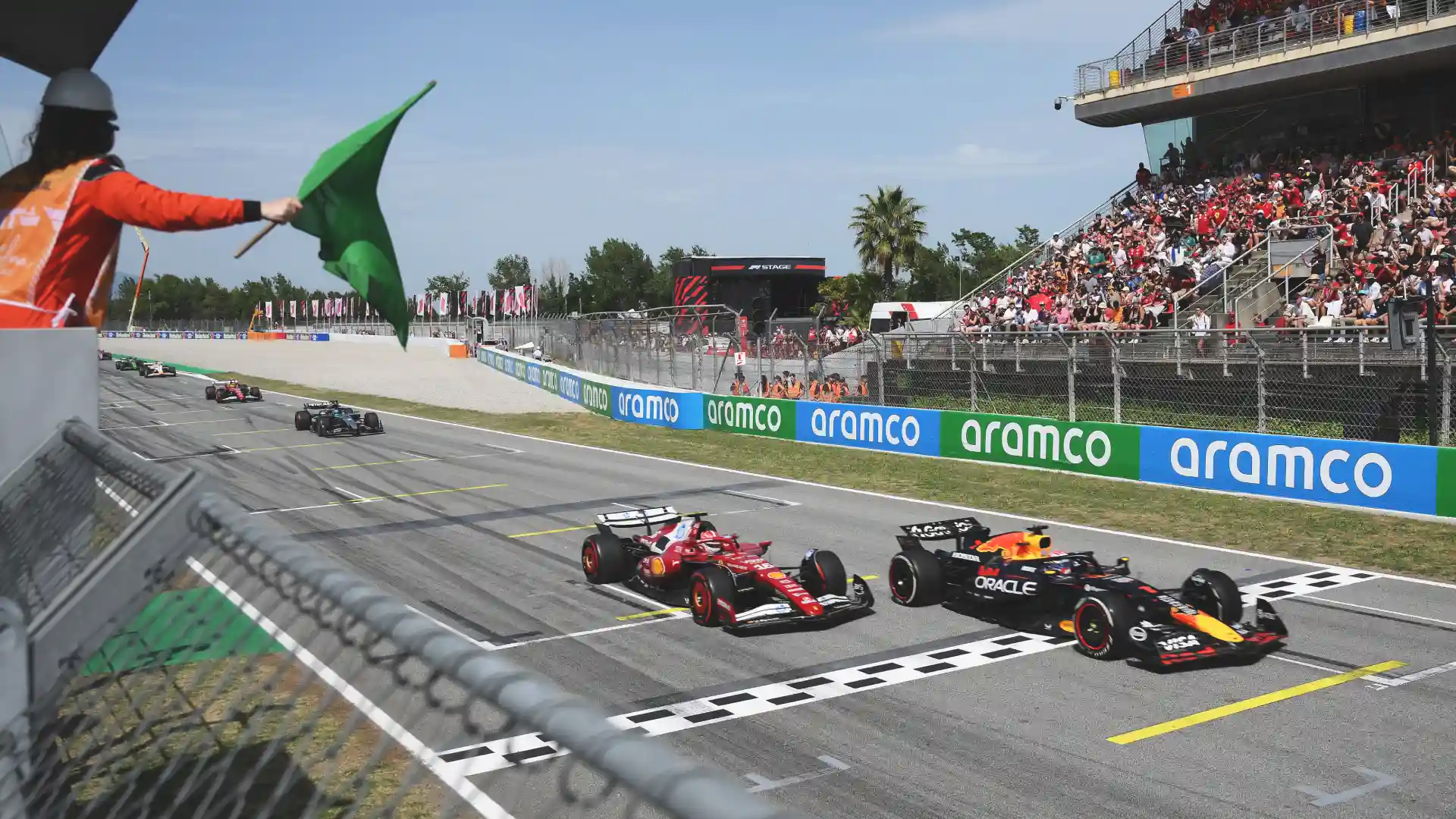


Barcelona has played host to Formula 1 races for decades now, and even though the Spanish Grand Prix may be moving to Madrid, racing is staying in the Catalonian capital for the first-ever Barcelona‑Catalunya Grand Prix in 2026.
With the F1 season heating up, the Circuit de Barcelona-Catalunya is certainly going to bring more sizzle to the grid under the Spanish sun. So to get you prepped for this upcoming race weekend, here are three things you probably didn’t know about this historic race and race track!


The track where F1 meets the Olympic Games
The origins of the Catalan track that has been the home of the F1 Spanish Grand Prix for the past three decades trace back to more than just motorsports. With construction starting in 1989 and the track completed in 1991, the circuit was all ready for the 1992 Summer Olympic and Paralympic Games in Barcelona. And indeed, the Olympics made good use of having a race track in its host city, with the road cycling team trial start and finish taking place along the circuit that year.
This may seem like a happy coincidence at first glance, but this timing was intentional, at least to a degree. With the local government wanting to bring the Spanish Grand Prix back to Catalonia since its days at the Montjuïc Circuit back in the 1970s, and the Olympics set to take place in Barcelona, the development of the Circuit de Barcelona-Catalunya (or the Circuit de Catalunya as it was known back then) became part of the city’s Olympic development program.
And indeed, they built an excellent racing venue. Beyond just serving as an Olympic venue and an F1 track, this circuit has been the home of countless other racing events including MotoGP, the 24 Hours of Barcelona and more. This is unsurprising, as it is an all-arounder track, often used as a baseline for performance and a frequent pre-season test track in F1. While the Spanish Grand Prix may be moving to Madrid, the Circuit de Barcelona-Catalunya is staying on the calendar for the biennial Barcelona Grand Prix until 2032, and will surely continue to host many other racing events in the future.
Schumacher gets a podium with a broken gearbox
Nothing is worse for an F1 driver than when something out of their control compromises their race. Be it the actions of another driver, bad timing with safety cars, or something simply breaking in their own car, when outside factors put you on the backfoot, salvaging a race can feel like a near impossible task.
But near-impossible is not impossible, as F1’s legend Michael Schumacher showed in Barcelona back in 1994. Race day started out well enough for Schumacher, with a good take-off from pole position to lead the first stint of the race. But after he made his first pit stop, things unravelled. His gearbox broke down, leaving him only able to use the fifth gear of his car. And with drivers constantly switching gears throughout a race, helping them control the speed of their car, this left Schumacher incredibly vulnerable to his opponents, who were quickly catching up and overtaking him.
But Schumacher isn’t known as the greatest driver of all time for nothing. He quickly adapted to the situation, saying, “At the beginning it was a bit difficult to take all the corners in 5th gear, but then I managed to find a good line and keep up lap times that were more or less good enough to compete against the others behind me."
By making adjustments to his racing lines, he not only survived the race with a single gear intact, but also managed to stay on the podium, finishing P2 overall. And to this day, it is considered one of the best recovery drives of not just Schumacher’s career, but F1 as a whole.
The 10-year anniversary of a €600K lap 1 crash
This year marks the 10-year anniversary of one of the most infamous race starts (and ends) in F1 history. It was in 2016 at the Spanish Grand Prix that Mercedes teammates and rivals Lewis Hamilton and Nico Rosberg took the front row of the starting grid in P1 and P2, respectively. At lights out, the two sped down the track side by side, neither willing to give the other an inch of extra space. And it cost them, as on turn 3 the two had collided, ending the race for both of them before it had effectively begun.
The result? A rather hefty repair bill for both Rosberg and Hamilton. Frustrated that the crash had done extensive damage to both cars and cost Mercedes any chance whatsoever to collect points for the Constructors’ Championship during the race, team principal Toto Wolff made his drivers split the repair bill 50/50. Rosberg recently revealed on the High Performance podcast that they each had to foot €300,000 for the damage they caused and were nearly fired from the team for their actions.
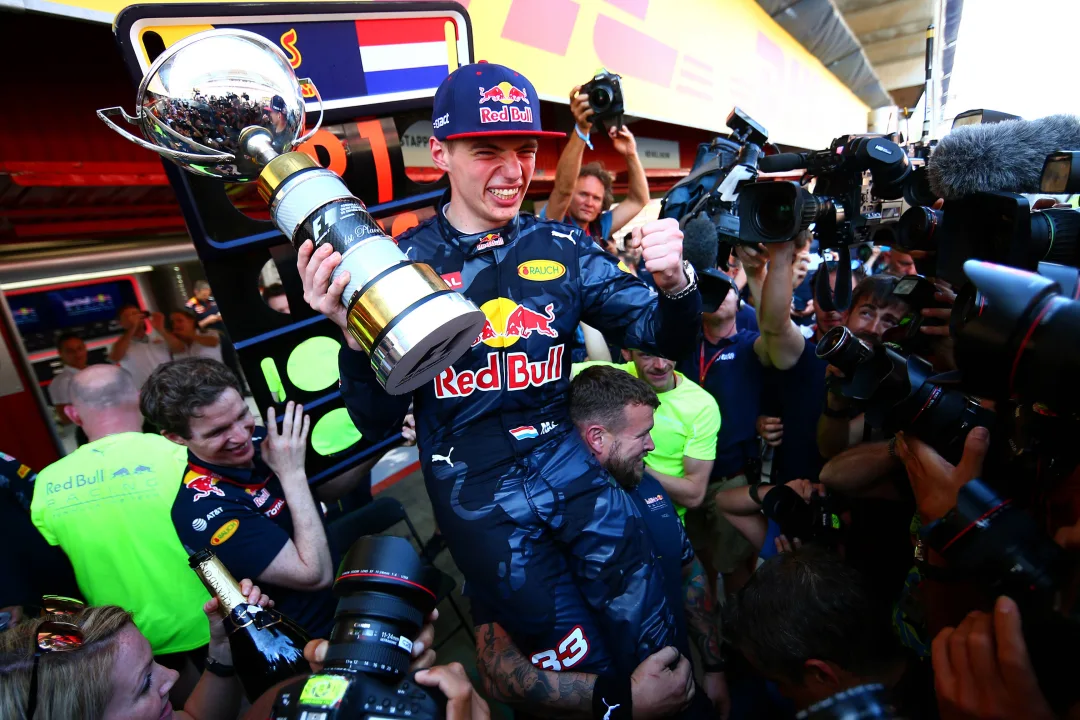
But this is only half the story. Their crash opened up to the door for the driver in third place to soar to the finish line unchallenged. That driver? Max Verstappen. Barcelona 2016 became his first ever race win, making him the youngest race winner in the history of the sport (a title he still holds to this day), and kicking off what would become the career of a generational talent.
Want more surprising facts about this year’s F1 drivers and race tracks? Sign up for our newsletter for a bonus fact about Barcelona, and be sure to check out our other Speed Reads:
- 3 Things You Didn’t Know About the Canadian Grand Prix
- 3 Things You Didn’t Know About the Monaco Grand Prix
Images via Red Bull Content Pool






.png)
.png)