




Although the Barcelona-Catalunya Grand Prix is entering a new era now that the main Spanish Grand Prix moves to Madrid, the original circuit, a staple in the Formula 1 calendar for over 30 years, isn’t going anywhere just yet.
Set just outside of Barcelona in Montmeló, the circuit is known for its open, hilly terrain and intense early-summer heat. With long, exposed viewing areas and limited natural shade, race weekend can be as physically demanding as it is exciting, particularly for General Admission (GA) fans navigating the terrain for the perfect viewing spot.
In the summer of 2025, Jack Wallace and Elliot Thoburn attended what was then called the Spanish Grand Prix as part of a spontaneous post-grad trip. Having attended Formula 1 races before, they were well-acquainted with the energy of a Grand Prix weekend—but General Admission at the Circuit de Barcelona-Catalunya offered a unique perspective.
Navigating the circuit with GA tickets, they quickly realized that while it’s one of the most flexible and immersive ways to watch a race, it also comes with its trade-offs: heat, crowds, limited infrastructure, and the need for careful planning.
Here’s what to realistically expect, whether it’s worth your money, and how to make the most of it should you choose to buy tickets.


Atmosphere in GA
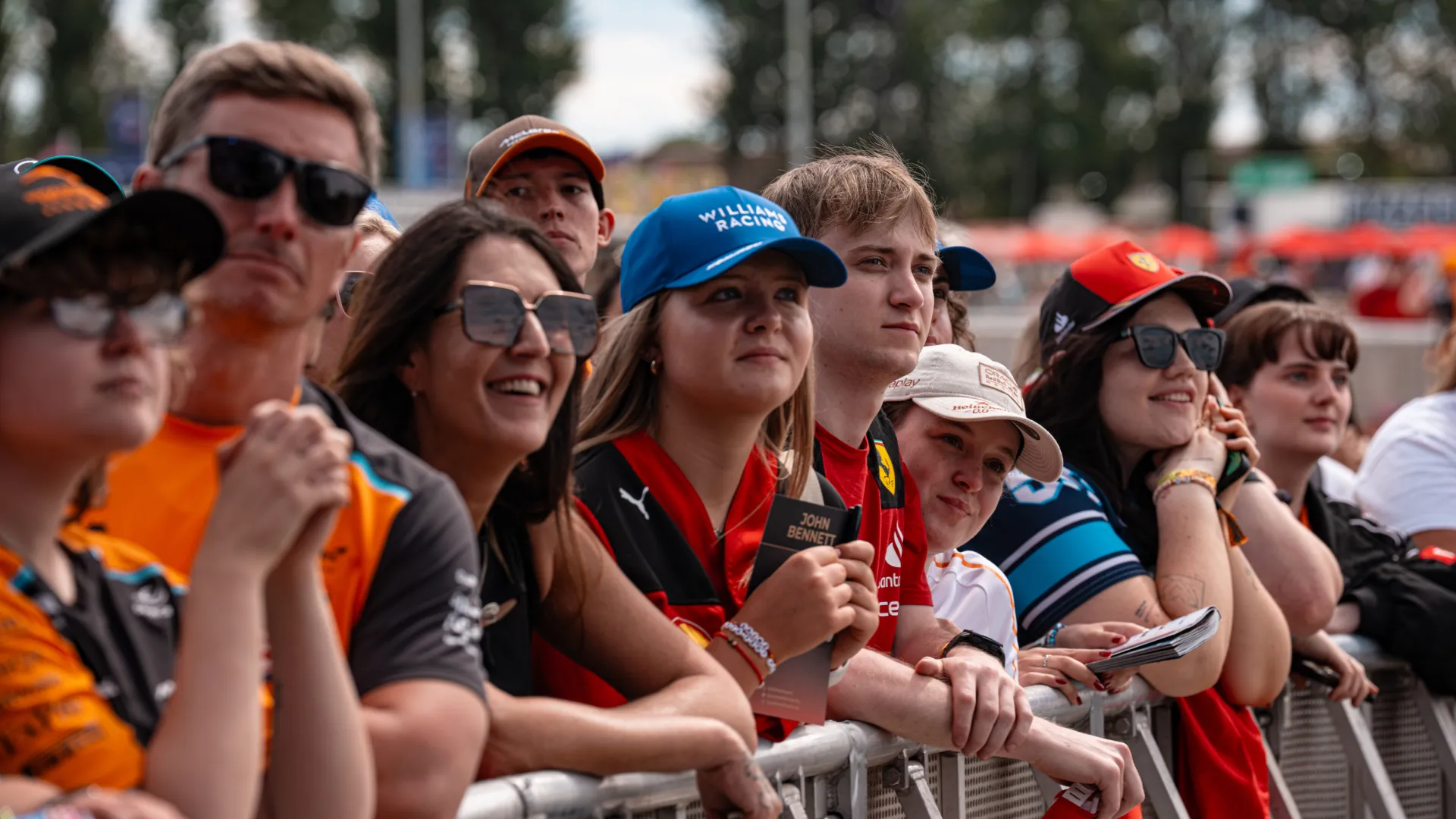
The first thing that stood out to both Jack and Elliot was the crowd. “It was very international—people from all over. We met some very funny British lads,” Jack said. Despite the global mix, there was a strong wave of Spanish support throughout the circuit, especially for hometown drivers like Fernando Alonso or Carlos Sainz.
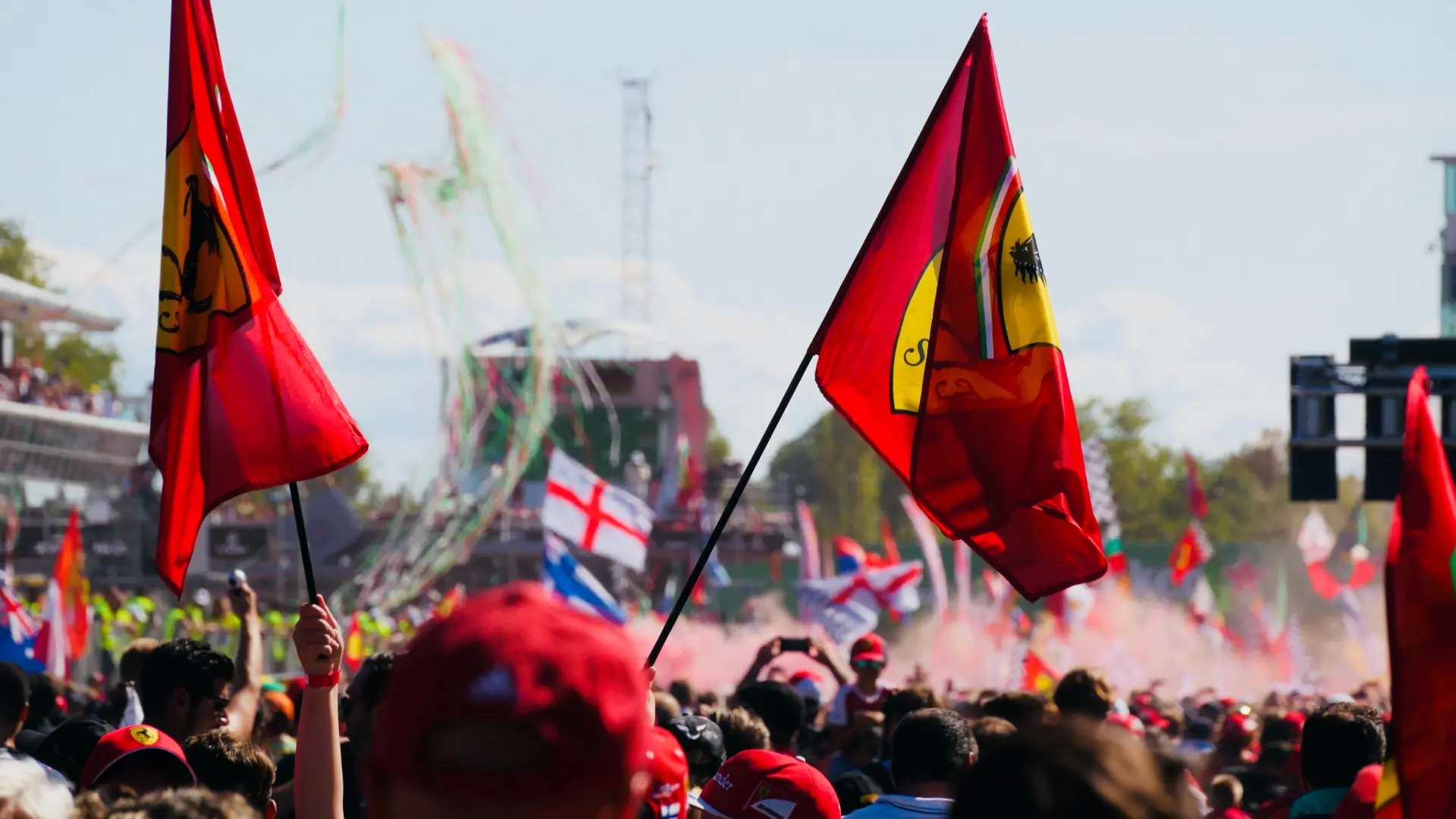
Fans showed up fully committed, decked out in team merch, flags, and colors, an energy that was contagious. “Everyone’s just super, super kind. Most people seemed like they were experienced in motorsports…these were vets,” Jack explained.
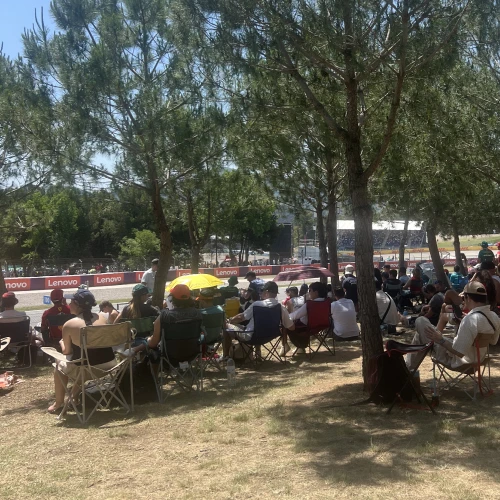
For first-time Barcelona attendees like Jack and Elliot, that created an unexpectedly welcoming environment. People were eager to chat, share shade, and even explain what was happening on-track.
Elliot echoed that sentiment, saying one of his highlights was simply “meeting fans from all over the world.” The atmosphere felt communal, bonded by the heat, the anticipation, and the shared excitement of race weekend. At times, it felt like everyone was “fired up,” as Jack put it.
That said, the energy wasn’t without its edge. Elliot described it as slightly overwhelming, noting that “it almost felt like…this is the last year we’re doing it in Barcelona, let’s just cram as many people in as we can.”
At the time, uncertainty around the circuit's future, combined with the upcoming addition of Madrid to the calendar, exacerbated the feeling. Formula 1 didn’t officially confirm a contract extension until February 2026, meaning that many fans treated the 2025 race weekend like a final opportunity to experience the track.
The result was an environment that was friendly and social, but undeniably hectic.
First Day at the Track: Scouting Day
Instead of going all three days, Jack and Elliot bought GA tickets for just Saturday and Sunday, meaning, Qualifying day became less about the on-track action and more about strategy. “You have to be super dialed-in… Our mission was just to figure out where all the good spots were,” Elliot said.
They treated it as a full scouting mission, walking the entire circuit to find the best possible viewing spot for race day. Their criteria were simple: shade, screen visibility, space, and a clear view of overtaking zones.
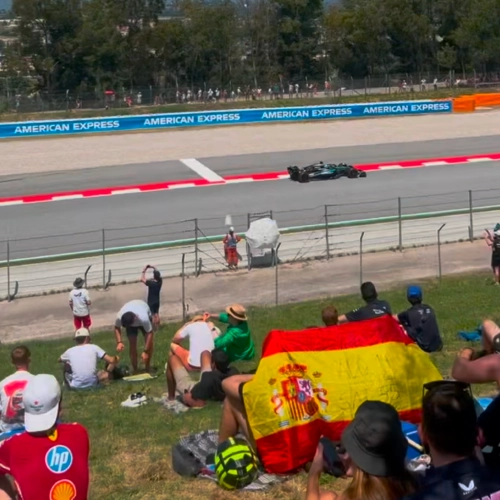
Their biggest takeaway? Prioritize elevation and screen proximity over being right against the fence.
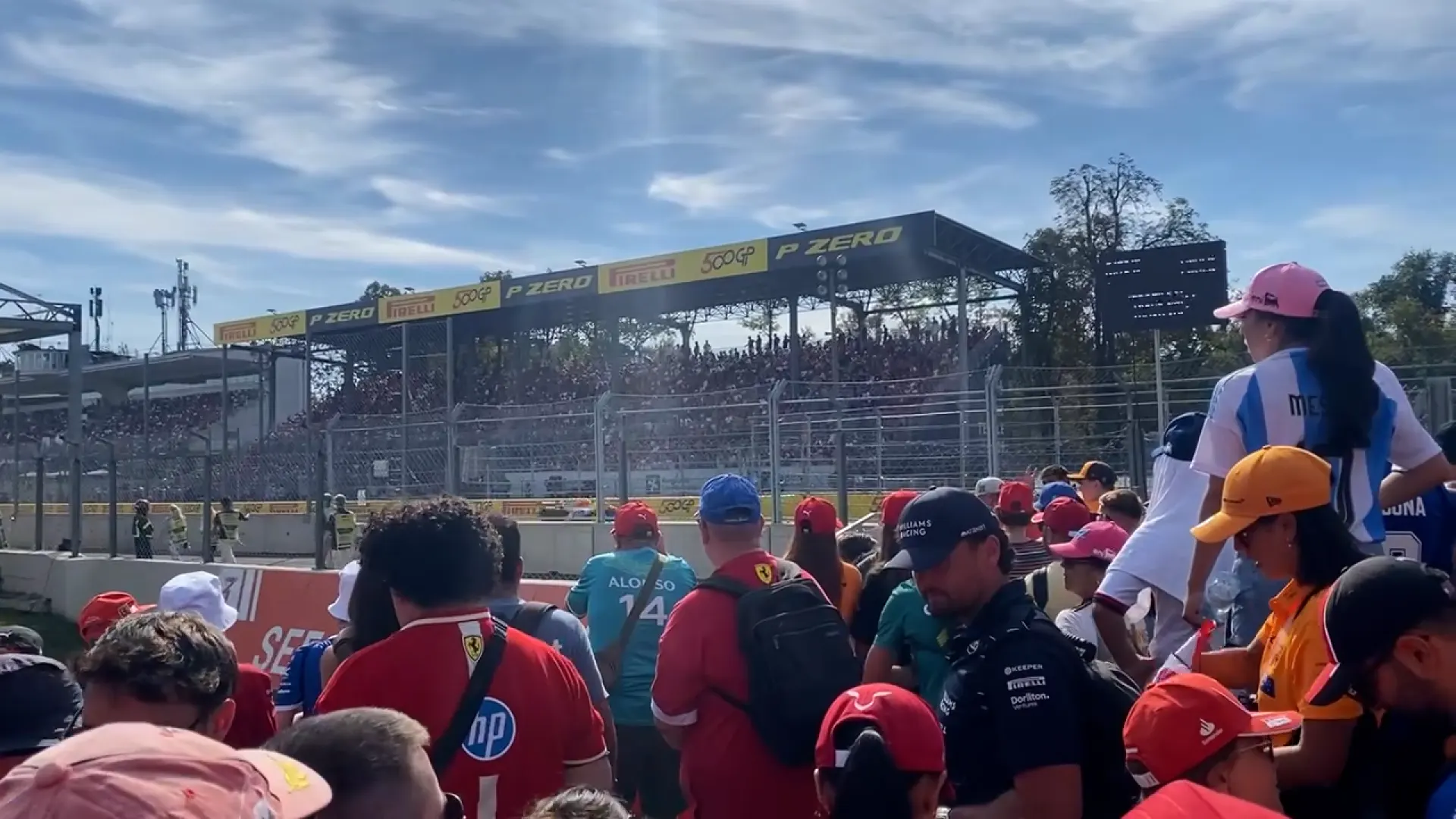
After hectically navigating their way through overflowing crowds, they landed on a sloped, grassy hill overlooking Turns 6 through 8.
This spot turned out to be a strategic goldmine for more than just the view. It marked the entry into a technical middle sector, making it one of the best places to see the cars' aerodynamics in action.
The hill’s elevation also meant that visibility was unobstructed even from further back—an advantage that proved crucial on race day when viewing areas filled with an extra helping of standing spectators and umbrellas, blocking views for those on flat ground.
Race Day: Committing to Your Spot
Race day in GA is all about commitment. Jack and Elliot recommend arriving at least three hours early, as the first-come, first-served pressure is very real.
Having scoped their spot the day before, they arrived prepared. With little to no natural shade, umbrellas were essential, and the camping chairs they bought were, in Elliot’s words, a “game changer.”
“We set up our real estate,” he said. Once you’ve claimed your space, you should plan to stay there for the duration of the race.
Unlike grandstand seating, where you’re guaranteed a clear view of at least one section of the track, GA is more of a gamble. Sightlines depend entirely on where you manage to set up, so from their chosen spots, they relied heavily on nearby screens to keep up with the race. They also had access to American Express radios, which alternated between English and Spanish commentary, helping them stay connected to the bigger picture.
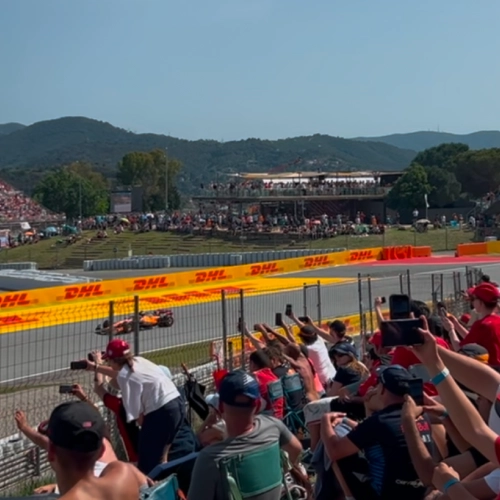
“The race itself was awesome!” shared Elliot, with every overtake, strategy call, and crash rippling through the crowd. Reactions traveled across the hillside, turning the race into something collective rather than individual.
And between the heat, the noise, and the commitment to holding their spot, the day became as much about endurance as it was about the race. Even without a perfect view GA delivers on an immersive experience.
One thing they warned of was transportation. “Leaving the track is always a gong show,” Jack said, describing the chaos of it in true Canadian slang. While they had access to a private charter to get to and from the track, they noticed that most fans stayed behind after the race to avoid the immediate rush. Without that kind of private transportation, patience is key.
Food and Amenities
When it comes to food, water, and bathrooms, strategy matters.
For water runs, they recommend taking turns: one person stays behind to hold your real estate while the other navigates the lines. Water stations are limited, so timing is important.
There’s also a logistical quirk you need to be ready for the second you hit the gates: The circuit has a long-standing policy of removing the caps from any plastic water bottles brought into the track. This even applied when they bought from inside the venue, vendors often hand over bottles but keep the lid as to avoid anything being thrown onto the track. “Security is super strict about it on the way in,” Jack noted.
Pro Tip: Staying hydrated is non-negotiable in the heat. You’re allowed to bring a refillable plastic water bottle (under 1.5L), which is a far more reliable option than juggling open drinks all day. Security may still ask you to remove the cap at entry, so be prepared for that, but having something you can refill and carry easily will make a long race day much more manageable.
Food, however, was a letdown. They paid upwards of $20 for standard options like burgers and wraps, but both found the quality underwhelming, even more disappointing given the price point. Adding to that, no alcoholic beverages are sold inside the circuit, which may come as a surprise to some fans.
Bathroom lines were another challenge. Wait times could stretch up to 30 minutes, turning even what would be quick into a commitment. As Elliot joked, “It was a spectacle within itself to watch the bathroom line move, you feel like internally cheering when someone new goes in.”
Weather
The heat is one of the biggest factors shaping the entire GA experience, not just because of the temperature but because of the conditions that amplify it. In early June, Barcelona typically sees temperatures between 78–89°F (26–32°C), combined with long periods of direct sun and very little cloud cover. The result is a dry, direct heat that builds over the course of the day.
Unlike grandstands, GA offers no fixed seating and only minimal natural shade, meaning most spectators spend hours fully exposed.
“It was hot… people were passing out,” Jack recalled. Even with limited access to hydration stations, the lack of shade made the heat difficult to escape.
This is where preparation becomes essential. Umbrellas, hats, sunglasses, and sunscreen aren’t optional, they’re necessary. Jack and Elliot’s setup of water bottles, portable chairs, and an umbrella (raised before the start of the race to avoid blocking anyone’s view) made it significantly easier to stay comfortable.
Pricing
General Admission at the Barcelona-Catalunya Grand Prix is relatively affordable by Formula 1 standards. In 2026, a two-day pass sits around $175 (€150), while the full three-day experience costs around $240 (€205).
For Jack, the value was clear. Compared to races he has previously attended in Las Vegas and Australia, Spain stood out as his favorite, citing its atmosphere and accessibility for what was a “pretty reasonable” cost, especially for first-time fans. The circuit's sloped layout also makes GA more forgiving, with better sightlines than many other tracks.
Elliot’s view was more conditional. He found the experience slightly disappointing due to the crowds, but emphasized that GA’s value depends on both price and track. He felt the price to be justified, but said he’d likely pay more for a shaded grandstand next time.
Ultimately, in Barcelona, GA works best as a cost-effective entry point—but only if you’re prepared to commit to the experience.
Final Verdict
General Admission at the Circuit de Barcelona-Catalunya Grand Prix is a clear case of “you get what you put in”. Between the heat, limited shade, and hilly terrain, GA requires planning, patience, and endurance. The “gong show” feel of the dense, the international crowd can also be a lot. But on the flipside, the freedom of the grassy hills and the camaraderie of weathering the elements together makes what’s rough and raw feel communal.
With the race now confirmed on the calendar through 2032—and set to alternate years with Circuit de Spa-Francorchamps—demand is unlikely to ease. If anything, fewer race weekends in Catalonia will make each one more crowded, amplifying both the pressure and the payoff of finding a good spot.
If you’re willing to embrace the chaos and plan ahead, then like Jack and Elliot told us, it’s a Formula 1 race that’s worth your time.
Want to know more about the Formula 1 races in Spain? Check out information on the Barcelona-Catalunya Grand Prix here and the new Madrid Grand Prix here! Or for guides and tickets for any F1 race, head to our Formula 1 hub.


.png)
.png)