


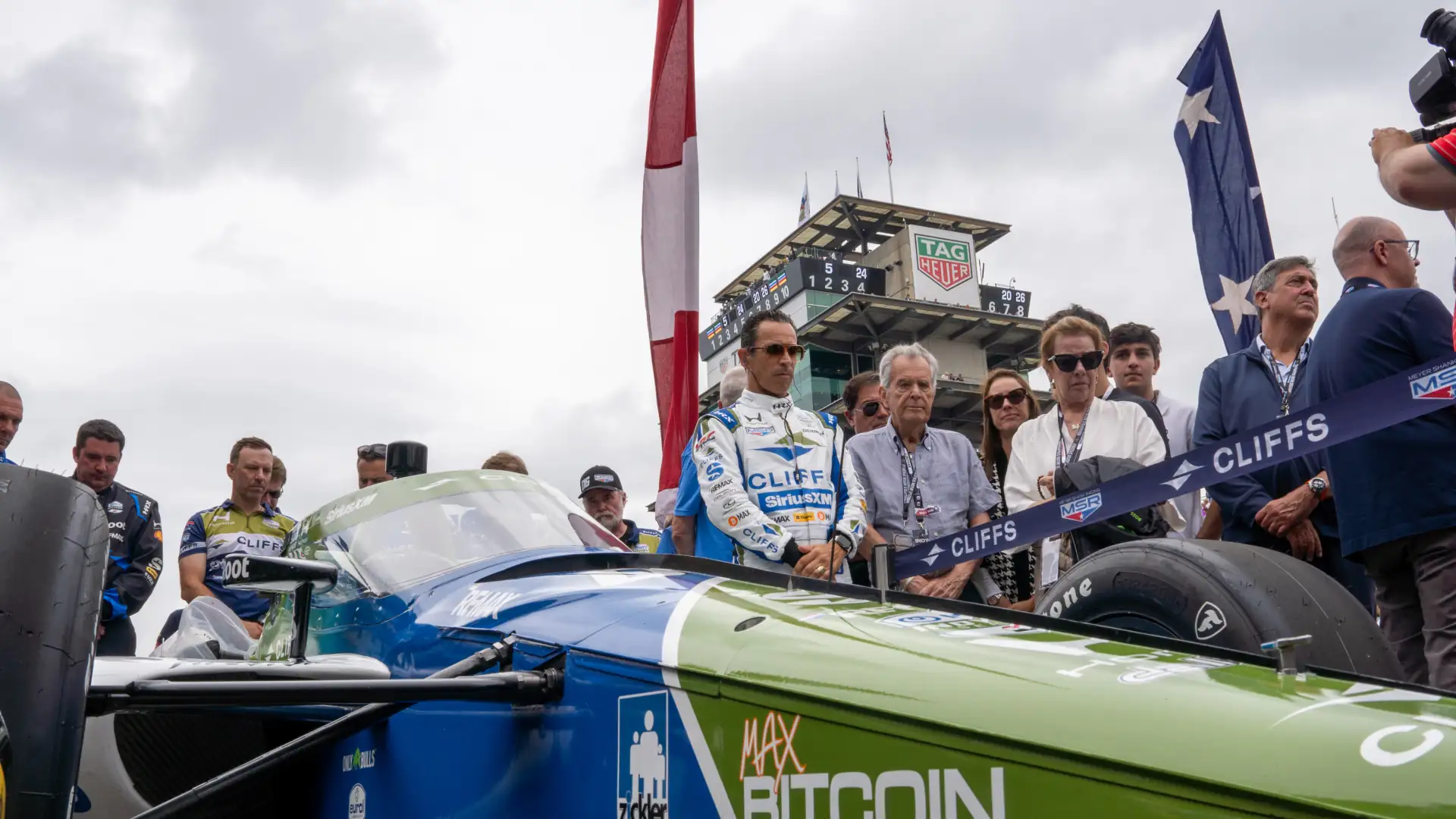


What keeps a driver motivated to come back and conquer a race he’s already won a historic four times?
The Indianapolis 500 is the largest race in the world. On just a single day in May, 350,000 fans gather to witness 33 drivers battling for 500 miles at average speeds faster than Formula 1. All for the chance to win millions and etch their name, and face, in history. After 110 iterations, only FOUR drivers stand above the rest having each won the Indy 500 four times.
Hélio Castroneves has a spot among those four.
But it hasn't always been a storybook ride. He endured a massive multi-year drought between his third and fourth victories, losing one of those races by an agonizing six-hundredths of a second, and eventually saw his iconic 21-year tenure with Team Penske come to an end.
Yet now, even at 51-years-old, Hélio’s fire burns bright. He’s a partial team owner in Meyer Shank Racing and a one-off Indy 500 driver. He’s still fighting with his engineers like a teenager, completely locked in on the historic Drive for Five. So after 26 years of sacrifice and pressure, how does he still find the motivation to keep chasing history?


Meet Hélio Castroneves on his hunt for the Drive for Five [0:00]
Greg: The Indy 500 is the largest race in the world. Every May, 350,000 fans pack the Indianapolis Motor Speedway to watch 33 drivers battle for 500 miles at average speeds faster than Formula 1. All for the chance to win millions and etch their name, and face, in history. While winning once is life-changing, in 110 runnings only four drivers have conquered this race four times. For 25 years straight, Hélio Castroneves has poured his blood, sweat, and tears into the Brickyard, earning his place on that list.
But even now, at 51-years-old. He's still here racing as a one-off entry, fighting for an unprecedented fifth win. So, what does it take to achieve racing immortality four times over? And why dedicate 25 years of your life to mastering a single race?
Hélio on winning his first Indy 500 as a rookie [1:07]
Greg: When you won, you were a rookie in the series, right? What was it like for you, moving and coming into IndyCar and going ahead and just winning it on your first go?
Hélio Castroneves: For me, when I came to the Indy 500, I knew it was a big race, of course. But you don't know—I never won on an oval before. I never won a 500 before. So they were all new things for me. I was more happy, actually, I was more excited that I won a 500-mile race than actually the Indy 500. You know, I realized how important it was to win that race when I came back to do the media tour, and they weren't talking about my name. They were talking about the Indy 500 champion. That's when I realized that something that I did changed my life.
Greg: The 500 miles. Why was that a milestone to you before the race itself?
Hélio: Because 500 is not only not a sprint race, you know, you have a strategy, you have a long race, you have five pit stops, you have five or six pit stops, depending on the yellow [flag]. So there is a lot more. It's just like a 5K against a big marathon, you know. So you change your strategy. And that's why I was excited about that.
Greg: So when you won that first time, Roger Penske said it was the biggest [win] so far for him. How did that change and shape your relationship with him and with the sport as a whole?
Hélio: I had just started with the team. I won three times before with the team, but again it was my first oval with them. And everything that I'm learning with them, it's making the results. So it's finally showing up. So for me it was that particular way that I felt incredible. I think that what I'm saying is I just became more synergized and gelled with the team. You know, that's why I ended up staying for 21 years there.
Securing his second Indy 500 win with Team Penske [2:56]
Greg: You win it, you then do it again the following year. What was different about it that second go around?
Hélio: Until that point, that time was 30 years that someone won back-to-back. And they have all these statistics, this story behind them. And I'm like, yeah, but back then it was different. I didn't think it would be hard because the competition was so hard. And the way I did as well, because my car wasn't the strongest. I was about to be a lap down in that race. And all of a sudden we took a gamble and it paid off. You can have the best car, you can have the best crew, but if the track doesn't pick you, forget it, you're not going to win the race.
The infamous drought Hélio experienced [3:35]
Greg: It wasn't all rosy. You had a period, a drought, let's call it, where you were in between wins, between the third and the fourth [wins]. What are you doing in that time to keep yourself feeling good about it? Because obviously you have to show up, and you don't just compete, you have to compete at the highest level. So how do you get yourself through that as a driver?
Hélio: Well, what people don't remember, between the third and the fourth [Indy 500 wins] I finished twice in second place. In one of them I lost by six-hundredths of a second, which is… I saw the finish line right here. But it wasn't meant to be. The way I saw it, it wasn't meant to be. There was a drought. I never felt that we were not capable of doing that. I always felt that we have an opportunity to do it. But sometimes change is good in everybody's life, you know. It was good to see something different, even when you work with a team for 21 years, our time frame just came to an end. To be honest, that fourth win was part of my learning curve with them. So I always say that they are also part of that win.
You still believe in it, you're still working hard. I think that's the best message I would say. I never let the outside world interfere with that. If it's just the words, then that's not going to matter. And that's the way I keep it outside, you know. But if there's something that might be, hey, never thought that way. Thanks for letting me know, I'm going to take a look. And that's how I see it.
A new chapter with Meyer Shank Racing [5:14]
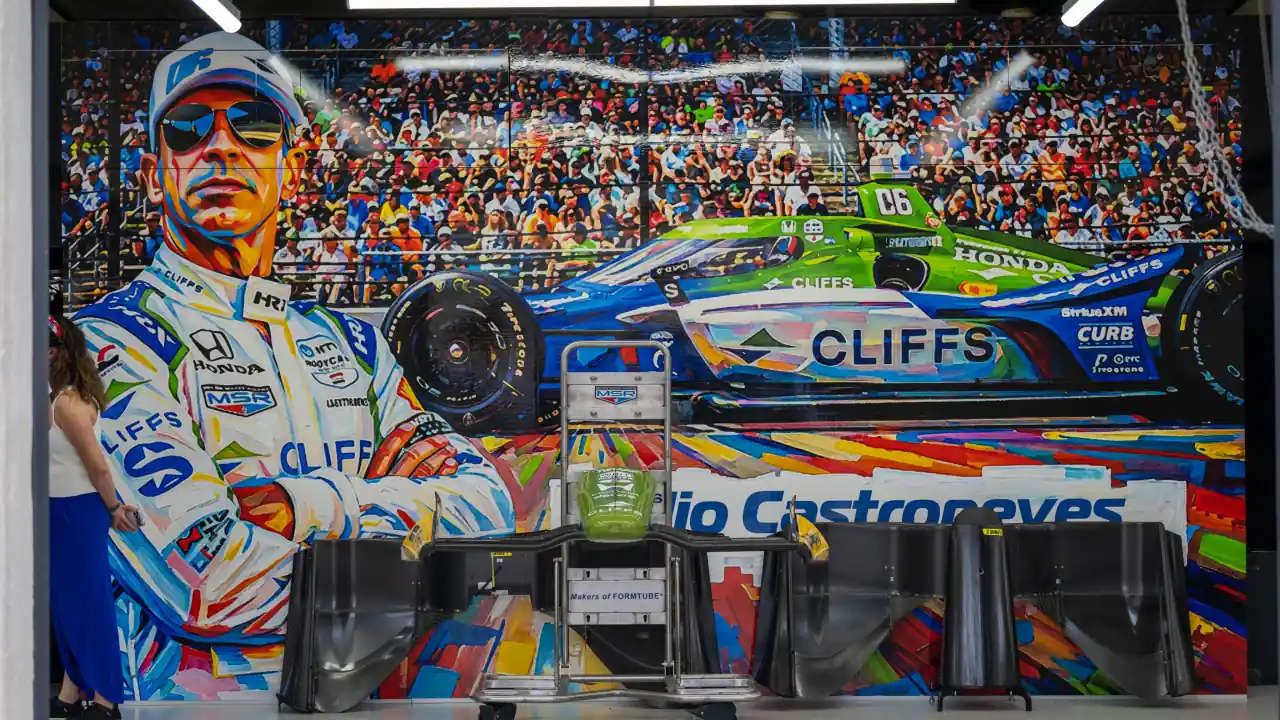
Greg: After three legendary wins and two decades with Team Penske, Hélio made a massive change. Joining Meyer Shank Racing as a one-off entry for the 2021 Indy 500. New team, new dynamic. The hardest part? Walking into the garage as the enemy. Even with leadership's blessing, it would take time for everyone to accept him. Or, he could fast-track their affection by winning his fourth Indy 500, and the team's first, on his debut race with them.
At Meyer Shank, you come in and on your first go around you win it again. That's number four.
Hélio: That was incredible. That was incredible. Because of several things, you know. Mike [Shank], is not only a guy who is passionate about racing. When I was going around asking, okay, guys, let's work together, let's continue. I just finished my IMSA program, and I want to go back to IndyCar. They're looking at me as a competitor still, because for so long I had been racing for Penske. And Mike didn't see it that way. He said, you know what? I'm going to give you an opportunity, and let's give me an opportunity to have someone with experience that I need to grow. It was a really great, special way for all aspects. Number four, a new team, the only win that they have, but the way we did it. So all of this, it was a storybook ending, and till this day it's pretty special.
Greg: Well you talked about how you came in and some people were looking at you and saying you're the outsider, but I think that also brings opportunity because you bring a different perspective. What did you bring at that moment? What was your input into that project to get the car to the right place?
Hélio: You need to grow. You know, I drove a car 26 years ago. It's not going to be the same. You know, the system is not going to be the same. The flow is not going to be the same. So I need to adapt my computer to keep it going for the actual racing these days. And that's why it's good for me, too. Because I learned from them. But it's that feeling that you know what you need to what it takes to win, that doesn't matter if it's 26 years ago or now. It's still the same.
Greg: So is it finding a home where they will listen to you, they will adapt, and that's what makes a winning team different from a team that's just going to compete?
Hélio: I will listen first to them because I need to know how they work so that I can adapt my way to them. Let's see how they do it. This is how I do it. Let's find a middle ground. But once I see something that is really outside, I'm like, okay, no, no, no. Now don't tell me what to do because this works for me.
What motivates Hélio to fight for a historic fifth Indy 500 win [7:55]
Greg: You're now 25 years later, you're on this Drive for Five. How has it changed for you? What's different now than it was before?
Hélio: It's interesting you’re asking this question. Three days ago, I was fighting for several things in the car with my engineers, like I was a teenager. But because I love it. I know it. I have the passion. Opportunity when it comes to you, in front of you, and you see it, you don't wanna let it go. You're like, nobody's seeing this? It's just me? What the heck?
So for me, even though it's 25 years later, I will fight for it. I will fight for it because that's what motivates me. That's what keeps bringing me back to try the Drive for Five.
Hélio’s mindset as a team owner and driver [8:46]
Greg: And what's changed now that you're a partial team owner? You have skin in the game, not just for yourself, but for other drivers who are going to be out there with you. Does that change your perspective? Or are you the same?
Hélio: No, you have to block that out. I mean, obviously when we're qualifying, we're working together, we're trying to see what's the best. If you're going to be battling for the win in the last few laps, that would be great. However, I'm going to do anything that I can to beat my teammates.
Greg: If you climb that fence and it's your fifth, what's going to be the next thing after that? Do you come back to go again or is it something else for you?
Hélio: Why not? Right? Yes, of course I would. Just like when I won my fourth, I said, why not try the Drive for Five? We'll Drive for Six.
Greg: It doesn't sound as good, but it'll feel better, I'm sure.
Hélio: I think people understand. They'll come up with something.
Greg: They’ll make it rhyme in Portuguese or something, I don't know [Jokingly].
Advice Hélio would give his younger self [9:42]
Greg: If you could walk into the garage back in May 2001 and you could pull yourself aside, what would you tell him to do for the road ahead?
Hélio: Well, I was really focused on specializing only in IndyCar. Maybe I would try something other than that to become an even better driver—complete driver, let's put this way. It took a little longer for me to do that. I understand. I was hired to do only IndyCar. But I would love to try different series other than that. That was the only thing. But in hindsight, to be honest, I’m pretty happy with the way everything was built up. I wouldn't change anything. I would have done the same. But I would tell myself to associate with good people and that you're going to get far.
Greg: Hélio’s legacy is undeniable. He's raced the Indy 500 26 times. He's won it four times as a driver. But as of 2026, he finally experienced a win from a completely new perspective: as partial team owner. And that's all thanks to Felix Rosenqvist. Whether he's behind the wheel himself or watching his team from the pit box, Hélio is constantly finding new ways to channel his passion for The Greatest Spectacle in Racing. And that ever-moving finish line is exactly what will keep him returning to the Brickyard whether he has five rings, or fifty.
Want more exclusive Insiders?
Then you're in the right place! Head to our YouTube playlist for more, and be sure to subscribe to be the first to see new episodes. Or you can check out some of our recent episodes below:

.jpg)
.png)
.png)