




How does a driver find the grit to get back in the car after surviving one of Formula 1’s most infamous crashes?
From the "wrong place, wrong time" chaos of the Crashgate scandal to the crash in Bahrain that cemented his legendary status as "The Phoenix’, Romain Grosjean’s path through Formula 1 has been especially difficult. But even from the beginning when he was juggling racing with a 9-to-5 bank job while he held out for his F1 debut, Romain proved he had enough resilience and drive.
Instead of succumbing to the ruthless politics of F1, Grosjean adopted a ‘head down’ mentality and fought to earn back a seat after being told he wasn't good enough. He launched America’s first F1 team in 30 years, and after his crash kept racing in IndyCar and at the 24 Hours of Daytona.
After years of perseverance, grit and passion for racing, Romain continues to get himself back in the cockpit where he can push his own limits. So then, what has been the most rewarding part of his career? Getting to say that he has now driven an F1 car just ‘for fun’.


Meet Romain Grosjean: The driver F1 could not break [0:00]
Romain Grosjean: It's not every day that you can say, today I just went to do Formula 1 for fun. That doesn't really happen normally!
Greg: No pressure, no team principal yelling at you.
Romain: Nope, it was just perfect.
Greg: Formula 1 is the pinnacle of motorsports, and the climb is notoriously ruthless—the racing and the politics. Just ask Romain Grosjean. He's the poster boy for it. His F1 career was born from the political firestorm that was Crashgate. And even fans that don't follow F1 closely know of Romain's fiery crash in Bahrain, the same crash that nearly cost him his hands and his career. Instead of calling it quits like most sane people, the Phoenix only ever thought about one thing, even from his hospital bed: getting back in the car. With the laundry list of setbacks and challenges that he survived, why then did Roman seem to gravitate to the pressure rather than break under it? After laying his life on the line, why did he finally just get to have fun?
What it’s like learning you’re going to race in Formula 1 [0:51]
Greg: So you were the test driver for Renault in 2009, and then you got the call, ‘Hey, it's time to go race in F1!’
Romain: Well, it was a little bit more complicated than that. The first time, we were in Germany, I think, and the week after was the Budapest Grand Prix. So I was told on Sunday afternoon, you're in the car for Budapest next week. And on Monday I got a call and it says you're not in the car for Budapest. We’re keeping Nelson [Piquet Jr.].
So you go, Yes, I'm in Formula 1… No, I'm not in Formula 1. And then after Budapest, finally, this time they called me again, they said you're in the car from Valencia onwards. It's seven Grands Prix to learn Formula 1 and then the 2010 full season, and so on and so forth.
Greg: That second time when it actually clicked and you were going to get in the car in Valencia, what is that like for a driver?
Romain: Well, it was a dream come true, right? When I was a kid, I wanted to be in Formula 1 and that's what most of the drivers want to achieve. It's the highest level in motorsport. I was sitting in a British Airways aircraft, actually going from Geneva to London. I don't know, I was going to the Renault factory for some reason, I can't remember what for, as a junior driver. And then by the time I got to the factory, I was actually as a Formula 1 driver. I drove the demo exhibition in 2008. I never drove the 2009 car until Valencia. So the first time I sat in the car, apart from doing a seat fit, was to do a race weekend in Valencia.
Greg: You’re like, “Where’s the parking brake?”
Romain: Literally. In those days it was different. We had no private testing, we had no simulator and we had no FP1 session. And the car was too small for me, it was designed for Fernando Alonso, who is about 15 centimetres shorter than I am. So I couldn't fit in the car. You're racing a street course which is very difficult.
Greg: In that car at that moment, are you thinking, I need this to go perfectly? What's going through your mind?
Romain: I think at that point that's what I should have said to myself and that's why I didn't really know and if I could go back I would look more at not messing up the weekend rather than trying to be pure performance all the time. So I wish I had had that mindset but no it was just about speed speed speed and speed but it was a fantastic weekend.
Romain’s early career and balancing a 9-to-5 job [3:04]
Greg: In that early part of your career, how are you feeling? Was it on top of the world? Was it untouchable?
Romain: No, I think I was lucky that I always took it as a hobby for a very long time and never thought that I could actually live from racing. So I was going to school and then I worked at a bank, and then half the time when I was going to the races and I would go back to the bank. And when I got to GP2 [Formula 2] and I started winning in Asia and doing good in the series, I thought ok, if I can win right under Formula 1, there's a chance I can make it. But until that point, I was just going to the races, having fun, trying to win, kicking everyone's butts and going home.
Greg: What do you say when you walk into work and you're like, well, I just won a championship…
Romain: Yeah, I mean after my first Formula 1 race in Valencia 2009, on Monday morning I went back to work to the bank and I thought, well, that's going to be tricky, right, to keep going. But for me it was important to also realize what I call ‘normal life’ was like.
Greg: You're like, really want to know what Excel is all about. [Jokingly]
Romain: Yeah, I like Excel, it's great. You can do so much with it!
How the Crashgate scandal affected Romain and Renault [4:08]
Greg: So there was the Crashgate scandal. But I heard you say that you would have preferred to wait and not come into F1 under those circumstances.
Romain: Well, you don't really choose the time you go to Formula 1. When it's time, you just don't say no. But yes, I went in as the young French Formula 1 driver that Renault brought in with Flavio Briatore and then Crashgate happened. Then Renault pulls of Formula 1. They sold the team. Flavio is not there. I guess at that point you can say wrong time, wrong place. So I was part of the furniture that you change when you come into a new house. And that was kind of game over at that point.
Greg: How do you, as someone who's junior in that world, get through that moment?
Romain: You just have to make your place gently and get in there. I think that's what happened. Like when I came to IndyCar, I was that world famous driver, but for me it was still all very new, so you just step by step learn and take the place that you want to take.
Romain’s return to Formula 1 with Lotus [5:08]
Greg: By 2012, you fought your way back full-time. You were with Lotus with Kimi Räikkönen and you were then on the podium, only four races in. You had Sebastian Vettel and Kimi next to you. Have you seen the Lando [Norris] photo of two World Champions and me?
Romain: Yeah, two World Champions and me, I didn't think of it. I was pissed because we picked up the wrong strategy in the race. If I'd put the hard tires on the last stint I don't think Kimi would have passed me and that was part of the learning curve so I was not happy about that, but yes it was the first podium in Formula 1.
Greg: When you were back in F1 that second time, did it feel different to you? Did that actually feel like you had the permanent spot you were going to be there?
Romain: Well, it was Renault that became Lotus, but it was the same engineers, it was the same team manager, it was like 98% of the people were the same. It was not easy because you come into a place where they basically told everyone that I wasn't good enough for Formula 1 and you come back to a place where that's what they thought of you.
Greg: How do you overcome that?
Romain: Just keep your head down and I qualified third in Australia for the first race of the season and at that point they thought well, maybe it's not that bad.
Greg: With all that knowledge and surviving the whole Crashgate issue and obviously now having that seat back and knowing how the team was feeling or what they were told, was there any advice you'd give yourself to do it differently?
Romain: I think if you could have the experience you have when you're 40 years old and put it when you're 20, life would be way easier. You do learn life very fast in very high-level sports because everything is pushed to the limit. Which is a blessing for the rest of your life because then you go into different scenarios and you're like, okay, I've dealt with those pressures or those moments. But yes, there's a lot of things that you would do differently.
How Romain persevered through his fiery F1 crash [6:48]
Greg: Romain's return to the sport was anything but easy. First, he joined the team that originally dropped him. Then, he joined the first American team in F1 in 30 years, which came with its own set of growing pains. Lastly, his exit from F1 nearly cost him his life. While the world watched a driver literally go out in flames, something in Romain's mind kept him going as if it was all clear skies.
The end of the Formula 1 period of your career happened with the crash, but what I thought was interesting was you were in the hospital bed and I saw you saying that you were thinking about ways to get back to racing almost immediately. How do you go from being in a burning car to just thinking “I want to get back behind the wheel” so fast?
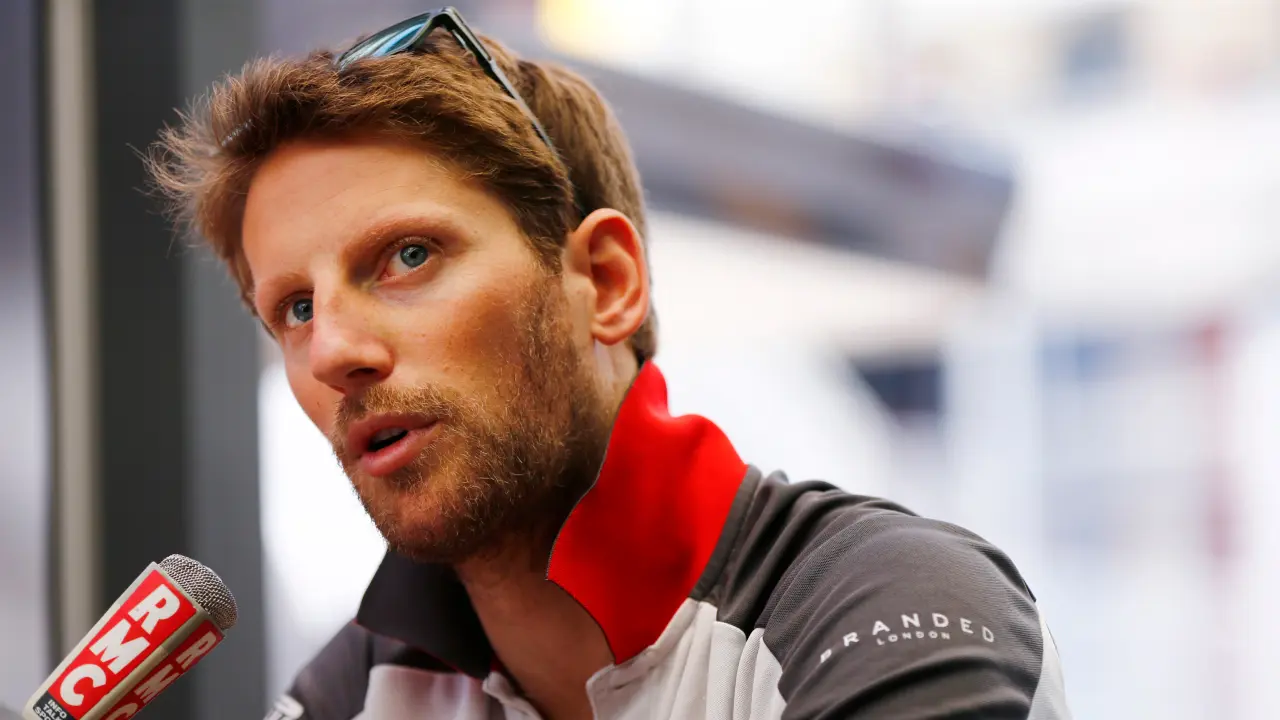
Romain: We accept the risk of motorsports and we know it can be dangerous. But yes, in that hospital bed, the first target was to go back on the grid the next weekend and then I realized that that was not going to happen. The weekend after, which was Abu Dhabi, which was supposed to be my last race in Formula 1, and I really wanted to be part of that race. And then, you know, the doctor tells you that you could lose your hand if you do that. Not ideal. So then you focus on the next chapter. But it was like, ok, this can happen. This happened to me. But also I'm here and this is what I love doing and I won't stop because that's not what I do, right?
A new chapter: Romain’s turn to racing with IndyCar [8:00]
Greg: When you started in IndyCar with Dale Coyne, it was the following year. Was it a big sigh of relief? I'm back behind the wheel, I'm in this new place, I've got something challenging me that I've got to learn?
Romain: There were a couple of questions, how I was going to feel in the car and then we got to the test in Barber and I jumped in an IndyCar car and we left the pit lane and I thought I was going to think about a lot of things and no, I just remember Will Power actually overtaking me because he had done some laps on track already and I'm like okay I've got to follow him! That’s all that matters, just how can I learn this thing fast?
Greg: What does the IndyCar chapter mean to you? What did you take away from that or learn and how does that compare to the F1 period?
Romain: I think they are two very different worlds F1 and IndyCar. F1, for sure, is the pinnacle of motorsport. It’s the hardest, the most advanced, the most, you know, everything you want, but IndyCar has got a lot of potential. It's a great series there's amazing drivers. You need to be good on all those short ovals, street course, road course and if you're not too bad, you have a good chance to have a good result on Sunday.
Endurance racing with Myers Riley [9:02]
Greg: You're also no stranger with your endurance racing. You finished fourth in your first ever Rolex [24]. Now you're here with Myers, Riley, you've got Felipe [Fraga], Jensen [Altzman], Sheena [Monk]. Of all the races that you've been in, what sets this one apart from the rest?
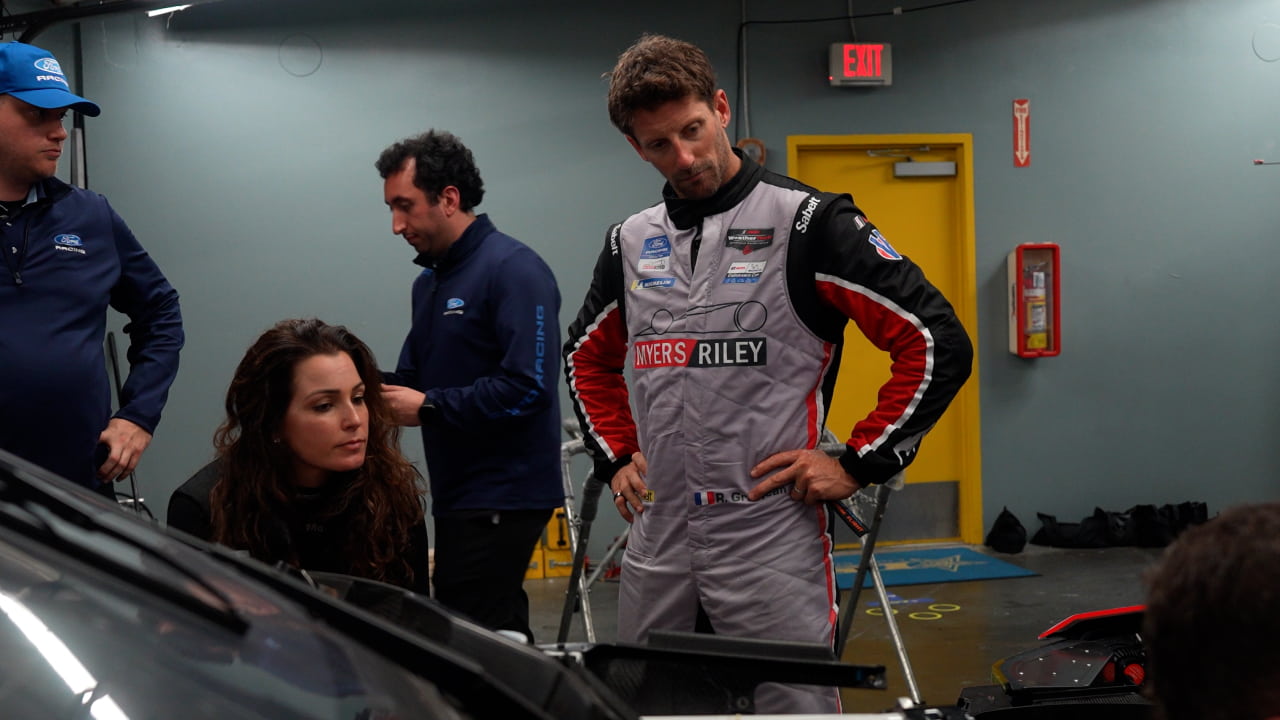
Romain: My knowledge of history in racing in the US is not that great. So I had to do a bit more digging and then I realized how Riley Motorsports has been 20 times winning here. So Bill [Riley] was like, yeah, we have an opportunity. And my first question was like, do we have a chance to win? And he said, yes.
Well, I think every 24-hour race is special. I've never done Nurburgring, but I've done Spa 24 hours many years ago. I've done Le Mans 24 two times and now this one three times. It's tough, it's a long race and I really enjoyed sharing the car with teammates. At the end of last year I was like, I've got to be in Daytona no matter what, so I'm just glad to be here.
Finally getting to ‘race F1 for fun’ [9:56]
Greg: Romain's love for racing is infectious. Even when he was dropped from teams, even when he suffered painful burns, and even when his next drive wasn't promised. He kept his head down and found a way to get back behind the wheel. While his Rolex 24 effort with Myers Riley ended in disappointment, sure enough, he quickly announced a full-time return to IndyCar. It's that ability to see challenges as a natural part of the process that keeps this phoenix rising. And that's what earned him the right to finally just have fun in an F1 car.
You got back in the F1 car at the end of last year at Mugello. You had Ayao Komatsu in your ear again. What was the feeling? Did you feel like you were back and no time had passed at all having him there with you in the car, having your family with the helmet?
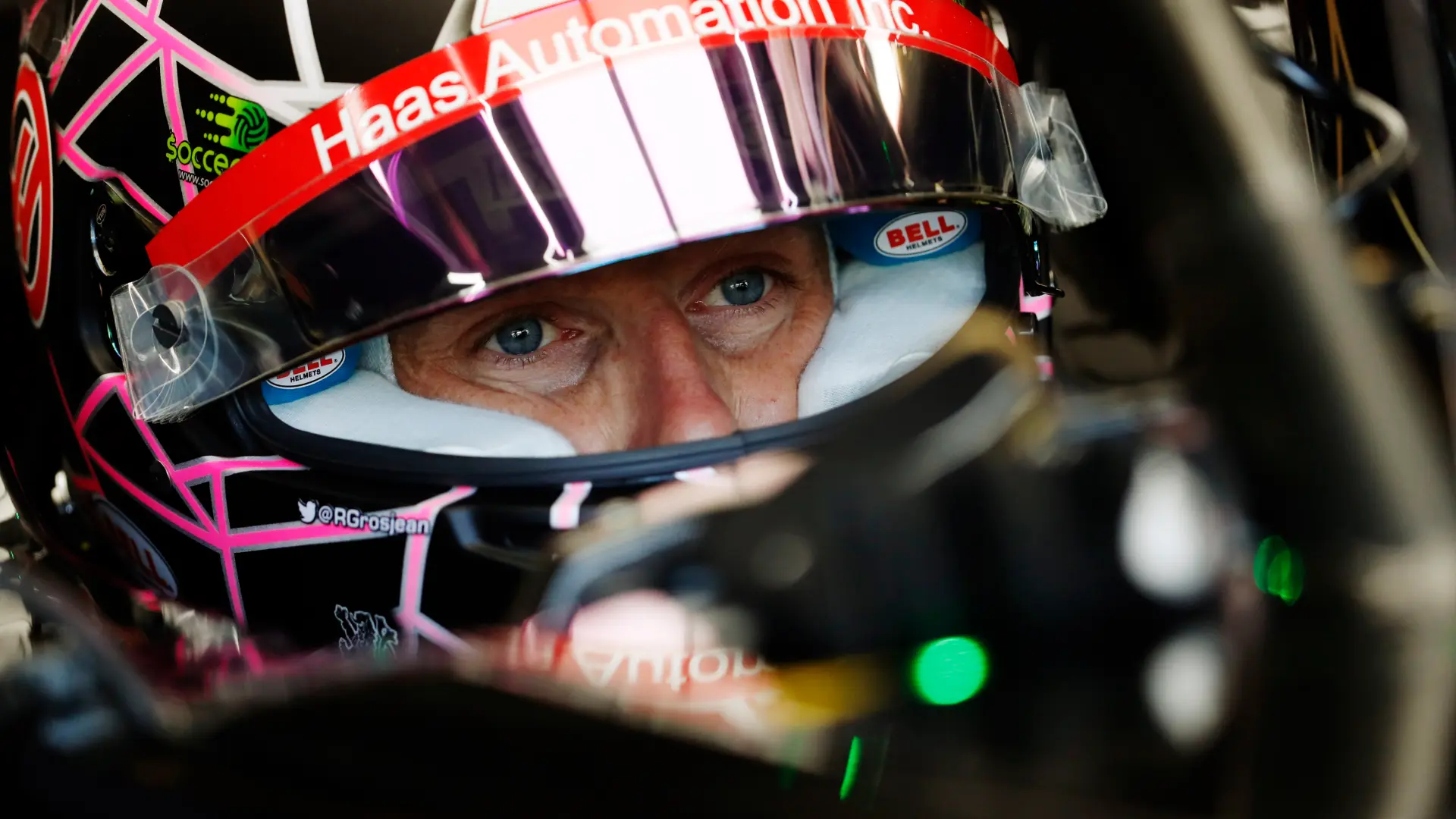
Romain: Yeah, I think with Ayao we got like 10 years younger in one day, you know, because the last time he engineered me was 2014. Then we're back in a car in 2025. It was also the first time that Haas was ever able to bring a car in front of the mechanics and families of the mechanics, because they didn't have a show car or like a car you can run before. So it was also important for Ayao, because I had been the first driver of Haas, that I was driving that day. And then, of course, it was five years after my accident, I had never been in a Formula 1 car again. It was just a very, very nice day. I think Ayao, myself and everyone that was involved enjoyed it and it's not every day that you can say I went today, I just went to do Formula 1 for fun. That doesn't really happen.
Greg: No pressure, no team principals.
Romain: It was just perfect.
Want more exclusive Insiders?
Then you're in the right place! Head to our YouTube playlist for more, and be sure to subscribe to be the first to see new episodes. Or you can check out some of our recent episodes below:
- Why Romain Grosjean and Myers Riley's Rolex 24 Ended in Heartbreak
- Guenther Steiner: Leaving Red Bull, Starting Haas F1 & Drive to Survive Fame
Cover via Haas F1 Team
.webp)


.png)
.png)