


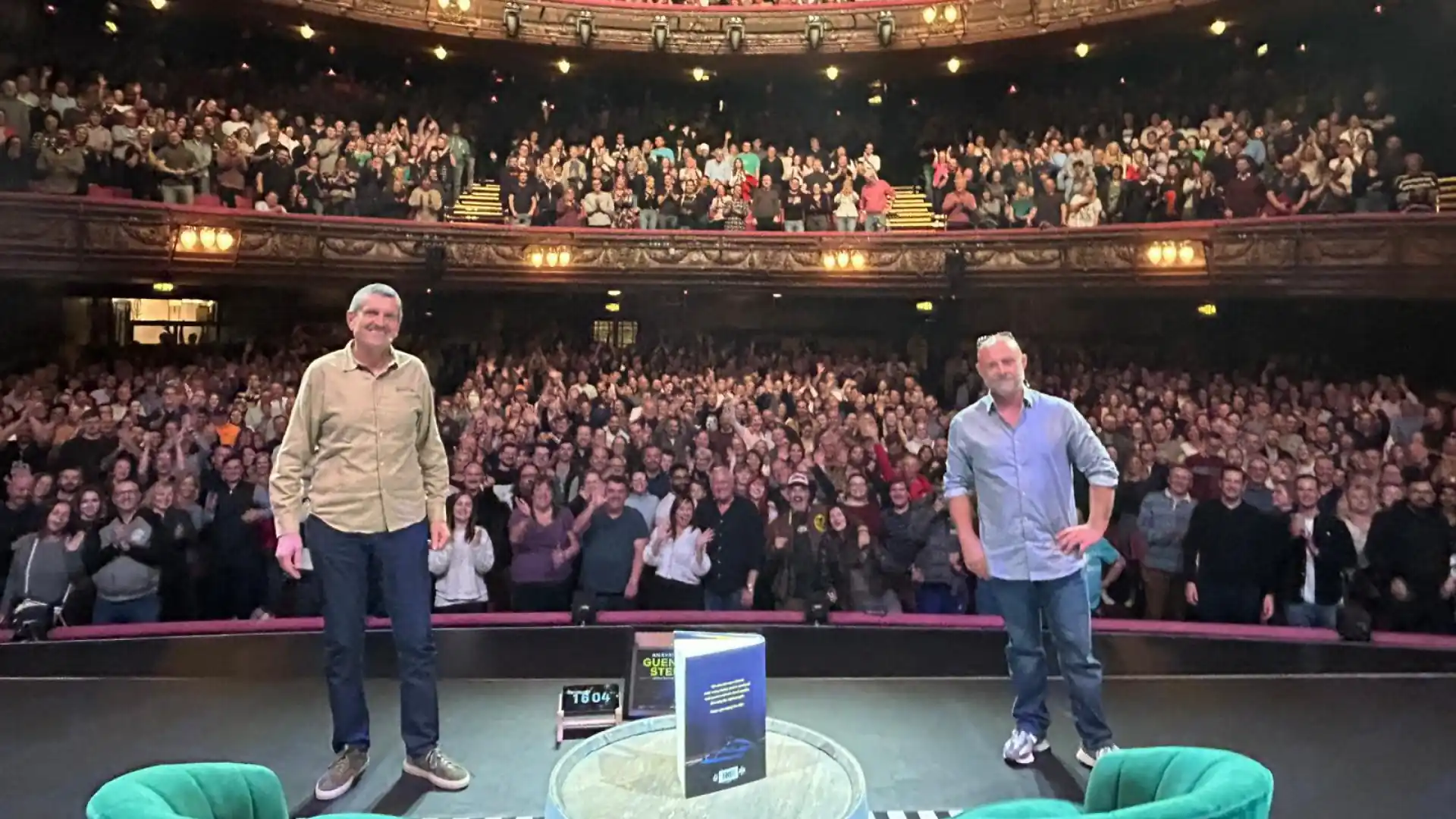


How does the Commercial Manager at the Yorkshire County Cricket Club with no formal degree go on to capture the unfiltered words of F1’s Guenther Steiner?
James Hogg may have left school at 15 years old, but he never stopped learning. While working in sales at the Yorkshire County Cricket Club, he decided to write a book with no prior experience (and admittedly reading only a book or two a year).
Fast forward more than a decade, and James has successfully taught himself the process, publishing over 30 books for athletes, actors, and national treasures. Most recently, he dove deep in the world of motorsports, writing bestsellers for motorsports icons like former Formula 1 team principal Guenther Steiner as well as drivers Damon Hill, and Johnny Herbert.
Now, with all these names on his resume, James reflects on how being relentlessly proactive, maintaining a commercial mindset, and choosing to stay hungry can help aspiring writers break into the competitive world of non-fiction.
Position: Collaborative Writer and Biographer
Day to Day: It’s extraordinarily varied. I’ve spent something like eight of the last 13 months away from home. I’ve decided the next three books are going to be about subjects in Yorkshire. Guenther and I will go on tour next year as well, because the new book comes out in the spring. So, we'll go back on tour. And I'm also about to start a podcast about comedy, because that's what I originally started writing about.


James’ Start
You started writing when you were working for the Yorkshire County Cricket Club. What prompted the career change?
Cricket isn't that big in the States, but in places like the UK, South Africa, India, and Pakistan it's a religion. In Yorkshire, the Yorkshire County Cricket Club is the biggest cricket club in the world. So, it's sort of the Manchester United or the Dallas Cowboys of cricket. I'm quite commercial, that's my background. I never went to school past the age of 15. So, I just went straight into sales because I've got a bit of a mouth, and I was quite good at it, but I hated it. I was good at it, but I really disliked it. I was looking for something to do, something else, just as a hobby, just to take my mind off the fact that I was in a job that I couldn't stand.
I decided to write a book, I decided to write a biography, obviously, in the third person, about an actor called James Robertson Justice, who was the best friend of the Duke of Edinburgh, the Queen's husband. He was an actor, a very famous actor in the UK and Europe, and also, he was a naturalist. He was into birds and used to go hunting with falcons and stuff like that. An amazing character, still a household name in the UK.
I don't read, I don't read many books. I might read two books a year, and as I said, I left school at 15, but I thought, I'm going to write a book. And I wrote a book, I went and researched his life for a couple of years, wrote a book, managed to get a publisher and an author to help me put it together, because I'd never done it before. I found that I could do it, and it sold 5,000 copies in a day, and I got the Duke of Edinburgh to write the foreword, the introduction to it. It was the only introduction the Duke of Edinburgh ever wrote, and it got book of the week in the Spectator and all sorts of things. It did really, really well, and I thought; this is okay. The club hated the fact that I was bettering myself. Everybody who worked for the Yorkshire County Cricket Club was very subservient. They lived for the club, whereas I didn't give a damn. It was a job. I didn't care, and they sort of knew that.
So, it got to a point where I wrote another book, and then we kind of fell out and they sacked me, which was the best thing that's ever happened to me. It really, really is. They hated me by the end, because the fact that I hated working there was so apparent, it was loathsome.
So, I went, and I worked for a friend of mine, who's a trader. He trades in commodities and he's my best friend, and he said, come and work for me for a bit. I was still messing around with books and he said, why don't you do this for a living? And I was like, well, you can't do it for a living. And I didn't want to write biographies because they're very time consuming and I don't like having my name on the front of a book, because there's a lot of responsibility. Guenther Steiner, I've written two books for him and I'm writing a third. Guenther sails through the whole promotional thing and all the interviews and things like that. I don't, I find it very uneasy. So, somebody suggested ghostwriting, and I thought you get good money, you don't take any of the responsibility. So, if it does really well, you're well-paid. If it flops, it's not my name on the front of the book.
How did you get started, especially working with high-profile people?
So, I got in touch with two ice skaters called Torvill and Dean, who are national treasures in the UK. They're gold medalists from the 1984 Winter Olympics. Absolute national treasures, everybody knows them over here. I got in touch with their manager and basically told a bit of a white lie, told them I was a seasoned ghostwriter and they should do their autobiography with me. They were stupid enough to say yes [jokingly]. So, we got Simon & Schuster, who I'm sure you've heard of, one of the biggest publishing houses in the world, based in the States, and they published it.
I had three weeks to write this book, three weeks writing as two people. Usually the process is that I will spend a week with Guenther or whoever—Johnny Herbert, Damon Hill—and I'll get the interviews. Then I will go away somewhere and I will spend a month, two months breaking the back of that book, and then I'll come home and we’ll refine it. You'll send it to them, send it to the publishers, knock it into shape.
So, it was the proverbial baptism of fire. I went to Cyprus, my mother had an apartment out there, and I sat in an apartment in Cyprus on my own. I worked from seven in the morning until nine at night, with no break, seven days a week, for three weeks, and it was hell. And I had to do the interviews as I went. Christopher Dean was in Colorado. Jayne was in Kent in England. So, I was Zooming them constantly, writing as I went. It was horrific, absolutely horrific, but anything since then is a piece of piss. Easy!
Did you make an active decision to pivot into sports? How did you think about your subjects and what stories you wanted to tell?
The reason I wanted to go and work for the cricket club was because, for a Yorkshireman—I'm from Yorkshire—for a Yorkshireman to work at the Yorkshire County Cricket Club, it was a big thing and I knew it would impress my grandparents and things like that. You know, a little bit of kudos. Then I realized I hated it, so they hated me. So, something had to change. And as I said, the sales thing, I've done really well at sales, but I just didn't like it. And I thought, I can't. Something needed to change exponentially, but I had no idea what, because I had no life experience other than traveling. So, I decided to write a book, but I didn't think it would turn into a career.
Greg: Once you started believing you had a career in writing, and you had the opportunity with the ice skaters, did you then lean into sports? Was racing the goal or were you just finding opportunity?
I just fell into it, because I have a different business model. The vast majority of ghostwriters will be affiliated with a publisher. So, we all have a literary agent, and then the literary agent will ring up and say, Penguin Random House wants you to do this book. Go meet them, see if you get on with them. There's another couple of ghostwriters who are up for it. We'll let you know if you get it. I've never done that. I've never, ever done that, and I never want to, because it's transactional. My business model is that I will pick somebody I admire, or I think has a commercially viable book in them. I will get in contact, and if they show signs of interest, I'll go and see them. And then what I'll do is I'll put together a very long sales document, with sample chapters that basically goes to the publishers, a proposal that sort of says; this is why you should give us an inordinate amount of money for the right to publish this book. But because it's my idea, I've devised it, I'm invested, so I get more money. I can negotiate a better fee. It's going to be a better book because I have more of the… As I said, it's a relationship, it's not a transaction. So, that's the way I've always done it.
I've worked with actors, DJs, sports people, motorcyclists. I've probably got one of the most eclectic lists of any ghost writer. And that's the joy of it, no two days are the same, no two books are the same. I'm doing three books with Guenther and they're all vastly different books. If I was just doing variations on a theme, I wouldn't do it, because it would bore me.
What was the angle for you with Damon Hill and Johnny Herbert? How did you think about that book?
Johnny was always my favorite. I'm not a super fan of any sport. I love darts, I love Formula 1, I love TT [Isle of Man Tourist Trophy], anything. So, I got in touch with Johnny, and I wrote Johnny's autobiography. I ghosted his autobiography, which I really enjoyed and we got on really well. And on Sky Sports, he and Damon Hill used to do these short comedy films for Sky Sports F1, about 10 years ago. Some of them were really funny. And they're friends who went back so far. And so, I got in touch with Johnny and I said, do you think Damon would be interested in doing a bit of a two-hander? You two writing, bringing that partnership to life, and just your view on F1. Anything from Bernie Ecclestone to any subject. Pick your own subjects. And again, they were stupid enough to say yes!
So, we met up and we got Pan Macmillan, a big publisher, and everyone was really happy. And I said, right, where should we do the interviews? And Damon said, I want a stately home, I want a big open fire, and I want three chairs. And I thought he was joking. He wasn't joking. And I want it to be equidistant between where I live and where Johnny lives. He wasn't being precious about it. It was just sort of like, if we're going to do it, let's do it somewhere comfortable. Johnny lived in Warwickshire, which is near where Shakespeare's from, and Damon was in Surrey. So, I managed to find this place in Buckinghamshire. This guy used to work for Rover, a British car company, who owned this stately home. And so, he basically gave me his library with this huge open fire, because we wrote it in the winter. And we had three big high back chairs, and we sat around shooting the breeze for a week, talking about Bernie Ecclestone and Formula 3000, and just all manner of subjects, everything. I think that was one of the points where I thought, this isn't a bad life. I'm sitting with Damon Hill and Johnny Herbert in front of a big open fire in a beautiful stately home, and they're just talking to me, they're telling me stories.
Damon can write. He wrote his own autobiography, which is very good. So, Damon ended up writing his parts, or the majority. I wrote some of them, and I wrote Johnny's, and it did really well. It was a lot of fun. And that kind of locked me into F1 for a while. Then I did Guenther. I've done trials. I don't know if you have motorcycle trials. And enduro, so I did an enduro rider and a trials rider, and I like motorsport and I thought; this is quite fun. And then during lockdown, everybody's watching Guenther Steiner.
How did writing for Guenther come about?
During lockdown, I was like all of us, sitting at home, looking for something to watch. I managed to get Drive to Survive, and I thought, this is amazing. But I was like who the hell is this idiosyncratic Austro-Italian swearmeister? Because I knew of him, I was a bit of a Haas fan, because I always go for the underdog, typical Brit. Always go for the underdog. But I didn't know him, if you know what I mean. I was like, he's just incredible.
So, I got in touch with Johnny because I think they crossed paths very briefly when Guenther was at Jaguar, before his first incarnation with Niki Lauda. And I said, do you know Guenther Steiner? He said, yeah, I know Guenther. I said, what's he like? Is he the same in real life as he is on Drive to Survive? And he said, exactly the same. There is no difference. I promise you. So, I asked to be put in touch with him and he gave me his email address, and I had this back and forth. Guenther was like, I'm not doing an autobiography. No chance. And I was trying to say that nobody wants you to do an autobiography. Let's do something different. And it's to and fro, and it got to a point where I think Guenther was sort of saying that he doesn’t want to do it.
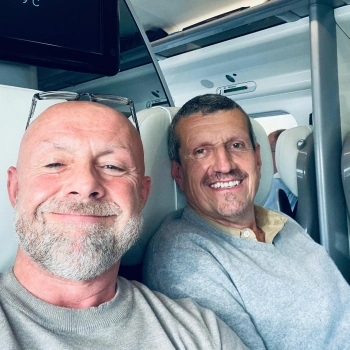
Then he saw Johnny at a race, and he said, I've been talking to this James Hogg guy. What's he like? He said, James is a good laugh. And what Johnny said to him obviously changed his mind, made him think, okay, sod it. We'll do it. And he said, well, what do you want to do? And I said, let's do something in the spirit of Drive to Survive, which is taking the audience where they've never been before, into the inner sanctum, into the heartbeat of Formula 1. I said, let's do a diary of an entire season. So, we'll start at the end of the previous season, the first day of the off-season, and we'll go to the last race of the following season, everything. And I'll follow you to races, some races, and we'll talk a couple of times a week. And he agreed. When I got the name ‘Surviving to Drive’, everybody immediately went to the lawyers. Can we get away with this? But of course, because Drive to Survive had done very well out of Guenther Steiner. So, borrowing the name slightly, Surviving to Drive, it was okay.
I was told by the publisher that the book is now the biggest selling Formula 1 book of all time. It’s bonkers, because it was just a laugh. And it’s been translated into 14 languages. I've been on holiday in France and I've seen it on the shelves in the supermarkets in France. That's something I'd never experienced before. And then, obviously, we started going on tour. The new one, we did a short tour before the new book came out, the second book, Unfiltered, because the second book was going to be the world according to Guenther, you know, the thoughts of Chairman Guenth, which is basically him talking about geopolitics, Donald Trump, making cheese, anything. And then on the 28th of December 2023, he rang me up and he said, I fucking left Haas. I fucking left Haas. We are going to write a different fucking book. Put down your fucking pen. Because I started writing the book. I'm like, oh, God. I was like 20,000 words in. So, I had to pause, you know, just chuck it away. And that's how Unfiltered came about.
Greg: So, he came to you with the idea for that one.
I'd already come up with an idea. He just said, I've now left Haas. The book we have to write is about my 10 years in Formula 1, because obviously, that has now come to an end for the time being. So, that's how we ended up writing that. And then we just started doing this tour thing. It started off in the UK with 25 dates, big theaters, 2000-seat theaters.
What has been different working with Guenther versus any of the other names you mentioned?
Guenther is the most professional person I've ever worked with. I've never worked with anyone like Guenther. I do hope he doesn't see this. He won't. He never would read this.
Greg: Does he see any of the content that comes out?
This is no word of a lie. If Guenther has to have something OK'd, if it's something on radio or TV or whatever, and they send in the video, he sends it to me. So, I spent half my life vetting Guenther Steiner's content to make sure it's okay. So, I'm like his taster. I'm his censor. Guenther and I have spent an unhealthy amount of time together over the past four years, but because of him, we've managed the relationship very well, because we have spent almost as much time with each other as we have with our respective wives and families, genuinely. We've been together on the road for weeks on end, together, where it's just the two of us. But we've managed the relationship. So, during the day, we don't spend time together, we get some time apart. And then in the evening, we’ll do a show, or if we're not doing a show, we'll go out for a meal. But we can sit there and we would not talk to each other for two hours, because we don't need to. If you know what I mean.
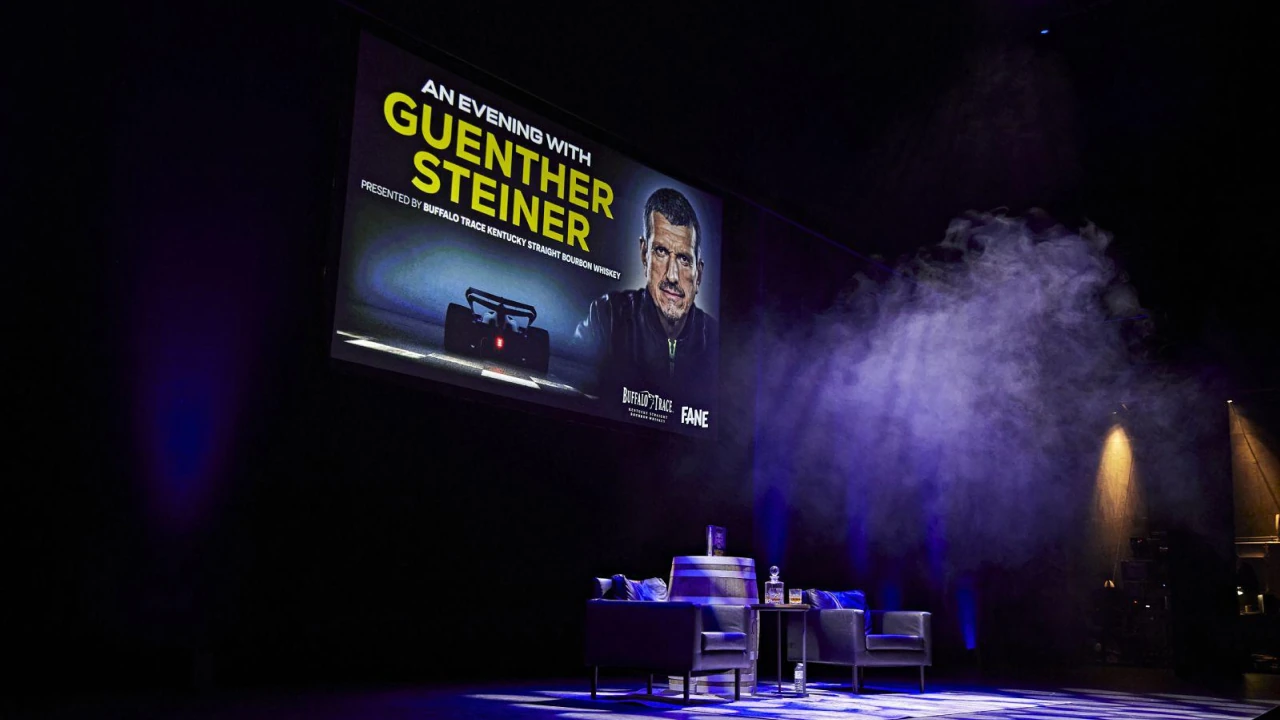
He's so professional. The way he goes about things, very disciplined. The people I've worked with previously, they weren't getting drunk all the time and raising merry hell, but they weren't disciplined people. They were quite sort of idiosyncratic, and some unpredictable. Whereas Guenther, I think because of the way… you can't put together a Formula 1 team single-handedly and not know what you're doing, not be professional. And that's the thing, you see, people, because of Drive to Survive, they think he's some sort of Formula 1 buffoon who just goes around and swears and raises hell. Absolute bollocks. He's the absolute antithesis of that. He's an ultimate professional. He's like a chameleon.
You know, you put him anywhere. One of the reasons he got that Formula 1 team together in the first place was because he knew everybody. He knew Bernie Ecclestone. He knew them all. He knew Charlie Whiting. And he had a good relationship, a professional, cordial relationship with all of those people, and they respected him. So, I can't think of anyone else who could have pulled that off.
Greg: Is that what's been what's attracted you to work with him and to become so close? Is it that you are learning from that style, you're seeing something you hadn't seen before with the others you've worked with?
Partly, but it is as simple as the fact that we get on very well. We make each other laugh uproariously. We spent days laughing when we first started to get to know each other. And he destroys me, he'll say some horrible things about me that if you didn't know us, you'd think, you can't say that. And I'll do the same to him. I speak to Guenther five times a week. We speak a lot about all sorts of things. And also, because I've got a commercial background, if people make an inquiry about Guenther, because Guenther doesn't like working with any one particular agency or anything like that, I have a similar approach that Guenther does. So, occasionally, if somebody inquires, they want to hire him to go and do something in Chile or whatever, he'll just say, look, can you look after this for me? So, we kind of got a little bit of a business relationship as well. I'll do some negotiating for him, because I know him. Obviously, I've got his best interests at heart. And if ever I needed anything, advice, he would be the first person I would go to.
James’ Current Role
How would you describe your current role?
Varied. It's extraordinarily varied. I’ve spent something like eight of the last 13 months away from home, and apparently, I have a family and a wife and things like that. I live in Yorkshire, in a place called Leeds, in the north of England. So, I've decided the next three books are going to be about subjects in Yorkshire. So, I've identified three people who are very well known over here, who I'm going to write books with. And I can do that because I can choose who I write with, to a certain extent. They have to say yes, obviously. Those books come out next year, there's a lot of live possibilities with them. Guenther and I will go on tour next year as well, because the new book comes out in the spring. So, we'll go back on tour. And I'm also about to start a podcast about comedy, because that's what I originally started writing about.
What are the most rewarding and the most challenging parts of your role?
Rewarding
The most rewarding parts are the travel, and the money. The money, if you work hard. And as I said, because my business model is slightly different and we do touring and things like that, the money can be good, which is great. It means that, my family, we can live comfortably, which is nice. It's not Formula 1, but it's a nice sort of level, which is what most people want. And it allows me to think, okay, where shall I write this book? I'll go to Peru. And I've got the freedom to be able to do that.
Challenging
I think as I get older… the live thing I did with Guenther, I really enjoy. And the older I get, the harder the books are, because it's the brain, the focus is just harder. My wife says when I'm writing, I'm a completely different person when I'm writing a book, because I'm so distracted, and I don't enjoy that as much now.
Greg: Distracted by the book?
By the book, yeah. So, I'd be somewhere else. She'd lose me for five weeks. My work life is like war, long periods of boredom, followed by short bursts of violence. It's kind of like that, or short bursts of activity, should I say. So, but everything changes and mine's evolving now.
Greg: Is it that you're trying to keep up with a changing mindset that you're no longer as tied to the writing as you are to the live part?
Yeah, you do think about that. I do think about that now when I'm thinking about people. So, two of the three people I'm writing with at the moment, who are based in Yorkshire, two of them, I know there are live possibilities. So, when the book comes out, we can say, let's get a 10- or 15-day tour, and I can go with them and we can do something similar to what I did with Guenther. So, that's a possibility. And also, I'm always bothering them with ideas for live shows. Like, I'm trying to get a TT show off the ground at the moment. The Isle of Man TT is huge. You speak to any Formula 1 driver, MotoGP riders, anybody in motorsport, the people who sit at the top of that sort of pantheon, if you like, the most mythical, are TT riders and rally drivers, because they're just so… you know, you've got to be on a different planet. And I find it fascinating, but it's never been commercially explored. So, I think you get the two greatest of all time, living, you get John McGuinness and Mickey [Michael] Dunlop together on a stage, with a bike and a screen and talk. I mean, wow, that's amazing. So, I'm trying to get that off the ground at the moment.
What are the top 3 qualities that have helped you succeed in your role?
Being proactive
Not waiting. If I have an idea, I will write the email immediately. I won't think about it. And lots of people I know, that's something I get really annoyed with writers who sort of say to me, oh, I'm thinking of going into ghostwriting, and I could do a book with blah blah. I said, well, write them an email. They never do. If I think of somebody I want to write with, I get really excited, and I will write to them immediately, and I will find out where they are, who they are, who their agent is, who the manager is, what their email is. I'm good at that. I'm like a bloodhound. I can find people. So, I could be a very good private detective or something like that. If anybody wants anybody to be found, just let me know! [Jokingly]
Not taking things too seriously
Also, I think that I don’t take it too seriously anymore. As I said, I managed to get rid of that at the very beginning. I don't like it if a book doesn't do well. Nobody wants to be involved with a failure, but it's not the end of the world. It really isn't.
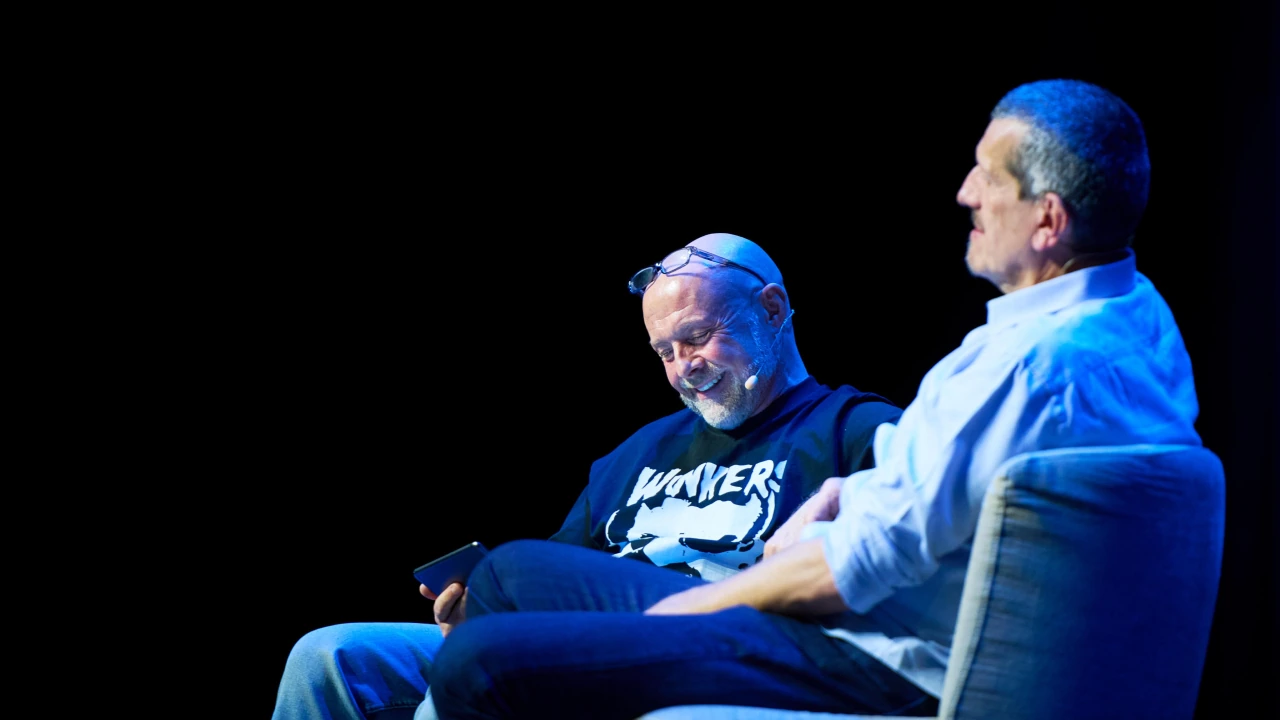
People either like the book or they don't. I know I've done the best I possibly can with the book. There are so many reasons why a book won't do well. It could be timing. There are lots of reasons. Nobody cares about reviews, you know, like critics and stuff like that. There are so many plays, musicals and things like that that get slated by the critics, but the public love them. So, it's public opinion that matters. And that will always prevail, or usually anyway. Like with Surviving to Drive. We hit a sweet spot, we really did, but it was a lot of luck involved, in the sense that, we didn't sit there and think, this is the right time to write this book. I just thought it was a nice idea and it would be a good laugh, and it could do well, and it did very well. And obviously, everything that's gone on there, my friendship with Guenther, the success we've had with the second book, we're writing the third book.
I'm not going to write a book for nothing, and neither is the person I suggest it to. So, it will be a certain level, commercially. But just try new things. That's why I loved working with Formula 1 and motorsport. But if I never did another motorsport book again, I wouldn't care. I'd go off and do something else. And Guenther is exactly the same, that's something I got from Guenther, because he was just like… I said, how did you feel when you had that phone call with Gene? He just said, one door closes, two open, and look what's happened. Just don't sweat it. We're not here long enough to sweat about stuff like that. Just go and do something. You know you've got a talent, you can do something. Guenther can do what he can do, I can do what I can do. Just go and do it somewhere else.
Stay hungry
Greg: Would you say then that that hunger is that third thing, always looking for the next opportunity?
That should have been the first thing. That should have been the first thing, because that is what gets me up.
I'm home now and I've said to my wife, I'm not going to go away until July, and she's like, what a load of rubbish. And I've had this idea about this book, because I've got five books on at the moment, and she said, do not write to anybody. Promise me you will not write to anybody. And obviously, I've written to three people in the past three days, because I've seen something on TV and I thought, that's a massive book. There is a book there. They haven't done a book. And I just can't help myself. You see, because if I write ten emails, one might turn around and say, let's have a chat. So, of the last ten emails I've written to people, about five of them have said yes. So, it's like, shit. But you still have to write the books, because you can't sort of turn around and say, actually, I don't have the time to do it now. You've just got to do it, and I've been in situations where I've written six books in a year, which is bonkers. You know, big supermarket books, and I've done six in a year, because I wrote ten emails, six of them said yes. I was expecting one or two. You can't turn around, you know, if you don't do it, somebody else will. You've got to make it work.
James’ Advice
What advice would you give to someone looking to be in your position?
Making them aware of the commercial opportunity, because at the end of the day, that's ultimately what people are interested in. You're not trying to get them to write a fictional book with you or something like that. It's basically an autobiography or a memoir or a diary, etc. So, to create that sort of creative thing, you don't have to explain that, or you can if you want to. You can sort of say, look, I've had this idea to do a diary, if you think it will help the pitch. But it's commercial. You just say, I know a publisher who can get this off the ground. These days you need to have a literary agent, and back then when I wrote to Torvill and Dean, I didn't have a literary agent. So, I wrote to them and I said, I'm a ghostwriter. I know some publishers. And I'd written for a couple of big publishers. I'd written for Pan Macmillan. Yeah, two for Pan Macmillan, and one for Transworld. And I said, there could be a big advance here. And they were coming to the end of that section of their career and their manager said, okay, well, let's have a chat. And then once he said, yes, I'm like, now I've actually got to make this happen.
If you could go back and give advice to your younger self, what would that be?
To get into Formula 1 sooner. I do wish I got into Formula 1 sooner because we've been part of it becoming a very fertile ground for books. And it was kind of like a bit of a sleeping giant when it came to books and when it came to live. I'm not saying that we're responsible, Guenther and I, but we're partly responsible for it. When Surviving to Drive did as well as it did, there's been a deluge of books since then, and some of which have done okay, some have bombed, but there's been loads, and they'll keep coming. Honestly, because it's such a fertile environment for that. So, I wish I'd done that.
If I could give myself any advice, it would just be that it's only a bloody book. Because I took things very personally in the first few years, I really did. That's why me having my name on the front of the book didn't work. It would be okay now, I don't give a monkey’s… But I wouldn't be stupid enough to write a biography now. It takes too much time, it’ll kill me. It really would. Don't sweat the small stuff. I know it's a bit cliché and it's probably been around the houses, but I think it's very important in this line of work. Guenther's exactly the same. He's always telling me, just calm down. Don't worry. And he's absolutely right.
James’ Career Highlights
What's been the most memorable moment of your career so far?
I think, when [Haas] got the pole position at Interlagos. I've been to a few races, and I was standing there on my own, because you're not part of the team. I'm not part of the team, I'm an interloper, and you feel very much like an interloper. So, you just stand at the back. But watching that and spending that weekend with Guenther at Interlagos was amazing because I didn't really get his fame until then. I knew he was very popular, but that's when we really clicked as mates. Driving into Interlagos, and he always drives himself, and people literally jumping on the bonnet of the car. It was like Beatlemania. I'd never seen anything like it. It was bonkers. I've never seen him refuse a selfie, ever. He just sort of takes it. It's absolutely wonderful.
I've had quite a few memorable moments. Getting the Duke of Edinburgh to write the foreword for my first book was incredible. I've done 30 books now. So, by the end of this year, I'll have done 33 or 34. But that was, as I said, that was the only time he ever wrote a foreword for a book, and he did really well. And that was quite a good feeling. Everybody's got an ego. I might be a ghostwriter, but everybody likes to have their feathers stroked occasionally. And the biggest compliment you can be paid as a ghostwriter, I think, is if somebody says, oh, I read that book. It was just like they were talking to me, which means you've got their voice, because the most important thing about being a ghostwriter is to get somebody's voice. So, I've had a few people turn around and say that.
If you were to write a book about your life, what's the title and who's writing the foreword?
Confessions of a Bald Git. Confessions of a Bald Yorkshire Idiot. I have actually started writing a memoir about being a ghostwriter, because it's never been done before. I've never fallen out with anyone I've worked with. I've got on with them to varying degrees, but I've got on with all of them, and I've had to work at it sometimes, but again, I do a lot of research. So, I'm not going to get in touch with somebody I know who's a prick. It's not going to happen.
And there's only one person who can write the foreword, and it's you know who: Guenther. It has to be Guenther. And then what would happen is, he would get me to write it, because obviously I'm his ghostwriter. So, I’m writing the foreword for my own book. But that's what would happen, seriously. I would say, would you write the foreword to my memoir? He’d say, of course I will. Will you do it? So, I would end up writing the foreword to my own book.
Want to learn more about other professionals across motorsport series? Then check out all of our Fast Lane interviews, or jump right into one of these:
How Hundreds of LinkedIn Applications Led to Producing Andretti Global’s Content with Alex Frick
.jpg)

%20(1).jpg)


.jpg)
.jpg)
.png)
.png)