


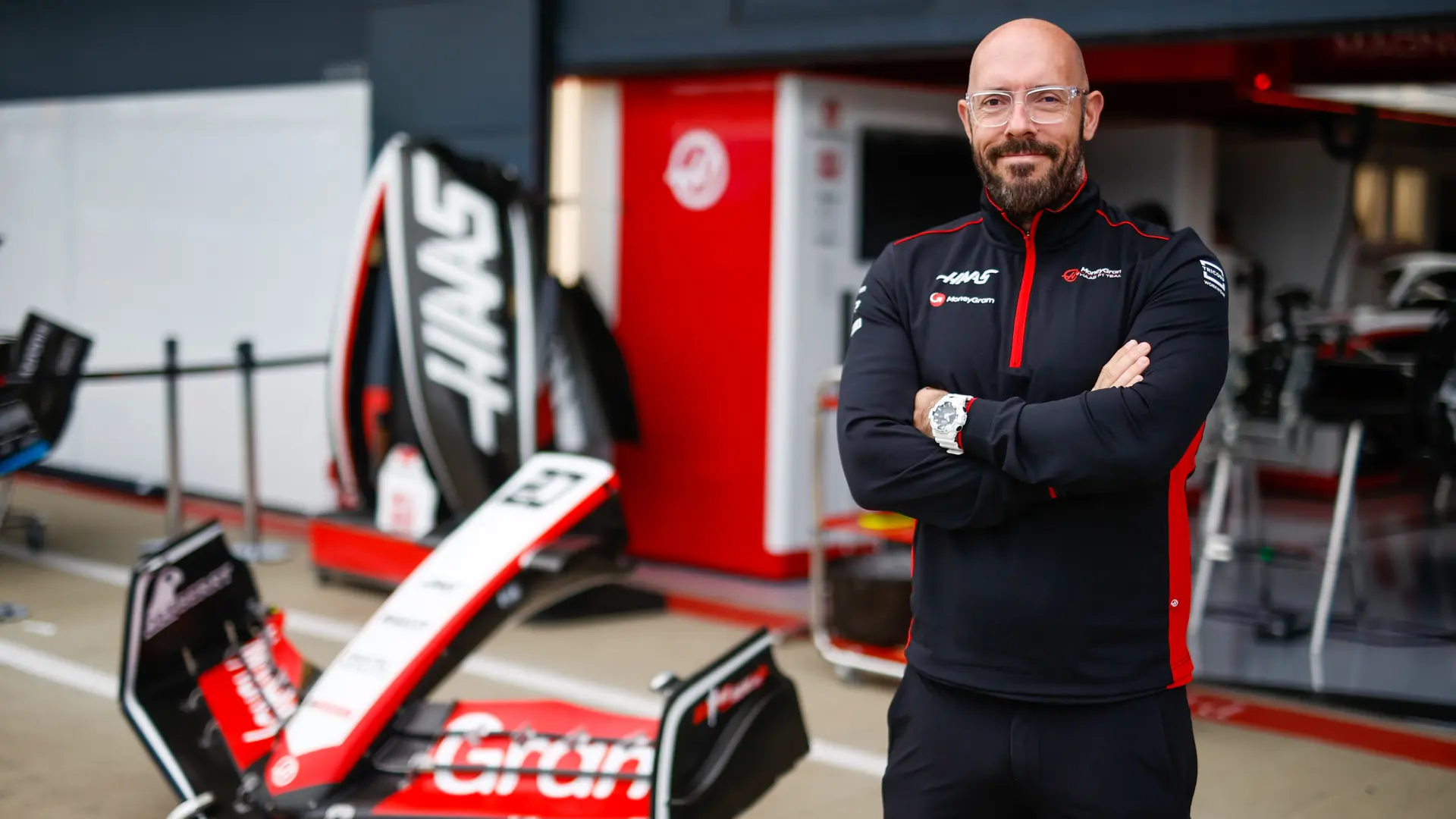


When Stuart Morrison sent cold letters for his first job out of college, he had no idea that decision would ultimately lead to him managing the communications strategy of a Formula 1 team.
Stuart Morrison fell in love with motorsports watching and reading about fellow Scotsmen in Formula 1. But when it came time to graduate and find a job, all he had was a film and media degree, Autosport magazine, and “blind ignorance.” It turns out those things, along with his enthusiasm, were enough to win over Jonathan Palmer and land him a press officer job.
Since then, Stuart has built a successful career working in motorsports around the world. He’s worked directly for series, run his own agency, and now serves as director of communications for the TGR Haas F1 Team, a team he’s been with since its inception more than 10 years ago.
Stuart shared with me the lessons he learned to jump up the career ladder, as well as the challenges he’s overcome while managing communications for a small team in the incredibly demanding world of Formula 1.
After years of navigating high-stakes messaging like driver changes and trackside emergencies, the real question is how does someone make it to his level? (And, of course, which F1 driver he’d have manage his own comms… but for that you’ll have to keep reading!)
Position: Director of Communications at the TGR Haas F1 Team
Day to Day: I'm responsible for the design, implementation, and execution of the communication strategy for our team.


Stuart’s Start
I saw you were an avid Autosport reader by the time you graduated college. What drew you to motorsports?
I don't come from a motorsport family or background. I literally got into Formula 1 just because we'd come home from church on a Sunday and while we're waiting for food, basically, some of the Grands Prix would be on. This is back in the ’80s and Nigel Mansell was doing well back in those days, and then into the ’90s with people like Damon Hill and Johnny Herbert. And what really attracted me was ultimately David Coulthard, as a Scottish person, I was naturally drawn to a home athlete and obviously the success of the likes of Jackie Stewart, Jim Clark, people like those. So, there was an element of pride there as well, that we then had another Scottish driver who was doing well in Formula 1. That's what drew me to it, and off the back of that interest and say, this is way before social media and Drive to Survive and things like that, it would literally be every couple of weeks, you'd be watching a Grand Prix. But then I discovered Autosport at the newsstands, and it was a case of, all right, here's a weekly magazine talking about motorsport. And it just opened my eyes up to wider motorsport as well, not just Formula 1.
And I was doing a degree in film and media studies, and randomly, I was just kind of like, maybe motorsport would be cool to work in. I had no idea where to begin or who to talk to. I actually bought a book called Who Works in Motorsports, and it used to be this volume of books that would come out every year. They had Who Works in Motorsports that covered a variety of series. They had another dedicated one, which was Who Works in Formula 1. It was rock solid and cost a fortune, but it listed faces, names, contact numbers. So, I did the classic. I wrote off to all the teams, and of course, they all came back saying, “you need experience.” I'm like, how do you get experience unless somebody gives you experience? But a couple of them said, we recommend looking at the junior Formulas, and literally right upon graduation was when the Formula Palmer Audi series was being set up and I read about it in Autosport.
There was another job being advertised in the classified section. And I saw the address for Jonathan Palmer, who was setting up the series, the ex-F1 driver, and I sent him a letter just saying, I'm fresh out of university. I'm interested in motorsport. A few days later, I got a response back saying, come down and meet me. Three weeks later, I'd moved from Scotland down to England, and I was a press officer, not really knowing what a press officer's job actually was or what they did, but from there, the learning curve went like that, and I haven't looked back since.
What gave you the confidence that you had what it takes? Were you applying with a specific role in mind, or were you just willing to do anything?
Blind ignorance. That's all it was. I wanted to see what would be available, and obviously with it being a new series, I figured, well, they're obviously going to be hiring people. So, I don't know, maybe I could have ended up in marketing, maybe I could have ended up in hospitality. He then obviously just saw that my degree was in film and media studies and said, right, you can be my press officer. And I remember when I was setting up the meeting, his PA at the time asked me to bring some examples of my press releases. I was just like, I've never written a press release before in my life.
Greg: What did you do for the meeting and once you got started?
In these situations, you have to be honest and just say, I've never written a press release.
Those first press releases that I did write were all in the early days, it was about signing the drivers. We owned all the cars, we set up the hospitality. The drivers literally just turned up with their helmets and raced. So, the first few press releases that I was involved in putting out were obviously driver announcements, because Jonathan wanted to make sure that people could see that the series was definitely happening, that young talent was signing up to it. But man, he used to call me into his office and dissect my press releases. He would spend about an hour just, word for word, slicing my press releases, bit to bit. But I learned a lot from that and I learned about attention to detail, I learned about the structure, and ironically enough, I ended up going back to work for him about five years later, when Justin Wilson got into Formula 1.
I was doing some other stuff for him at the time, and he was just like, your writing's really improved. And it was from those early lessons. It can be tough when you're going through it, but that education has lasted me, you know, we're 30 years later now and I still think about those things and I get credit every now and again. And it was a case of him—I had a great mentor—because details really mattered in the press release back in those days, and this was long before social media messaging. It was a case of needing to have an immediate impact with your headline and your first paragraph. Everything else after that is the fluff, but the immediate impact, the crux of the story, has got to be in that first paragraph. If you read nothing else, you know what you need to know. By the time I left the series, I'd probably written about 60 press releases, and now across my lifetime, I hate to think, thousands of press releases, but it all stems from that education that I got, because when I went to my second job, my boss then was a totally different character.
I remember the first time I presented him with a press release to read, he was just like, why are you showing me this? And I was like, well, yeah, just so you can proofread it. And he was like, you're the press officer, you've written it, it'll be fine. And of course, you do that double take. If he'd been my first boss it would have been a totally different story. But the fact that I had that taskmaster, somebody with that foresight and everything, it was a great education, and ultimately, that's where I also learned, networking is what gets you going in this business. It's about putting yourself out there. I was then meeting lots of young drivers, starting to meet other people in the industry.
What do you think it was that made you stand out to Jonathan? And then how would that translate to someone coming to you today, looking to get started? What would you want to see from them?
I think at the time it was literally just, I had the moxie to write to him and say, listen, I'm fresh out of university. I'm interested in motorsport. People tell me I need to get the experience. This is a brand-new championship. I mean, I honestly can't remember what I wrote. I mean, it must've been okay, but I can't remember what I wrote. I didn't keep a copy of the letter.
Greg: The first paragraph had everything he needed to know.
I think that was it, it was an enthusiasm. He called me down, I met him, and he could see. I mean, when I look back on it now, I mean, I was greener than grass. I had no clue about anything and it's amazing, but it was a tremendous opportunity and I seized it with both hands.
What I say to people now is that the landscape is totally different. There's many different ways that you can get into motorsport. A lot of people come wanting to get parachuted straight in at the top. They see things like Drive to Survive, or they follow people on social media and think, oh, that looks glamorous, that looks great. It's like, yeah, but you still have to know the basics of the job you're doing, and for me, it's about understanding communications, the role that it plays, how you execute that. But you can do that through being involved at university, you can do that from volunteering. You can help people, you know, young drivers with social media.
I mean, in the first series I worked in, we went to some cold winter series racing in Snetterton, in Norfolk, England, and you go to places like Knockhill, and you go to some very unglamorous racetracks around the world. From an education standpoint, that was hugely important to me, learning how a racetrack runs, learning what team culture is like, seeing what drivers go through on a daily basis. That education for me was hugely important.
There's a lot to be said for even getting agency experience. Work for a sponsor of a team, work for an agency, work for a driver, work for a team, work for a series. There's all kinds of things. And also, these days, you can come in from other sports as well. I think having a sporting background is good, but there's no one clear path into our world.
On your way to the present day with Haas in Formula 1, you worked in communications roles for many different types of companies and clients. What did that teach you?
I ended up working for myself for 12 years, and I learned a lot from that, because that really is a case of, if you're not out making the contacts, making the connections, while at the same time, producing a good body of work. Reputation is everything. I mean, that's what you should want to take pride in, as not only an employee, but if you're freelancing or whatever it is, you should have pride in your work, but your reputation in this business speaks volumes. It's also a very small business. I mean, I've been very fortunate. I've worked on both sides of the Atlantic. So, I've worked in IndyCar, I've also worked in Formula 1. I've touched upon World Rally, DTM, and junior level racing as well. The crux of the business is still the same.
I think it's just good to get perspective, at the end of the day, because certainly in an environment like Formula 1, it's a bubble. We often say it's a traveling circus, especially with 24 races a year now, the intensity of that schedule, you know, we spend a lot of time away from home, away from family, away from friends. It becomes your life to an extent as well. So, it can also mess up your view on the world. You can see it as being the most important thing, especially in this day and age when it is so big. It's not just a sporting phenomenon anymore, it's a lifestyle thing. It's a cultural thing. The F1 movie that came out, you've got Drive to Survive. You've got fandom now, which is 24/7. It can be all consuming, but I think if you've got perspective on different things, and that's why I mentioned, if you're coming from having worked at a different sport, that's not a bad thing. So, it's a case of getting the experience and bringing that experience and bringing those resources into whatever role you do and building from there.
You see people coming in and out of the sport as well. They maybe go off and do another sport for a few years, then they come back in. It's just that there's no set rule in that respect. It's not like engineering where you need a specific degree and you need to follow a certain career trajectory. Comms, marketing, those kinds of elements, you can kind of dip in and out of various things.
Greg: Was there a constant?
What I love most about the role is just that I get to deal with everybody within the team. I deal with the team principal, deal with the owner, deal with the stakeholders, partners. We work closely with the marketing department, but we have to speak to the technical guys. We're involved with the guys in the garage as well, if we need something from them. Then through to promoter relations, working closely with Formula 1 and their comms team. And the longer you stay in it, those relationships build as well, which can make life easier when you go back to races in different countries and whatnot. Whereas, I look at the mechanics going to the garage or the engineers that go into the engineering room, they literally live within those four walls for the most part during a Grand Prix weekend. And they love what they do, so that's fine, but I enjoy my part of the job because we can literally be down at race control meeting Stefano Domenicali or we can be in the media center, chatting to media, or we're doing a partner event in the evening, or we're briefing the drivers, we have an interaction with most of the crucial elements on a weekend.
Stuart’s Current Role
What is your current role in one sentence?
It's a very difficult one, but as director of communications, I'm responsible, ultimately, for the design, implementation, and execution of the communication strategy for our team, our brand, and that then ultimately involves, what is the messaging that we're putting out externally, what is the messaging we're doing internally as a team? Honestly, our greatest asset is the people that we have in the team at Haas, because we're a much more resource-efficient team. We don't have the budgets that the larger teams have, but we punch above our weight. In 10 seasons, we've only finished last in the championship a couple of times, which I think is testament to how passionate people are about this project and how we want to keep seeing it doing better and better. So, that's it. At a very top line level, setting the communication strategy, the messaging, and empowering people to be able to speak on our behalf. And then the nitty gritty is, yes, I'm in charge of the overall social media team, and we've got certain pillars that are the structure of our content that go around social media. It's engaging with the media at the track, and handling all the public relations and communications around what we do.
We're not a Red Bull, we're not trying to sell energy drinks. We're not a Mercedes, we're not trying to sell automotive vehicles. We literally exist to go racing and then obviously to serve our partners and make sure that they have a platform for engagement in their business worlds as well.
When your audience is so global, and you have so many partners and other stakeholders watching, and you are measured in milliseconds, what is your process to make sure things go out quickly without sacrificing quality?
It just boils down to the attention to detail that you put into it. And to your point, it's a case of, check, check, double-check. That's the important thing to me, because details do matter. We get a lot of inbound emails from people who are clearly emailing other teams as well, whether it's somebody looking for a job or a partner, somebody who's trying to pitch something, and sometimes you'll see that they've not taken out the previous team name. That's an automatic delete as far as I'm concerned. It's a case of not targeting us specifically. You were just doing the whole whitewashing of the paddock or you've got the address book and you're sending it out to everybody. So, if you're emailing somebody in the team, make sure it feels personal to them. It doesn't just look like a generic email in that respect.
What are the most rewarding and the most challenging parts of your role?
Rewarding
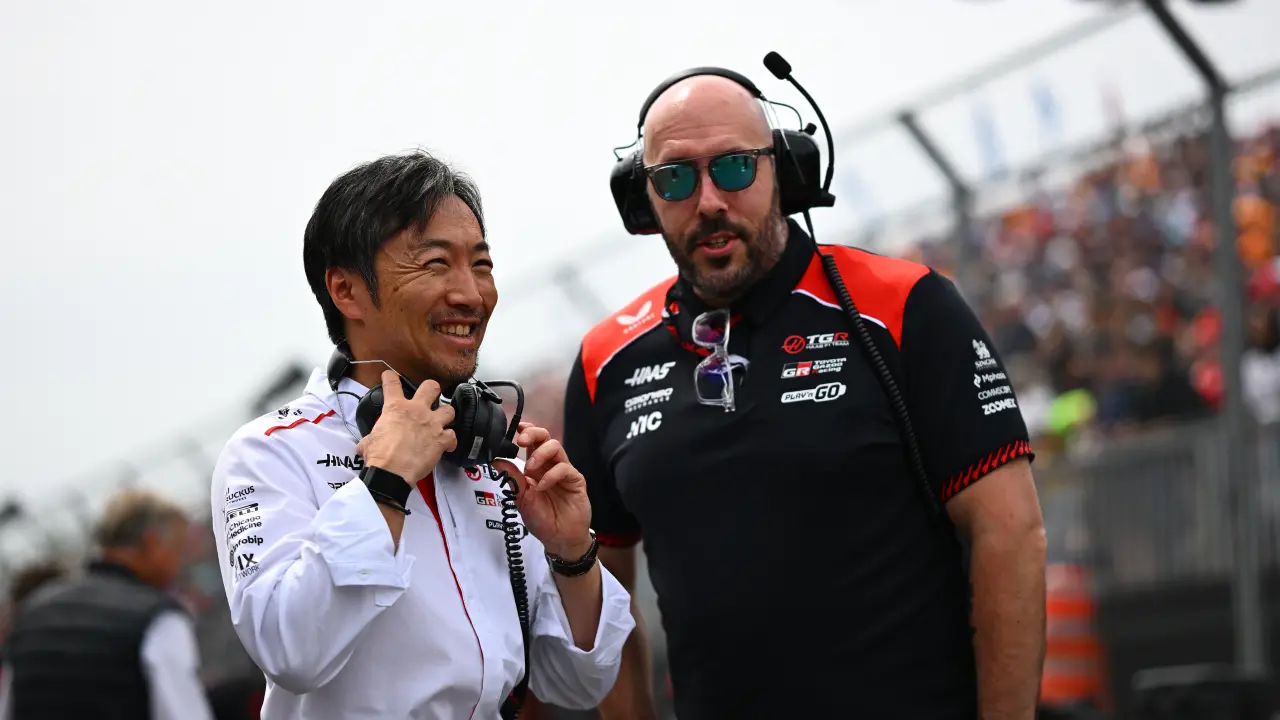
Building up the communications team to where it's at now, because for the first few years, very much at track I was a one-man band, and we were able to get away with it because we were a small team and Liberty had only just taken over. We started racing in 2016 and Liberty took over in 2017, so that's when the big push started to come. It was exciting to be on board for that. For me to be able to grow the social media side, to grow the communication side, to get us to the point now that we're a small, but highly effective team within a team. I'm very proud of that because we don't have the resources that the other teams have, but our quality of work, to me, doesn't look different from what the other teams are producing. Like, when you look at my end, we certainly have good media relationships within the paddock, we're a source of trust within the team, as far as how we communicate things. People like Ayao [Komatsu], our team principal, and the drivers know that we've got their best interests at heart.
I also take pride in the fact that within my time here I've faced some major situations, such as the crash that Romain [Grosjean] had in Bahrain, the geopolitical situation we had with having a Russian driver and a Russian title partner when everything in Ukraine kicked off. So, I looked at some of those more crisis-led moments and realized that I was able to get through those, I was able to guide the team, set the strategy, give guidance to the key stakeholders, to senior management, and obviously deal with the media influx that came from all of that. I'm proud of the way that was all handled. And it's only really once you've gotten to the other side of that, that you realize what you actually went through. In the same breath, for example, when Romain had his accident, I was still a one-man band at the time, and obviously I was then dealing with the situation of the race then restarted. So, Kevin [Magnussen], our other driver, was racing, but my phone was absolutely blowing up with contacts from the media and all the rest of it, and then I still had to do media live with Guenther [Steiner] at the time, and report back.
So, you're trying to manage that flow of information in terms of the information you're getting from the FIA, from Formula 1, from Romain's physio, for example, who was with him, while the race is still going on and you're trying to keep an eye on that.
What moved me the most and still moves me to this day is the number of the other PRs that reached out to me from other teams and said, listen, if you need a hand with anything, just let us know. Don't be too proud to ask. So, that was hugely touching, because it shows that not only are you respected and valued by your peers, but they're willing to step up, and I've always tried then to offer that same level of support to other people, when you see that they might be flat out, because at the end of the day, as much as we're rivals on track, only other PR people and other comms people in Formula 1 know what we go through in our line of work. You only see certain things on TV, for example, you don't see what drivers are like behind closed doors and some of the emotions that you have to deal with. It's a very emotive sport, it's passionate, it's competitive, and that boils down into everything, but you certainly see a lot more things behind closed doors or you have more situations to manage than people see at surface level.
In those respects, these are things that I look back on that I’m the most rewarded from, because you get through it and it grows you as a person, it grows you within your role, and then you're able to communicate that and share that. And I don't get it right every time. I'm not saying that. I think it's important that you're able to admit your vulnerabilities or when you've maybe got something wrong, but it's a case of, that's what I'll look back on and go, okay, you did okay there.
Challenging
When drivers don't always want to do all the media, you sometimes feel like you're burdening them with things, but that is the role of a modern Formula 1 driver. You have to do appearances, you have to do media, and we try and use their time as well as we can, but every now and again, like everybody, it doesn't matter if you're a Formula 1 driver, there's parts of your job that you're going to find boring, or you're not going to be engaged in, or somebody's just waking up and they're having a bad day and you have to deal with that. But everything we do is in the spotlight.
What are the top 3 qualities that have helped you succeed in your role?
Patience
Knowing when you actually need to be patient, but I'm not known for being patient. I really don't know, because I look around the paddock and I’ve looked around my career and there's so many communications professionals that I know, and we're all so different. That's the thing. I think it's whatever skill set you bring and everybody's experience that they bring is different. So, they may choose to handle situations differently.
Confidence
Having confidence, having belief [in what you do], because at the end of the day, our job is to convey messages. That's important. You've got to be able to back yourself. So, you need to have a little bit of presence around you as well.
Willingness to learn
With me, it's a case of just learning more and more. I learn things every day that I realized I didn't know 20 years ago, 30 years ago, that you can apply. Communications is also about learning who it is you're trying to communicate to and with, because everybody receives messages differently. So, the way we speak to the drivers and convey some messaging to them is maybe not the way I'd say something to our team principal or to a partner or to colleagues. So, it's assessing a situation and knowing how you want to communicate something, because people receive messages very differently. Again, for me, that's something I've only learned in time and through experience.
Stuart’s Advice
If you could go back and give advice to your younger self, what would that be?
I would literally just say to trust myself, because you can doubt yourself so much, and I didn't have a PR mentor, I didn't come from a communications background either. I didn't really do PR at university. I did film and media studies, which was very generic. I used to spend a lot of time worrying. Just enjoy the journey.
Now that I'm older, I can look back on things. There's many things I look back on and go, maybe I would do that differently, and there's other things I'm just like, well, I'm glad I didn't do that differently because it's brought me to where I am. So, really, it is just to have that confidence in yourself, because you will know if you're good. I mean, I've been in motorsport for almost 30 years now. So, that tells me something. I've been able to work in different series and I've worked with young drivers who've gone from the junior categories all the way up into IndyCar and into Formula 1, and to see that growth and to have been alongside some of those people for that journey, I think it speaks volumes as well.
I would probably say to myself, just enjoy it a little bit more, because sometimes you're stressed in situations, and even to this day, I still have a knot in my stomach at the start of a Grand Prix weekend, because for me, that's what gives me that edge. It's just like, I'm uptight, because I've seen it all. I've seen every level. I've seen accidents happen, I've seen title partners say they're pulling out the week of a Grand Prix weekend. You just don't know what's going to come, and it's only when I'm flying back home on a Sunday night or on a Monday, I feel the knot dissipating. The downside to that is it probably means that I'm in that state of, not worry, but alertness, and you maybe don't always enjoy things quite as much as you could.
Stuart’s Career Highlights
Throughout your run in Formula 1, what have been your most memorable communications?
I think what people don't realize, one of the hardest things, actually, when it comes to communications, is when you're going to be announcing that a driver's leaving the team. Because this is somebody that you built a relationship with, and I will say it takes at least a season to really build up rapport with a driver, because believe it or not, there's some people that maybe have the impression that we're hanging out with them all the time. We're really not. Between the demands of travel, their engineering commitments, partner commitments, we don't tend to spend a lot of time with drivers. When you do get time with them, it's important, as I said earlier, that you build up that rapport and that trust. So, when it then comes time that you're announcing that the team is letting them go, it's not a decision that you've made, but it's something that you're responsible for communicating to the outside world. It's a very difficult time, because, obviously, you need to make sure that you handle it with a sensitivity that still respects them, because oftentimes, the drivers still have a few more races to go, so you don't want it to be awkward for the last few races.
You've also got a job to do that you've got to put that news out, and it's then very difficult if you're then subsequently announcing the replacement driver within the next day or two or whatever it is. That's the bit that you don't really realize until you're in the moment and you're just like, oh, okay, we've just got to make sure we do this well. I've been in all scenarios: where we've been getting rid of both drivers, where we’ve been getting rid of one driver. I've been in the situation a couple of times where the driver's announced that he's leaving us, in which case you try not to take that personally. So, that's probably the thing, outside of the big crisis moments that we've had.
Greg: And what about a massive achievement or out-of-left-field announcement?
There's probably been a few car livery drops that we've done, maybe pre-season where we've not announced our timings, and then we've just dropped our livery. The other one that I think of is Japan last year. Nobody knew that we were doing the cherry blossom livery that we did, and a couple of other teams had been teasing and trailing that they were going to have this special livery coming out, and we just dropped ours out of the blue, and the reception that got, I mean, the car looked fantastic. The reception that got was just amazing. I've always taken the stance that teasing things out, it can build up, and the anticipation doesn't always meet the end result. So, with that one, we just dropped it. We put out the support materials around it, and it was so well received. Then when people actually saw the car in real life, they were like, that's amazing, because our creative team did an amazing job with it.
If you had to pick your own press officer from anyone you’ve worked with, who would it be and why?
Only because I'd like to see him greatly inconvenienced, I would love to see Kevin Magnussen do it, because at the end of the day, Kevin's the driver I've worked with the longest at this team, and we've got a very good relationship. It's a case of, he came in, he needed a bit of a career boost, and he certainly rejuvenated his career here. Then also, we brought him back again in 2022, which was great, and he had an even better attitude the second time he came, because he'd actually done some work for Danish TV as well. He came to me and he was like, I understand how the media works a lot better, even from a year away from Formula 1, because I was involved in the TV broadcast side of it. I can see that it's not just one person with a microphone chatting to me when I'm sweaty after 70 laps around Qatar. There's 200 people back in a studio in Copenhagen producing this, directing this, doing research on it.
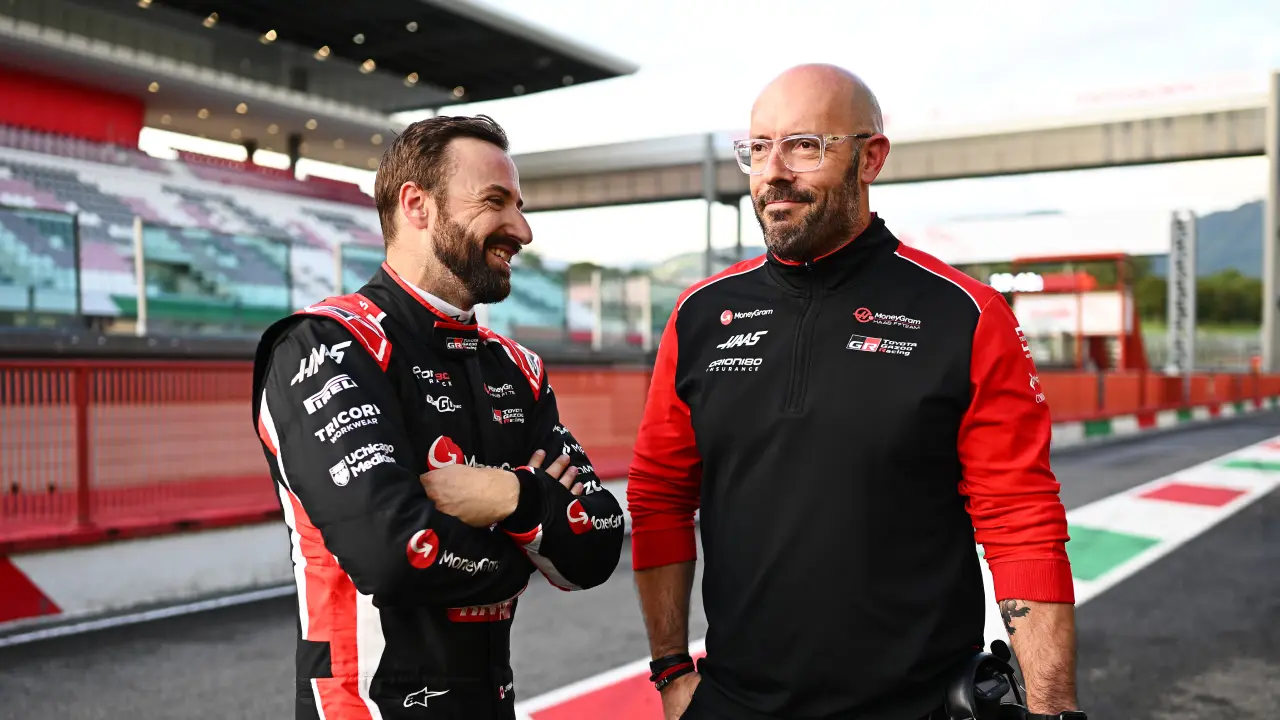
So, his attitude was brilliant and he's just a very good human being. He's a lot of fun to be around, but he sometimes could make some of my media dealings quite excruciatingly uncomfortable if he wasn't in the mood. We'd always say that when he was doing the TV pen, he'd start off with the first answer but the second answer would usually be the best answer. Then gradually, the answers would just go back to getting shorter and shorter again. So, I would just love to see how he could do it, at the end of the day, knowing how he is.
Want to learn more about other professionals across motorsport series? Then check out all of our Fast Lane interviews, or jump right into one of these:

%20(1).jpg)
.webp)
.png)
.png)