


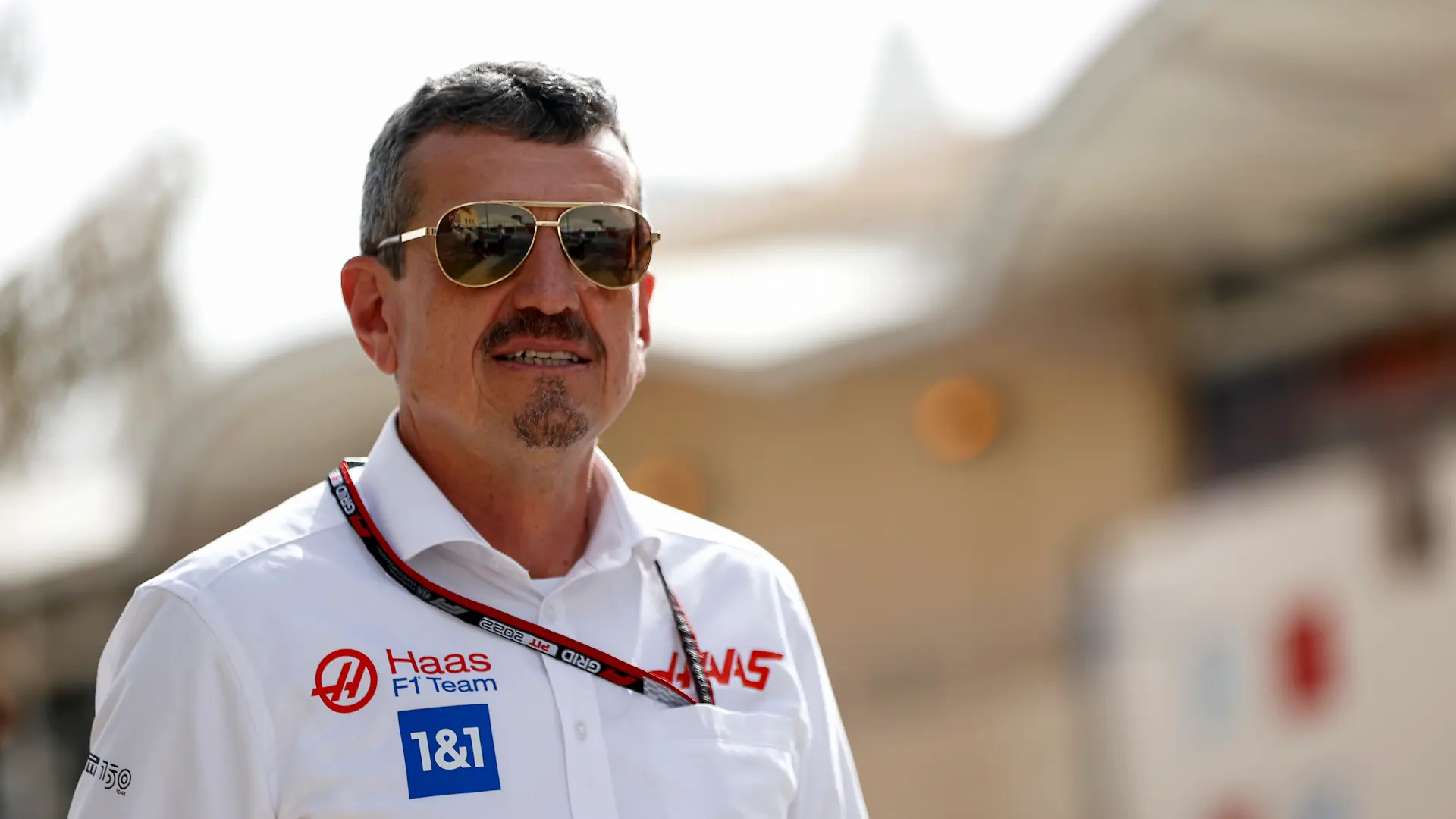


.png)
What does it take to turn a kitchen table business plan into a billion-dollar Formula 1 team?
For Guenther Steiner, it wasn't just about the money, it was about the passion he had for the sport and the drive to bring something to life against all odds. From the high-stakes gamble of leaving Red Bull to the "lucky moment" that brought him to America, Guenther reveals in our exclusive interview the truth about F1 politics and how he uses realistic goals to keep himself and his team in the right headspace whether things go right or wrong. Because there's no room for hope in the paddock, only hard work.
Whether he's persisting through the relentless stress of the midfield or embracing his new status as a global icon, Guenther is always working hard to chase the next big opportunity.
Appreciating Haas F1's first points but continuing to work [0:00]
Guenther: When you come to racing and you think F1 is superior and you come in, “I know everything.” No, you don't know everything because it's different, but it's not better or worse. It's just different, and you need to learn the difference and then try to introduce something you know, from somewhere else to make it better. And that is what you need to stay calm and do.
Greg: You became the first American constructor in 30 years. You scored points on the debut. What was the feeling? Was it validation for writing this business plan in your kitchen table and going, shit, we made it! How did you feel about that?
Guenther: When we did it, you didn't feel anything. It was just like it was very strange. And I just realized a few years later what we actually, what we achieved, what the team achieved. When you do it, you are too much in the detail, because we were the smallest team. We were the team with the smallest budget. We were the newest team. Nobody could care about us. And you just achieved this. So, what you want to do to make sure that the next race, which was just around the corner, we got ready. So, we didn't enjoy it at all. We enjoyed it, but we didn't celebrate it. That's maybe the right word. We didn't—we just kept on going, racing, and a few years later, actually realized we should have celebrated this a little bit more than we did. Because for us, it was just like, we did it now, but wow, we have to do the next one now.
Greg: You talked to a lot of competitive people. And that's the mindset, I think everyone's like, I should go back and enjoy it more. But in the moment, you don't think about it because you're on to the next moment.
Guenther: You're on the next one, you're always running.
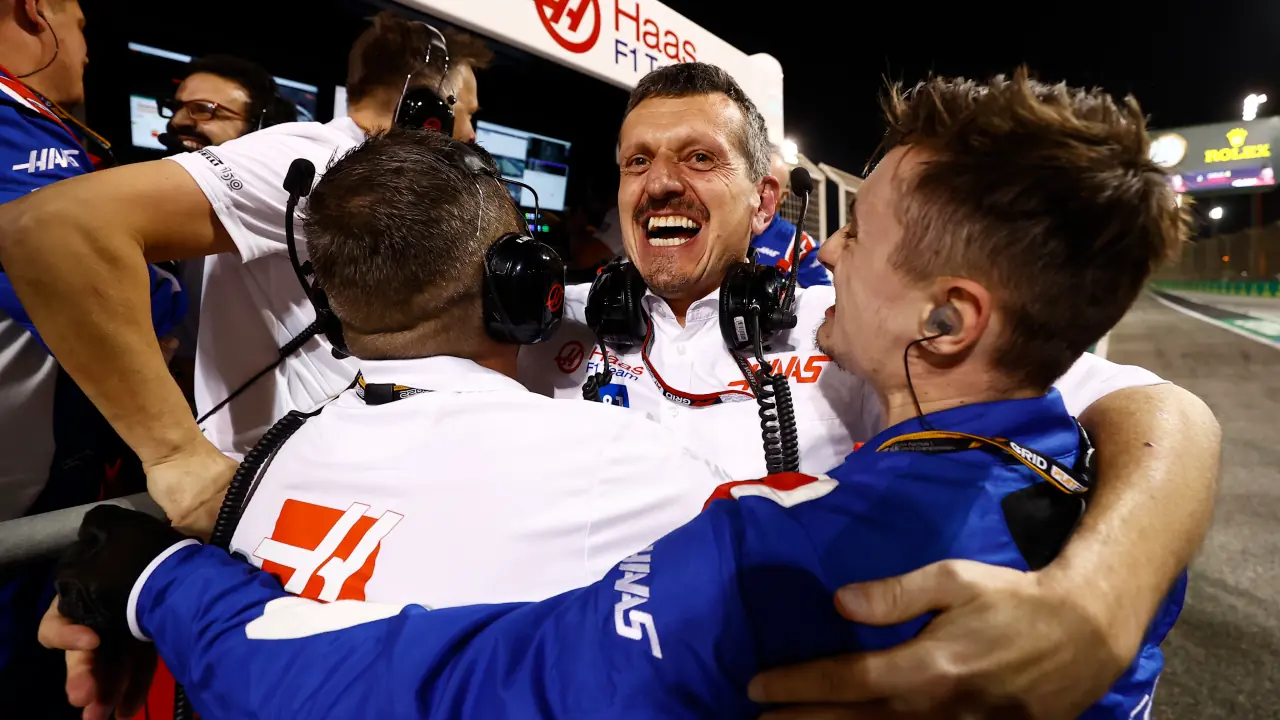
Why Guenther decided to start a Formula 1 team [1:27]
Greg: To get to this point, everyone knows your personality. I saw Drive to Survive and loved you in that whole, obviously in the paddock, but then also in that show, I think it was amazing to be able to see the personalities. But what I find most profound is that you started, even in the Haas space, by writing a business plan at your kitchen table. What was the vision that you had, back in that day? What were you saying at that point, where you're like, I'm going to start this team?
Guenther: What I was seeing there was a big interest in F1 teams because it was a not so good moment. It was 2009, the financial crisis, everybody struggled. And I said it is a good time to start something new. When there is a challenge, there is opportunity. And that's what I always see: Opportunity. Something is coming. And I said obviously at the time it was not a business which actually could make a lot of money. But, I needed to find somebody who wanted to go racing and had enough financial means to do it because it takes a lot. And at the time, the teams were worth nothing, but also believes that the sport will grow, and then obviously we entered the sport and Liberty Media, bought the sport and made it what it is now. Now all the teams are worth billions. I mean, Mercedes was valued at $6 billion, you know, not only valued the Toto Wolff sold the stake of his team with the valuation of $6 billion.
Greg: And McLaren too.
Guenther: Exactly. It was it was very high up.
Greg: I think it was five, around five. Yeah. Close enough.
Guenther: Exactly one billion more or less. What is that? I mean, nothing!
Greg: One of Toto’s jets!
Guenther: Exactly. Yeah. So, it's a very good business now.
Greg: Modern post-Drive to Survive, Formula 1 is the talk of the town. But 15 years ago, when Guenther was pitching for a new team, the sport's popularity and business looked dramatically different, albeit still glitzy and glamorous. For starters, team valuations back in 2012 were a whole lot smaller than the sky-high numbers of today. In fact, the Mercedes of today is worth more than the average NBA team. But it's not all about the cold, hard cash. Remember, Liberty Media didn't take over Formula 1 until 2016. It was under their watch that the average race viewership in the US, which is now a priority market, has nearly tripled. And since Liberty Media hadn't yet entered the sport, social media as we know it simply wasn't a thing in the paddock. Take Instagram, F1 didn't even have an account until 2015, and now, it's larger than the NFL. Guenther wasn't just building a team; he was betting it all on a sport that was primed to explode.
Guenther's secret to success and the biggest challenge launching Haas [3:55]
Back at that time when it was the financial crisis and it wasn't as good of a business. What made you think that you'd be able to succeed at it where others had come and gone? What gave you that confidence?
Guenther: Because I know the sport. I mean, it sounds arrogant how I say it, but I actually got the inspiration out of US F1 and I saw the idea was good, but the guys didn't know how to do it. They were good people. I'm not trying to critique them, but they didn't know F1 and I could see that. But I knew F1 and I knew the people in F1, and you cannot know everything yourself. But as long as you know somebody who knows that is the key, and I always knew a lot of people. I still know a lot of people I can go to. I didn't try to find somebody to tell them, if you invest here, you will make money the first year. I say, if you want to invest in an F1 team, I can make it happen with this plan. And this is what you need to contribute to make it happen. I’ll put the rest of it in.
Greg: What was the most challenging part about that, getting all these stakeholders together? What was the hardest part of that for you?
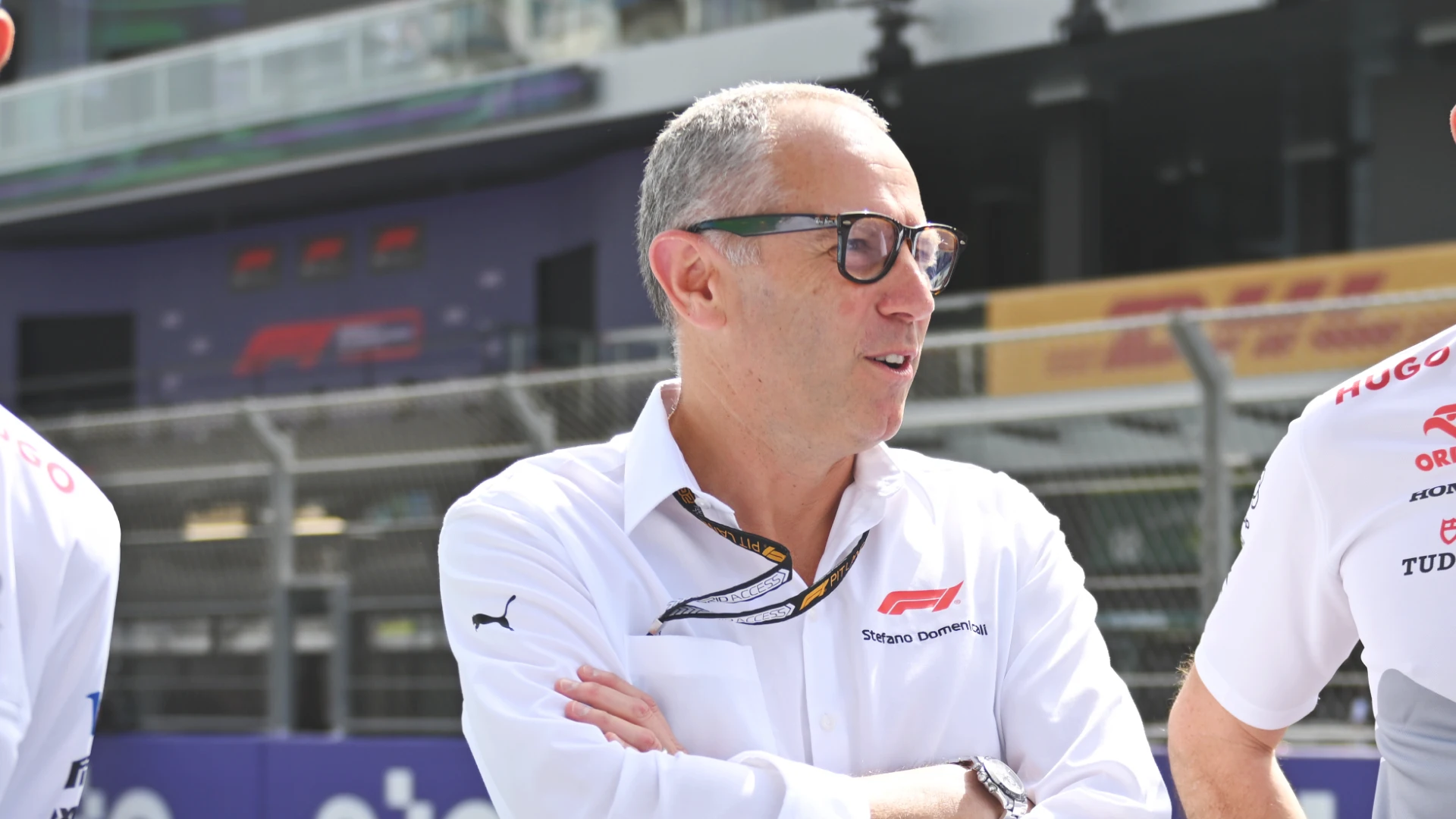
Guenther: I think the most difficult part was to get Bernie Ecclestone on board to believe in it, because there were so many people trying to start a team, and somehow for him it was like not another one which wants to start a team. And just one team failed. A few were struggling. I don't want these people around me. And Bernie was quite direct, and I had to convince him that it was actually a solid go at it, and it ended up to be the most solid of all of it, because it is the only team which was left from that era, which was new, so to convince him was the most difficult one, but without the help, as I say, of friends like Niki Lauda and Stefano [Domenicali], Bernie wouldn't have said yes to me.
Greg: What was the thing that made it click for him? When was the moment when that clicked? Was it these guys?
Guenther: It was the moment when Niki said, if Guenther does it, it will be all right. Stefano said it was all right. The FIA at the time, Jean Todt was the president. He knew me from the Red Bull days. He believed that I can do it because it was more a belief if he can do it or not. And that is when he saw that there is enough money which Jean has put in and that I can do it. That was what made it click. But without the help of Niki, Stefano, and Jean Todt, Bernie would not have agreed to it. And another guy which supported me a lot was Charlie Whiting, the technical director at the time of FIA, who unfortunately passed away a few years ago.
Why people like Christian Horner and Adrian Newey are successful [6:21]
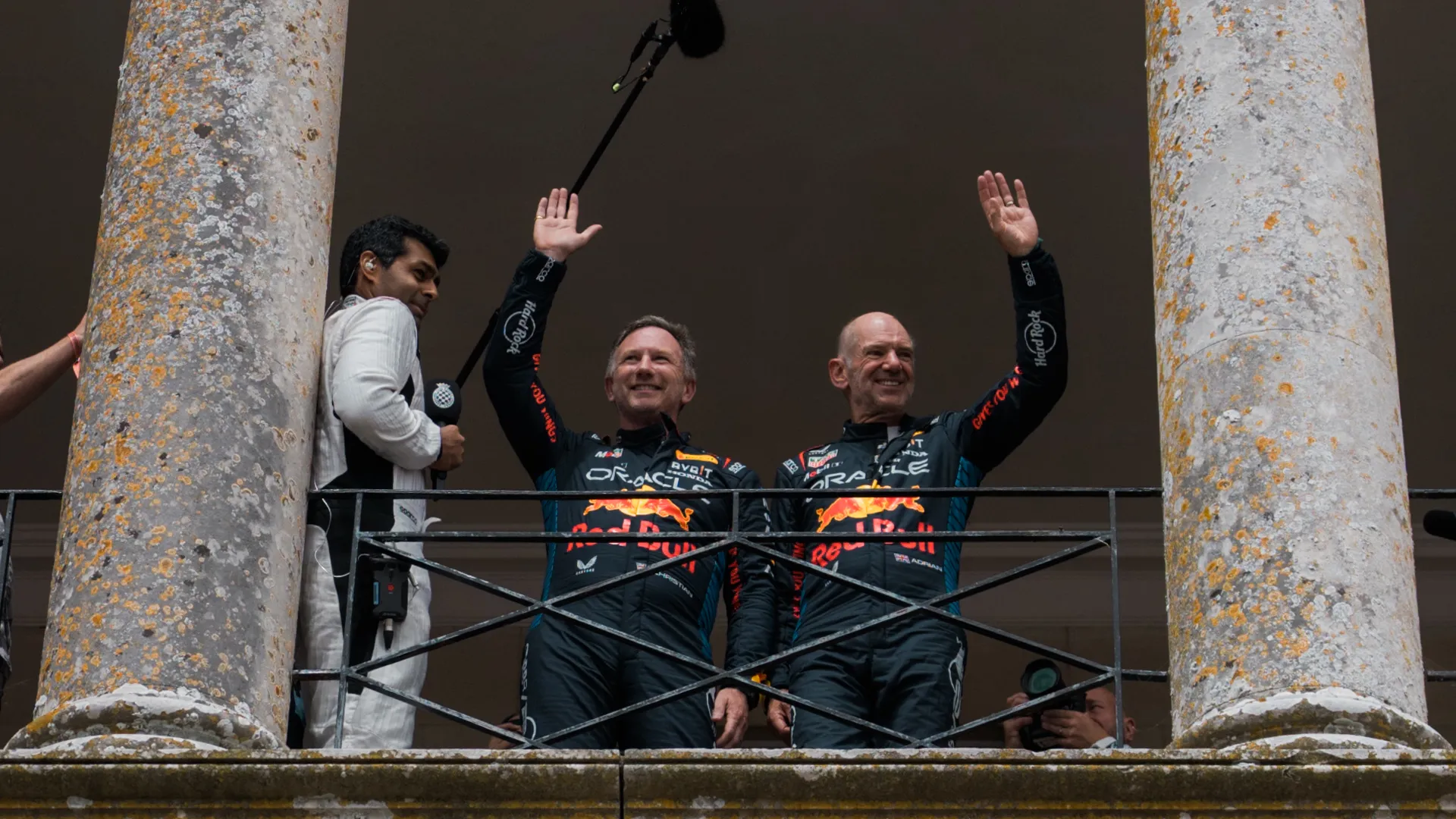
Greg: You were coached by Niki Lauda, you worked with Christian [Horner], you worked with Adrian [Newey] and a million other people in the paddock. What's one trait that you and other successful people in the space really share that sets you apart? What got you to the level that you've been at?
Guenther: I think the “I want to do this”. The drive. That's what you need, the persistence. Because you see it from outside [and] you think “this is all moving”. No, it's not moving on its own. You need to push everything. You need to keep on telling people what you want. You need to keep on pushing. I think that is the successful people, especially in F1. It's relentless. You need to keep on just driving everything.
Greg: And especially in a sport where there's only one winner who wins a race. But people are talking about midfield, backfield, backmarker teams, and you're looking to find ways to champion getting 15th place in different races, how do you stay motivated? How do you keep people motivated? How do you keep people pushing when you're on the road so much, you're away from family all the time?
Guenther: It's not easy. But how you do it, you need to tell people what you want to achieve, realistic achievements and working towards it and trying to achieve this, the goals you set for yourself. This was one of the things I was not good at anymore myself because I wanted to achieve a lot more and to keep on people doing it. You need to give them goals. If you are behind on your goals, you need to explain to them why you are behind and what you're doing, not to be behind forever.
Greg: Give them that hope in a way.
Guenther: Hope. Don't give them hope. Give them realistic goals. Because hope, I mean you get in the church.
Greg: Fair enough. Not in the paddock.
Guenther: Yeah, not in the paddock. In the paddock is hard work, not hope.
Moving to the United States and working in NASCAR [8:11]
Greg: If there's one thing we learned from Guenther, it's that he's never been one to sit around and wait for orders before they were in competing pit boxes. He and Christian Horner actually fought for the same F1 team, but the arrival of Adrian Newey signaled to Guenther that the organization had become too bureaucratic.
His move? Pack his bags and head to the States. Red Bull didn't just want to race in NASCAR; they wanted to dominate it. And lucky for them, Guenther was willing to move to North Carolina to turn Red Bull's American dream, and his, own into a reality.
Before that Haas moment you were at Red Bull, you had worked with Christian Horner. Adrian Newey came in and you had said that the team became 'crowded.' Politics is obviously something that comes into play with business in any case, as everything grows. Is there any part that, as you look back on that, that thinks like, “I should have stayed to finish the job?” Or was that the right time and place to leave? Come to the States and work in NASCAR and try something different?
Guenther: No, for me it worked out perfectly. I mean, it became crowded. And for me now, looking back, that was my lucky moment when I left because it opened the door to the States. Before, I always wanted to live in the States when I was younger, but never could because, you need a work visa, you need to do something, and you cannot get that. And it opened that avenue for me. And once I was here. Now, you cannot get rid of me anymore. So first of all, I opened my own company, which is a composite company. Now we have got 300 people, which is a pretty successful company. And then it gave me the opportunity to start an F1 team, which if I would have done the same in Europe, I wouldn't have succeeded because I wouldn't have found an investor. And if I would have tried out of Europe to find an American investor, I don't think he would have gone with me, because it's too far away. It's too far apart; and worse, I needed to learn the American culture to find somebody to speak the same language. Because if I speak European culture to an American businessman, he's not going to do business with me. And for me, it was the best thing that happened in my life to leave Red Bull.
Greg: When you left at that time and you came, was your thinking, “I'm going to go back” or was your thinking “there's so much opportunity even just to learn from NASCAR," and you weren't even thinking about the future. Where was your mindset at that time?
Guenther: I’ll tell you exactly what I said to my wife. I would like to live in America. We go and make the experience if we like it, and if it works, we stay there. If it doesn't work, we come back. As simple as that, keep it simple. It was not like, “what do I do in five years?” Let's do it. Let's try it. If it doesn't work, go and do something different. There's always something you can do in life.
Greg: What did you bring from the F1 side and inject in the US racing culture?
Guenther: I think NASCAR installed the processes, the engineering side of it and now all the NASCAR teams do it. But 20 years ago, when I came here, it was a much larger sport. It was run by crew chiefs, by mechanics. Now it’s engineering-led. And I think Red Bull was the first team to introduce this system. We had to do it carefully because it was a culture shock. But you needed to explain to people that this will make you better. And then they appreciate that, you know, not just going in to tell them this is what we are doing.
Greg: Yeah. You can't say you're wrong.
Guenther: Correct. You can't say you're wrong. You say you are right. But we could do this better.
Greg: Yeah, you're totally right. It's just this is the other way to do it.
Guenther: Just do it completely differently.
Starting his company and learning American business culture [11:31]
Greg: Guenther spent two years from 2006 to 2008, building team Red Bull's NASCAR operation as technical director. But when he left the team, he didn't head back to Europe. Instead, he stayed in North Carolina to launch a company that would give him one thing most F1 managers lack: a literal foundation in American business. So, by the time he sat down with Gene Haas years later, Guenther wasn't just a technical guy. His experience across disciplines allowed him to pitch Gene a revolutionary idea with legs: An American F1 team, with its roots in NASCAR country.
On Fiberworks Composites. Why start that? Why not go back into racing in a different capacity.
Guenther: I always wanted to have my own business in life. I never had the time because I always had the job, and at the time it was like, either do it now or I'm getting too old. And I saw an opportunity also there because I saw a lot of opportunities for other people. And at some stage you say, I need to find my own opportunity because motorsport is quite brutal. It's a very small industry and when you are out you can get back in, but at some stage you are too old to get back in. Younger people will replace you. So, you need to make your own future. And I didn't want to be always just like, hoping to get a job, because that doesn't work. You need to be realistic.
Greg: And you have to go to church for that.
Guenther: Yeah, exactly. Exactly. I go to church to hope. To hope for something. But I saw the opportunity when I was in NASCAR, there was composites. I mean, composites started in the United States, but then it went away from the United States because England got to be the leader because if one pushed it and I had the knowledge, I wasn't an expert in composite, but I had good knowledge of it. So, this is an opportunity to build something up again for the future here. And I think it was the right call at the time, to do it and what it does, it gives you security for yourself. Because if there is nothing in racing that you like, at least you've got your own company to fall back on.
Greg: What was the best part about it that you took away? Was it speaking the American business culture? Was it meeting all the people?
Guenther: Learning about the American culture and to live it, not only reading it in a book, but also to live the American culture. Because I grew up in northern Italy, but I speak German at home, so I know the German culture very well and the Italian one, which is a big advantage if you understand the culture. I lived in the UK for ten years. I understand English, but then we always think that because we are Westerners, we have got all the same culture. No, American culture is different, and the only way for me to make good business is if you know the culture of who you're dealing with. An American doesn't have to adapt to my culture. I have to adapt to his culture. So for me, that's a big advantage because I know a lot of people, which for example, in Europe, Italians, who try to do dealings with Germans, they struggle because it's not that they don't want the same, just the approach is different because it's a different culture. But if you know them both, you find a way around it because you understand what your counterpart does. The same here, now in the States, I can understand exactly when people speak, why they speak like this and what they want to achieve.
Guenther on staying booked and busy [14:35]
Greg: By the time Guenther's tenure at Haas came to an end in early 2024, he had become the most recognizable face in the paddock. But to simply pass him off as a 'former team principal' misses the bigger picture. This is a man who was also lit on fire and rally, built an American manufacturing company from scratch and helped bring Red Bull to NASCAR. His face was plastered on shirts and podcasts. He even took over a MotoGP team. So, when it came time to tell his story, not once but twice, it was no surprise that his books were bestsellers with sold out live shows. Because for Guenther, leaving Haas didn't mean leaving motorsports. He sure as hell is still living it.
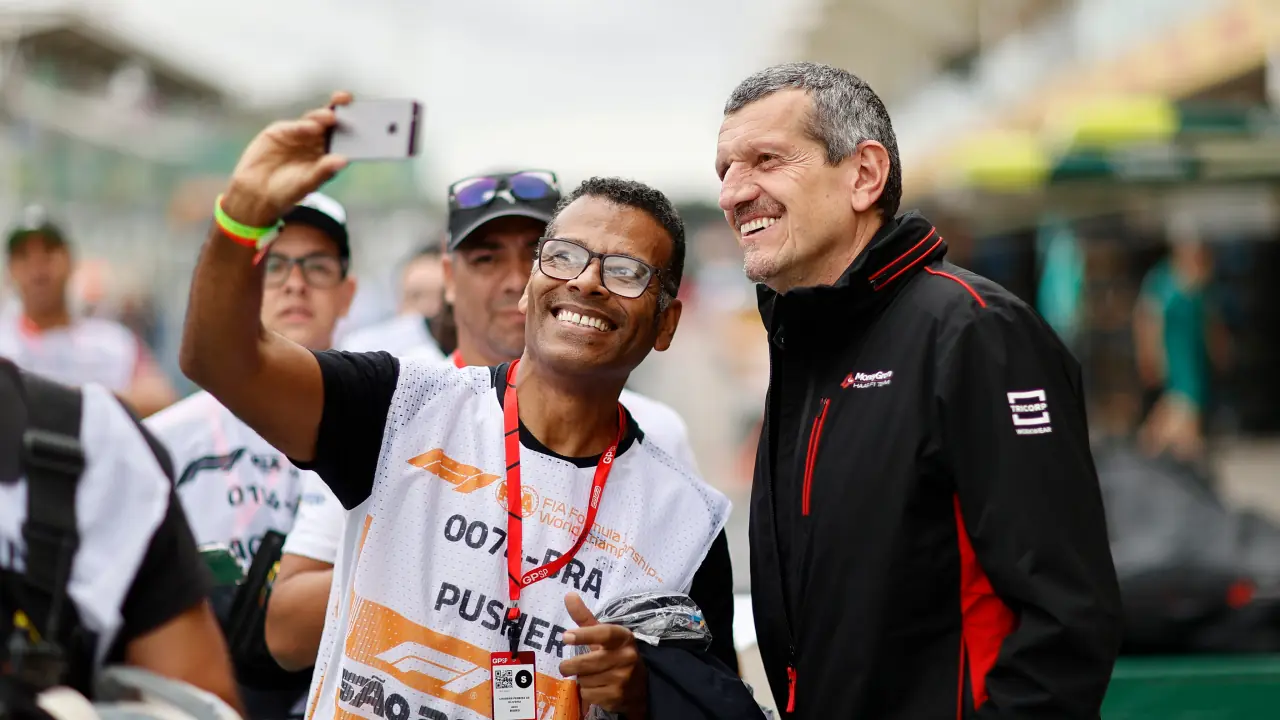
How does it feel going from the F1 paddock and doing all of that to 87 shows that you're now on? James [Hogg] was saying it's the number one bestselling Formula 1 book. Your first one, period. How does that feel?
Guenther: Good. It's good, but it's one of those things because you cannot force these things. People actually want this stuff because you can try to market it. But in the end, if people don't want it, you market it and then it falls off. But it doesn't fall off because people like it. And it's pretty cool to do these things, after you think you have done F1 a long time and it's like, I don't know what to do next. And this just came up and it's showing good success and it's enjoyable.
Greg: When you were stepping away from F1, was this all part of your plan to keep putting your hand in the different opportunities? Is that just your nature to always go, go, go? And how does it feel to be able to say you've done the 87 shows, the book's been so big. All these things that you've been involved in.
Guenther: It's a very strange thing. I always want to do something. I cannot sit still. I've got this itch to do something. My brain keeps on always working, and I get up in the morning and I'm already thinking, what do I need to do? What can I do, what do I have to do? Otherwise I get bored very quickly, having these things and they work out and some don't work out. But I always say there is a moment when you're not good enough, but I can live with that, because then I go and do the next one and it will be good again. I don't give up because something didn't work out. But some of these moments came without, I would say, I got lucky, I didn't want to write a book to start off with. I had no interest. It wasn't me trying to find somebody to write a book with, I was approached to write a book. I said, no, I don't want to do a book. And then I was convinced because the people told me it's actually a cool thing to do. All right, let's do something cool. Let's try it. But I had no guarantee that it would be successful. But I can live. If they would have sold only two books, I wouldn't be depressed or anything.
Greg: You tried.
Guenther: I tried, I did my best. It wasn't good enough. That's life. You cannot always be successful and you have to live with that. There's always a moment where you don't succeed or where you lose a deal or something, but just get up again and do the next thing. It's pretty easy for me, obviously I'm not happy if something fails. By no means I'm happy about failure. But it doesn't get me down. It's the same when you have got the race weekend. I always say the two worst moments for me in racing were when your two cars go out in Q1. That Saturday night is like you don't want to come out of the office, you just want to sit there until everything is dark and nobody sees you. And on race day when you don't finish in the points, it's the same thing. I don't want to be there. But what you have to do on Monday is to get back and work to make it happen next time. You need to be strong enough to do that, and if you're not strong enough to do that, you shouldn't be a team principal in F1.
Guenther's advice to his younger self [18:04]
Greg: It's a great mindset. I just want to ask if you could go back and give yourself advice when you were writing that whole business plan before you launched Haas, and you ended up in this seat as an author, as an analyst, all these things, would there be any piece of advice you'd give yourself?
Guenther: It's obviously with hindsight now, it's easy to say because you've got that advantage. But you know what? I tried to put in that I want a piece of the team. Yes, I would put that one in, but at the time I didn't want it because I didn't have the money to invest in it. So, I needed to be clear about that one. So, I cannot demand something. But if I would have known that the teams would be worth, within five years, billions of dollars, obviously you would make yourself more valuable.
Greg: I mean, you got a lot out of it. So, it's been great to see.
Guenther: I cannot complain again, as you say, I got a lot out of it and I cannot complain. So I'm happy. I have no regrets.
Want more exclusive Insiders?
Then you're in the right place! Head to our YouTube playlist for more, and be sure to subscribe to be the first to see new episodes. Or you can check out some of our recent episodes below:
- Marcus Ericsson on his F1 struggles to Indy 500 winner
- Behind the scenes of endurance racing with Porsche Penske
Article Cover: LAT Photo
.webp)








.webp)




















.webp)























.png)
.png)