


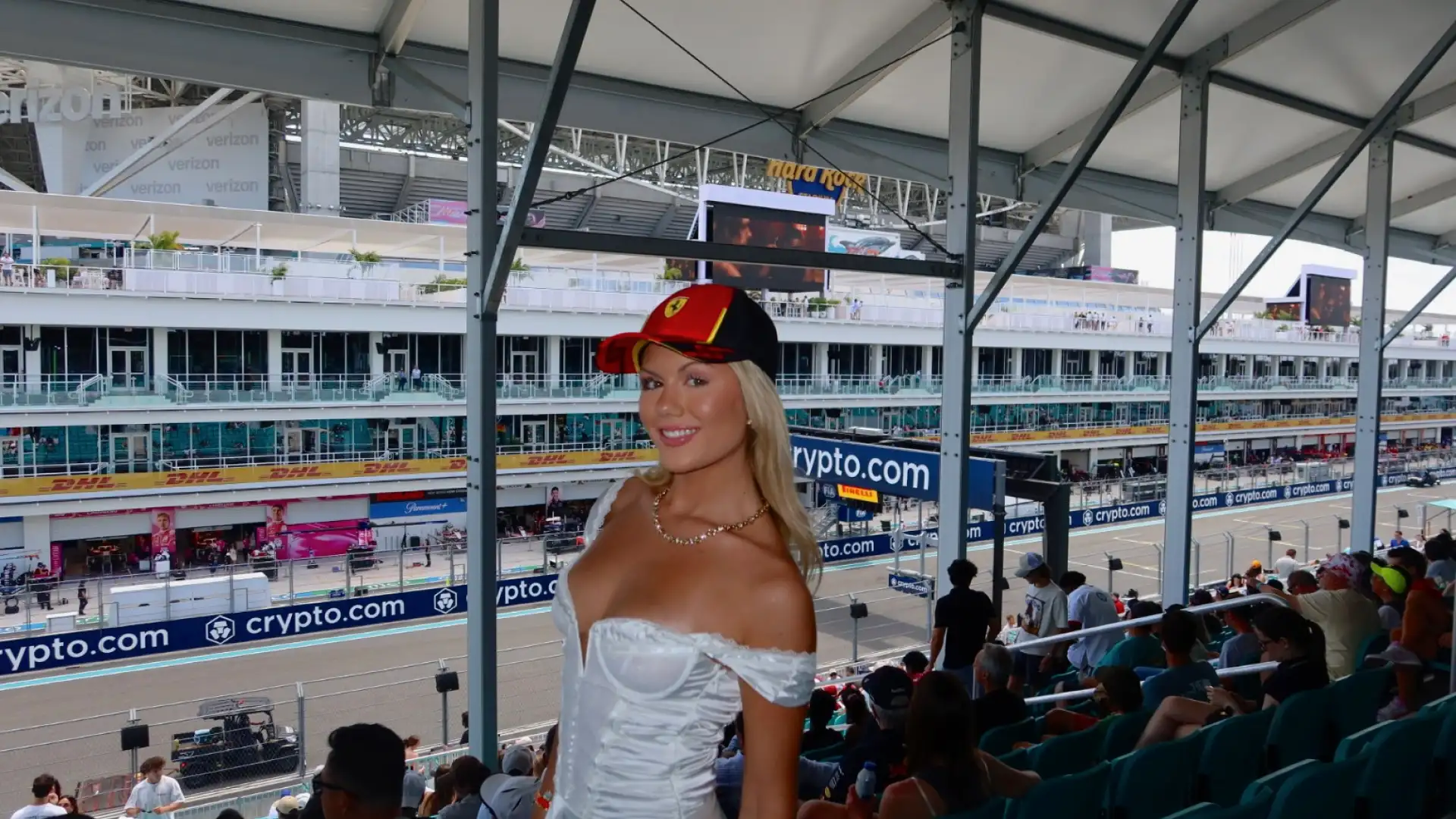



“I think everyone should experience an F1 race at least once in their life,” said Sydney Roberts after her first ever Grand Prix in Miami.
Sydney had never been to or watched much of Formula 1 before the 2025 Miami Grand Prix. Attending the race with her UMiami sorority and their brother fraternity, equipped with her trusty Ferrari hat, she was excited to experience a Formula 1 race firsthand. And boy was it the experience of a lifetime because she can’t wait to go again this May!
Attending your first F1 Grand Prix can be overwhelming—but with the right preparation, it can be unforgettable. Using Sydney Roberts’ race weekend as an example, here’s a guide to help first-time attendees plan, navigate, and enjoy this race to its fullest.


Race Day Thrills at Hard Rock Stadium
The Miami Grand Prix takes place at Hard Rock Stadium which is situated approximately 40 minutes outside of Downtown Miami with typical traffic (it’s actually closer to Fort Lauderdale). It proved to be a great venue, and not just because it's a place familiar to UMiami students who frequent major sporting events there. It’s also because it was the fourth time the stadium has hosted F1, and they’ve ironed out the kinks in those early years.
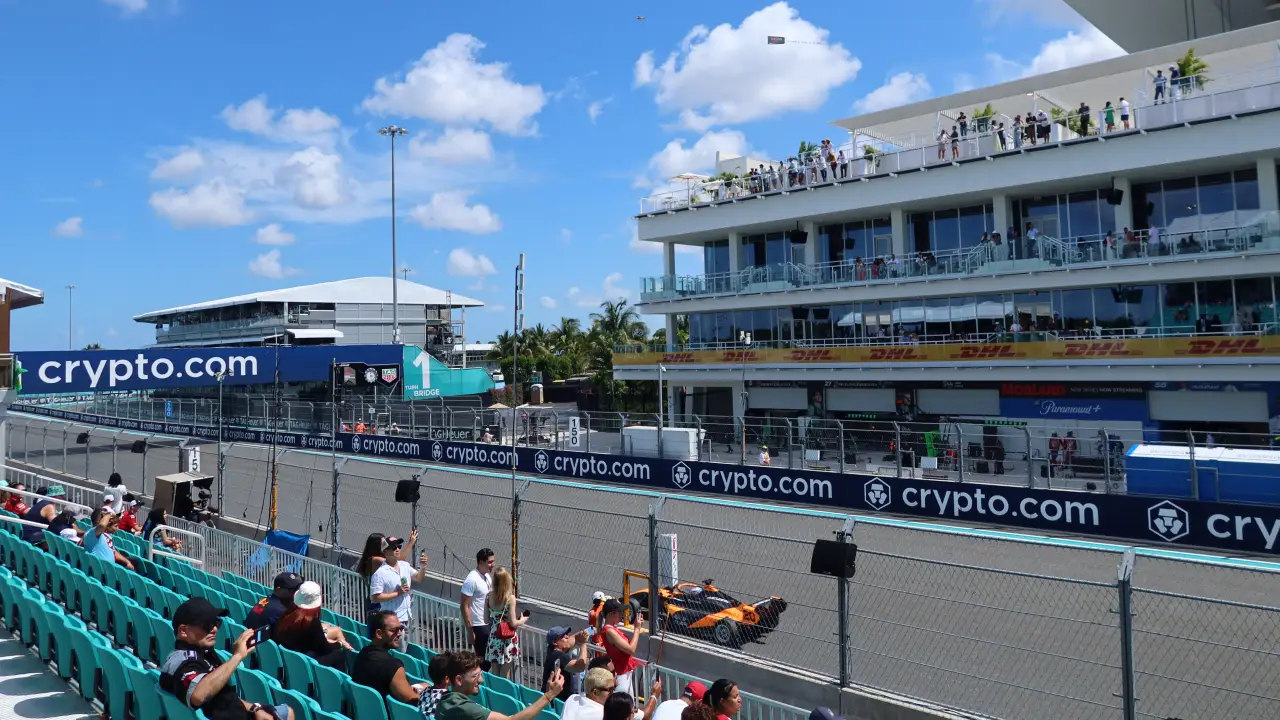
Sydney attended the race with nearly 100 people from her university sorority and their brother fraternity. From their seats in the Start/Finish Grandstand, the atmosphere was overwhelming in the best way! The cars screamed past at full throttle before diving into Turn 1, the sound hitting first, a vibrating roar that rattled through the grandstand, followed by the smell of fuel and hot rubber lingering in the humid Miami air. There was the Porsche Carrera Cup and F1 Academy race, and once the lights went out for F1, “It was loud!” Sydney remembered shouting through all the commotion. “I hope everyone else has earplugs because wow!” Every start, pit stop, and the checkered flag moment unfolded directly in front of them. For a first-time race experience their seats gave them a front row seat to all the action.
Two things to consider in Miami, even for more premium grandstands, are screen visibility and seat cover. From the lower rows, you’re closer to the track with clear screen visibility and the risk of little to no cover. That means sitting exposed to the baking sun or rain. The higher rows offer shade, but the screens may be obstructed by the roof or its support beams. If you’re prioritizing comfort, the shaded, higher rows are the way to go to avoid the intense Florida sun, whereas if you don’t mind the heat and don’t want to miss a beat of the action on screen, a lower row is recommended.
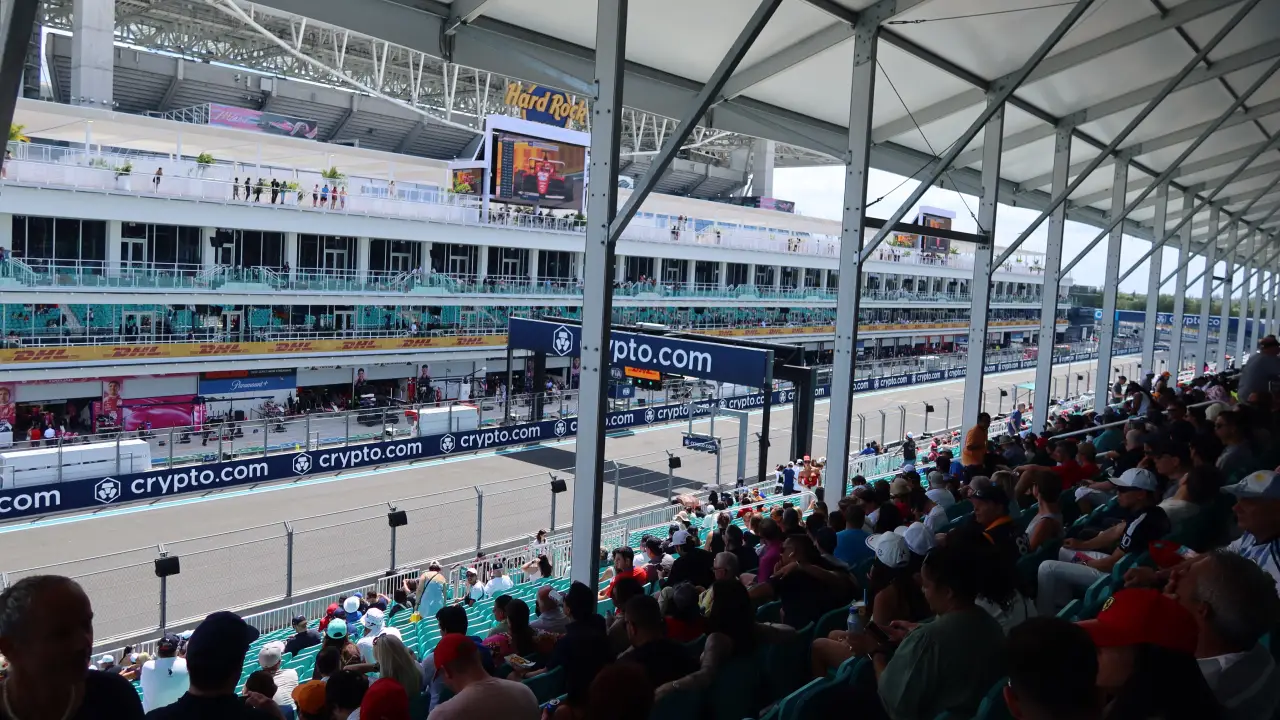
Sporting her Ferrari hat, Sydney kept a keen eye out for a certain blue eyed Monégasque Ferrari Driver, better known as Charles Leclerc. Wanting to keep up with him throughout the race, but not wanting to brave the heat, Sydney relied on the F1TV app for timing and onboard views. For first-timers, having the app downloaded in advance can be the difference between staying up to date on the full race story and struggling to know what’s happening.
Ultimately, if you’re deciding where to sit at a Grand Prix, the start/finish straight offers unmatched intensity and atmosphere. When selecting seats, think beyond just how close you are to the track. Consider sightlines, screen access, weather exposure, and your overall comfort for a day outdoors. A small seating detail can make a big difference in how you experience race day.
Getting to Your Grandstand
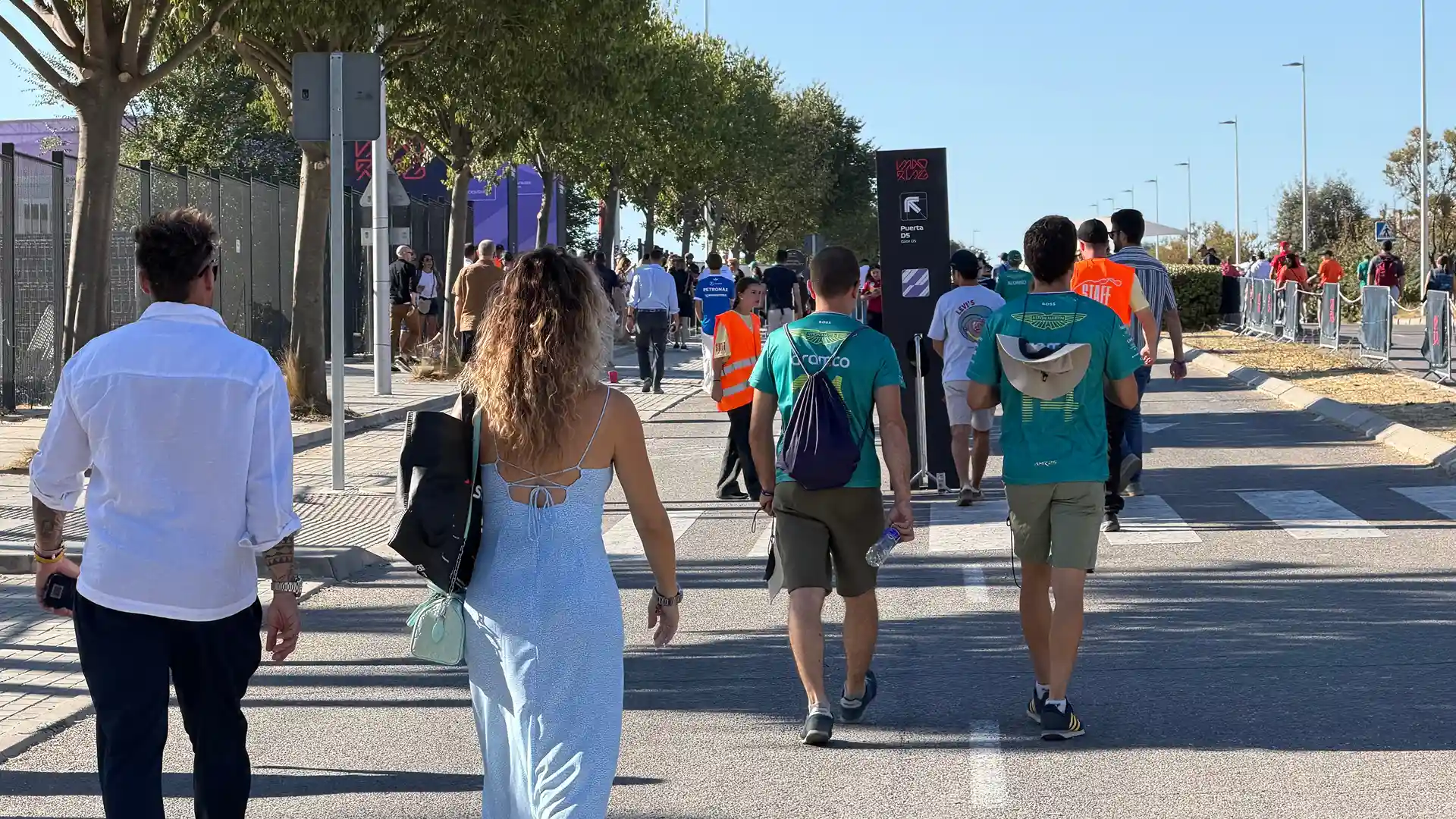
One of the first challenges new attendees face at the Miami Grand Prix is simply finding their seats. Sydney and her friends quickly realized that finding their seats in the Start/Finish Grandstand wasn’t as simple as following one sign. Hard Rock Stadium is expansive, with multiple zones, entrances, and section labels that don’t always align intuitively with what’s printed on a ticket (example: the Start/Finish Grandstand is situated within the North Campus zone). Add in tens of thousands of fans moving in different directions, and it’s easy to feel lost.
No matter which Grand Prix you attend, make your arrival smooth by getting there earlier than you think you need to. Give yourself time to review venue maps, confirm your entry gate in advance, and familiarize yourself with the zone layout before race day. If you’re unsure where to go, staff members throughout the circuit can point you in the right direction. A little extra time and preparation can make the difference between a stressful start and a confident one.
From Home to the Track (and Back Again)
Getting to and from a Grand Prix requires just as much planning as choosing your seat, and the logistics can vary dramatically depending on the circuit layout.
For the Miami Grand Prix, Sydney and her group opted for a rideshare. They scheduled an Uber and split the $100 fare to make the 40-minute drive manageable. While the drive itself was smooth, navigating the correct drop-off point proved to be more complicated. With multiple designated entrances and temporary road closures in place, choosing the wrong drop off zone can mean unexpected walking time and confusion. Her biggest takeaway: research the entrance closest to your grandstand before requesting your ride.
Transportation strategies differ by circuit. At the Canadian Grand Prix in Montreal, for example, many fans rely on the metro system to access Circuit Gilles Villeneuve, while shuttle buses are common at Silverstone for the British Grand Prix. Your best option depends on the venue, so researching transit routes and road closures ahead of time can prevent unnecessary frustrations.
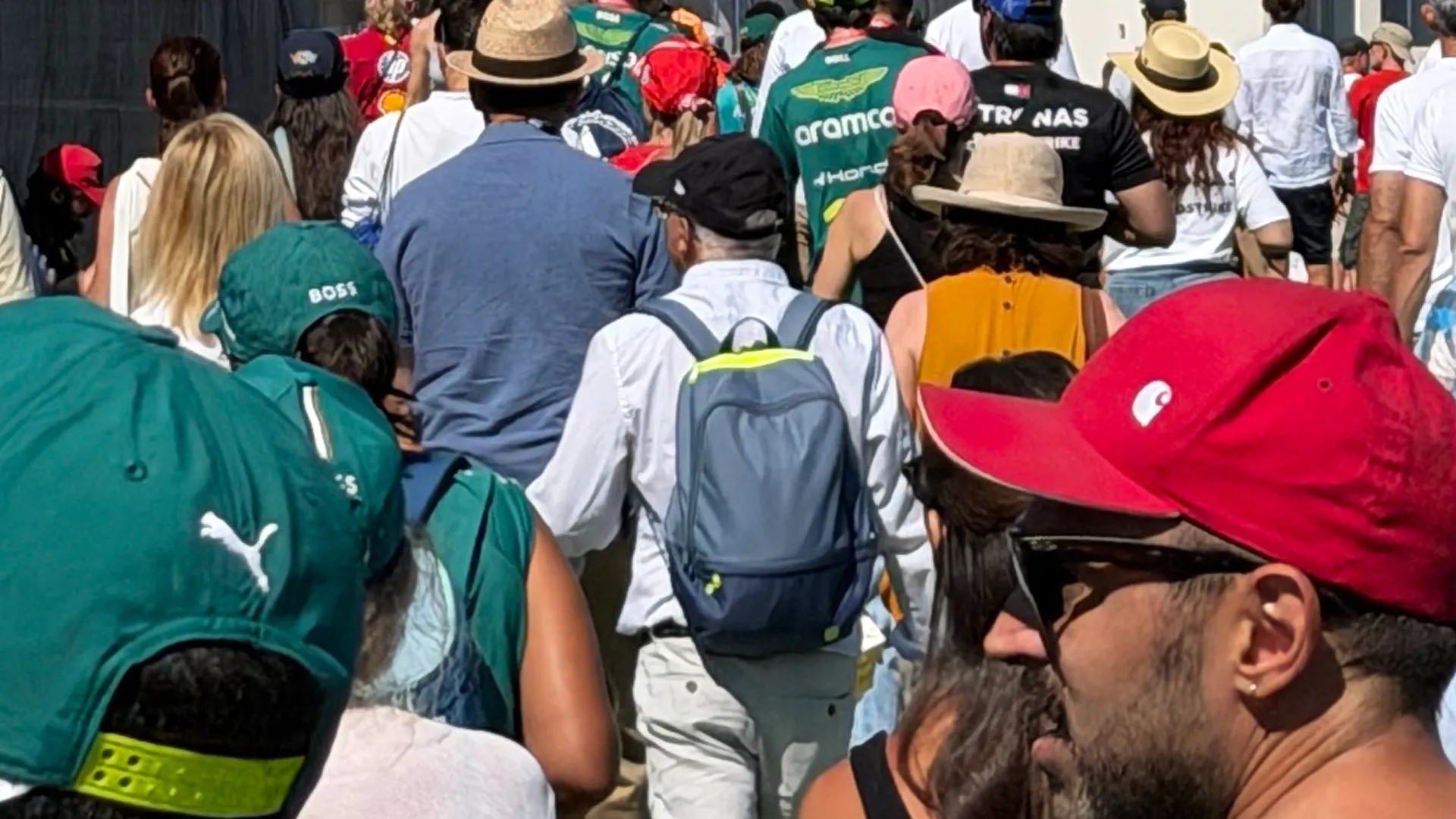
Leaving the track tends to require more strategy than arriving. As Sydney noted, exiting Hard Rock Stadium after any major event can feel overwhelming. Roads surrounding the venue quickly come to a standstill, and rideshare pickup zones become congested within minutes after the checkered flag flies. Her advice? Walk several blocks away from the main gates before requesting a ride, or allow time for crowds to thin out. Surge pricing should also be expected, as Sydney and her friends had to pay double the price to get back to the University of Miami campus.
No matter the circuit, the big idea is: plan your arrival and exit in advance. Whether you’re taking a rideshare, metro, bus, etc, understanding how to get to your specific venue can save time, money, and unwanted stress.
Race Day Refreshments and Rest Stops
“Frozen Lemonade is always good on a hot day,” Sydney shared when it came to her race-day splurge! Having eaten at home before the main event and wanting a sweet treat to tide her over, Sydney found that frozen lemonade was the way to go, especially on a hot Miami day. She found that most onsite beverages and snacks were quite pricey. “It is Miami after all.” Translation: it’s expensive. Sydney recommended eating before heading to the circuit, and bringing a water bottle to save the hassle of waiting in lines and the pain of emptying your wallet.
On a positive note, bathroom facilities were clean, well-maintained, and relatively efficient, with minimal wait times compared to other large sporting events, an important factor when it comes to making sure you don’t miss any of the action.
The takeaway here is simple: arrive well-fed, stay hydrated, budget for higher prices, and factor concession lines into your schedule to make the most of your first race day experience!
Hats, Hydration, and Handbags
What you pack for your race day can significantly impact your race-day comfort.
First and foremost: sun protection. Miami heat is no joke, especially if you’re in an uncovered grandstand, or walking between zones. A hat is essential and many attendees also opt for sunglasses and sunscreen. As Sydney emphasized, “Miami is HOT, so being prepared is essential.” and when asked for her top race tip she warned enthusiastically, “a hat!” A water bottle, camera, and her Ferrari hat was all Sydney felt that she really needed.
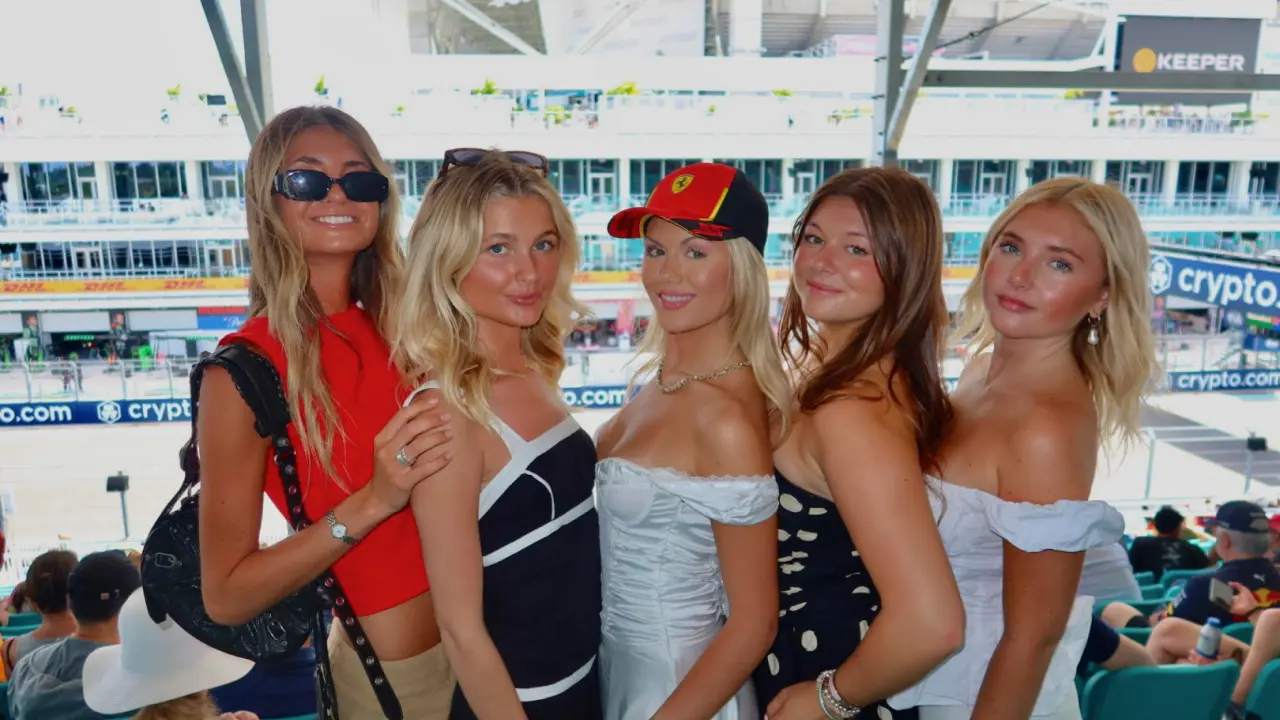
Hydration is equally important. Bringing a refillable water bottle can save time and money while helping you stay cool throughout the day. With long walking distances and limited shade, having water on hand is critical.
When it comes to bags, pack strategically. “Hard Rock Stadium is notoriously strict with bag checks,” Sydney warned, “so pack light, and only bring the essentials.” Check out our article on bag restrictions at F1 races to make sure that you’re set for race day.
Protect yourself from the sun, prioritize hydration, and pack light to make entry smooth and stress-free.
Sydney’s Tips for a Smooth First F1 Experience
So, what can you learn from Sydney's first F1 Experience? The biggest tip: plan ahead. Figure out your transportation in advance so you don’t get stuck navigating crowded streets. Dress for the weather—bring a hat and water for hot circuits like Miami or Monza, or a sweater for breezier races like the Canadian Grand Prix. Don’t forget to check the circuit’s bag policies before you arrive to avoid delays at security.
Soaking in the roar of the engines, cheering for your favorite driver, and enjoying the atmosphere with your friends, with a little preparation your first Grand Prix can be as thrilling and memorable as Sydney’s!
Want to learn more about the Miami GP? Look no further than our dedicated race page for guides and ticket options. Or, pick your perfect first race by exploring tickets and guides for every race on the calendar, including F1, IndyCar and more.


.png)
.png)