

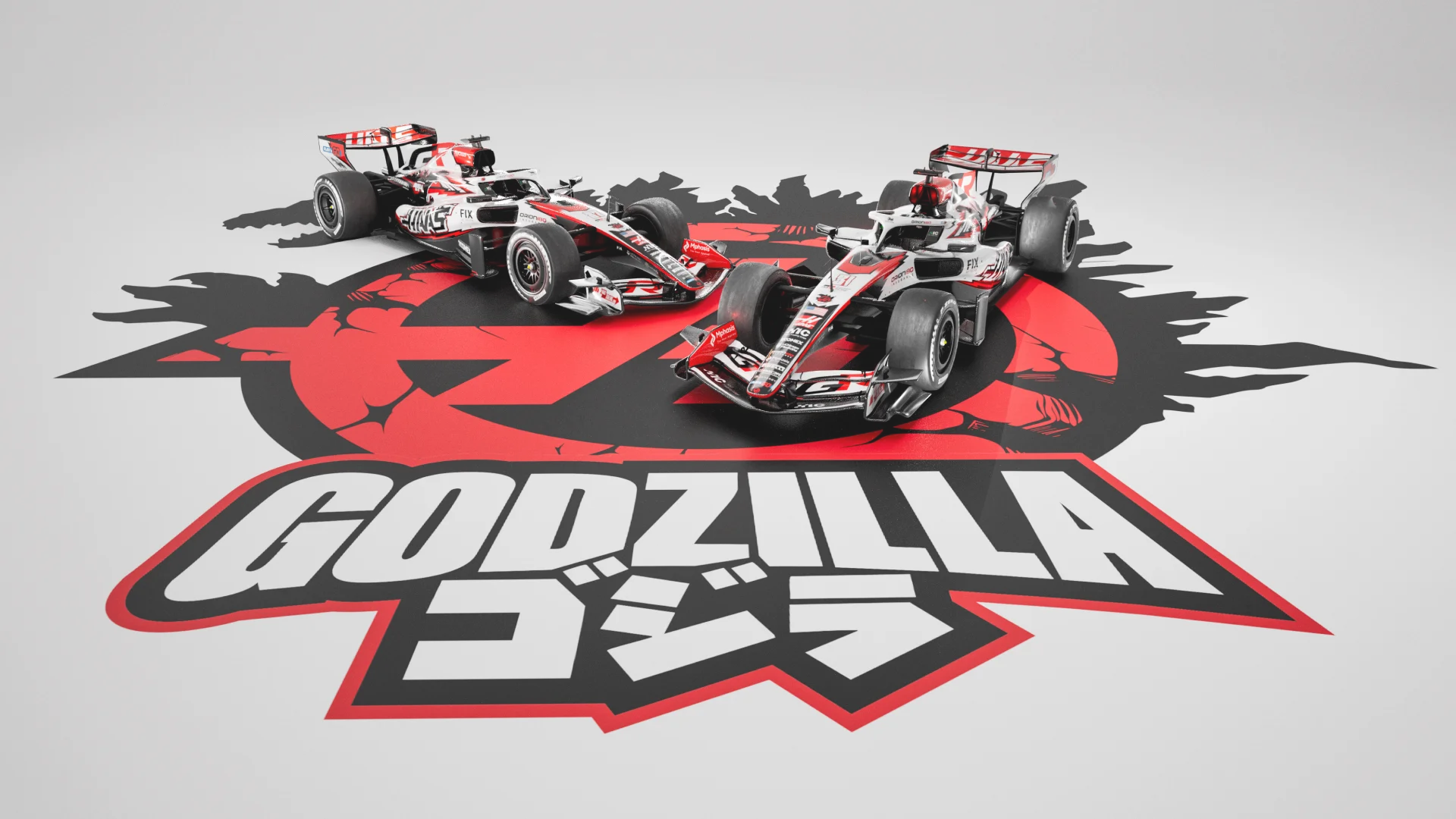


From Star Wars and Sega to Lego and Disney, Formula 1 is no stranger to collaborations on an epic scale. They’ve brought us some amazing liveries and some incredibly fun merch, but few have truly stopped us in our tracks the way that Haas did when they revealed their monstrous partnership with Japan’s TOHO Studios that brought a Godzilla-themed custom livery to the 2026 Japanese Grand Prix.
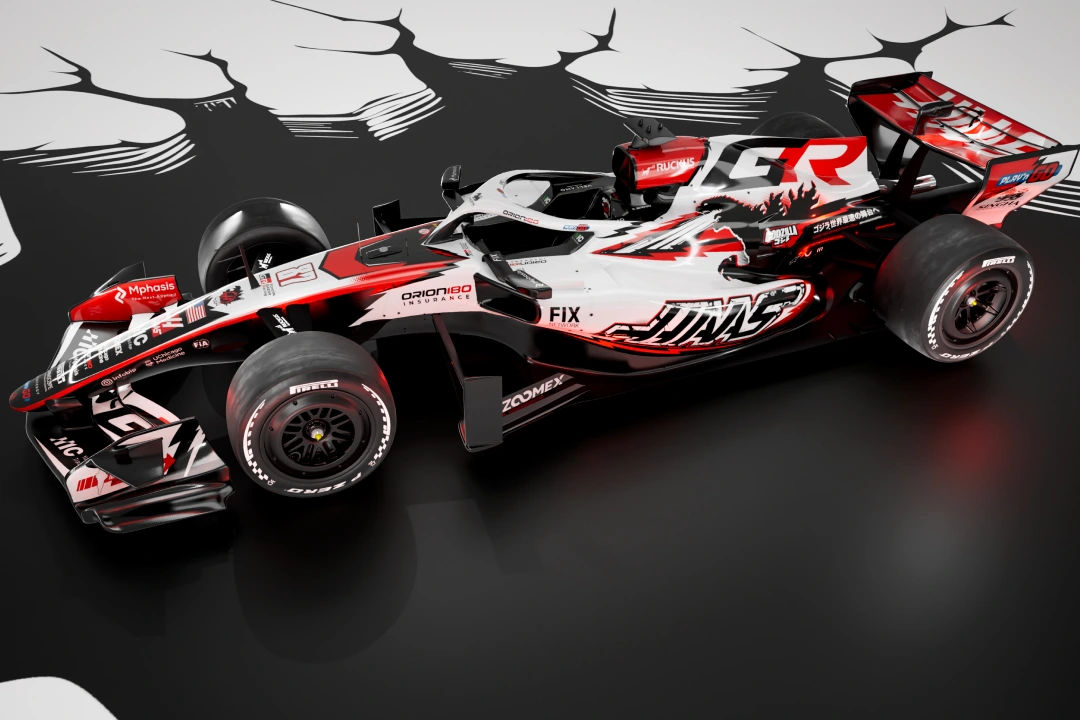
The livery, featuring the world’s most famous kaiju silhouetted on the engine cover of the VF-26 chassis, became one of the most talked about parts of the weekend at Suzuka Circuit (and around the world). But beyond just giving us a spectacular design, this collaboration is a study in how the fast-paced world of F1 and the carefully constructed characters of the film industry can come together through an inventive fusion of branding, and technology to bring something incredibly unique that speaks to fans everywhere.
So sit tight as we dive into the process of how a team owner’s seemingly throw-away idea grew into a larger-than-life spectacle that will be a key part of that team’s image this year.


The initial idea came from Gene Haas himself
The concept for this collaboration initially started with a casual comment from Haas team owner, Gene Haas.
“Gene suggested it to Ayao Komatsu (Haas Team Principal) at the end of 2024 because at the time the idea of doing a special livery for Japan was coming around,” explained the team’s Director of Marketing Operations Francois Puentes in a recent interview with Sector.
Komatsu admitted that, at first, he didn’t think too much about the idea. “I was like, ‘OK Gene,’ and kind of didn’t react,” he said to The Athletic ahead of the Japanese Grand Prix Weekend. “And then Gene mentioned it three times, and I thought, ‘huh, interesting.’
“Godzilla is someone dynamic, a bit disruptive, and is a Japanese export well-known worldwide. The more I thought about it, the more I thought it was actually a pretty good idea.”
Godzilla perfectly encapsulates the Haas identity
Indeed, the global scale of the Godzilla franchise is exactly what makes this the perfect partnership for Haas as, in a way, it mirrors the international footprint of the team.
“Through Gene and the Haas name we are very much American-rooted but like many teams we are based in the UK and then through Ayao and [Toyota Gazoo Racing] we have strong links to Asia, and Japan in particular,” Puentes said to Sector.
“It makes sense for us to partner with such an iconic brand, not just in Japan but throughout the world.”
Haas driver Esteban Ocon echoed the sentiment when speaking to The Athletic, saying, “Godzilla is an icon across the whole world, not only in Japan.”
From that, it is easy to see how bringing a globally recognizable icon like Godzilla to the track offers Haas a unique opportunity to connect with an F1 audience that has never been more international than it is today, particularly as the team is feeling all the more international itself.
But how is an idea like this put into practice?
Designing a livery for an F1 car is no easy task
“The surface is a very unusual surface,” Canadian muralist Kristen McCrea said. McCrea was the creative mind behind Red Bull F1 Academy Driver Alisha Palmowski’s custom livery for the 2025 Canadian Grand Prix, and although F1 Academy cars are not clones of their F1 counterparts, many of the same design challenges exist between the two.
“It also is going to be seen as quite a small object by most people,” explained McCrea. “Most people are either going to see it from the stands as it races by them if they're really lucky… and get to go see it in person, or on their phone, or maybe on a computer screen, maybe a TV screen. But it's going to be a small object and it's going to be in motion. So those are all things to consider.”
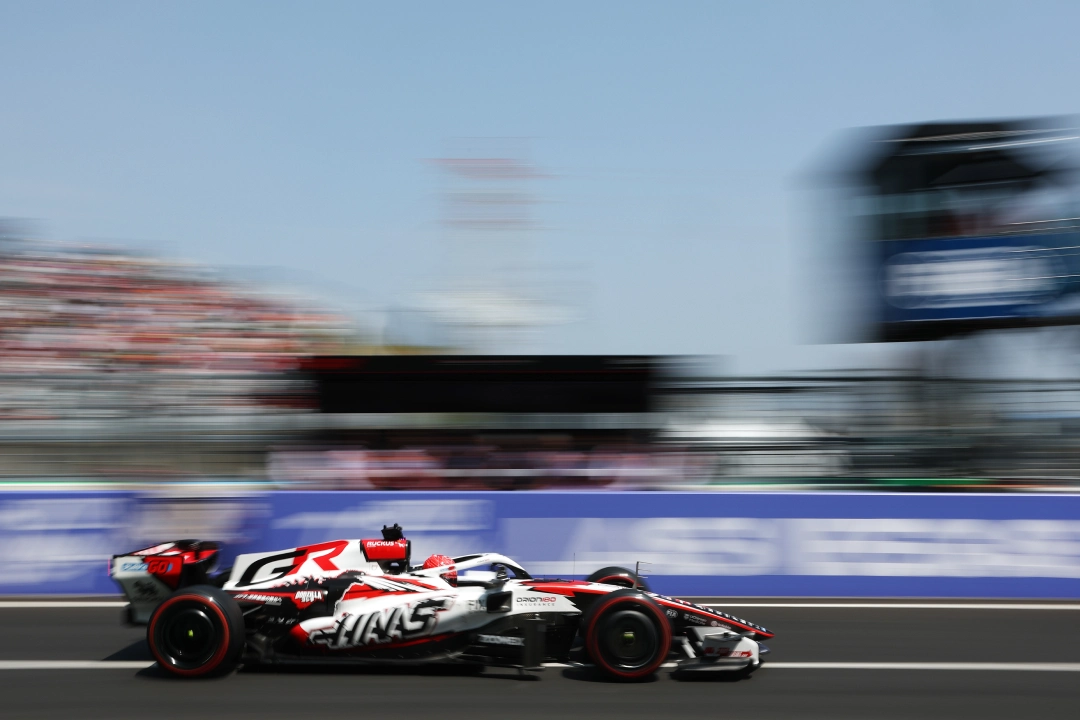
But beyond just accounting for the unique shape of the car and making sure that the design is legible at high speeds and even on a tiny screen, there is one other crucial factor when considering the visuals of an F1 car that cannot be forgotten: the sponsor logos.
Arrow McLaren Vice President of Marketing & Communications Lauren Gaudion gave us excellent insight into this when speaking about the design process of a custom livery for their IndyCar team.
“We'd love to do something that maybe brings in teal with Papaya,” she said, “but does that also align with the different partners and what we'd have to do with their backgrounds?
“You'll see it on the [McLaren] F1 team that they use patches.”
Haas’s clever solution to this issue was to incorporate a Godzilla design that fit into their red, white and black color scheme, allowing them to seamlessly weave the image of the monster shooting his famous Atomic Breath without needing to make many adjustments to sponsor logos.
The challenge of bringing Godzilla to life on the F1 track
Designing a custom livery may not be an easy task, but doing it in collaboration with a massive film franchise is all the more difficult. In addition to working around the F1 team’s own sponsors, designers also have to keep in mind the identity of the franchise that they are working with.
“Obviously you have to approach the opportunity with a great level of respect and humility,” Puentes said. “Like any other key player in its industry, TOHO is protective of its IP but I was surprised by the level of flexibility they had.
“We expected approvals to take much longer and with more push back but they have really played the game from really early on.”
This worked to both parties' benefit as an even bigger challenge became evident early on in the collaboration.
“The main difference is that in F1 we have small cycles,” explained Puentes, “we operate in weeks not years and it is the exact opposite in the entertainment industry so we had to meet somewhere.”
The fan reaction makes it all worth it
All of the crazy challenges that come with unique surface shapes, IP and sponsors, and wildly different industry timelines become worth it in the end for one critical reason: the fans.
And the fan reaction to this partnership has been nothing short of incredible.
The merchandise that was released as part of the collaboration sold out of its first run before the race weekend even began. The livery reveal, held in Tokyo Midtown Hibiya on March 24th, was packed to the brim with spectators. And, perhaps most tellingly, the online comments have been full of enthusiasm and excitement for the team-up.
“Aside from Godzilla being one of my favorite movies, now with the collab of my fave team in F1. What more could I ask for,” commented one user on an Instagram post announcing the partnership.
“American team with a Japanese livery, this is why we love Formula 1,” said another on a post chronicling the reveal.
“This needs a LEGO Speed Champions set IMMEDIATELY,” said a third.
This is not a one-off. It is a year-long deal
While the collaboration hasn’t extended to include a LEGO set, fans of this epic team-up need not fear, as the Japanese Grand Prix will certainly not be the last time we see Haas repping Godzilla.
While many other custom livery collaborations exist solely as one-offs, Haas and TOHO have set in motion a long-term plan that will see them reprise their partnership at the United States Grand Prix in Austin, Texas later this year.
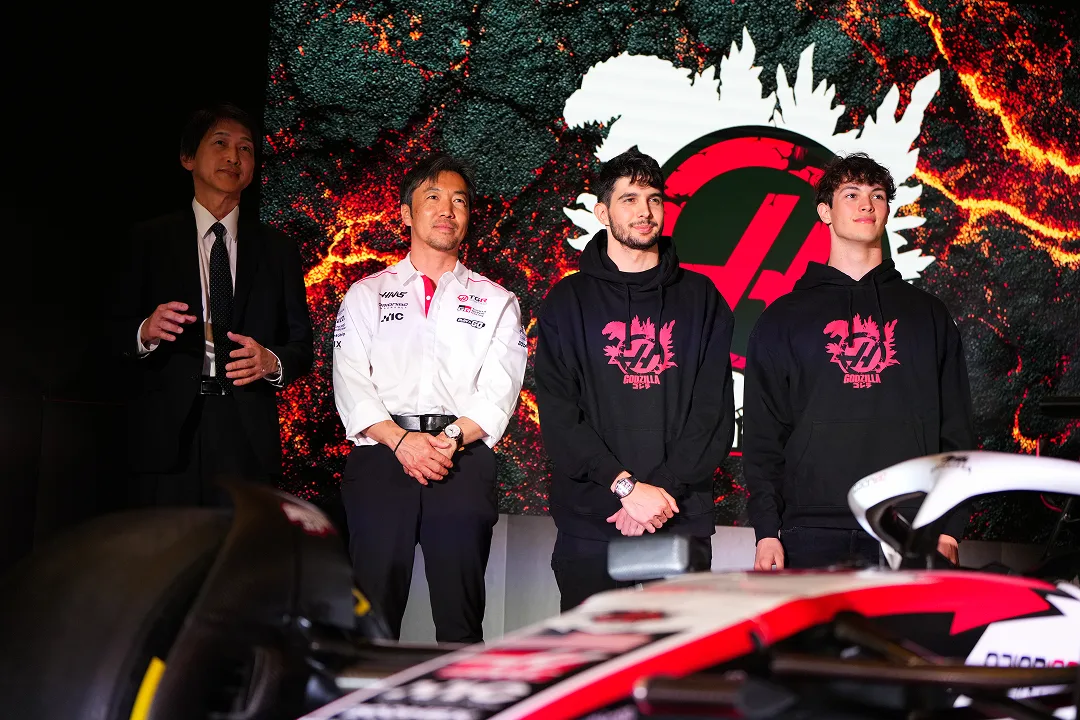
“The second leg of the collaboration will be tailored around the upcoming release of Godzilla Minus Zero,” said Puentes, “we will have the opportunity to reach out to those new audiences.
“We will be at New York Comic Con in October – we are going to be able to introduce ourselves to a completely new audience. They may know about F1, they may know about Haas but they will definitely know about us after Comic Con.
“We are going to be part of the wider promotion of the movie and there will be a takeover of our garage in Austin.”
This is a truly exciting shape for a collaboration of this sort to take, as fans will have gotten used to many one-time cross-overs we’ve seen in the past. But with this, Haas and TOHO both have an excellent opportunity to foster sustained engagement and build a deeper connection, tying together the epic worlds of motorsport and monsters.
Ultimately, this joint project between Haas and TOHO is a testament to the way that F1 and film are evolving together to harness the international appeal of both industries, adapting to challenges from both fields to bring fans across the globe together, one Godzilla-sized step at a time.
Images courtesy of the TGR Haas F1 Team.


.jpg)
.jpg)
.jpg)
.png)
.png)