


.webp)


Winning a Formula 1 grand prix is not just about having a fast car; it’s also about having a sound race strategy. Two key tools that F1 teams have when formulating their Sunday plan are the undercut and overcut.
These are two terms you are more than likely to hear at least once during any given grand prix, and we are going to break them down so you know exactly what they are, how they differ, and how each one is used.


Tire condition is the key to a successful undercut and overcut
F1 races require every driver to make at least one stop and use two different tire compounds, and when and how teams choose to do this can make a big difference on their race outcome. Both the undercut and the overcut are race strategies that use the timing of a pit stop to give a driver an advantage over their opponent. But before we get into the crux of what these two strategies are, we need to understand how different tire compounds behave and how that comes into play when teams are planning their race strategies.
The speed of an F1 car, and therefore its lap time, is highly dependent on its tires and the condition that they are in. When they are fresh out of the pit, all tire compounds need a bit of time to warm up and reach their top speeds. Over time, however, they also get worn out and degrade, causing them to slow down.
Softer compounds tend to need less time to warm up and reach their top speed quite quickly, but they also degrade the fastest, making their performance like a sudden burst of energy that fades out quickly. Harder compounds, on the other hand, need longer to warm up, so they will start off slower but once they reach their goldilocks condition, they will stay there for longer, making up for that initial loss of speed.
That said, the compound is not the only thing that affects how quickly tires degrade. Things like the condition of the track, the traffic–or lack thereof–around a car, and more can all affect how tires behave and how well they can hold up. How well a driver is able to manage their tires once they come up to temperature is also a big factor; the better care a driver takes, the longer their tires will last, ultimately opening up more strategy options for the team.
Teams will keep careful tabs on all of these things as well as the state of their own driver’s tires when deciding if they want to go for an undercut or overcut, and how to use these strategies to give them the biggest advantage over their opponents.
The undercut: pitting earlier to get ahead on fresher tires
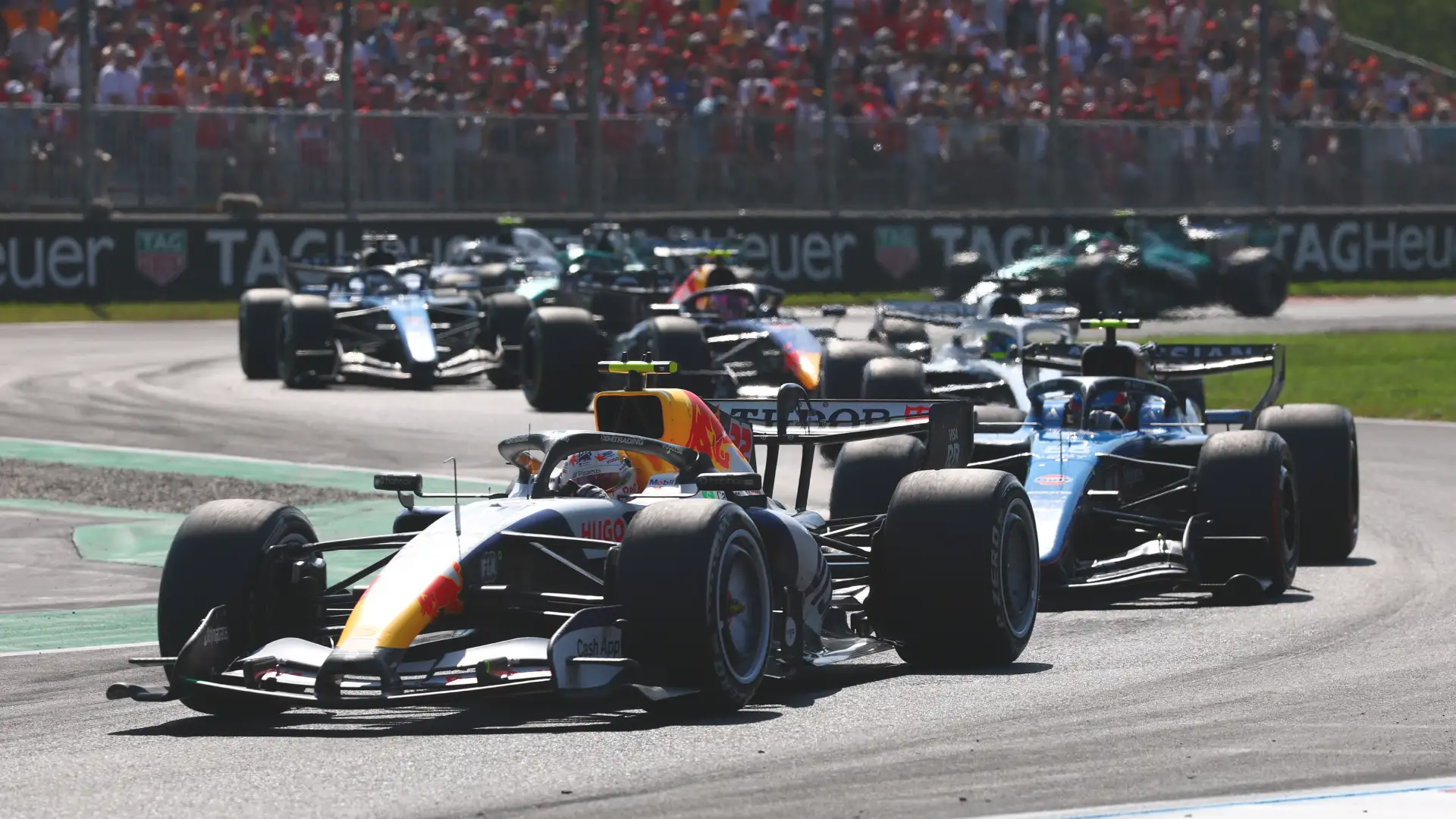
In an undercut, a driver will pit before their opponents and thus be on fresher, faster tires compared to the set used by their competitors. This difference in tire condition should allow them to make up for the time lost going into the pit and gain the upper hand on-track.
So how does it play out?
Let’s say we have two drivers, Adam and Terry, who are battling during a race. Adam’s team decides to go for an undercut, and so pits before Terry. He loses time going through the pitting process–about 20 seconds lost–but comes out on brand new tires and puts down a lightning quick lap after leaving the pit (the out-lap).
Meanwhile, Terry is still out on old tires. This means his pace is considerably slower, and even if he pits right after Adam, Terry’s final lap before his pitstop (the in-lap) will still take longer than Adam’s out-lap. This is where Adam has a chance to make up the ground from pitting first and even get ahead of Terry if his team timed this well.
The undercut is an aggressive tactic often used on tracks that have fairly high degradation. The higher the degradation, the faster older tires will lose speed, so a fresh set of wheels offers a bigger advantage.
The overcut: staying out longer to build a bigger gap
The overcut is a bit more defensive, and involves a driver staying out longer than their opponent, building up enough of a gap to be able to take a pit stop and still maintain position.
Let’s go back to Adam and Terry to see how this works on-track. Adam pitted first, hoping to use his fresher tires to gain an advantage over Terry. Terry’s team, however, thinks that Adam could have trouble getting his tires up to the ideal temperature, and thus speed. Maybe they see that Adam is likely to come out of the pit in the middle of some heavy traffic where he will have to spend a lot of time overtaking other cars, or is on a harder compound that takes more time to heat up.
So they decide to try doing an overcut with Terry, telling him to stay out and push as much as he can, even though he is on older tires. Terry uses the clean air he has to build up a large enough gap between himself and Adam. And if he and his team have both done their jobs, Terry will have enough time to make a pit stop and still come out of the pitlane ahead of Adam.
Overcuts are less common than undercuts in F1, and are most often seen on low degradation tracks where tires are generally able to last longer, allowing the overcutting driver to stay out without losing ground.
The safety car variable
On top of all the data teams have at their disposal when planning their tire strategies and pit stops for the optimal outcomes, they also need to be prepared for the unexpected. A perfect example is a safety car, which is not something anyone can accurately predict ahead of time.
While pitting under normal racing conditions costs roughly 20 seconds, doing so under a safety car costs only about half of that time, as cars are forced to drive at a slower pace. So while a team may initially be thinking about an undercut, doing so during a safety car will not be nearly as beneficial.
Of course, sometimes teams get unlucky, and a safety car happens shortly after they’ve pitted for an undercut. This is a possibility they will always have in the back of their minds when executing their race strategies and is part of what makes planning undercuts and overcuts so complex.
Cover image via Red Bull Content Pool

.webp)
.webp)


.png)
.png)