


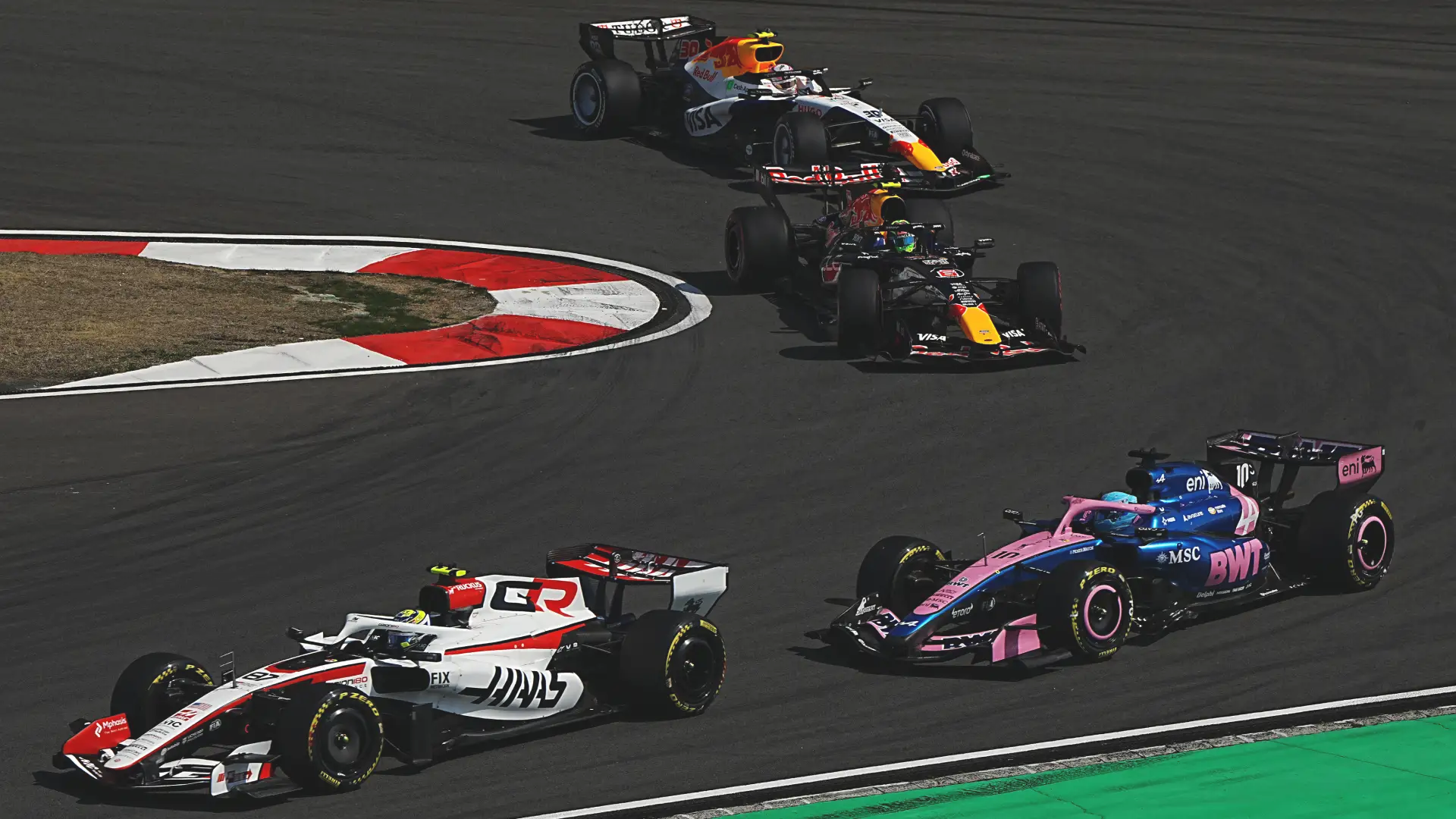


With the new Formula 1 regulations taking effect, and drivers and teams having to adjust to completely new cars, missteps on track are bound to happen. Two of the most common issues we hear about during almost every grand prix are oversteer and understeer. But what exactly are they? And how can you spot them when they happen to your favorite driver?
We’ve got all the answers you need in this breakdown of how and why oversteer and understeer occur and, most importantly, what the difference between them is.


Understeer: When the front tires lose grip
Understeer happens when the front tires of an F1 car have less grip than the rear tires. This can occur if they get more worn out throughout the course of a race, but it can also be caused by the way the suspension is set up and the balance of the car. If there is more weight towards the back of the car, for example, the front will be less grippy, making it more susceptible to understeer.
But what does understeer for race car drivers look like?
Simply put, it is when a driver turns the steering wheel, but the car doesn’t go with it. Instead, it keeps going straight because the front tires don’t have the necessary traction needed to make the turn. You can spot it on an onboard video when, for example, a driver is going through a right-hand turn and they keep twisting the steering wheel to the right without much effect. An easy way to imagine it is as if the car is under-reactive to being steered in a certain direction.
If the understeer is particularly bad, the driver can lose control of the car and hit the wall, usually nose-first.
Oversteer: When the rear tires lose grip
If understeer happens when the front tires lose grip, then oversteer happens when the rear tires have less grip. Again, it can be caused by several factors, but suspension set-up, car balance and uneven tire wear are the most common factors, causing the weight of the car to be shifted more towards the front and making the back less grippy.
In oversteer, the rear will slip more easily making it much more difficult to control the car. Usually, this looks like the car is drifting, or like the back end is coming around to the front in the middle of a turn. On an onboard, you can spot it fairly easily when a driver’s steering wheel suddenly snaps in the opposite direction of the turn they are going through.
If a driver loses control of the car during oversteer, they can end up spinning out with their rear wing in the wall.
How understeer and oversteer impact driving
No F1 car is perfectly balanced, and every single set up will tend to push it a bit towards under- or oversteer. A more understeer-y car tends to be a bit more stable, albeit slower to get around a turn. An oversteer-y car, on the other hand, tends to be a bit less stable and more prone to spinning out, but it does benefit from faster entry speed into corners.
With that in mind, different drivers will have different preferences on how they like the car to be set up. Depending on their driving style, some may prefer to err on the side of caution with a bit more understeer, while others may lean towards a quicker, snappier car that is more prone to oversteering.
Cover image via Red Bull Content Pool
.webp)

.webp)


.png)
.png)