

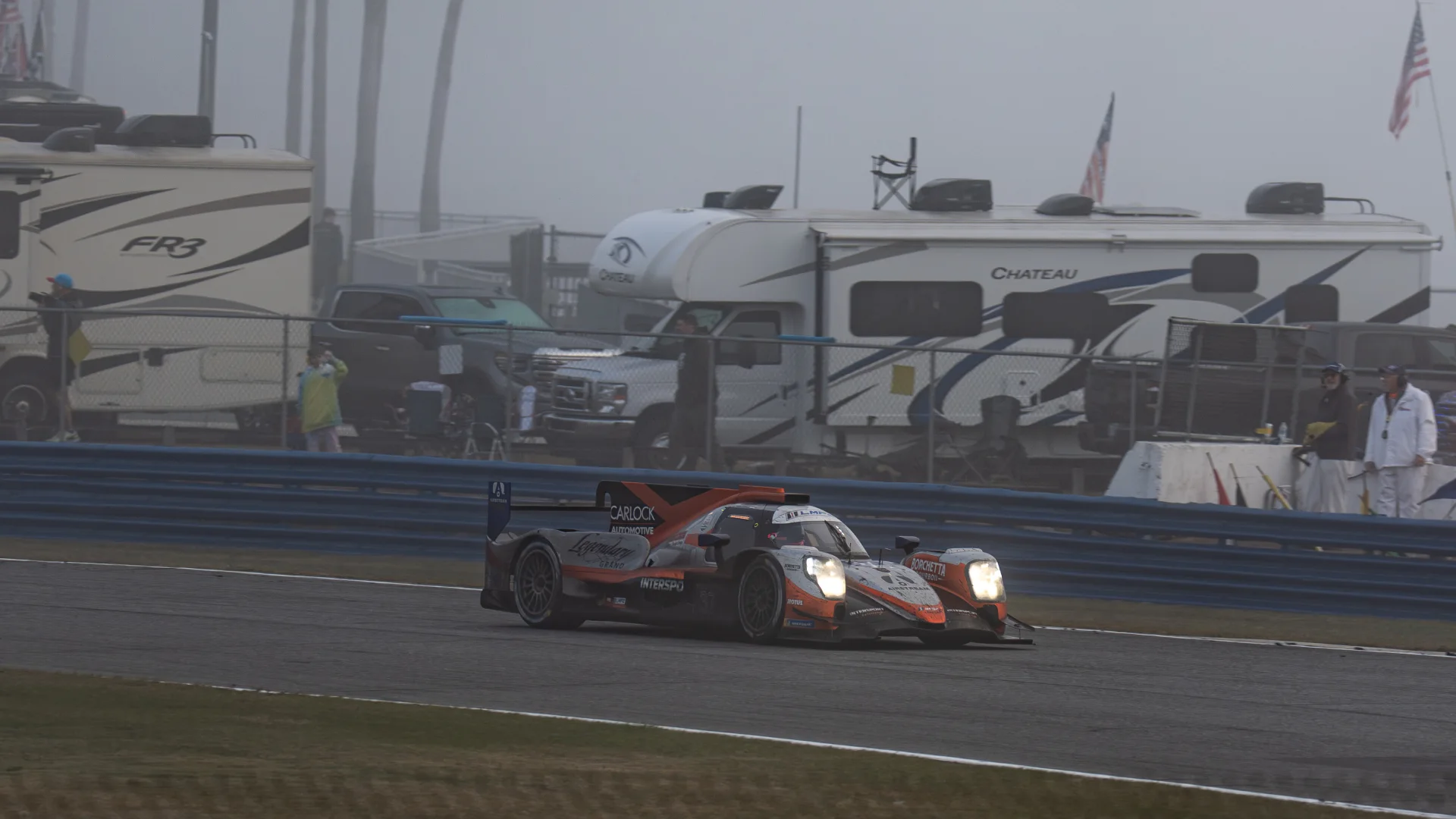


At the Rolex 24, the race doesn’t begin when the green flag waves. For many fans, it starts long before—somewhere between setting up a tent, sharing a drink with strangers who feel like long-lost friends, and watching the track lights glow against a campground that slowly becomes a small city of its own. At the Daytona International Speedway, camping is as magical of an experience as the on-track action.
For Josh Chinksy, a long-time race fan who grew up next to The Racing Capital of the World, the Indianapolis Motor Speedway, that realization turned a birthday weekend into an annual tradition. 2026 was his second time at the Rolex 24 , attending again with his friend Chris. They packed the car with a cooler, Blackstone grill, folding chairs, and even a projector screen before racing down to Daytona, Florida. If you’re going to spend four days at this historic IMSA race, you might as well do it right.


Infield vs Outfield: Choosing Your Base Camp
Not all campsites are created equal. There are two primary options:
- Outfield - The Park West RV lot is located near turn one, adjacent to the airport runway
- Infield - A mix of RV and tent camping spread throughout the entire infield area. The Orange Tent Campground is the primary tent camping option situated inside turns three and four
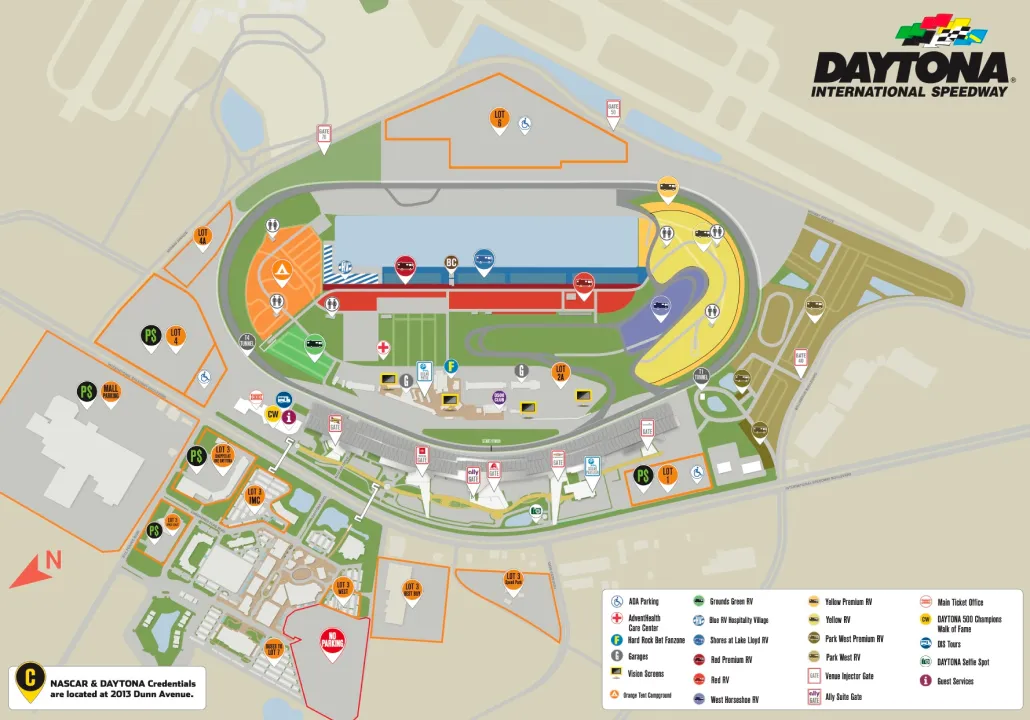
The outfield, or Park West RV (referred to by some fans as ‘Geico West’) offers a unique kind of experience. Campsites are large (20x40ft), and with more breathing room the atmosphere is more relaxed. It’s slightly farther from the core of the action, but easier to access and better suited for fans looking to spread out, or camp in larger groups.
On the other hand, the Infield, or Orange Tent Campground (referred to by some fans as ‘Geico Orange’) is the social epicenter situated smack in the middle of the action. Infield campers are surrounded not only by the race itself, but by thousands of fellow fans all parked for the weekend. A mix of tent and RV camping makes the atmosphere feel like a festival inside the circuit. The area will only get more dense in 2027, when Orange Tent Campground sites are reduced from 20x35ft to 10x35ft.
Both areas have their advantages, and demand for each has only increased throughout the years leading to long waitlists. In fact, the running joke among campers is that the only way you’ll get a spot directly from the circuit is if someone else dies and doesn’t renew. According to Josh, resale outfield passes are generally easier to come by and tend to be more affordable. Josh and Chris renewed their outfield passes directly from the circuit to ensure they had space, and then they bought an Orange Tent Campground infield spot through a Facebook group called “R24 Daytona” once winter weather led to last-minute resales.
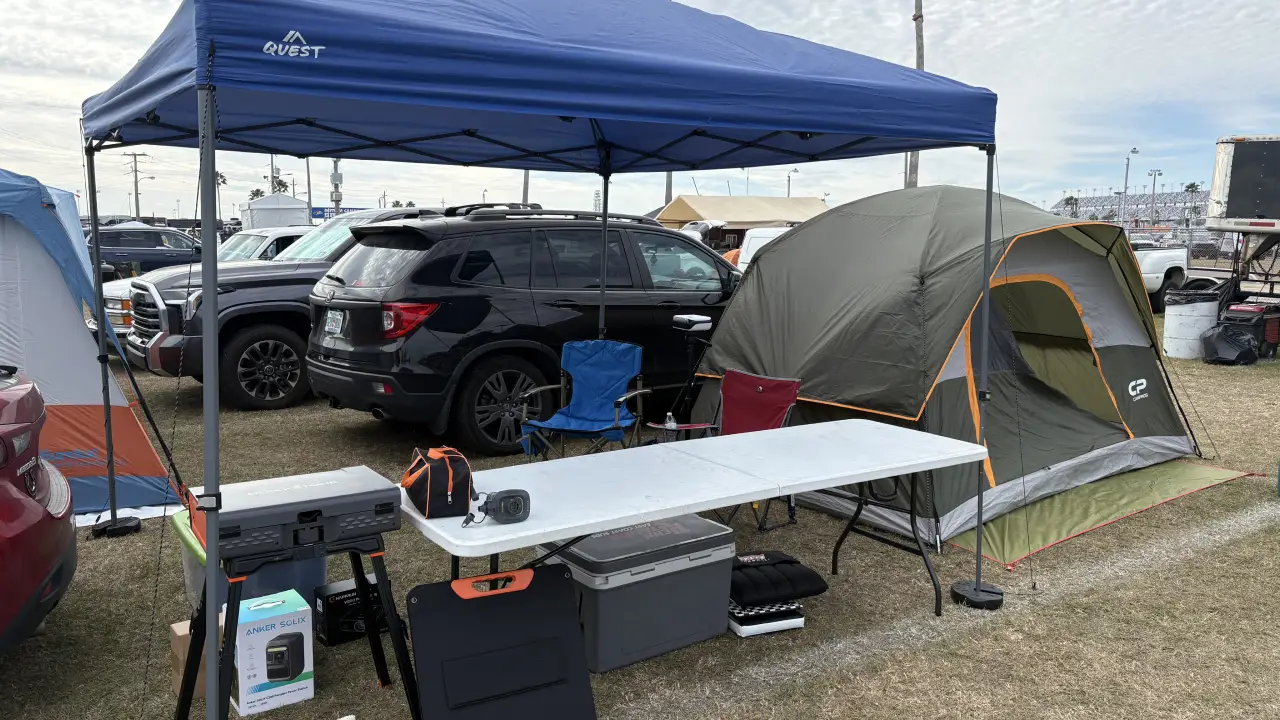
Arrival and Setup: Getting to Your Camping Spot
For years, arrival day was practically its own endurance test. Thankfully, the Daytona Speedway team is making changes.
In 2025, Josh’s first experience at the circuit was first-come, first-served. In 2026? Still first-come, first-served, though it also marked a chaotic transition to a reservation system where the spot you claimed became your spot for future renewals. Campers staged in rows during the early hours of the morning, with people lining up before 5am, only to wait hours for their turn to enter the infield and stake their claim. It took Josh and Chris four and a half hours of waiting before they were escorted by Daytona International Speedway staff to select their spot.
The good news for race fans is that beginning in 2027 car camping in the Orange Tent Campground will move to fully reserved campsites. That means campers will arrive knowing their exact spot is already secured. That means no more staging lines, no guessing, and no early-morning scramble that defined previous years.
The Weekend: Hangout Central
By Thursday afternoon, the campground feels less like a parking lot and more like a small, temporary town. Campers settle into the rhythm quickly; grills fire up, folding tables fill with snacks, and some groups go all out building elaborate setups with couches, string lights, and makeshift bars tucked beneath canopies. It’s not unusual to see neighbors trading drinks or wandering from campsite to campsite just to see what everyone else has built, only to leave with three new friends.
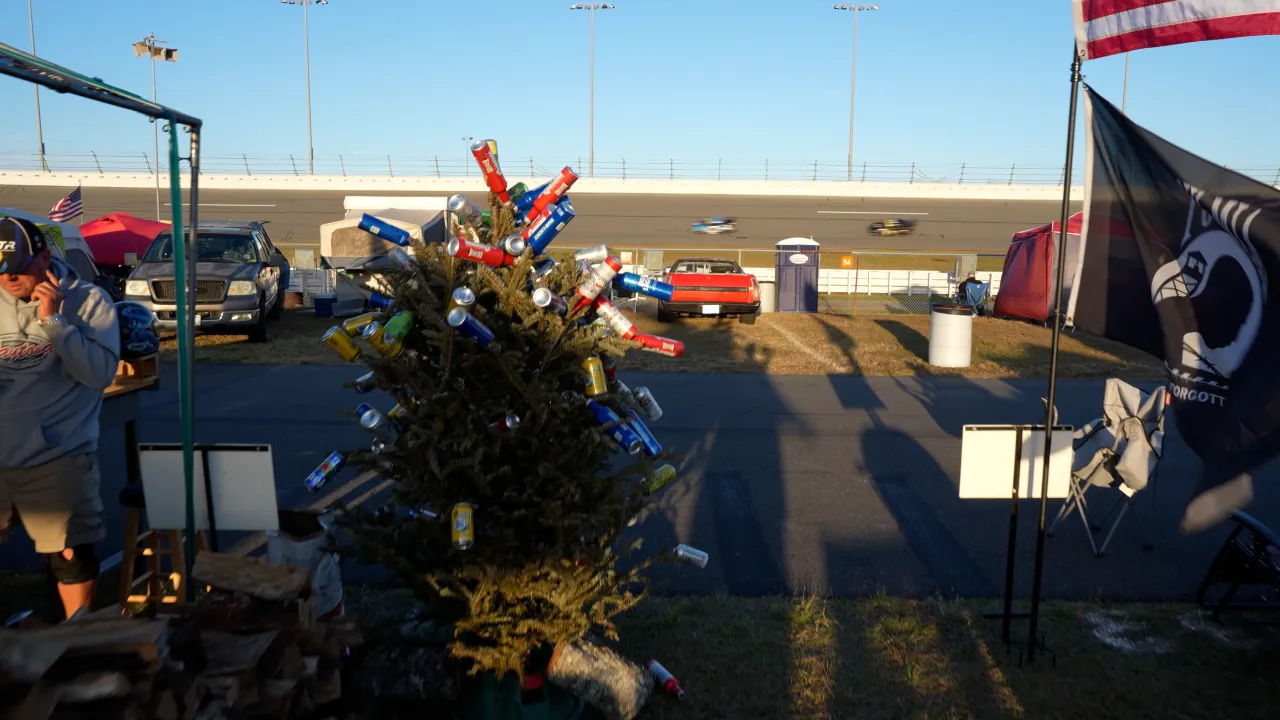
Josh describes the infield as “100% family-friendly, social, but not chaotic.” It’s not rowdy the way people expect. It’s communal. Everyone is there for the same reason: 24 hours of endurance racing and the atmosphere that surrounds it.
Through Thursday and Friday, the race weekend slowly builds with practice sessions and qualifying. The campground ebbs and flows as people wander off toward the grandstands, garages and fan zones throughout the day. Once darkness settles, the energy shifts back. Fires glow again while music hums. Conversations stretch late into the night, and the distant echo of engines reminds everyone why they’re there.
By the time the green flag drops for the 24-hour race, that sound never stops. The cars circle continuously through the night while the campground stays alive beside them. Making it a full four day event rather than just a Sunday event
For Josh, it’s become something of a birthday trip tradition, four days of something akin to a neighbourhood, with friends, campfires, and the soundtrack of not just music on speakers, but of awesome endurance racing, making Josh want to keep going back year after year.
Facilities & Food: Comfort When You Plan Ahead
Here’s where the Rolex 24 practicality comes in.
Bathrooms are brick-and-mortar, with hot water sinks. Showers are free, clean (though you should still wear your shower shoes!), and regularly maintained. “A luxury compared to festival shower trailers,” Josh emphasized. The secret to the showers? Go after 10am. Josh did and avoided lines entirely.
Food logistics were also much easier to navigate this year for the pair, as the previous year Josh and Chris had flown to Daytona and relied on whatever they could check in their carry-ons. This year, they drove Josh’s car the whole way, completely changing the experience!
After reserving their campsite, they stopped at a nearby grocery store and stocked up on the weekend essentials. Back at camp, coolers kept everything fresh while a Blackstone grill meant hot meals all weekend — from breakfast staples like bacon and eggs to surprisingly ambitious dinners like chicken fettuccine alfredo. Josh was quick to call out the other camping classics: Fruit Roll-ups and Gushers.
If you forgot something, nearby stores like Target, Walmart, and CVS are all within ten minutes of the track. But packing smart is essential. Florida in January is unpredictable. Sunburn by day, hoodie weather by night. Warm layers are essential once the sun sets.
Cost & Booking: Planning Early Pays Off
Tickets typically go on sale shortly after the race weekend concludes, so planning ahead is key.
Josh and Chris renewed their individual outfield camping spots which cost roughly $125 each, coming out to a combined price of $250 to stay all four days. However, for the second year in a row they managed to score a secondhand infield pass, this time for $550, which was an increase from the $400 they paid in 2025. When you divide that between friends, compare it to hotel rates during race weekend, and factor in food savings from cooking yourself, even resale prices make camping look like a financially savvy move!
It’s important to note that a camping pass does not include a race ticket. While some camping areas offer direct views of the track, and it’s common to socialize with your trackside neighbors, you’ll still want a ticket to fully experience the racing. GA will set you back $160 for four days, and Josh mentioned a friend considering premium club seats for around $1,000 a person.
You can read Josh’s full Rolex 24 GA ticket review, but suffice it to say that the value for money—being able to explore nearly all the Rolex 24 has to offer from Thursday to Sunday for under $50 a day—is hard to come by in any racing series. If you do buy GA, Josh recommends exploring the 300-level grandstands for some of the best vantage points of the race start.
The Limitations
Camping isn’t perfect. Infield spots are tight. Noise is constant. The weather can turn. Privacy is minimal.
And while campsites generally feel safe—our team was walking about at all hours of the night and saw TVs running unattended and undisturbed—it’s always smart to lock up any valuables.
It’s also Florida. Keep electronics protected from rain and morning dew to avoid damage.
Why It’s Worth it
Stressful planning? The midnight staging? The waitlists and resale hunting?
Josh says it ironically made the weekend better. He’s a meticulous planner. Once their site was secured, the stress disappeared, replaced by 90 hours of racing, shared meals, new friends, and surprisingly deep sleep aided by the hum of cars thundering past.
Add in the fact that the circuit is introducing reservations to eliminate long staging lines and the experience will get a whole lot better for those lucky enough to have a spot.
Ultimately, camping for the Rolex 24 enhances everything. It stretches it from a 24-hour event into a four-day immersive experience. While the race may happen on track, camping isn’t just an add-on, it might just be the reason to go.
Want to know more about this race? Make sure to check out all our Rolex 24 guides and ticket options!

.png)
.png)