


Imagine earning $425 million in a single year. Or $657 million. Or even $866 million.
This is the scale that Formula 1 teams Red Bull, McLaren1, and Mercedes reported as their respective revenues in 2024, and it is certainly not pocket change.
But where does all of this money actually come from?
We recently broke down how F1 earns its billions, and now it’s time to do the same for the teams. Below, we dig into their main sources of income, from what F1 itself pays them to their sponsorships, all to get a better understanding of how each enterprise keeps the proverbial lights on as they work to design 11 of the fastest cars in the world.


Most F1 team revenue comes from two major income streams
Each team on the F1 grid relies on two primary sources of money to fund their yearly activities: F1 itself, and the sponsors that they partner with.
What proportion of each team’s money comes from which source is highly variable and dependent on things including their performance in past Constructors’ Championships, driver rosters, the length of their time in the sport, and the number of sponsorship and advertising agreements they have (and the specific terms of those agreements).
But beyond just these two sources of funding, teams can also earn revenue from licensing, merchandise, and more, all of which we break down in full below.
.webp)
Teams earn millions through F1’s prize money system
One of the biggest sources of income for many of the teams on the F1 grid comes from F1 and its parent company, Liberty Media, in the form of prize money paid to teams in the first months of the year. This is taken out of F1’s revenue pool from the previous, which in turn comes from things like media rights, race promotion fees, sponsorships, and so on (all of which are explained in full detail here).
While the exact percentage has not been made public, Liberty Media reported that it had made payments to teams totaling $1.4 billion in 2025. This is roughly 41% of the $3.4 billion the sport generated in revenue in 2024, the year from which the prize money comes. If we take that percentage, we can calculate that the prize money fund for the beginning of 2026 should total about $1.6 billion of the $3.9 billion F1 made in revenue during 2025.
But how this money is distributed among teams is not as easy as just dividing it equally amongst all 11 participants in the F1 World Championship like you might a cake or a pie. In fact, how much each team earns is laid out in a contract between F1, the FIA and the 11 F1 teams called the Concorde Agreement.
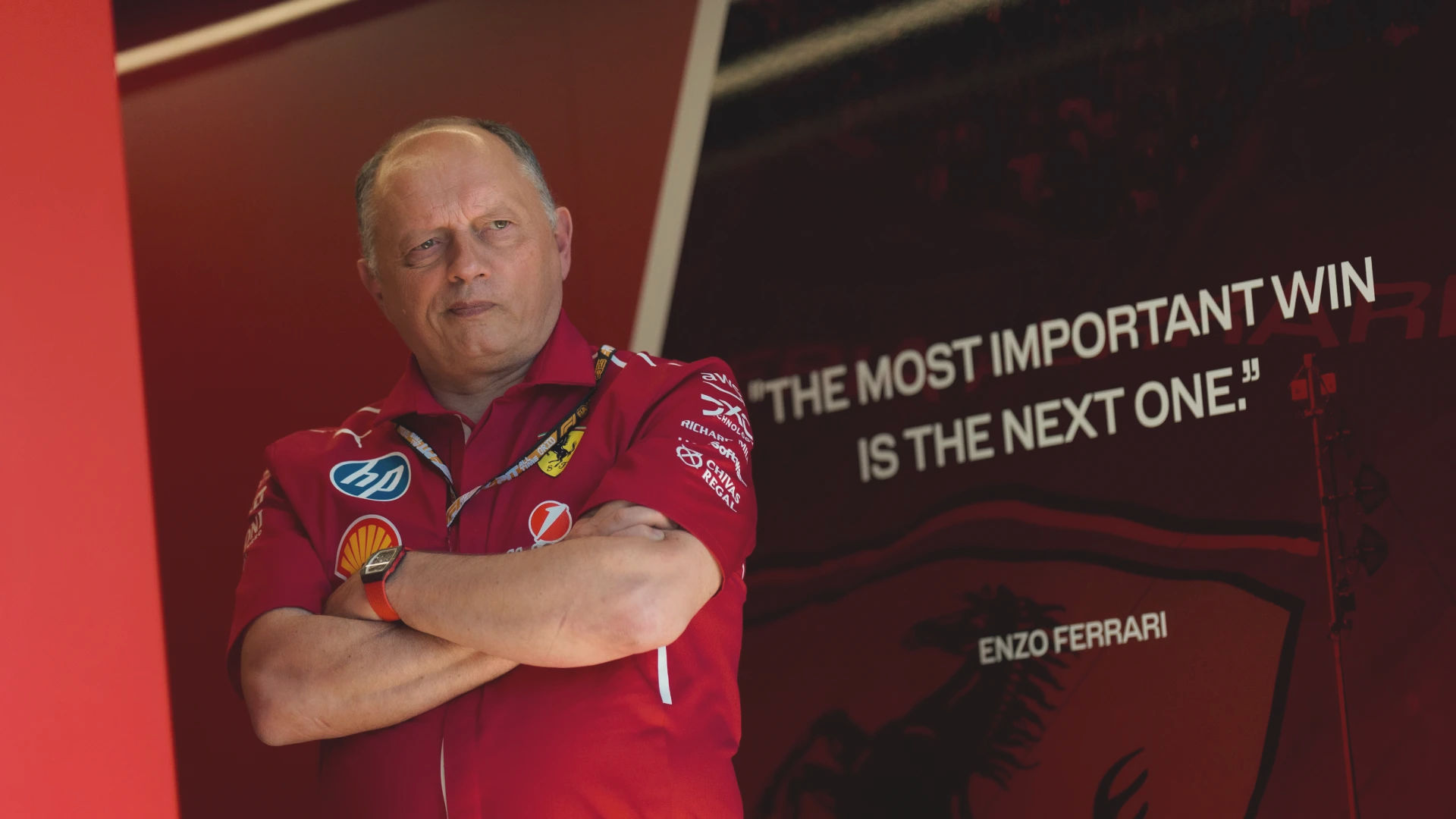
The terms of the Concorde Agreement have always remained confidential, but Liberty Media’s 2025 financial report (10-K) states that a specific portion of the prize fund goes to Ferrari as a sort of bonus acknowledging its history and heritage in the sport. According to a March 12th, 2025 article published by Jon Noble in The Race, this is roughly 5% of the total prize money fund. That means that in 2025 Ferrari got an estimated $63 million, and this year they could be getting about $80 million from F1’s 2025 prize fund just for showing up to race!
The rest of the prize money is then divided among the teams (Ferrari included) based on how they ranked in past Constructors’ Championships. According to Noble, about 75% of the prize fund (roughly $1.2 billion for 2025) is divided based on the most recent Championship results. As the winners of the 2025 Constructors’ Championship, McLaren would be getting the biggest cut of that 75%, Mercedes would get the second biggest, Red Bull the third biggest and so on.
And what about the final 20% of the prize money pie?
That is also determined by the Constructors’ standings, but in a slightly different way. For this, F1 looks at the constructors that finished in the top three in the last 10 years of Championships. For 2016-2025, that would include only McLaren, Mercedes, Red Bull, and Ferrari. Each of these teams gets a small bonus based on their standing in each season over the last decade of racing. For 2025, this amounts to about $318 million.
Sponsorship deals are extremely valuable for F1 teams
Money from F1 alone is not enough to account for the $425-$866 million in revenue that teams like McLaren and Mercedes bring in each year. Helping boost their bank accounts are the teams’ sponsors. In fact, sponsorships make up the largest total sum of money that the teams on the grid have earned, with SponsorUnited reporting that the ten teams on the 2025 grid brought in a massive $2.5 billion through their partnerships. The only other sport whose teams brought in more money through sponsorships last year was the NFL ($2.7 billion) while the English Premier League came in third with an estimated $2.0 billion.
There are several different types of sponsorship deals that teams provide, each with their own price tag and perks, kind of like a tiered Patreon membership program. The more a company is willing to pay, the more they get. This is often reflected in the placement and size of a logo on the livery of an F1 car, as well as time with drivers, activations, and even hospitality access.

Brands that are willing to Shell (wink, wink) out the most get the highest honor: team naming rights. Think Aramco for Aston Martin, Atlassian for Williams, and Oracle for Red Bull. Oracle struck a five-year deal with the Milton-Keynes outfit in 2022 estimated to be worth $100 million per year. In fact, Alpine just inked a deal with fashion powerhouse Gucci as a title sponsor from 2027.
The driving force behind the $2.5 billion sponsorship sum is the number of partners each team has. For 2026, most teams average at around 20-30 sponsors; McLaren tops that list with 54 total partners, while the newest team on the grid, Cadillac, only has nine so far, but is sure to accumulate more as time goes on.
Merchandising and licensing provide additional income
While F1 prize money and sponsorships with brands make up the bulk of their revenue. F1 teams have various other ways to make money.
One that many fans are familiar with is merchandise: the team t-shirts, caps, model cars and more that we buy to show our love for our favorite competitors. This can come from the official team stores directly, either online or in-person at a race. It can also come through collaborations with other brands, such as Cadillac's clothing collaboration with Tommy Hilfiger, or Williams's custom watch collaboration with UNDONE. Teams sell their own products or strike licensing agreements for other companies to use their logos and branding, in the latter case receiving a cut of each sale.
Equity sales can also bring in large one-time sums of money. This occurs when individuals, companies, or investment groups buy a portion of the team. We saw this play out in 2023 when Otro Capital purchased a 24% stake in Alpine. The deal came with a $218 million (€200 million) price tag, valuing the team at around $900 million at the time.
Of course, much like they are always looking for new ways to make headways with their cars, teams are also always exploring new ways of bringing in revenue. A great example of this is Williams Grand Prix Technologies, a company that seeks to apply technological innovations in F1 to address problems in other sectors and industries. Works teams such as Mercedes and Ferrari also have their power train productions, supplying customer teams with engines for the racing season. And as the world of F1 continues to expand, the grid will surely likewise continue to experiment with different streams of income, making the world of F1 finance all the more intriguing.
1 Revenue reported for McLaren Racing, including both McLaren F1 and IndyCar teams
Cover image via Mercedes-Benz Media.


%20(1).jpg)
.webp)

.png)
.png)