



.png)
What happens when a beauty and luxury PR pro stumbles upon Drive to Survive?
For Manvi Mittal, it sparked a new passion for the high-speed world of motorsports. Manvi shares the reality of life in motorsport communications and public relations, and gives invaluable advice on networking and breaking into the industry.
Position: Freelance Earned Media and Communications Specialist
Day to day: Sitting in the middle of client and media, ideating on messaging and coming up with activations that help tell it.
Manvi's start in motorsports
#1. What was the first moment that you discovered racing?
I don't have a very fun story about this. It's very much Netflix’s Drive to Survive in 2020. I literally make no apologies about this. I am a Drive to Survive fan, and I'm very happy to be one. I do think my first entry into racing was Formula 1 with the show. But slowly and gradually, through other content creators, I started getting into IndyCar, F1 Academy and other disciplines, which now I wish I got into a lot earlier than I actually did. But Drive to Survive was the gateway drug 100%.
Greg: What was it about it?
It was actually my best friend. She has been watching Formula 1 since I've known her, and she recommended that I watch it during Covid. And I was like, “Okay, fine, I'm not going to get into this. This looks stupid.” But I watched it. And obviously, like so many people, I ended up binge watching it over a weekend or something. And I do think I have one of those personalities that when I really get into something, I have to throw myself into it completely. Like, even after I watch a movie, I have to do all the research. I have to see how the production was and everything. So that happened [to me] with Drive to Survive, and then it just kept building on from there.
#2. When did you decide that the racing industry was a place that you wanted to build a career, or at least have professional involvement, since you are not fully focused on the space?
I think it was when I joined Females in Motorsport in October of 2022, I want to say it was a weird time for me personally. I was coming off some weird things and I think I was just looking to tack on to something that I could distract myself with and work on and just feel a little bit more fulfilled in that area. And I just cold emailed Females in Motorsport and being like, “Hey, I would love to be a part of this. I'm happy to just be like a blog writer. If you guys ever need an extra set of hands.” They weren't looking for people at the time. I literally just cold emailed them and I ended up getting a response from them within 24 to 48 hours. I started off as a blog writer for them. I did a couple of interviews and then I was doing some research on podcasts, and I noticed that they had not done anything for their podcast in a few months. And I was like, “Why aren't you guys doing this anymore?” And they were like, “We don't have anyone who's able to dedicate time to this.”
.webp)
And I think that was a moment for me where I was like, “Okay, I want to raise my hand and be like, okay, I want to do this.” I wasn't intentionally making a decision to be a part of the industry, but more so like, “Okay, I know I like this. Let's see if this is something I want to explore.” Before that, all of my experience has been in beauty, fashion, a little bit of pharma, very removed from sports. So, this was really like an ‘a-ha’ moment for me. It was like maybe I should see if these sticks. And then it did for a couple of years. And I think the podcast was a turning point for me because it really helped me connect with so many industry insiders, and that helped me understand more about what's happening in the world of motorsport. And then it just kept building from there.
Greg: When you were with Females in Motorsports, what were you focused on doing?
My first thing that I did for the first few weeks was create my wish list of guests that I would want to have on the show. And then week to week, I would probably just do a lot of outreach, like cold email managers. I was that annoying person whose emails are going to spam for a lot of people. But that's what a lot of it was initially. I really did try to actually keep it very authentic, where I would interview one person a week, and then in the beginning, you're so excited that I would do it, and then I would edit it right after that and I would post it. But with work and everything, it got really hard to balance. So then later on, I changed my schedule where I would schedule like 5 or 6 interviews in two weeks, and then I would go into the editing phase and then I'd go into the posting phase. So, it did change a lot depending on how many guests are reaching back out to you, and responding to you. You're [at] the mercy of them, but I'd probably dedicate a few hours a week to work on the podcast specifically.
Greg: And what was the day job while you were balancing Females in Motorsports?
I was at a PR agency. I've since shifted to another PR agency, but I was working in beauty, lifestyle, luxury, retail, which was very different to what I was doing at Females in Motorsport. And now we're in 2025 and a lot of brands in every category are going into F1 or some kind of motorsport or the W or something like that. This is 2022, 2023 when it was not like this. Things have changed so much in the past year and nobody at my agency, even though they wanted to, I don't think they fully understood why I was doing what I was doing, but they were very gracious enough to let me do whatever I wanted to do. But I think that that experience of being in PR and comms, and just being someone who has had to build client relationships, media relationships, it helped me take that into podcasting and make relationships in that area as well.
Manvi's current role
#3. What does a PR role entail for people on a day-to-day basis?
PR is basically when, especially in an agency role, you are sitting in the middle of client and media. And when I say media, that can be editors, magazines, influencers, content creators, everyone. You're essentially the middle person where you're trying to relay your brand's messaging or your client's messaging to the media. So, you're in charge of ideating what that messaging is, coming up with activations that help tell that message, actually making those relationships with media and sharing that brand activation, launch or whatever it is with them. So, being that middle person—and it's a very relationship-based role—you have to be someone who's open to networking and putting yourself out there to succeed in PR and comms, especially if you're working on the agency side.
So again, just having that excitement to talk to new people and tell them about your client, tell them about your client's product. You have to have that excitement. You almost have to be either, in an ideal world, extroverted, which I am not, but you should at least be ambivert where you can turn it on when you need to.
#4. What are the most challenging and rewarding parts of being in PR?
Rewarding
This is such a cliche answer, but it really is, especially someone as a PR person, you're actually talking to editors at Forbes or Vogue or Elle or whoever, and you're trying to tell them about your brand or your client or your product. And if they buy on your story, and write it, and it goes live, it's a rush. I can't explain it, but sometimes it will happen. An editor will tell you that the story will go live today, and I'll be sitting at 9:01 a.m., hitting refresh on my computer. And if you're working with a smaller brand, whom editors don't really know about, you have to do a lot of education for them, and then they enjoy what you have sent them and actually write a story. It really does feel very fulfilling.
Challenging
From a challenging perspective, it's a very crowded news cycle right now, and it's really hard to get people's attention. Attention spans are generally decreasing. We know that. But I think that really spans onto the media as well because the media landscape has changed so much. It's no longer about just The New York Times, Wall Street Journal, Vogue, Elle, print magazines are not even a thing anymore anymore. I remember when I first started in PR, everybody wanted to get into the September issue like that was the Holy Grail. No one talks about that anymore in my industry. And now it's really about how do we tap into Substacks? How do we tap into newsletters? How do we tap into editors who are also influencers? How do we get into TikTok and Instagram? That's become such a big part of the media now. But that change has been very challenging because that's not something I learned in school. It changed so much more recently. And really being able to grasp that attention of people is what is challenging.
#5. What are the top three qualities that have made you successful?
Curiosity
I think for any PR person, and I do think this is something I do very actively work on, there are a few things. Number one, I would say is just to be curious, and this is true for motorsport as well. And this really came into podcasting too, is that you really have to A, be curious about what's going on in the world. And B, when you're interviewing people, being curious about their life enough where you're not obviously overstepping, but also just being able to ask interesting questions. And I think the true word for that is being a little bit nosy, but just to be a little bit more positive, I'm going to say it's really about curiosity.
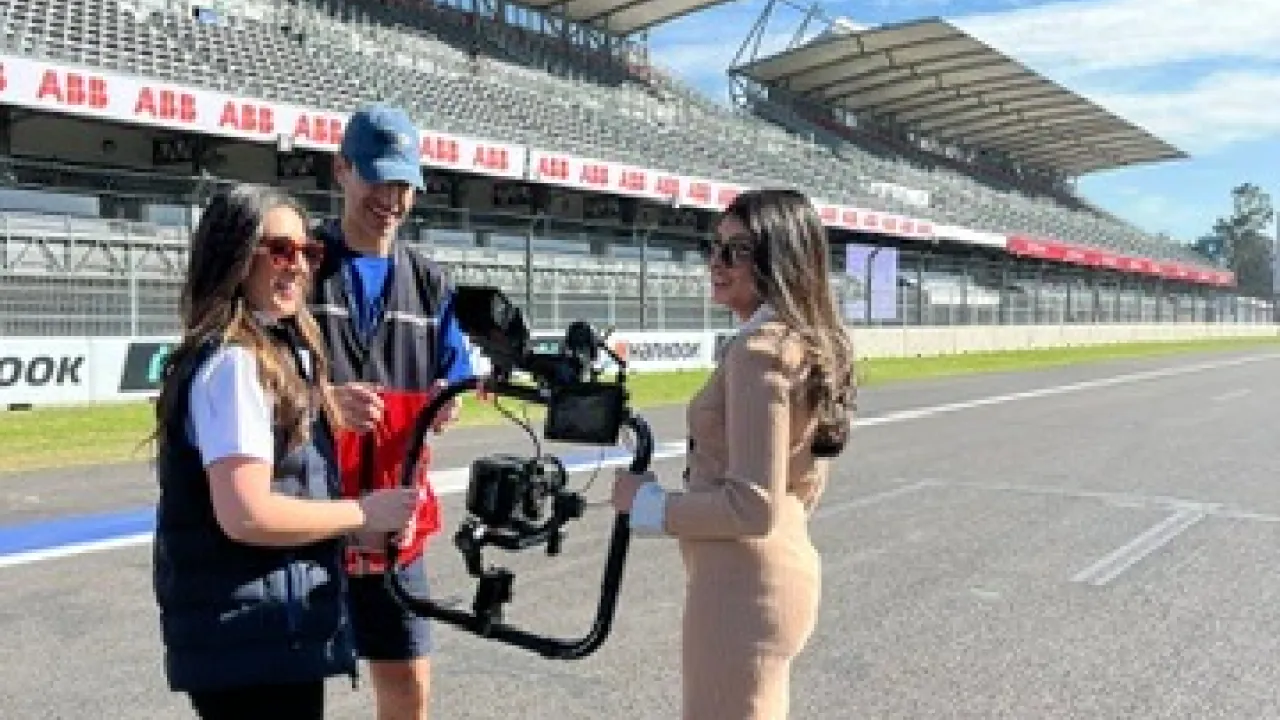
And I have had this with Females in Motorsport; I was interviewing a lot of women. It's interesting because, of course, you want to interview women about what is happening in the industry, and how they're feeling about it as a woman in the industry. But so many times, I would say more often than not, they're not asked regular questions. And this really stuck out to me when I was interviewing Tatiana Calderon, and I asked her a question about what it's like working with her sister because her sister is her manager. And I think it's such a normal question. Charles Leclerc gets questions about his brothers all the time. Lewis Hamilton used to get questions about working with his dad all the time. And when I asked her this question, she was like, “No one has ever asked me this question before.” And I think that's so telling of the industry that we're in. But I think it also reminded me [to] be curious, just ask interesting questions; at the end of the day, they're also normal people. This is just their career. Fame is not their career. Fame is a part of the career. So be a little bit more curious about their lives in a way which is interesting to you as well as your readers or listeners. And the same thing goes with PR, be curious about what editors are excited about writing. See what they're writing about, see where their personal interests are. It's so much easier to then form a more authentic connection with them about the product, the brand you're trying to talk to them about.
Confidence
In a way, especially working as a creator, and if you're trying to make it as a creator, something you really have to hone in is confidence. And I don't think I'm the most confident person on earth by any means. But I do think working in PR, and working in a client-facing role where you're presenting things, presenting plans, results, ideas, launches, all those kinds of things, it helped me hone in the fake it till you make it. I've learned the art of faking confidence because I know inside what is happening. I know I'm nervous. I know I'm feeling I'm not saying what I want to say or not sharing the idea the way I want to. But a lot of people have told me, “Oh, you seem so calm and confident all the time.” And I'm like, “Okay, I guess this is something I'm good at faking.” And it did help me realize when I was working in motorsport that everybody has those days. We are not always feeling confident. Where you're having imposter syndrome. Everyone feels that way. No matter where you are in your industry, and in the career ladder. So, keeping that in mind helps ground you and being a little bit easier to fake it.
Networking
The third thing I would say is about networking. I think this is true for any industry, especially if you're working in motorsport. I would say you live in a city like Austin or Indianapolis, or Miami or any city where races are happening. Connect with people who are at the racetrack, send those LinkedIn messages, engage with people on LinkedIn. Don't just send a message and let it go into the abyss, but actually connect with people, engage with people on their content. Because more often than not, people do want to connect. They do want to talk to you. They want to learn more about you. I think I've been very lucky where more people have helped me than not in this industry. So, I think networking is really important for any industry.
Manvi's advice
#6. If you could go back and give advice to your younger self, what would that be?
I would say, don't be afraid to take risks. And it's something that I can now look back and say because I'm actually quite risk averse. But looking back, I would tell myself that don't be afraid to start that podcast, start that newsletter, send that cold email, because that is how you get all the opportunities; even if something doesn't materialize in that moment. It might lead you somewhere, and you need to just have a little bit more of a thicker skin when taking risks. And that takes time to develop. And it's really hard in your 20s, I think it was really hard for me to develop that thick skin. When I was first starting to put my face on the Females in Motorsport channel and l do videos, and things like that. Especially because the internet can be a really cruel place. But the more you do it, the easier it becomes. And I'm glad I took those risks, and people around me pushed me to take those risks, because that's where I learned the most, and that's where I was able to network the most as well.
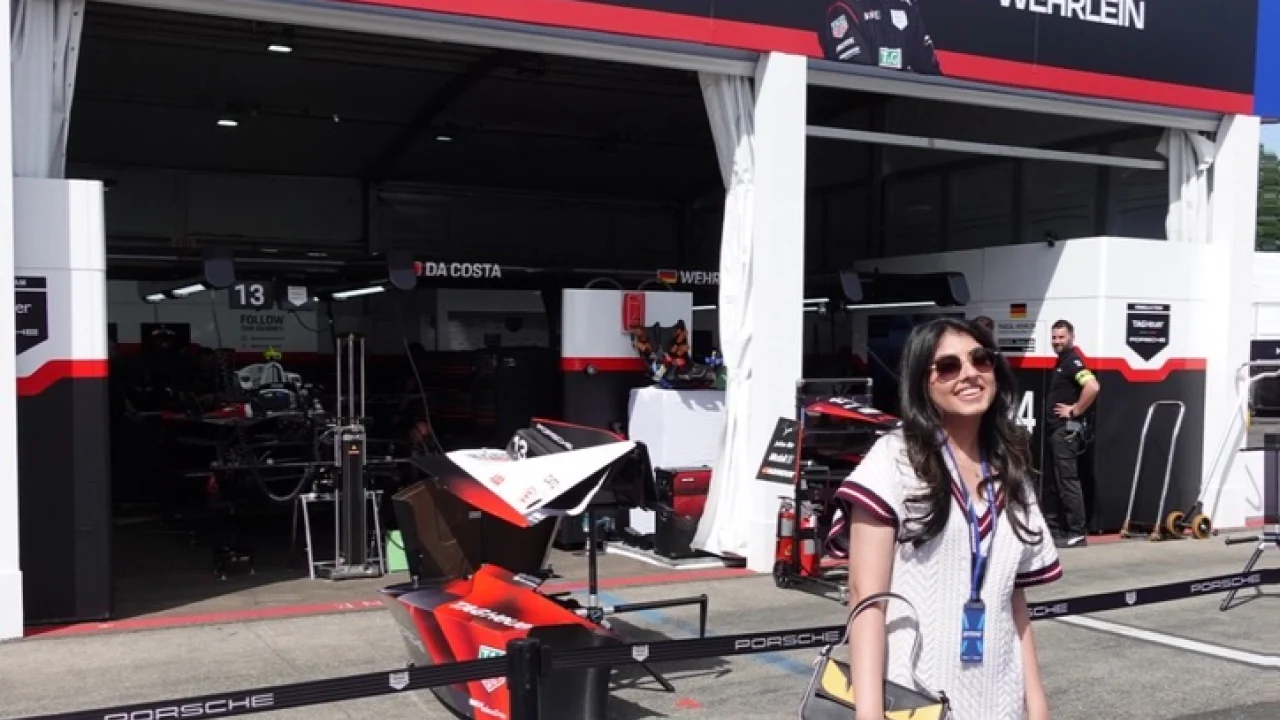
#7. What advice would you give to someone looking to be in your position?
All the jobs I've ever had have come through networking. And generally, PR, like I was saying earlier, is a very relationship-based role and relationship-based job. So, you really have to be able to go out there, put yourself out there, go to events, engage with people, even just following people on Instagram and seeing what their personal interests are. And be a little bit more open to those kinds of things, and just schedule that coffee, just schedule that meeting. And it can be really daunting because when I first started, I was like, “I'll do that coffee meeting, but what am I going to say? What am I going to talk about there?” So, it's really about now [that] you've done the coffee meeting, now go on Instagram, see what they're talking about. See [if] there's something you can form an authentic connection with. You don't want it to be disingenuous because people can catch that really quickly; but you want to find something authentic where you can connect with them and just keep it casual.
I would say it's probably the same for motorsport, especially in F1, because this is such a small industry, and it's hard to see from the outside because you would think it's actually so many people, and it is. But everyone knows everybody, and truly someone can help you get somewhere else, and you wouldn't even know it. Now I look back and I think this is so funny that I started watching this random show on Netflix and seeing all these people. Seeing the F1 Academy show on Netflix was such a very surreal experience for me because I've interviewed some of those drivers and that's just so wild. And it's because so many other people helped me get there. People helped me make connections. And I remember it was a creator who made my first connection with Bianca Bustamante, and it was just through other people. So, being able to network and share what you want; don't be afraid to be like, “Hey, I'm trying to interview this person. Can you connect me?” And it feels a little bit weird, and it feels a little bit like, “Should I ask this question?” But in my experience, more often than not, people are very, very willing to help you.
Manvi's career highlights
#8. What's been the most memorable interview you've had?
There is one that really made me think about how women are in the industry. It was with Laura Winter and it was a very fun interview. She is so funny as a person, and she's exactly how you think she would be, at least in the interview. That's how I felt. And something that she said that was really, really interesting to me was “I'm not trying to be a good female broadcaster. I'm just trying to be a good broadcaster.” And I think it was a good reminder to not box women in the industry just as women in the industry. They are also players in the industry as a whole, and people forget that very often. And that was a good reminder to me also to not be afraid to step out of that box as well. Because I have worked in beauty and fashion, where it has been mostly women that I have worked with. So, I feel very comfortable in that arena as well. But pushing myself out of that was something that she reminded me to do. Don't be afraid to ask questions that you don't have to be a woman to ask. You can just be anyone and ask those questions. So, I really love that she said that.
#9. Who would be your dream interview?
I have to say two. One, I would say Doriane Pin, [she] just won the [2025] F1 Academy Championship. I feel she is someone who's really succeeded in so many disciplines in motorsport, in endurance racing in formula racing, and I want to understand how someone does that, because I would think the driving style is probably very different. And also, endurance racing, the discipline that she's in, it’s multiple cars competing. And then you're going into formula racing where you're competing individually. How do you switch your mindset from that to that, and still succeed is something I'm very curious about.
And the second person I would love to interview is Kush Maini, he is an F2 driver from India, and the reason I want to speak to him is I am in awe of him just being able to succeed and come this far because I know there is no infrastructure, no true infrastructure for motorsport in India. It's very hard to go from one step to the other. And he's reached Formula 2. He's going into his fourth year in Formula 2, that is not easy at all. I know a lot of people have had to pull back because of funding, and I know a lot of his funding is not just coming from him. It’s a lot of sponsors. It's a lot of all of that schmoozing. So, I would love to learn more about how he's able to keep going on that front, and keep pushing, because I can also imagine it can be very disheartening to not go any further.
Want to learn more about other professionals across motorsport series? Then check out all of our Fast Lane interviews, or jump right into one of these:


.webp)

.webp)



.webp)







.webp)






.png)
.png)