


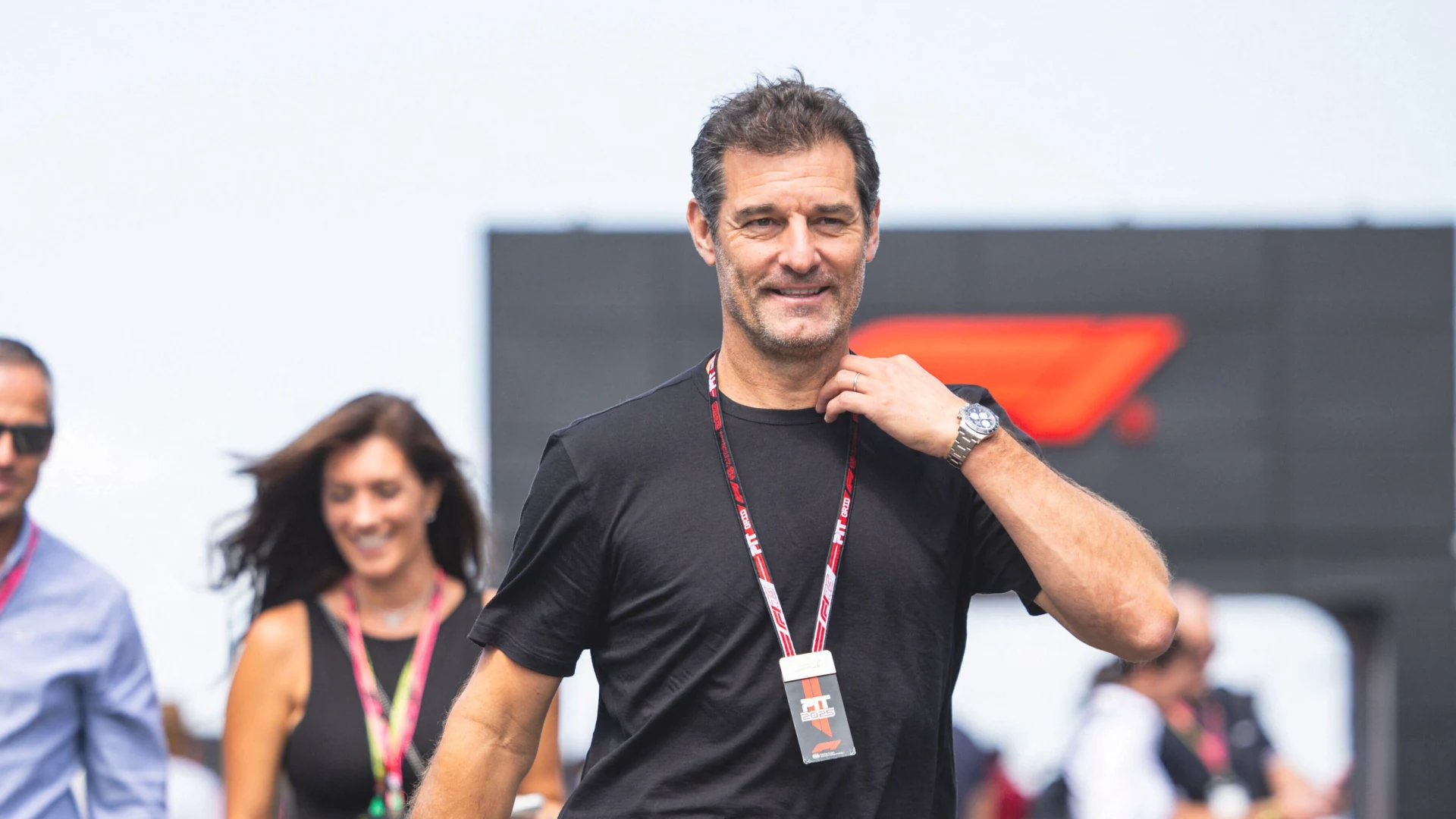


Motorsport, and Formula 1 in particular, is known for building bitter rivalries, something that Aussie legend Mark Webber is all too familiar with (Multi 21, anyone?). But beyond these intense inter- and intra-team battles, motorsport is about community, whether it be among team members, a team and their partners, or the sport and its fans. For Webber, deepening these connections has defined the trajectory of his career beyond F1 more so than any competition or rivalry.


The team mentality of endurance racing
Webber retired from F1 at the end of the 2013 season, after 11 long years in the sport, swapping out single-seaters for the two-seaters of the World Endurance Championship (WEC).
“It’s a phenomenal sport, I really, really loved it,” said Webber of his time in F1 during a 2016 interview with Channel 4. “The hardest thing for me to walk away from was the intensity of working every day with really great people, who would drive you on every day, and improve you as a person and a driver. The whole adrenaline, the speed, the risk-taking, I don’t miss a huge amount. I felt I’d got the timing of my decision right. But I miss the glue of the team culture.
“I have something similar with Porsche now – I’m racing for them in the Sports Car Championship. You can’t just turn the tap straight off. If you stopped completely – which some guys do – it’s really difficult.”
For the next three years of his career, Webber would go on to race for Porsche in the LMP1 class of WEC which, with its multiple drivers manning a single car, requires a more team-based mentality than something like F1, where your teammate is also your biggest rival. Having that team mentality is exactly how Webber reached his greatest career achievement by securing Porsche the Championship Title in 2015 alongside his co-drivers Timo Bernhard and Brendon Hartley.
"Behind the wheel he is a fair fighter, never shy of even the toughest wheel-to-wheel battle. At the same time, he thinks strategically and is team orientated,” commented then-Porsche LMP1 vice-president Fritz Enzinger in 2016.
"This mixture makes him invaluable as an endurance racer. Winning the 2015 Drivers' World Championship together with Timo Bernhard and Brendon Hartley almost seemed to be a logical consequence,” continued Enzinger.
Webber spoke about the culture of endurance racing later that same year, saying, “It was a big change from Formula 1 to LMP1 and an entirely new experience. But it came at the right time for me.
"I found I liked sharing a car and the chemistry between Timo, Brendon and me is special and something I'll always remember.”
Connecting cultures as a Porsche ambassador
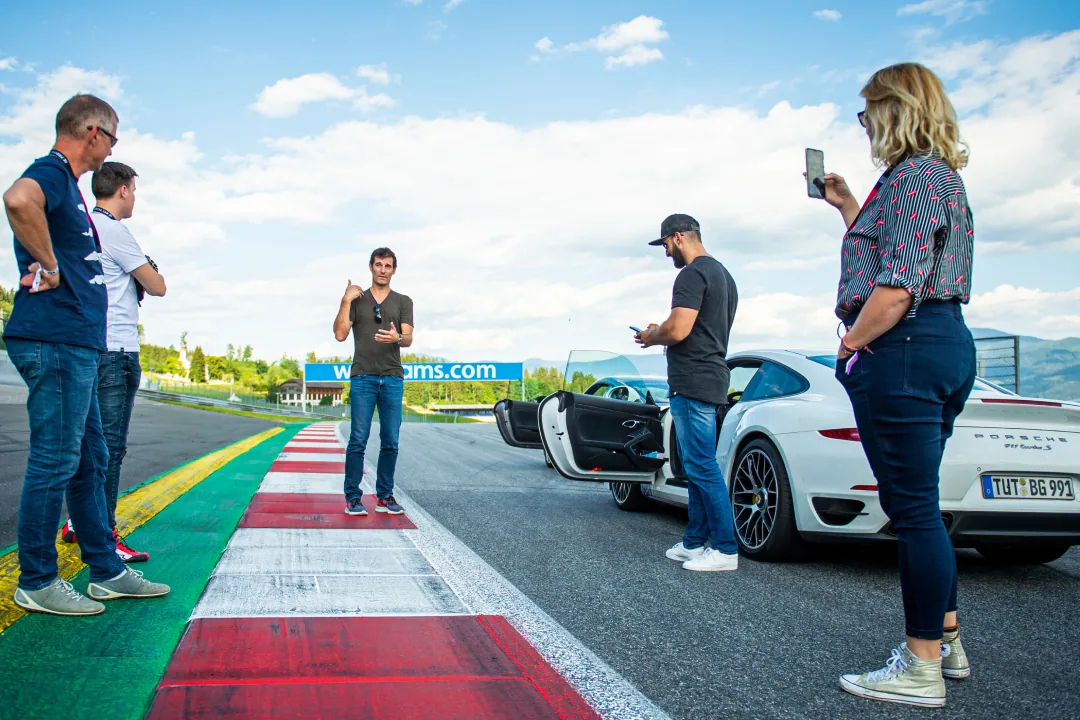
In 2017 Webber hung up his racing suit for good, but didn’t stray far from the paddock. Instead, he took on the role of Porsche brand ambassador, a role he still holds today. As brand ambassador, he represents the Porsche brand at events around the world, helping to connect them to potential customers, partners and even fans.
He told Autoweek in 2018, “We’re such an international company, I think it’s nice from a racing side to glue different cultures together. Clearly, its German origins. And it’s the most successful sports car brand around, a phenomenal brand. We are international as well and I’m really enjoying that component of gluing what regions I can.”
From driver to journalist: Translating F1 for fans
This concept of gluing or connecting different parts of the motorsport world, however, extends beyond just ambassadorship. As an expert analyst, writer, and post-race interviewer for F1 coverage on BBC, Australia’s Channel 10 and more, Webber is often the bridge between the members of the paddock and the fans.
“I feel that I can get good things out of the drivers…,” he said to Autoweek. “I am a fan of the sport and I want people to have the opportunity to listen to the people that are still involved in the sport on the emotional side to say, okay, whether it’s a driver or a mechanic or a photographer, I mean some of these snappers, where they go, what they do, they’ve been doing it for thirty years and they’re cool cats.”
What’s more, his expertise as a former F1 driver helps convey the experience in a rich and informative way.
“I really enjoy relaying the expert opinion from the cockpit,” Webber said in an interview on Channel 4 in 2016, “what the drivers are going through, what the teams are going through putting the weekends together, the stress and the pressure of Formula 1, from an expert view.”
.webp)
Helping Oscar Piastri find his footing
Yet that expertise is not limited to just helping the audience understand F1. It also plays a massive role in his work as a driver manager for McLaren’s Oscar Piastri.
“Especially year one of F1, there were a lot of questions that hadn’t even crossed my mind that Mark was asking as if they were obvious to me and the team,” said Piastri in a recent Fox Sports interview.
Webber’s ability to ask these questions certainly helped a young Piastri integrate into his team more effectively, and fostered a dynamic that benefitted both the individual driver and the constructor.
Although he is still Piastri’s manager, Webber is taking a step back from on-track duties. On the surface, it may read as though Webber is not needed as much, but it can also be the sign of a great mentor who has done his job well to ensure his protege is more than settled into the world of F1.
His passion for the motorsport community and the desire to cultivate and nurture the bonds of others within that community shines throughout Webber’s career. What other roles he will take on next are unclear, but if the past is any indication, they will be ones that allow him to keep forming and maintaining the bonds that hold the motorsport world together.


.jpg)
%20(1).jpg)


.png)
.png)